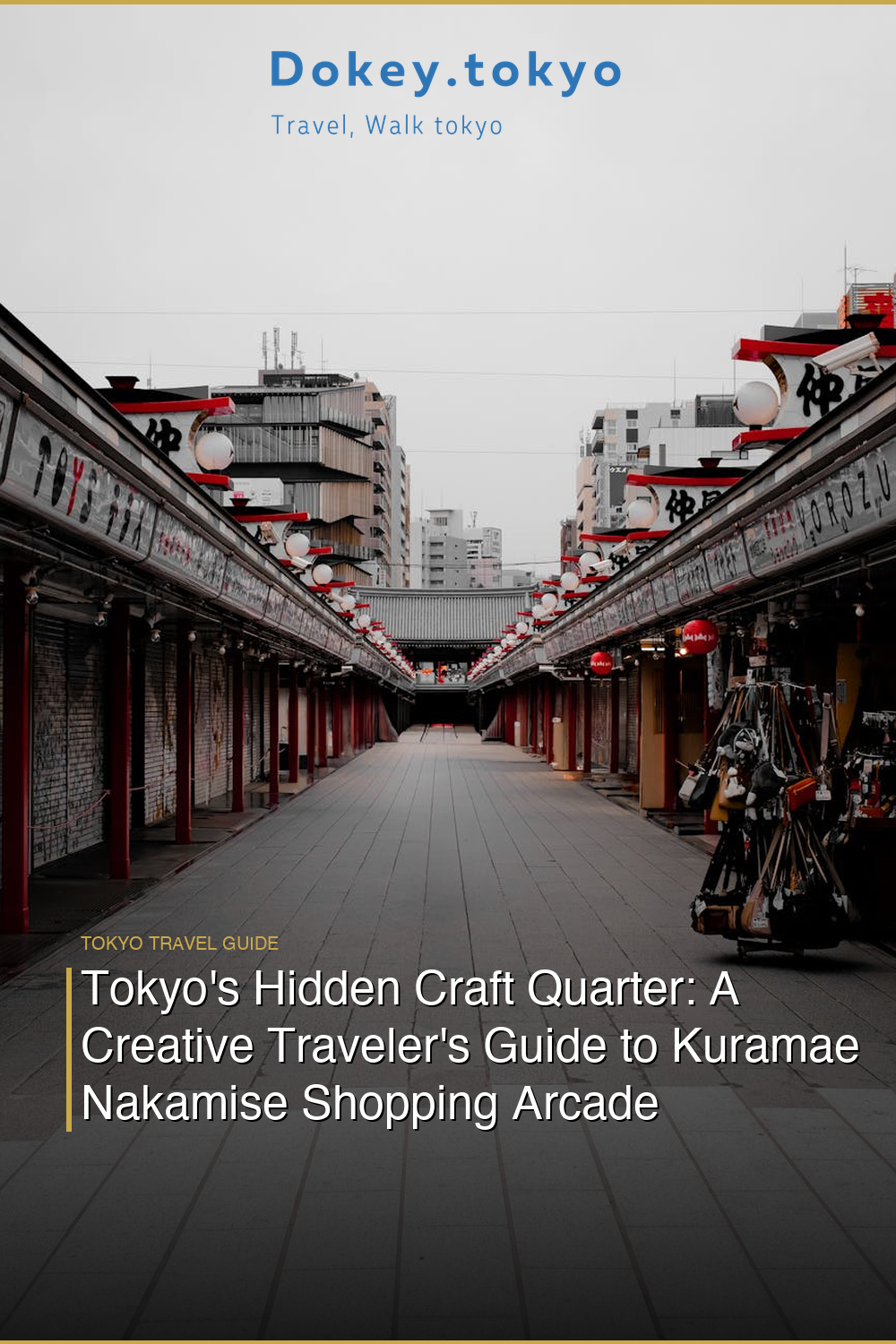
If you’ve already done Harajuku, ticked off Akihabara, and bought your obligatory Senso-ji omamori charm, then you’re ready for the Tokyo that doesn’t show up on the first page of Google results. Kuramae — and specifically its low-key shotengai (shopping arcade) strip along and around Kuramae Nakamise — is the kind of place that makes design-obsessed travelers put their phones away and just look. This isn’t a polished tourist corridor. It’s a living, breathing neighborhood where old-school wholesale toy merchants share a street with third-wave coffee roasters and bookbinders who learned their craft from their grandparents. If your travel wish list includes discovering independent makers, touching things made by hand, and walking out with something genuinely one-of-a-kind in your carry-on, Kuramae Nakamise belongs at the very top of your Tokyo itinerary.
The first time I walked into the arcade on a quiet Tuesday morning in late October, the smell hit me before anything else — a layered mix of cedar wood shavings, roasting coffee, and something faintly waxy, like fresh leather conditioner. A craftsman two doors down was hand-stitching a bifold wallet at a workbench visible through a wide glass window, completely unbothered by passersby. The autumn light came in low and gold from the east end of the arcade, and I remember standing still for a full minute just absorbing the fact that this place existed.
Why Kuramae Is Tokyo’s Craft Capital Right Now
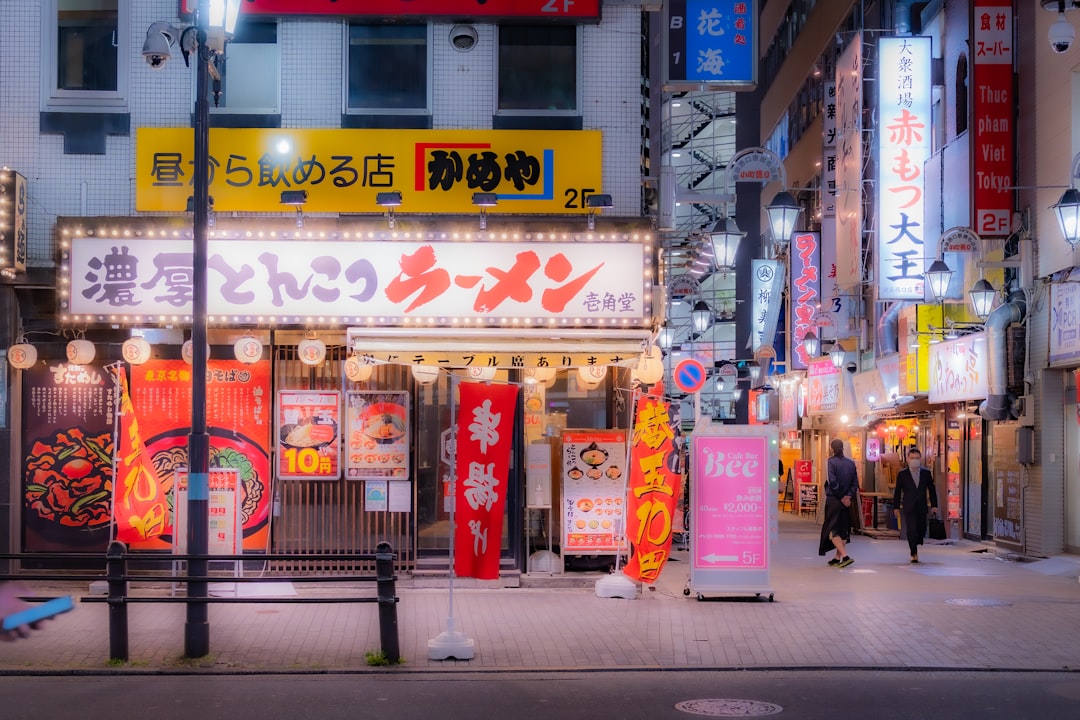
Kuramae sits in the Taito ward, tucked between the Sumida River and Asakusa, and for most of the 20th century it was known as Tokyo’s wholesale toy and candy district — a place for bulk orders and back-of-truck deliveries, not tourism. What happened over the last decade is a beautiful accident of urban economics: low rents attracted young Japanese designers and makers who wanted studio space in the city. They opened their workshops with tiny storefronts. Coffee culture followed. Then came the leather workers, the stationers, and the natural dye textile artists.
The Nakamise arcade itself is more of an informal cluster than a formal covered mall — think a few intersecting streets and a partially covered stretch near Kuramae Station where independent shops have colonized what was once purely utilitarian retail space. It’s walkable, unhurried, and blissfully free of the souvenir-shop-sameness that can make parts of Asakusa feel like an airport terminal.
Must-Visit Shops for Creative Travelers
Kakimori — The Stationery Lover’s Church
If you only have time for one shop in Kuramae, make it Kakimori. This is a custom stationery studio where you can build your own notebook from scratch — choosing the cover material (cloth, leather, paper), the inner pages (grid, lined, blank, watercolor), and the binding ring color. The process takes about fifteen minutes and costs roughly ¥2,000–¥4,000 depending on your choices. They also stock their own line of bottled ink in colors that feel like they were named by a poet: Tsuki no Shizuku (Moondrops), a pale silver-blue that I now use for every journal entry I write at night.
The staff speak enough English to walk you through the customization process, and the shop’s interior — white walls, timber shelving, natural light — feels more like a design gallery than a retail space. Arrive when it opens at 11am if you want a peaceful browse; by early afternoon, the small space fills up.
HIGHTIDE STORE Tokyo
Just a short walk away, HIGHTIDE stocks functional, beautifully designed stationery and travel accessories from Japanese and Scandinavian brands. Their own-label notebooks and pen cases are the kind of thing you buy intending to photograph later and end up actually using every day. Great for picking up gifts that won’t break your luggage weight limit.
Leather Workshop District
Kuramae has a quiet concentration of leather ateliers — some with window-facing workbenches so you can watch makers at work. Shops like SyuRo blend everyday tools and copper goods with a wabi-sabi philosophy that feels genuinely rooted in the neighborhood rather than performed for Instagram. I stumbled into SyuRo looking for a brass key hook and ended up spending forty minutes learning from the owner about how they source their copper from a single foundry in Niigata.
He told me, almost as an aside, that the best time to visit the area is just after a light rain because the copper pieces in his window display take on a different patina in the humidity — a detail I never would have thought to look for, but can now never unsee.
Coffee and Food: Fueling Your Creative Wander
Fuglen Tokyo (Kuramae Area)
The Kuramae coffee scene is serious. Nui. Hostel & Bar Lounge on the river has a ground-floor café that’s popular with the creative crowd for good reason — the cold brew is outstanding and the industrial-meets-natural interior is exactly what you’d expect from a neighborhood that values craft. It’s also a great place to open your laptop and sketch out your afternoon plan.
For pure coffee quality, Dandelion Chocolate — yes, the San Francisco bean-to-bar chocolate maker — opened a Tokyo outpost nearby and the combination of single-origin hot chocolate and a butter kakigori (shaved ice) in summer is almost unreasonably good.
Eating Like a Local in the Arcade
Don’t sleep on the older, non-trendy end of the Nakamise strip. There’s a tiny udon counter that’s been operating since the 1970s where the lunch set — kake udon with a side of rice and pickles — costs around ¥650. I ate there at 12:30 on a Wednesday surrounded by warehouse workers and a grandmother reading a paperback novel, and the broth had that bone-deep umami that only comes from a dashi that’s been going for decades.
Practical Tips for Design-Obsessed Travelers
Getting There
Take the Toei Asakusa Line or the Oedo Line to Kuramae Station — you’ll exit onto a wide street and the creative cluster is largely within a 10-minute walk in either direction. The area is also very cycleable; several nearby bike rentals make a half-day loop from Asakusa through Kuramae and down to Ryogoku a genuinely excellent itinerary.
Best Time to Visit
Weekday mornings between 10am and 1pm are peak creative-traveler conditions. Shops are freshly stocked, staff have time to talk, and the light in the arcade is at its best. Weekends attract more visitors and some of the smaller workshops close or limit custom work. If you’re visiting in spring, the proximity to the Sumida River means you can extend your day with a sakura walk; in autumn, the low-angle afternoon light along the arcade’s older covered section is genuinely photogenic. The Asakusa Nakamise area nearby offers similar photographic opportunities if you want to explore the broader neighborhood.
Budget Planning
You can browse for free all day — many shops are genuinely welcoming to people who just want to look. Budget ¥3,000–¥8,000 if you plan to buy (a custom Kakimori notebook, a SyuRo brass item, and a bag of single-origin coffee beans will run you toward the higher end). Lunch at the local end of the arcade can be done well under ¥1,000.
What to Bring
Wear comfortable shoes — the streets around the arcade involve a fair amount of doubling back as you discover new doorways. Bring a lightweight tote bag for purchases (many shops use minimal packaging by design), and if you’re a serious notebook user, bring your current one so you can show staff at Kakimori exactly what paper weight and ruling you prefer when customizing a replacement.
The Broader Kuramae Nakamise Experience
Mixing Old and New Tokyo
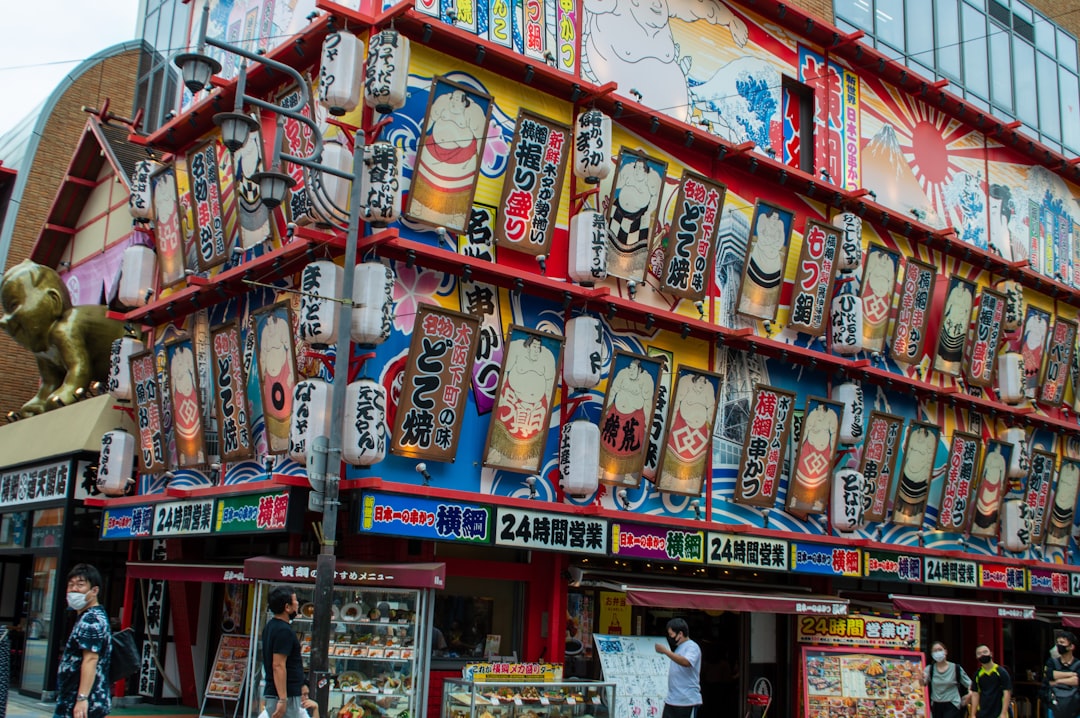
What makes Kuramae special for creative travelers isn’t just the shops — it’s the texture of the whole neighborhood. You’ll pass a Buddhist family altar shop that’s been there since the Meiji era, then immediately walk into a minimal design studio selling hand-poured soy candles in apothecary bottles. The contrast isn’t jarring; it feels like exactly how a living city is supposed to work, with decades layered on top of each other without apology.
Small Galleries and Pop-Ups
Keep your eyes open for hand-lettered signs in windows announcing weekend pop-up markets and small exhibitions — Kuramae has a habit of hosting these quietly, with almost no digital footprint. The best ones I’ve stumbled into involved a printmaker selling risograph zines from a folding table and a textile artist demonstrating indigo dyeing in a doorway barely wider than my shoulders.
On my last visit, just before sunset on a Friday, I turned a corner near the river end of the arcade and found a ceramicist sitting outside her studio drinking green tea and letting people handle her work — irregular, smoke-fired yunomi cups that felt like holding something the earth had decided to make. She handed me one filled with warm tea without saying a word, just nodded at the cup like she was letting me understand it rather than sell it to me. I bought two.
Making the Most of Your Kuramae Visit
Kuramae Nakamise rewards slow travel and genuine curiosity more than any checklist approach. If you’re the kind of creative traveler who finds more meaning in a ten-minute conversation with a bookbinder than in photographing the same temple shot as ten thousand other tourists, this neighborhood will feel like it was made specifically for you. Go on a weekday, go slow, talk to the makers when they’re not rushed, and leave room in your bag — and your schedule — for the unexpected. Tokyo has many faces, and the one it wears in Kuramae is one of the most honest and quietly beautiful you’ll ever see.