There’s a moment — and every first-time visitor to Tokyo knows it — when the city stops feeling overwhelming and starts feeling like magic. For me, that moment happened at Senso-ji Temple in Asakusa. You step through Kaminarimon Gate, that iconic red-and-black structure with the enormous paper lantern swaying overhead, and suddenly the noise of modern Tokyo softens. What replaces it is something older, warmer, and completely impossible to describe until you’re standing right in the middle of it.
I still remember the first time I walked through that gate on a crisp October morning. The smell hit me first — sweet smoke from incense burners curling up toward a pale blue sky, mixing with the sugary warmth of freshly grilled senbei rice crackers from a nearby stall. The cobblestones beneath my feet were already worn smooth by millions of footsteps before mine, and the soft clatter of wooden sandals from a woman in a kimono passing by made me feel like I’d accidentally slipped through a fold in time. My heart genuinely raced.
If you’re visiting Senso-ji and Nakamise Shopping Street for the first time, you’re in for one of Tokyo’s most sensory, rewarding experiences. But without a little guidance, it’s easy to blow your yen on trinkets you’ll never use and miss the genuinely special stuff. This guide is here to fix that.
Understanding Nakamise: More Than a Tourist Trap
Let’s get one thing straight: Nakamise Shopping Street gets a bad reputation from jaded travelers who breeze through expecting it to be nothing but cheap keychains and plastic katana. And yes, some of that is there. But if you know where to look — and what to look for — Nakamise is one of the best places in all of Tokyo to pick up authentic, meaningful souvenirs and genuinely delicious local snacks.
The street stretches roughly 250 meters from Kaminarimon Gate to the temple’s inner precinct, lined with about 90 shops. Many of these family-run stalls have been operating for generations. The trick for first-timers is to walk the entire length once without buying anything. Just look, smell, taste the free samples, and get your bearings. Then double back for what actually called to you.
The Best Time to Visit for First-Timers
Go early. I cannot stress this enough. On my third visit to Tokyo I finally got smart and arrived at Nakamise by 8:00 a.m., before the tour groups descended. The vendors were just rolling up their shutters, the light was golden and low, and a few elderly locals were making their morning rounds to the temple. It felt like a completely different place — calm, intimate, almost sacred. Most shops open by 9:00 a.m. and the crowds build fast after 10:30 a.m., especially on weekends. Early morning is your golden window.
If your schedule only allows a midday or afternoon visit, don’t despair — just brace for the crowd and lean into the energy. Evening visits after 5:00 p.m. can also be beautiful, especially in autumn when the lanterns glow amber against darkening skies.
Souvenirs Worth Every Yen
As a first-time visitor, you want to bring home things that actually represent Japan — not things manufactured overseas and slapped with a Mount Fuji sticker. Here’s what I genuinely recommend from Nakamise.
Tenugui (Hand-Dyed Cotton Towels)
These thin, flat cotton cloths printed with traditional Japanese motifs are one of the most versatile and culturally authentic souvenirs you can find. They’re lightweight (a dream for first-timers traveling with carry-on only), affordable (typically ¥500–¥1,500), and genuinely useful — as a hand towel, a gift wrap, a wall hanging, or a bandana. Look for shops selling hand-dyed versions rather than screen-printed ones; the colors are richer and the craftsmanship shows.
Kokeshi Dolls and Wooden Crafts
Traditional wooden kokeshi dolls make beautiful, lightweight gifts. Several stalls along Nakamise sell hand-painted versions with faces so individual they feel like tiny personalities. I once watched an older craftsman at a stall near the inner gate carefully paint eyebrows onto a small doll with a single-hair brush. He glanced up, noticed me staring, and said simply, “Each one is different.” He was right, and I bought two.
Folding Fans (Sensu)
Practical and gorgeous. For first-time visitors arriving in summer, a quality folding fan is both a souvenir and a survival tool against Tokyo’s humid heat. Look for ones with wooden frames and hand-painted designs — these typically start around ¥1,000–¥2,000 and are genuinely made with care.
Omamori (Good Luck Charms)
Purchased directly from the Senso-ji temple itself (not the street stalls), omamori are small fabric amulets blessed for specific purposes — safe travel, good health, love, success in studies. They’re inexpensive (usually ¥500–¥1,000), deeply meaningful, and make thoughtful, personal gifts for people back home. First-time visitors often don’t realize you can buy these at the temple’s own counters inside the main hall complex.
Local Treats You Must Eat on Nakamise
This is where Nakamise truly earns its place in your Tokyo itinerary. The food stalls along this street serve snacks with real history, made fresh in front of you. Skip lunch before you come.
Ningyo-yaki (Doll-Shaped Cakes)
These small, golden-brown cakes molded into the shapes of lanterns, pigeons, and the famous Kaminarimon gate are filled with sweet red bean paste (anko) and cooked on cast-iron presses right before your eyes. They’re warm, pillowy, slightly crisp on the outside, and taste like everything good about Japanese wagashi confectionery. They cost around ¥600–¥800 for a small bag and are still warm when you eat them on the street. Don’t wait until you get back to your hotel — eat them immediately.
Agemanju (Deep-Fried Steamed Buns)
If you see a line forming at a stall, there’s a good chance they’re selling agemanju — and you should join that line. These deep-fried buns filled with sweet bean paste emerge golden and crackling from the oil. The outside shatters when you bite through it; the inside is soft and sweet. I’ve eaten agemanju all over Japan and the ones on Nakamise are some of the best I’ve had anywhere. One piece costs about ¥150–¥200. Budget accordingly, because you will want more than one.
Senbei (Japanese Rice Crackers)
You’ll smell these before you see them — the savory, slightly smoky scent of soy-glazed rice crackers being grilled over charcoal. Senbei stalls are scattered throughout Nakamise and offer samples freely. Some are sweet, some savory, some coated in nori (seaweed). They make excellent, packaged-for-travel gifts and many shops will vacuum-seal your selection. A small assorted box runs about ¥800–¥1,500.
Melonpan Ice Cream
A slightly newer addition to the Nakamise snack scene but one that first-timers absolutely love: a thick slice of soft serve ice cream sandwiched inside a freshly baked melonpan (a sweet, dome-shaped bread with a crisp sugar crust). It’s indulgent, photogenic, and uniquely Japanese. Perfect for that mid-morning sugar boost around 10:00 a.m.
Practical Tips for First-Time Visitors
Cash is king. Most Nakamise stalls are cash-only. Bring yen — at minimum ¥5,000 if you want to buy a few souvenirs and eat your way down the street comfortably.
Bags fill up fast. Many stalls offer small paper bags, but bring a tote bag of your own. You’ll accumulate small packages quickly and juggling them in a crowd is miserable.
Respect the temple. Remember that Senso-ji is an active place of worship, not just a backdrop. When you reach the main hall, watch how locals approach — washing hands at the temizuya fountain, waving incense smoke toward themselves, tossing a coin and bowing to pray. Follow their lead quietly. It takes three minutes and changes everything about how the experience feels.
Don’t ignore the side streets. The narrow lanes branching off Nakamise — particularly Orange Street (Dempoin-dori) to the west — hide some of the most charming, less-visited shops in all of Asakusa. Independent ceramics sellers, tiny tea shops, vintage kimono dealers. This is where I stumbled on a tiny shop selling hand-painted chopstick rests for ¥300 each — the best gift I’ve ever brought home from Japan.
Before You Leave: One Last Moment
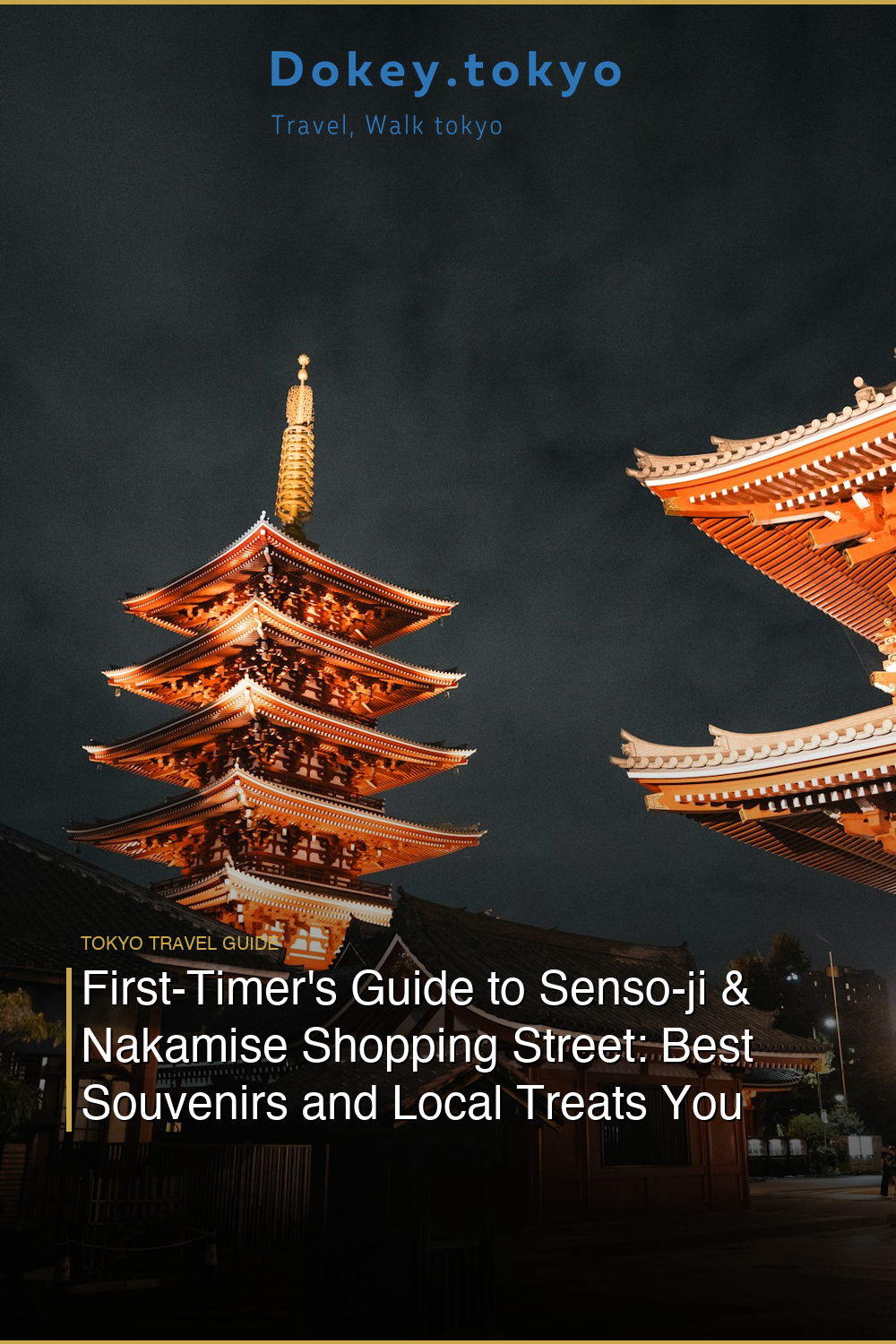
Before you finally turn back toward the subway, do this: find a quiet spot in the temple courtyard, ideally near the five-story pagoda, and just stop moving. On my most recent visit, I stood there at dusk with a half-eaten stick of mitarashi dango — those glutinous rice dumplings glazed in sweet-savory soy sauce — watching the lanterns inside the main hall flicker on one by one as the sky turned indigo. A group of schoolchildren in matching yellow hats were making wishes at the incense burner, and an elderly man beside me was murmuring something soft and private to the temple. The dango was warm and sticky in my fingers, the smoke was thick and sweet, and I thought: this is the Tokyo I came back for.
Your First Visit Won’t Be Your Last
Senso-ji and Nakamise Shopping Street have a way of doing that — making first-time visitors into repeat visitors. The temple has stood in some form since 645 AD, and Nakamise has been feeding and equipping pilgrims for centuries. When you walk through that red gate for the first time, you’re joining a very long, very beautiful line of people who arrived curious and left changed.
Go early, eat the agemanju while it’s hot, buy the tenugui, and say a quiet thank-you at the incense burner. Tokyo has dozens of neighborhoods worth your time, but this one will stay with you long after your flight home.