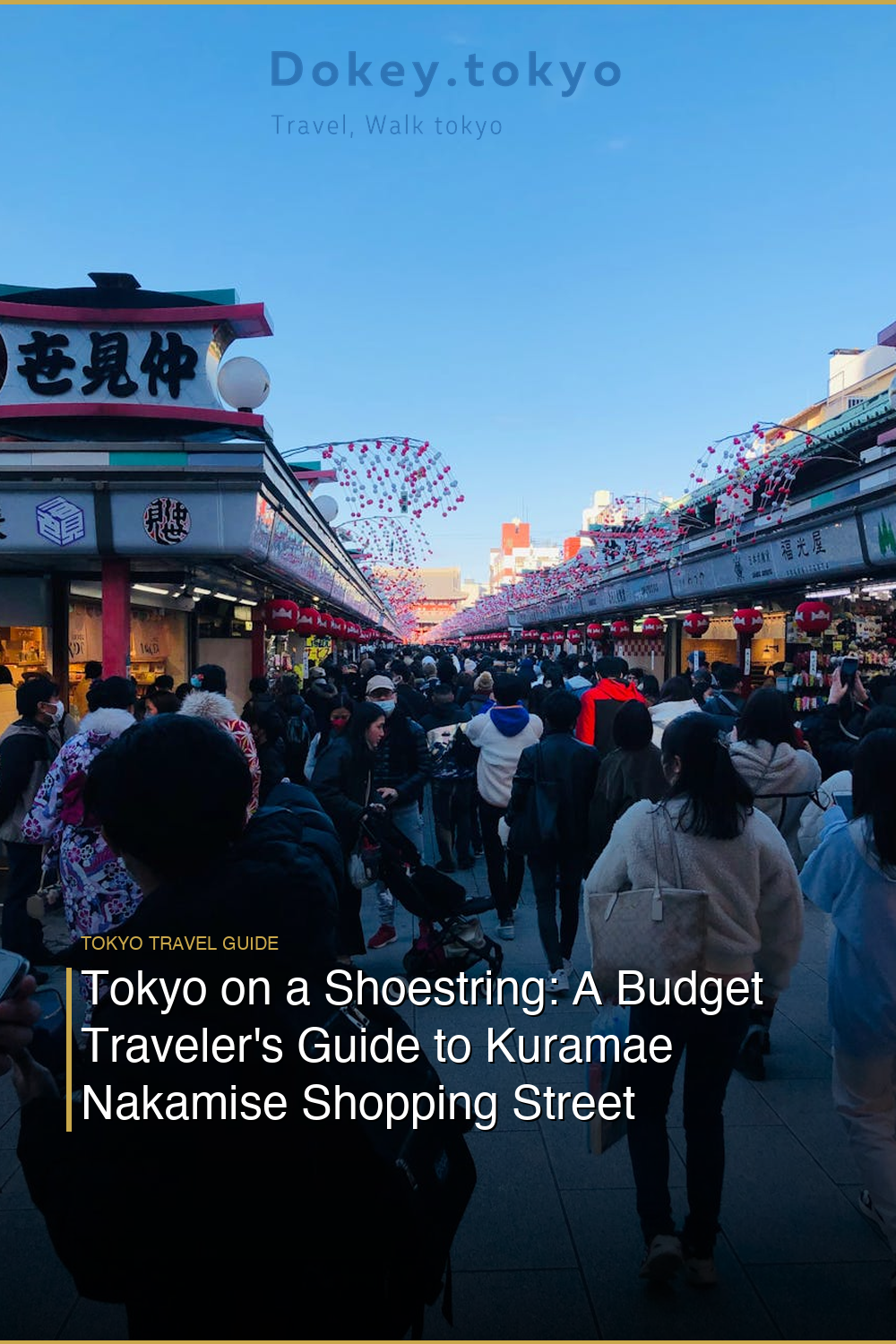
If you’ve been told that Tokyo will drain your wallet faster than a vending machine drinks your coins, I’m here to gently, enthusiastically prove you wrong. Kuramae Nakamise shopping street sits tucked into the Kuramae neighborhood on the eastern bank of the Sumida River — a short walk from the tourist thunder of Asakusa — and it is, without question, one of the most rewarding budget discoveries I’ve made in this city across multiple trips. We’re talking handmade crafts under ¥500, street snacks for ¥200, and the kind of unhurried, locals-first atmosphere that makes you feel like you’ve stumbled into Tokyo as it actually lives, not Tokyo as it performs for tour groups.
I still remember the first time I turned off the main Asakusa drag and found myself on the quieter stretch leading toward Kuramae on a late October morning. The air smelled faintly of roasting sesame and cedar wood shavings drifting from a tiny workshop with its shutters propped open. A cat was asleep on a ceramic pot display. Two elderly women in matching floral aprons were debating something passionately over a tray of wrapped sweets. The whole street glowed with that low, golden autumn light that Tokyo does better than anywhere, and I thought: this is the version of this city I want people to find.
Why Kuramae Nakamise Is a Budget Traveler’s Secret Weapon
Let’s get practical right away, because that’s what budget travel demands. Kuramae Nakamise is not a sanitized tourist corridor. It’s a working neighborhood shopping street — the kind Japanese locals call a shōtengai — where prices haven’t been inflated by Airbnb-era foot traffic. Here, you’re buying closer to the source, often directly from the maker. This stands in sharp contrast to famous shopping areas like Senso-ji and Nakamise, where the same souvenir items carry significant tourist markups.
Your average daily budget in Tokyo as a serious backpacker runs ¥5,000–¥7,000 (roughly $35–$50 USD). A good Kuramae Nakamise haul — snacks eaten, gifts sorted, one quality craft item purchased — will cost you ¥2,000–¥3,000 if you’re disciplined. That leaves plenty for a ramen dinner and a night bus.
The Best Souvenir Shops for Tight Budgets
Handmade Stationery and Paper Crafts
Kuramae has quietly become Tokyo’s craft paper and stationery district, and the Nakamise street feeds directly into that identity. Several small shops here sell washi (Japanese handmade paper) products — notebooks, envelopes, origami sheets — at prices that would make the boutiques of Ginza weep. Look for single-sheet washi wrapping paper at ¥150–¥300 per sheet; these make stunning, flat-packable gifts that won’t wreck your luggage weight limit.
One shop I keep returning to stocks handbound notebooks with covers made from recycled kimono fabric. They range from ¥400–¥900 depending on size. For a budget traveler trying to bring home something genuinely beautiful and uniquely Japanese without spending ¥3,000 on a lacquer box, this is the answer.
Candy and Traditional Confectionery Shops
A handful of dagashi (old-school penny candy) shops and traditional wagashi makers line the street, and they are a budget traveler’s paradise. Dagashi — the nostalgic, colorful Japanese childhood sweets — sell for as little as ¥30–¥100 per piece and make the most charming, lightweight souvenirs imaginable. Grab a paper bag and fill it for under ¥500. The shopkeepers tend to be delightfully enthusiastic about helping foreigners pick favorites, pointing and miming taste reactions with theatrical commitment.
For slightly more upscale gifting on a budget, look for individually wrapped yokan (sweet bean jelly blocks) and konpeitō (star-shaped sugar candy) sold in small decorative tins. These typically run ¥300–¥600 and look far more expensive than they are — exactly what budget souvenir shopping is about.
Craft Tools and Artisan Supplies
Because of Kuramae’s artisan identity, you’ll find shops selling small craft tools — leather-working stamps, calligraphy brushes, hand-carved wooden stamps — that double as unusual, meaningful souvenirs. A single quality calligraphy brush can be had for ¥200–¥500. I once bought a set of three ink stones as gifts for under ¥800 total from a shop that also supplies local bookbinders. The owner told me, through a patient mix of Japanese and hand gestures, that the same set sold for four times the price in Shinjuku department stores. For similar artisan shopping experiences, Koenji’s antique shops offer comparable value and character.
Street Food on the Kuramae Nakamise: Eating Well for Under ¥1,000
Morning Snacks and Breakfast Bites
If you arrive between 8:00–10:00 AM — and as a budget traveler, you should, because this is when the freshest items appear and the street is blissfully uncrowded — you’ll find vendors setting up with freshly made tamagoyaki (rolled egg omelet) cut into bite-sized pieces for ¥150–¥200 a portion. Eat it standing at the small counter the vendor sets up on the pavement. It’s warm, slightly sweet, and faintly smoky, and it will ruin all future eggs for you.
A small bakery tucked near the middle of the street (look for the hand-painted bread sign above a narrow door) makes an anpan — sweet red bean bun — for ¥180 that I have thought about on every subsequent trip. Soft, pillowy, with a thin sesame-crusted top that crackles when you bite through it.
Lunchtime Street Eats
The lunch window from 11:30 AM to 1:30 PM brings out more substantial options. A rotating cast of small stalls and shop-front windows serve onigiri (rice balls) for ¥120–¥200, yakitori skewers for ¥150–¥180 each, and my personal budget-lunch formula: two onigiri plus one yakitori skewer plus a ¥100 canned tea from the nearest vending machine = ¥550 total and you are completely satisfied.
There’s also usually at least one vendor selling dorayaki — the pancake-sandwich filled with sweet azuki bean paste — for ¥200. Buy two. You’ll eat one immediately and immediately regret not buying four.
Late Afternoon Sweet Treats
Around 3:00–4:00 PM, a small cart near the southern end of the street typically appears with kakigōri (shaved ice) in summer and amazake (warm, mildly sweet fermented rice drink) in cooler months. Both are ¥200–¥300. The amazake is particularly special in autumn and winter — earthy, gently warming, nothing like the sickly-sweet versions sold at tourist spots.
Practical Budget Tips for Navigating Kuramae Nakamise
Get there by subway, not taxi. The Asakusa Line and Ōedo Line both stop at Kuramae Station, making this one of the most transit-accessible budget shopping streets in eastern Tokyo. From Asakusa Station it’s a 12-minute walk along the river — entirely flat, entirely lovely, and free.
Bring cash in small denominations. Many of the small craft shops and stall vendors are cash-only, and they don’t always have change for large bills. Load up with ¥100 and ¥500 coins before you arrive. The convenience store ATMs near Kuramae Station (7-Eleven and FamilyMart both have international-compatible ATMs) are your best bet.
Visit on weekday mornings for best prices and least crowds. Weekends draw more foot traffic, and while the street never reaches Asakusa levels of chaos, some vendors raise prices slightly or run out of fresh items earlier. Weekday mornings are when the shopkeepers have time to chat, show you things from the back shelf, and occasionally throw in a free sample.
Shop the ‘end of day’ window. Around 5:00–5:30 PM, food vendors begin discounting perishables — fresh sweets, bakery items, prepared snacks. This is prime budget traveler territory. I’ve picked up entire trays of freshly made mochi for ¥300 this way, clearly priced to sell before the vendor packs up.
Don’t skip the vending machine walls. Several spots along the street have dense clusters of vending machines selling not just drinks but small snacks, cup noodles, and even basic toiletries. The machines here tend to be cheaper than the ones near Senso-ji or Tokyo Skytree, for no apparent reason other than tourist-tax logic.
Best Time to Visit Kuramae Nakamise on a Budget Trip
Honestly? Any season rewards a visit, but autumn (late September through November) and spring (March through early May) are peak value seasons. The weather means you’re comfortable standing and eating at street stalls without sweating through your backpack straps or huddling against the cold, and the seasonal food items — chestnut wagashi in autumn, sakura-flavored everything in spring — are at their freshest and most affordable before they start appearing in Shibuya at triple the price.
Summer mornings before 9:00 AM are magical if you can drag yourself out early enough — the street has an almost private, pre-tourist feel, the light is extraordinary, and the cold drink vendors are your best friends.
It was on one of those early summer mornings, around 8:15 AM on my fourth visit to Tokyo, that I sat on a low concrete step near a ceramic shop and ate a warm tamagoyaki with my fingers while a shop owner across the narrow street swept his entrance with a long bamboo broom in slow, methodical arcs. He caught me watching, nodded once with great seriousness, and went back to his sweeping. In that moment, with sesame and egg on my fingers and the Sumida River breeze just reaching the street, I felt more genuinely present in Tokyo than I ever had at any landmark.
Your Kuramae Nakamise Budget Checklist
Before you leave, here’s the fast-reference budget breakdown to keep in your notes app:
- Street food breakfast: ¥200–¥400
- Lunch (onigiri + yakitori): ¥450–¥600
- Afternoon snack: ¥200–¥300
- Souvenir budget (washi goods, dagashi, small crafts): ¥1,000–¥2,000
- One quality craft item (notebook, brush, small ceramic): ¥400–¥900
- Total day spend on Kuramae Nakamise: ¥2,250–¥4,200
That’s a full, rich, genuinely memorable Tokyo experience for between $15–$30 USD. When someone tells you Tokyo isn’t a budget destination, send them here first.