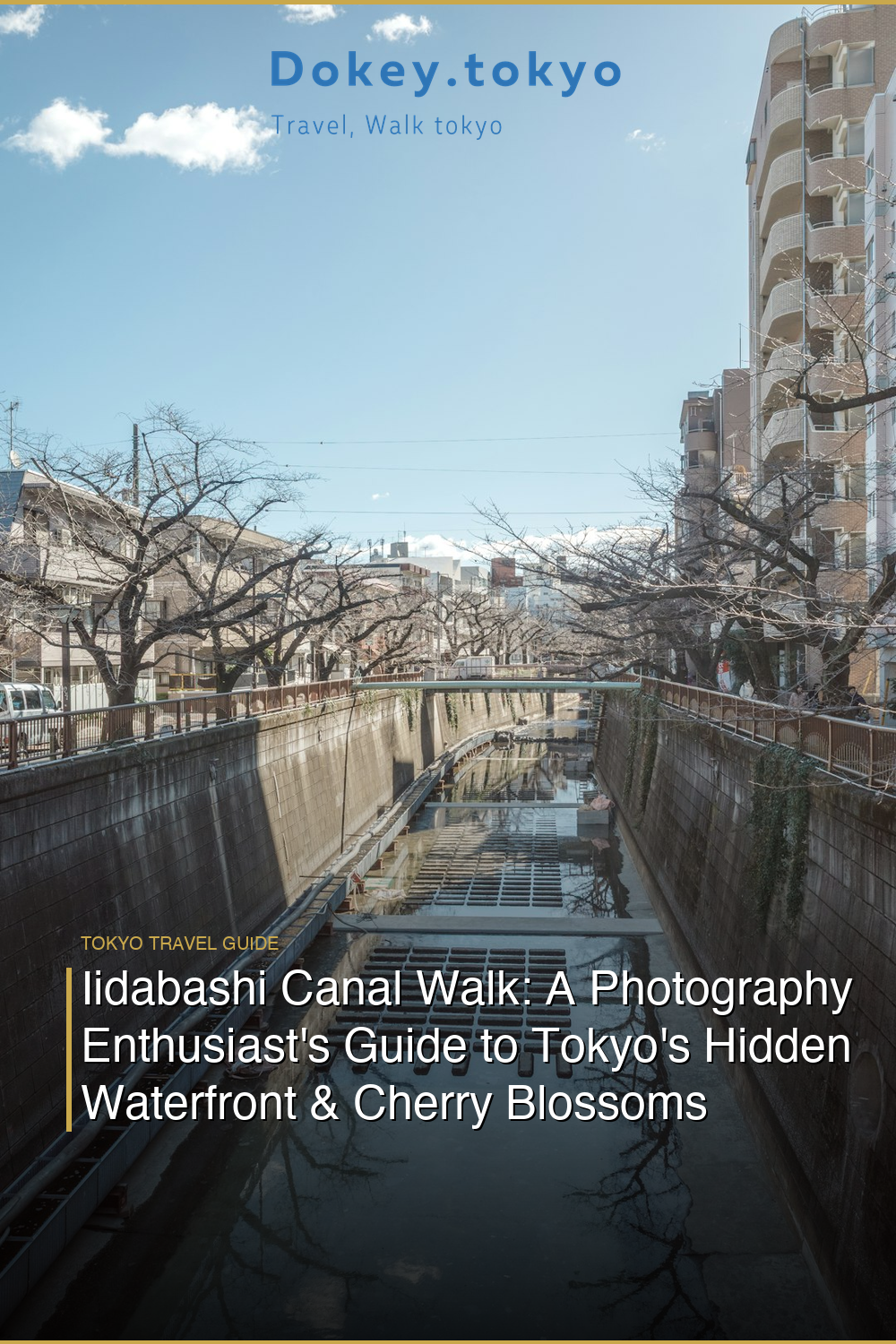
If you’ve already photographed Shinjuku Gyoen and Ueno Park during cherry blossom season and you’re hungry for something that doesn’t involve elbowing through a crowd of ten thousand people, let me tell you about the stretch of waterway that quietly became my favorite shooting location in all of Tokyo. The Iidabashi canal walk — running along the Kanda River and the outer moat of the Imperial Palace near Chidorigafuchi — is the kind of place that rewards photographers who do their homework. It’s not invisible on the internet, but it’s nowhere near as saturated as the big-name sakura spots, and the compositions you can pull here are genuinely world-class.
I still remember the first morning I arrived at the Sotobori (outer moat) stretch near Iidabashi Station before sunrise. It was late March, maybe 5:40 in the morning, and the air smelled like cold stone and something faintly sweet I couldn’t place — it turned out to be the cherry blossoms releasing their fragrance before the crowds and the exhaust fumes arrived. The canal surface was completely still, and the pink canopy overhead was reflected so perfectly in the water below that I genuinely stood there for a full minute without raising my camera, just breathing it in. That moment, that particular quality of silence and soft pre-dawn light diffusing through petals, is what I chase every time I book a flight back to Tokyo.
Why Iidabashi is a Photographer’s Secret Weapon
🗾 Book on Viator: Capture Tokyo’s Night Photography Like a →
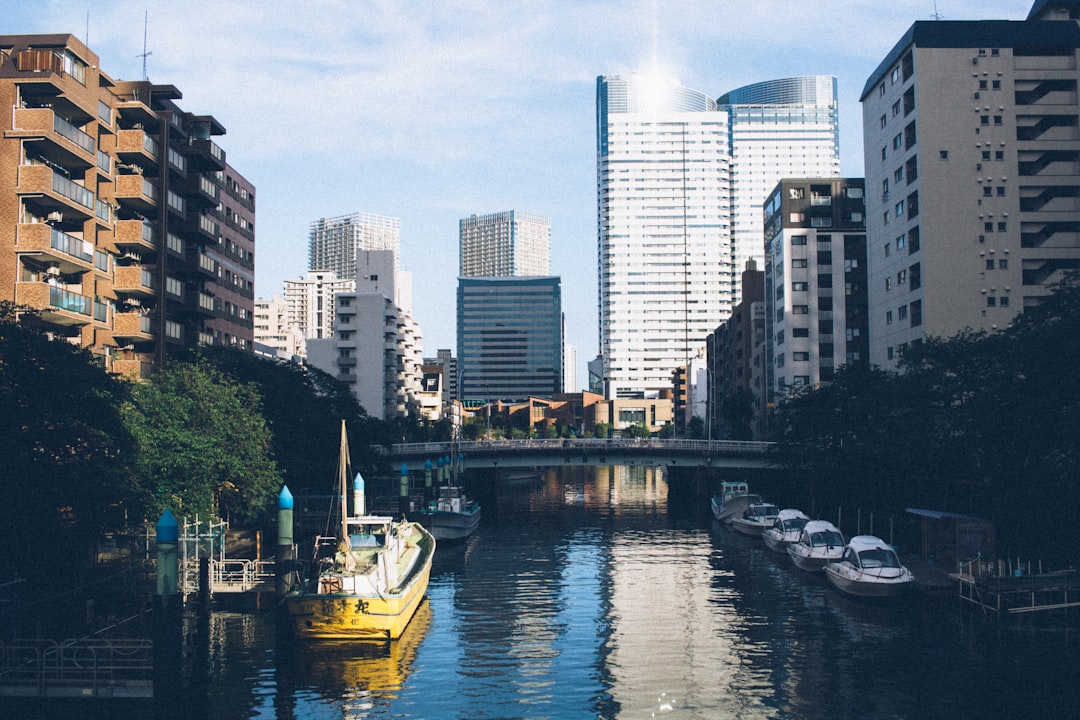
Most visitors who come to Tokyo for cherry blossoms make a beeline for Ueno or Yoyogi. Both are beautiful, both are absolutely worth visiting — but they’re also overwhelming, especially if you’re trying to compose a clean shot that doesn’t include seventeen selfie sticks. Iidabashi offers something fundamentally different: a linear, walkable canal corridor where the sakura trees arch directly over the water, creating natural tunnel-like compositions that are almost impossible to replicate anywhere else in the city.
The primary shooting zone runs from Iidabashi Station (exit B3 on the Tokyo Metro Yurakucho Line) along the Chidorigafuchi moat toward Kudanshita, a distance of roughly 700 meters. But the smarter move for photographers is to extend your walk in both directions along the Kanda River tributary canals, which deliver entirely different aesthetics — narrower channels, lower bridges, and the occasional traditional wooden boat that looks like it wandered in from another century.
Gear Recommendations for This Location
You don’t need a professional kit to shoot here, but a few gear choices will significantly improve your results. A wide-angle lens (16-24mm equivalent) captures the full tunnel effect of the overhanging branches. A longer focal length (85-135mm) is perfect for compressing the reflections in the water and isolating individual blossom clusters against the soft cityscape behind them. A polarizing filter is genuinely useful for controlling reflections on the canal surface — I use one about 70% of the time here depending on cloud cover. And please, bring a small travel tripod or at minimum a gorilla pod for your pre-dawn and blue-hour work. The light is too extraordinary to lose to camera shake.
The Golden Hours: When to Shoot and Where to Stand
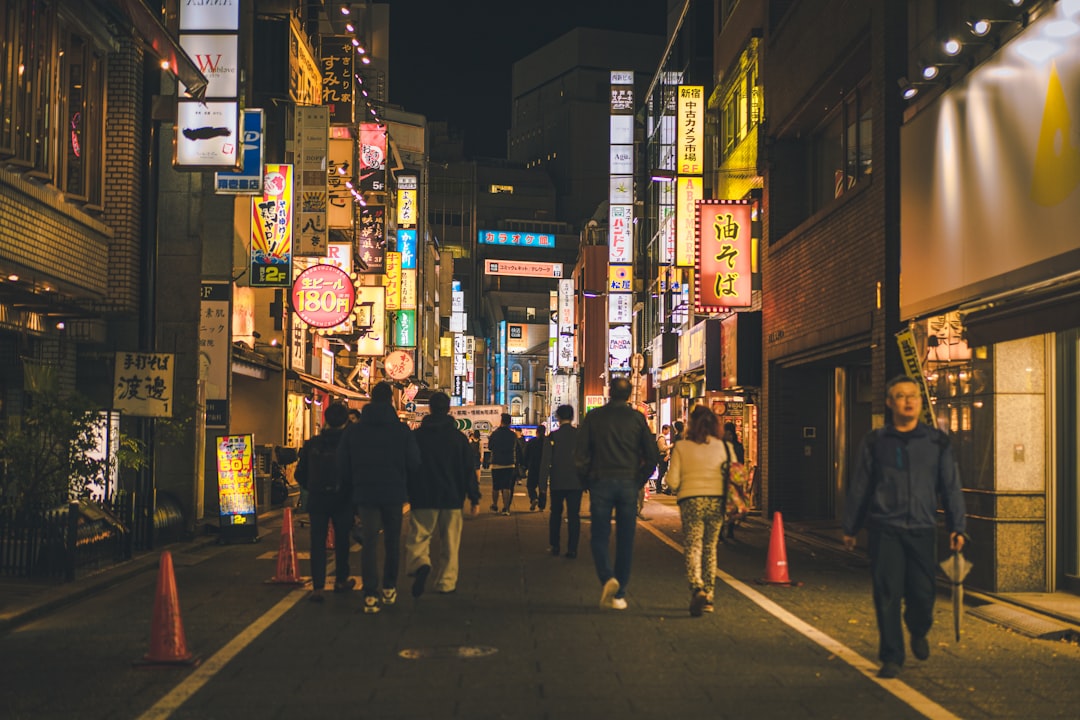
Timing is everything at Iidabashi, and I mean this more literally here than at most locations. The canal runs roughly east to west in certain sections, which means the light physics change dramatically throughout the day.
Pre-dawn to 7:30 AM is the undisputed crown jewel. The canal is glassy calm before foot traffic disturbs the air, the petals are closed and waxy-looking (which actually photographs beautifully in blue hour), and the surrounding buildings go from dark silhouettes to warm amber tones as the sun crests the skyline. This is when you want to be positioned at the lower embankment level, shooting toward the brightening sky so you have blossoms framing the light source.
Late afternoon, 4:00–6:00 PM, brings an entirely different gift. The sun drops low and comes in at an angle that sets the sakura petals backlit and almost translucent — that luminous quality where each petal seems to glow from within. Position yourself on one of the small arched stone bridges looking east, and you’ll have the last sunlight catching the blossom edges with the canal receding into soft bokeh behind them. This golden-hour light is similar to what you can capture at other Tokyo locations like Shibuya Sky Observatory, but the natural setting here offers an entirely different composition.
Blue hour after sunset is criminally underrated here. The stone embankment walls take on a deep blue-grey tone, the city lights begin reflecting in fragments across the water, and the remaining blossoms go from pink to almost lavender. If there’s a light mist on the water — which happens maybe three nights per blossom season — the photographs look like they were staged by a film director.
The Hidden Angle Almost Nobody Uses
Here’s the specific discovery that changed my Iidabashi shooting sessions entirely: the view from water level. There are rented rowboats available at Chidorigafuchi Boat House (千鳥ヶ淵ボート場) during cherry blossom season, and getting into one of those boats and shooting upward through the canopy from the surface of the moat is unlike anything you can capture from land. The perspective is completely disorienting in the best possible way — petals falling directly onto the water around you, the canopy closing overhead, the city disappearing entirely. I once shared a boat with a retired Tokyo schoolteacher named Kenji who told me, in careful English, that he’d rowed this moat every spring for thirty years. “It is the same,” he said, gesturing at the blossoms. “It is never the same.” I’ve thought about that sentence every cherry blossom season since.
Eating and Refueling Without Losing the Light
Shooting seriously means managing your energy, and Iidabashi’s immediate neighborhood is excellent for this. The area around the station — particularly the Kagurazaka side — is one of Tokyo’s most charming dining districts, full of narrow lanes hiding excellent small restaurants. If you’re interested in exploring more of Tokyo’s culinary hidden gems, the depachika gourmet basement guide offers insights into another side of Tokyo’s food culture.
For early morning sessions, the Family Mart convenience store near the B3 exit is your friend. I know, I know — but a hot canned coffee and a tamago sando (egg salad sandwich) at 5:30 AM when you’re setting up your tripod in the cold is not something to be embarrassed about. It’s a Tokyo rite of passage.
After your morning session, walk up the hill into Kagurazaka for proper breakfast or a late-morning brunch. The French bakeries along the main street reflect the area’s historical connection to the French community in Tokyo — there are genuine croissants here, and they are genuinely good. For something more local, look for the small kaiseki lunch spots tucked into the cobblestone alleyways (横丁, yokocho). A bowl of warm soba after two hours in the pre-dawn chill is one of life’s more underrated pleasures.
Practical Photography Tips Specific to Cherry Blossom Season
A few hard-won practical notes for shooting Iidabashi during peak sakura season:
Arrive before 6:00 AM or after 7:30 PM. Between approximately 8:00 AM and 5:00 PM, the walking path along the moat becomes crowded enough that clean landscape shots require significant patience and some creative cropping. The crowds aren’t unmanageable — this is not Ueno — but they will appear in your frame.
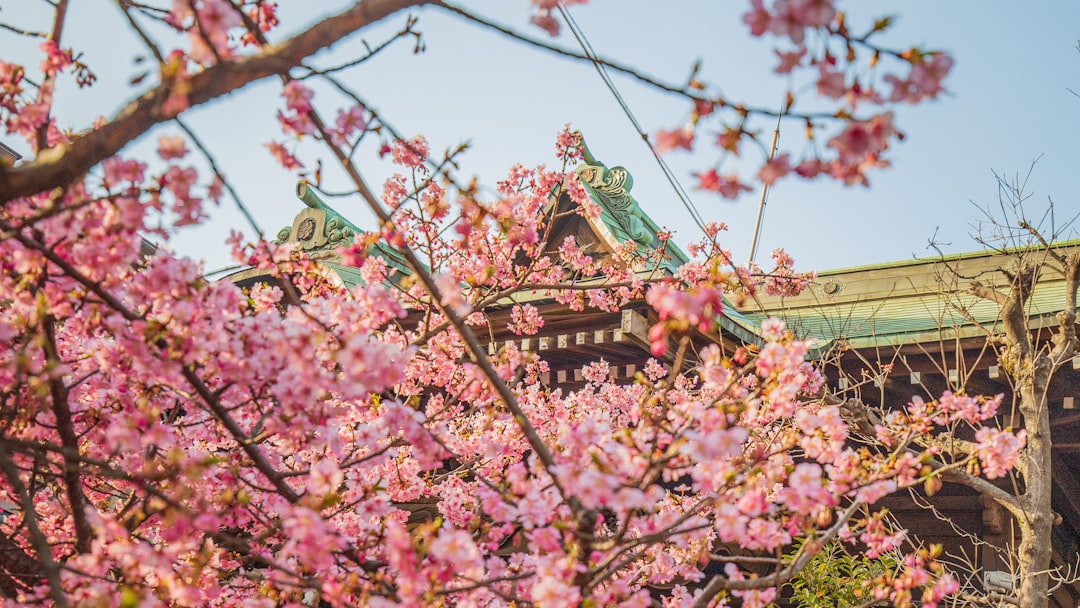
Check the sakura forecast obsessively. Japan Meteorological Corporation publishes updated bloom predictions, and the Tokyo Sakura Guide (multiple websites) tracks daily petal-drop percentage. You want to be there for “mankai” (full bloom) AND the first two days of petal fall, which creates the magical “hanafubuki” (flower blizzard) effect on the water’s surface.
Bring a rain jacket regardless of the forecast. Not for rain, necessarily, but because the embankment walls are mossy and your knees will be wet if you’re shooting low-angle work, which you absolutely should be.
The boats sell out. Chidorigafuchi Boat House begins taking visitors on a first-come basis with no reservations during blossom season. Arrive by 9:00 AM if you want to guarantee a boat, or accept a potentially long queue.
The Moment That Made This Place Mine
On my fourth visit to Iidabashi, I stayed later than I’d planned into the evening, packing up my camera around 8:00 PM. I stopped at a tiny yakitori stall I’d never noticed before — just a folding table and a charcoal grill under a blue tarp strung between two cherry trees — and ordered tsukune (chicken meatball skewers) from a man who looked about seventy and clearly found my enthusiasm for his grill deeply amusing. The smoke from the charcoal mixed with the cold air and the last petals falling from the trees overhead, and a few of those petals landed directly on my skewer while I was eating it. I didn’t remove them. The tsukune tasted like soy and char and something I can only describe as “the end of a perfect day,” and I stood there alone in the half-dark eating six skewers and watching the canal go black and mirror-bright under the city lights.
Planning Your Iidabashi Photography Trip
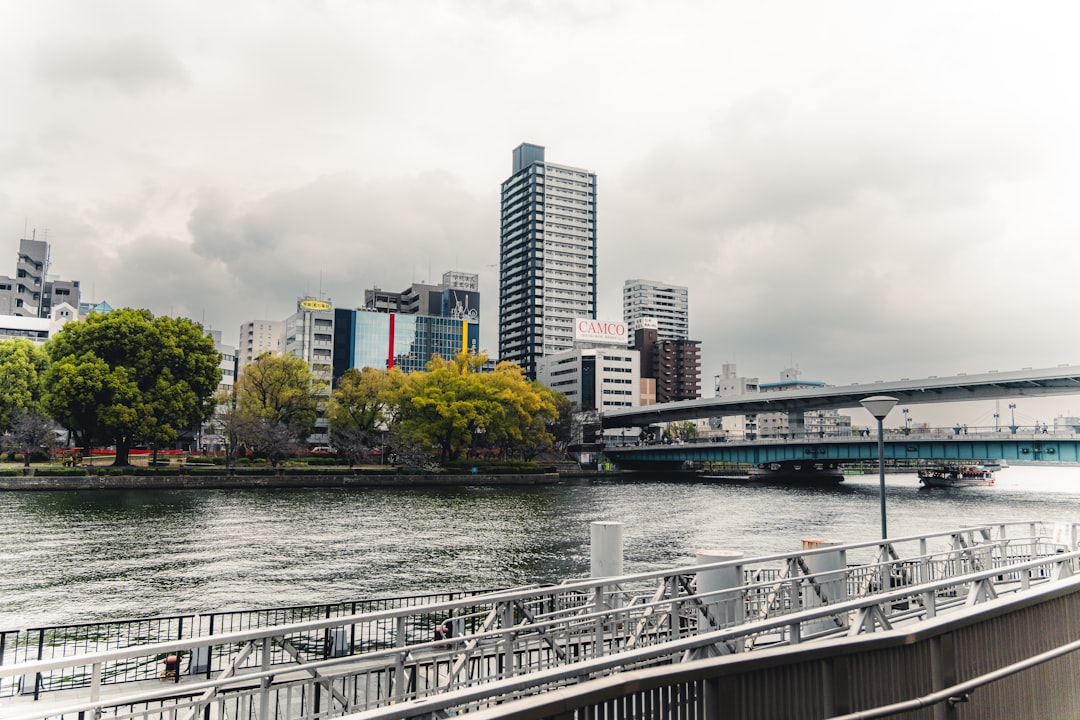
Iidabashi Station is served by the Tokyo Metro Yurakucho, Namboku, and Tozai lines, as well as the JR Sobu Line — it’s genuinely accessible from virtually anywhere in central Tokyo. The canal walk requires no entrance fee. The boats at Chidorigafuchi cost approximately ¥800 for 30 minutes. Peak cherry blossom season in Tokyo runs late March to early April, shifting slightly year to year with temperature.
For photographers specifically, I’d recommend building at least two dedicated shooting sessions into your Tokyo itinerary: one pre-dawn during peak bloom, and one blue-hour session during or just after full bloom when petal fall begins. If you can manage a third visit mid-week rather than on the weekend, your compositions will thank you. For other photography-focused exploration, consider pairing this with visits to Yanaka Ginza Shopping Street, another excellent location for photography enthusiasts seeking hidden Tokyo gems.
Tokyo rewards the patient, early-rising photographer who’s willing to research beyond the obvious. Iidabashi is proof that the city’s most extraordinary images are still waiting to be found — not discovered for the first time, but found by you, at the right moment, in the right light.
Ready to experience it?
🗾 Book on Viator: Guided photoshoot with cultural experien →