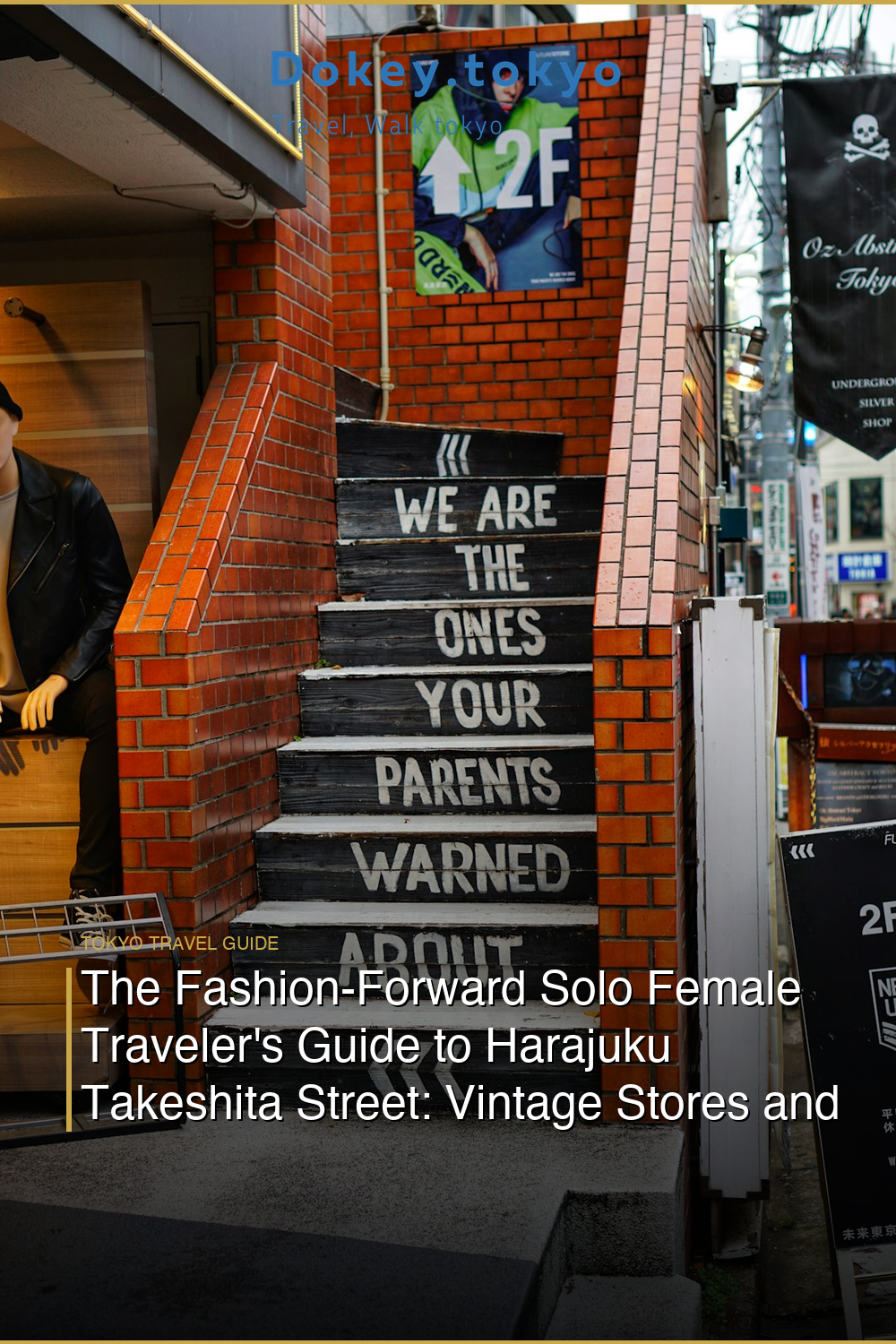
If you’ve ever stood at the entrance of Takeshita Street on a Saturday afternoon and felt that electric, almost overwhelming buzz of color and sound hit you all at once — you already understand why this street owns a permanent piece of your heart. As a solo female traveler who lives for the thrill of a truly great thrift find, I can tell you honestly: Takeshita Street is not just a tourist spectacle. Peel back the crepe stands and the kawaii souvenir shops, and you’ll find one of the most genuinely exciting fashion hunting grounds in the entire world. The secret is knowing where to look — and being willing to duck into alleys, climb narrow staircases, and follow the sound of lo-fi beats drifting from a basement you almost walked past.
I still remember my first time stepping off the Harajuku station platform on a grey Tuesday morning in November, the air sharp with that particular Tokyo cold that smells faintly of roasted chestnuts from a cart near the exit. The street was half-empty at 10am, and the fluorescent shop signs glowed against the overcast sky like neon candy. I had my tote bag slung across my chest, my phone charged to 100%, and the specific, stomach-flip feeling of a city about to give you something unexpected.
Why Solo Female Travelers Thrive on Takeshita Street
Let me settle something first: Takeshita Street is extremely safe for solo women. Japan’s general culture of public safety, the constant foot traffic, and the presence of friendly shop staff — many of them young women around your age — makes this one of the most comfortable solo shopping experiences you’ll have anywhere in Asia. You won’t be hassled. You won’t be followed. You’ll be left gloriously alone to rifle through racks of Y2K slip dresses and 90s Japanese street wear at your own pace.
The street itself runs about 350 meters from Harajuku Station down toward Meiji-dori, but the real magic happens when you stop treating it like a straight line and start treating it like a maze. The side alleys — narrow lanes that branch off at seemingly random intervals — are where the independently owned vintage shops, zine stores, and hole-in-the-wall cafes actually live.
The Best Vintage Stores: Where to Actually Find Good Pieces
Chicago Thrift Store (The Starting Point)
Every serious vintage hunt on Takeshita starts at Chicago, which has been anchoring the street for decades. It’s not hidden, but it is genuinely excellent — three floors of secondhand denim, Showa-era kimonos, Western vintage, and Japanese brand archive pieces. Go straight to the second floor for the most interesting finds. Prices are honest and clearly marked, which as a solo traveler means you never feel pressured to negotiate or perform. I found a perfectly worn Levi’s Type III trucker jacket here for ¥3,800 on my third visit — less than $30. Take your time on the rack at the far left wall; that’s where staff rotate new stock throughout the morning.
Kinji Harajuku (For the Real Bargain Hunter)
Kinji is the kind of store that makes your pulse quicken. It’s a massive secondhand shop with a rapid turnover of stock, and the pricing is genuinely aggressive — most pieces fall between ¥500 and ¥2,000. The trick with Kinji, which a shop assistant named Yuki told me quietly while we were both digging through the same pile of 90s blazers, is to come back on a Wednesday afternoon. That’s when their midweek restock hits the floor and the new pieces haven’t been picked over yet. She said it so matter-of-factly, like it was obvious, but I’d never read it anywhere online. Wednesday afternoon at Kinji is now non-negotiable on every Tokyo trip I take.
The Side-Alley Stores You Need to Find
About two-thirds of the way down Takeshita heading toward Meiji-dori, look for a narrow alley on your right with a small handwritten sign (often in Japanese only) pointing up a staircase. The upper floors of the buildings along this stretch house some genuinely independent vintage dealers — curated collections of 80s Japanese workwear, Harajuku-specific subculture pieces like decora accessories and fairy-kei coordinates, and occasionally archive pieces from labels like Jun Watanabe or early Milk. These shops open late (often not until noon), so plan your visit accordingly if you want to browse them properly.
Hidden Cafes Beyond the Crepe Stands
Kawaii Monster Cafe Is Not What I Mean
Let’s be clear: the Instagrammable maximalist cafes are fun, but they’re not what will make your trip memorable. What you want are the tiny, quiet spots where local Harajuku girls actually decompress between shopping rounds.
Sakura-Do (Find It, Love It)
Tucked behind a vintage accessories shop about halfway down a side alley off the main street, Sakura-Do is a 10-seat cafe run by a woman who has been serving hand-drip coffee and thick Japanese milk toast since the late 1990s. There’s no English menu, but the laminated picture card she hands you makes ordering effortless. Order the coffee jelly parfait (¥780) and the butter toast set — the toast arrives on a wooden board, golden and impossibly thick, with a tiny ceramic dish of cultured butter that you’ll spend the rest of your life trying to replicate at home. The WiFi is strong and the music is always something gentle and jazz-adjacent. As a solo traveler, this is exactly the kind of place where you can sit for 90 minutes, journal, recharge, and plot your next move without anyone rushing you.
Omohara no Mori (The Secret Garden)
This one isn’t technically a secret, but 80% of Takeshita Street visitors never find it because it requires walking past the main drag and turning into a small wooded path near the Omotesando end. Omohara no Mori is a terrace garden cafe underneath a canopy of zelkova trees — in spring the cherry blossom light filtering through makes the whole place look like a film still. Solo visitors get the small corner tables near the wooden fence. Order the seasonal matcha latte and watch the impeccably dressed locals drift past. It costs about ¥600 for a drink and gives you the kind of quiet that Takeshita Street itself never offers.
Practical Tips Filtered for the Solo Female Shopper
Timing your visit: Arrive before 11am on weekdays to shop without the weekend crush. If you must come on a weekend, arrive right at opening time (most shops open at 11am) and work the side alleys first before the main street fills up.
What to carry: A lightweight foldable tote bag is essential — you will buy more than you expect, and plastic bags from shops are charged for in Japan. Bring cash. While many larger stores now accept IC cards and some take credit cards, the independent vintage dealers and small cafes are almost always cash only. ¥15,000–¥20,000 gives you comfortable shopping room for a full day.
Fitting rooms: Japan’s fitting room culture is extremely respectful and private. You will never feel rushed, and staff will offer to hold additional items outside the curtain for you without being asked.
Language: Basic English is functional in most Takeshita shops. Google Translate’s camera function handles Japanese-only menus and signs instantly — download the Japanese language pack offline before you go.
Best season: Late October through early December gives you crisp weather, manageable crowds compared to spring, and the most exciting vintage layering pieces on the racks — coats, knits, and boots start appearing in shop stock from October onward.
The Neighborhood Beyond the Street: Ura-Harajuku
🗾 Book on Viator: Harajuku walking tour near Meiji Shrine →
After you’ve done Takeshita, cross Meiji-dori and enter what locals call Ura-Harajuku (the back streets of Harajuku). This quiet residential-commercial zone is where the higher-end Japanese designer boutiques, independent jewelry makers, and specialty vintage dealers operate out of converted townhouses. Walk slowly. Look up — many shops are above street level with only a small brass plate by the door to announce them. This is where solo female travelers with a fashion focus go from tourist to connoisseur.
On my last visit, deep in Ura-Harajuku at around 4pm when the winter light had gone completely gold and horizontal, I ducked into a tiny archive store I’d never noticed before — the kind with a single rack of hand-selected pieces and a proprietor who looked up and just nodded, no performance necessary. I held up a 1996 Undercover jacket, and she said quietly in English, ‘That one waited for someone.’ I paid ¥12,000 for it, wore it to dinner that night, and have worn it approximately 200 times since.
Making the Most of Your Day
Harajuku rewards the solo female traveler who moves slowly, follows her instincts down unmarked stairs, and lets herself get genuinely lost for an hour. Budget a full day — arrive at 10am, shop the main street before the crowds build, retreat into a side-alley cafe by 1pm, then spend the afternoon in Ura-Harajuku before the shops close around 7–8pm. Eat a matcha crepe standing at the entrance of Takeshita sometime around 3pm — yes, it’s touristy, yes it’s delicious, and yes, it’s 100% the right call.
The city will meet you exactly where you are. Just show up ready to look.