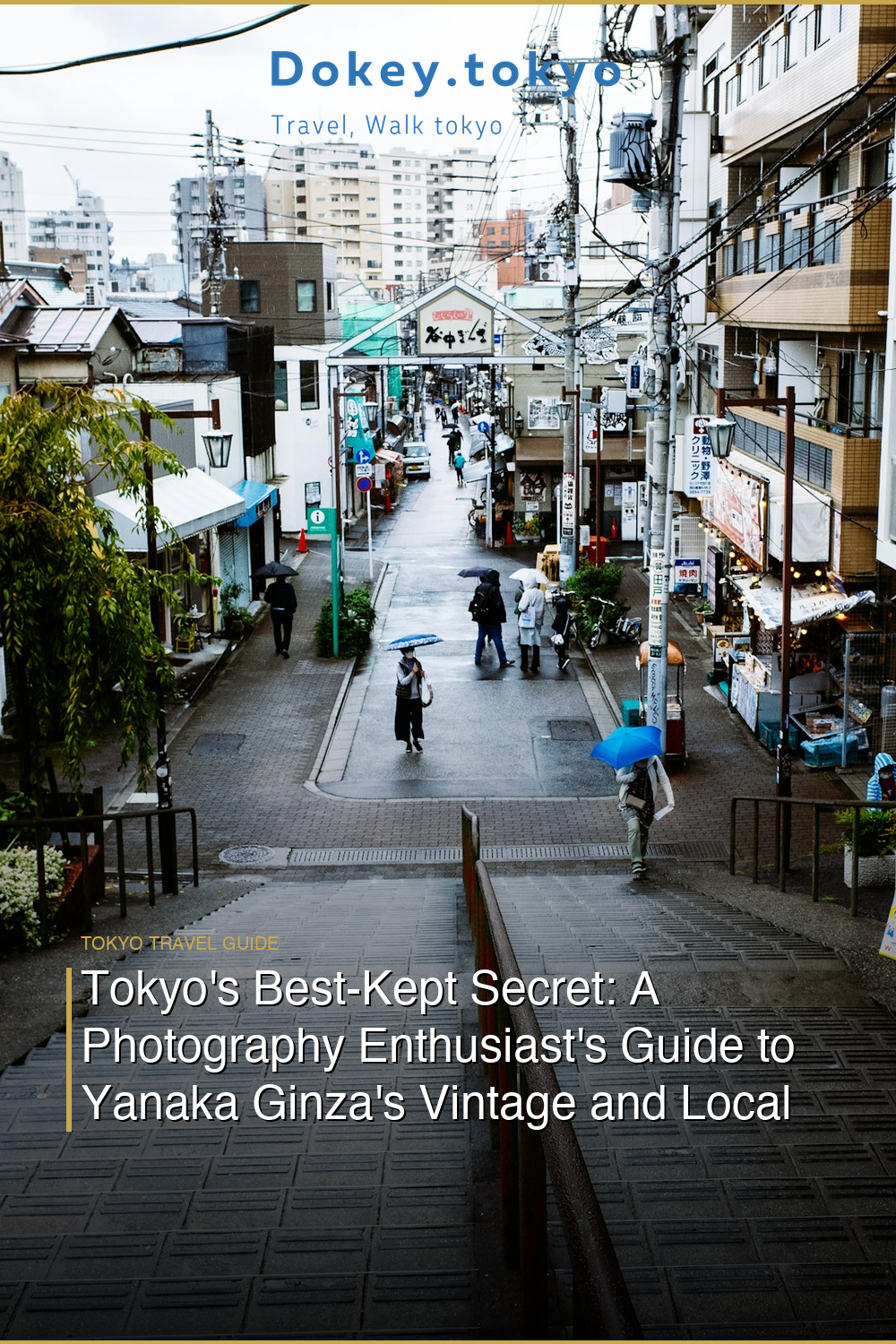
If you’ve spent any time chasing the “real Tokyo” through a viewfinder, you already know that the neon-soaked corridors of Shinjuku and the curated minimalism of Omotesando only tell half the story. The other half — the weathered, warm, slightly sun-faded half — lives in Yanaka Ginza, a 170-meter shopping street in the Taito ward that feels like someone pressed pause on Tokyo sometime around 1962 and forgot to press play again. This isn’t a place that shows up prominently on influencer feeds. It’s a place where cats doze on shop awnings, where the smell of grilled senbei crackers drifts out of wooden doorways, and where every peeling paint texture and hand-lettered sign is a potential frame.
The first time I walked down Yanaka Ginza, it was a Tuesday morning in late October, just after 9 a.m., when the shopkeepers were still rolling up their metal shutters and the low autumn light was cutting gold stripes across the stone-paved lane. I remember standing at the top of the Yuyake Dandan steps — the famous “Sunset Steps” — looking down at the street below and feeling genuinely disoriented, like I’d stepped into a photograph rather than a place. The smell of fresh taiyaki batter hit me before I’d even descended three steps.
Why Yanaka Ginza Is a Photographer’s Paradise
Yanaka Ginza sits inside the broader Yanesen neighborhood (Yanaka + Nezu + Sendagi), one of the few parts of Tokyo that survived both the 1923 Great Kanto Earthquake and the World War II firebombings largely intact. That survival is the reason you’re here. The wooden shopfronts, the narrow alleys branching off the main street, the Buddhist temple cemetery just beyond — none of this was reconstructed for tourism. It simply never got torn down.
For photographers, this means layered, authentic texture at every turn: rust-stained corrugated iron, potted plants crowding tiny storefronts, handwritten price tags in faded ink, and the occasional cat — Yanaka is famous for its feral and semi-feral cat colony — sprawled in a patch of sun like a living still-life.
The Best Light Windows
- Morning (7–9 a.m.): The street is nearly empty, shopkeepers are setting up, and the low-angle light creates dramatic shadows between the narrow buildings. This is your golden hour for architecture and detail shots.
- Late Afternoon (3–5 p.m.): The Yuyake Dandan steps earn their “Sunset Steps” name here. Position yourself mid-staircase facing west for silhouette shots of pedestrians descending against the orange sky.
- Overcast days: Don’t cancel your visit. The diffused light on cloudy days turns Yanaka into a soft, melancholy monochrome scene that suits its atmosphere perfectly. If you’re visiting during rainy weather, check out other indoor photography spots locals love as backup options.
The Vintage and Local Shops Worth Your Time (and Lens)
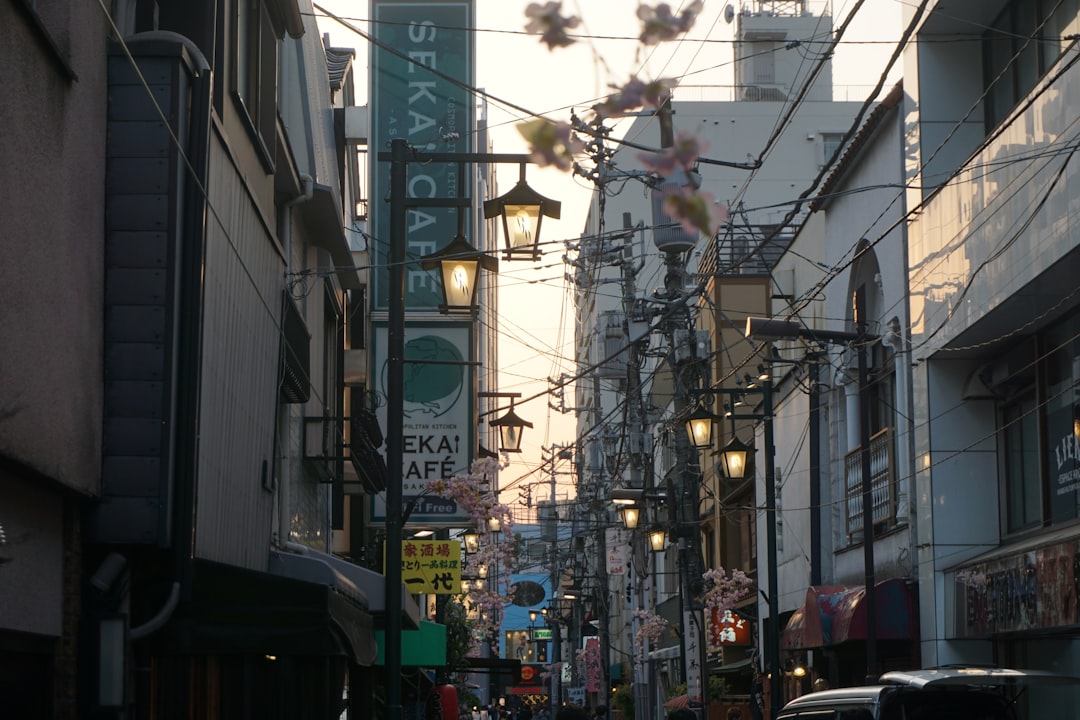
Yanaka Ginza has roughly 70 shops squeezed into its short stretch, plus more tucked into the side alleys. Here’s where to point your camera and your yen.
Mikawaya — The Historic Dagashi Shop
Dagashi are old-fashioned Japanese penny candies, and Mikawaya has been selling them since the Showa era. The shop’s wooden interior, glass-jar displays filled with colorful wrapped sweets, and hand-written price signs (most items cost ¥10–¥50) make it one of the most visually rich spots on the street. Ask before shooting inside — the elderly owner, a compact woman with silver-streaked hair who was there both times I visited, is generally warm about it if you buy something first and smile when you ask.
Vintage Clothing and Textile Shops
Several small vintage shops are tucked into the alleys branching off the main street, particularly along the lanes running toward Nezu Shrine. Look for kimono fabric rolls stacked outside in plastic bins — these sell for as little as ¥500 per meter and photograph beautifully against the weathered wood surroundings. If you’re a serious vintage kimono collector, nearby Komagome also offers excellent vintage kimono shopping with even deeper roots in the textile trade. One afternoon I ducked into a shop called Kottoya (an antique goods dealer, the name roughly translates to “old-things shop”), half-hidden behind a rack of secondhand obi belts, and the owner — a man in his seventies wearing a canvas apron — pulled out a drawer of Meiji-era medicine labels from under his counter, unprompted, and spread them out for me like a treasure map. I didn’t buy anything, but I photographed every single one with his permission, and those macro shots are still some of my favorites from ten trips to Tokyo.
Handcraft and Artisan Workshops
Yanaka has a small but genuine artisan community. Keep your eyes open for workshops producing traditional items like hand-dyed tenugui (thin cotton towels), bamboo crafts, and ceramic pieces. These aren’t tourist-trap demonstrations — they’re working studios that also happen to sell. The artisan tradition continues elsewhere in Tokyo too; Kuramae’s Nakamise shopping arcade also preserves Tokyo’s historic craft quarter with similar working artisans. Shooting through a workshop window or doorway with the craftsperson in focus and the street blurred behind them is a composition that never fails.
Food Stops That Double as Photo Ops
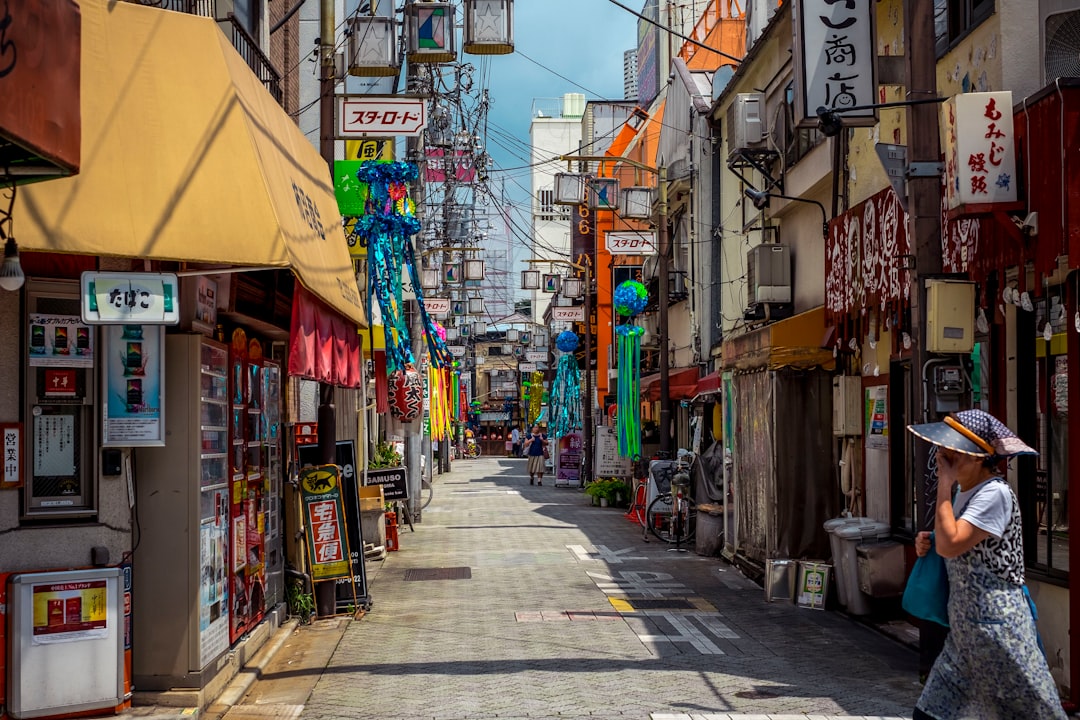
You will not go hungry on Yanaka Ginza, and more importantly for us, you will not run out of things to photograph while eating.
Niku no Suzuki — The Menchi Katsu Stand
This butcher shop’s menchi katsu (deep-fried minced meat cutlet) is the street’s most iconic snack and probably its most photographed object. The cutlets cost around ¥150 and come wrapped in paper. The shot everyone goes for: hand holding the paper-wrapped cutlet, Yanaka Ginza street receding in the background, steam rising from the first bite. It’s a cliché because it’s genuinely that good-looking. More importantly, it tastes like it was fried by someone’s grandmother — crispy shell, juicy and savory inside, with a faint sweetness.
Yanaka Beer Hall
Tucked slightly off the main drag, Yanaka Beer Hall serves local craft beers alongside bar snacks in an interior that looks like a Taisho-era storage room that got converted in the best possible way. The late-afternoon light through the small street-facing windows is extraordinary. Order the Yanaka Lager (¥700), sit near the window, and practice your available-light interior photography while you decompress from the street.
Taiyaki and Street Snacks
Multiple vendors sell taiyaki (fish-shaped cakes filled with sweet red bean paste or custard). Buy one, find the Yuyake Dandan steps, sit halfway down, and eat it while watching the street below. This is not a tip for your Instagram — it’s a tip for your nervous system.
Practical Tips for Photographer Visitors
Getting There
Take the Tokyo Metro Chiyoda Line to Nezu Station (exit 1) or Sendagi Station (exit 2). Both are a 5-minute walk from the shopping street. Avoid driving — the surrounding lanes are extremely narrow.
What to Bring
- A versatile zoom lens (24–70mm equivalent) handles the tight street and the wider establishing shots
- A 50mm or 35mm prime is ideal for low-light interior and portrait work
- Small mirrorless cameras or Fujifilm X-series bodies draw far less attention than large DSLRs — shopkeepers are more relaxed, and you’ll get more natural candid moments
- A small tripod or tabletop tripod for the early-morning architecture shots
Photography Etiquette
Always ask before photographing inside shops or pointing a camera directly at shopkeepers. A simple “Shashin, ii desu ka?” (写真、いいですか?— “May I take a photo?”) goes a long way. Most people will say yes. Some will say no. Accept both gracefully and carry on.
Best Time to Visit
Weekday mornings from September through November are the sweet spot: autumn foliage on the temple grounds and cemetery, manageable crowds, and the quality of October-November light in Tokyo is almost unreasonably beautiful — clear, golden, slightly low even at midday.
A Moment I Keep Coming Back To
On my most recent visit, I was leaving Yanaka Ginza around 4:30 p.m. in early November, and the street had reached that perfect threshold between afternoon and evening where the shop lights were just beginning to compete with the fading daylight. A woman in her eighties was closing up a tiny sembei shop, stacking lacquered trays of unsold rice crackers back into wicker baskets with the unhurried precision of someone who has done this ten thousand times. She caught me watching her, and instead of looking annoyed, she held up a broken sembei shard — a cinnamon-glazed piece, warm from the display warmer — and offered it to me across the counter without a word. It tasted like burnt sugar and soy sauce and something I can only describe as the smell of old wood on a cold afternoon. I didn’t photograph it. Some things you just eat.
Final Thoughts: Why This Street Is Worth the Detour
Yanaka Ginza will not give you the dramatic skylines or hyper-modern visuals that dominate Tokyo photography collections. What it will give you is something harder to find and harder to fake: genuine continuity with a Tokyo that most of the city has moved past. For photography enthusiasts, that means images with weight and mood and story rather than spectacle. It means the kind of street portraiture and still-life work that gets people asking “where is that?” rather than “which filter did you use?”
Book the early morning. Bring the small camera. Eat the menchi katsu. Sit on the sunset steps. And whatever you do, don’t rush through it in an hour on the way to somewhere else — Yanaka Ginza rewards the slow walker every single time.