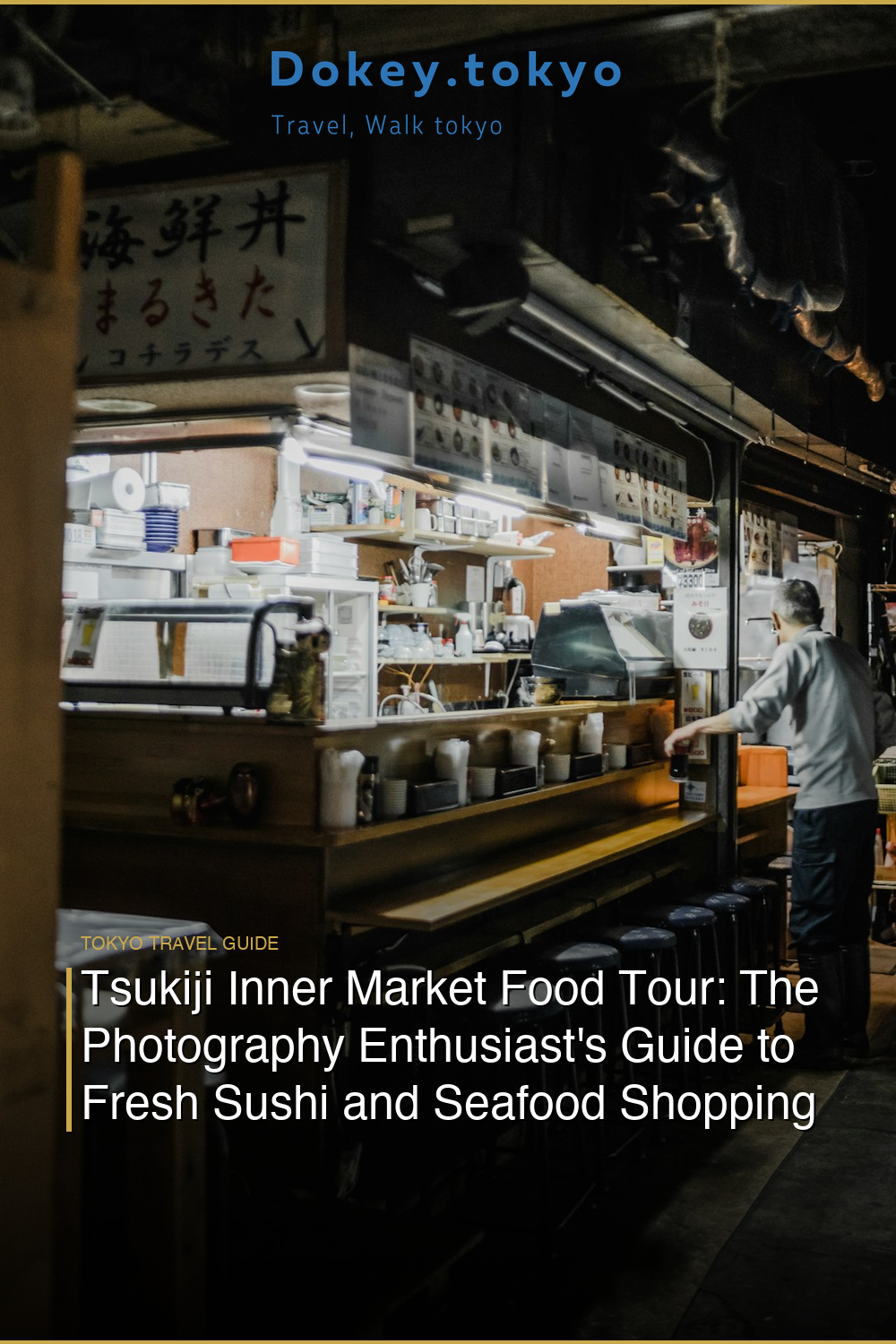
There are few places on Earth where the chaos of commerce, the artistry of food preparation, and the raw beauty of the ocean’s bounty collide so perfectly as they do at Tokyo’s Tsukiji Inner Market. For a photographer with a good eye and a growling stomach, this place is nothing short of paradise — a living, breathing canvas of color, texture, motion, and light that rewards those who arrive early, stay curious, and aren’t afraid to get a little fish juice on their camera strap.
[ADD: Share your personal first impression or arrival story here — 2-3 sentences]
Why Tsukiji Inner Market Is a Photographer’s Dream
🎫 Fresh Sushi Making Class Tokyo →
Unlike the now-relocated Tsukiji Outer Market’s more tourist-friendly stalls, the Tsukiji Inner Market (the professional wholesale section that still operates in the original footprint near Tsukiji Station) is a working marketplace — and that authenticity is exactly what makes it so visually extraordinary. Vendors in rubber boots and thick aprons move with practiced efficiency. Gleaming whole tuna rest on ice beds like silver sculptures. Tanks of live crabs and shellfish bubble with movement. Every square meter is a potential frame.
For photography enthusiasts, the market offers something increasingly rare in the age of curated Instagram aesthetics: genuine, unposed human activity. You’ll find seasoned vendors who’ve been filleting fish since before dawn, young apprentices focused intensely on their knives, and buyers leaning in close to inspect the quality of a cut. These are the kinds of candid, character-driven moments that elevate food photography from pretty to powerful.
The Light You’ll Find — and When to Chase It
The inner market is largely covered, which means you’re working with a mix of overhead fluorescent lighting and occasional shafts of natural light filtering through gaps in the structure. Bring a camera body that performs well at higher ISOs — think ISO 1600 to 6400 — and a fast prime lens. A 35mm f/1.8 or a 50mm f/1.4 will serve you beautifully for close-up food details and environmental portraits alike.
The single best time to visit for photography is between 6:00 AM and 8:00 AM. This is when the market is at its most active, vendors are in full swing, and the energy is electric. The light inside may be artificial and somewhat harsh, but the motion, color, and atmosphere more than compensate. Arrive before 6 AM to secure your position and avoid being in the way of working professionals — respect for their space will earn you warm smiles and, occasionally, an invitation to photograph something extraordinary.
Navigating the Market: A Photographer’s Route
🗾 Tokyo sightseeing with licensed guide →
🗾 Tokyo sightseeing with licensed guide →
Tsukiji Inner Market is compact but dense. Here’s a suggested route that maximizes both your visual opportunities and your sushi intake:
Start at the Main Entrance (Kaikosha Gate Area)
Begin at the outer perimeter near the Kaikosha Gate on Shin-Ohashi Dori. This is where the organized market flow becomes immediately apparent — delivery trucks, hand carts stacked with styrofoam boxes, and vendors unloading the morning’s catch. The scale of the operation hits you instantly. This is a great spot for wide establishing shots that convey the sheer volume of seafood moving through this place every day.
Move Toward the Tuna Vendors
While the famous tuna auction is now held at Toyosu Market and requires advance registration, the inner market’s tuna preparation areas are still among the most photogenic spots you’ll encounter anywhere. Watch skilled workers use long, single-blade knives called maguro-bocho to break down massive bluefin tuna into retail portions. Frame these shots tight — the gleaming flesh, the precise knife angles, the vendor’s focused expression — and you’ll come away with images that tell a complete story without a single word.
The Seafood Stalls: Texture, Color, and Chaos
As you move deeper into the market, the variety of seafood becomes overwhelming in the best possible way. Whole sea bream arranged in neat rows, buckets of live clams, stacks of dried fish, mounds of uni (sea urchin) in wooden trays — every stall is a still-life composition waiting to happen. Use a macro or close-focus setting to isolate individual subjects: the pearlescent sheen of a fresh scallop, the vivid orange of salmon roe, the iridescent scales of a whole mackerel.
[ADD: Add one personal tip or hidden gem you discovered — 1-2 sentences]
The Sushi Restaurants Inside the Market
One of the greatest rewards of arriving early at Tsukiji is earning your place in line at the legendary in-market sushi restaurants. Spots like Sushi Dai and Daiwa Sushi have been serving market workers and devoted food pilgrims for decades, and the sushi they plate — made with fish purchased from the stalls just steps away — is some of the finest you will taste anywhere in Japan. If you’re interested in learning more about sushi preparation, consider taking a Tokyo cooking class to learn traditional sushi-making techniques.
For photographers, these tiny counter restaurants are golden. The sushi chefs work in close quarters, their hands moving with a speed and elegance that demands a fast shutter speed (aim for 1/200s or faster). The intimate setting also creates natural depth — a chef in sharp focus, rows of gleaming fish portions blurring softly behind them. Ask permission before photographing the chefs and other diners. Most will agree, and some will even slow their movements momentarily to give you a better shot.
What to Buy: Your Seafood Shopping Guide
🗾 Tokyo food tour with local eateries →
🗾 Tokyo food tour with local eateries →
Beyond photography, Tsukiji Inner Market is one of the best places in Tokyo — arguably the world — to purchase premium fresh seafood and sushi-grade fish for home preparation.
Best Buys for the Discerning Shopper
- Sushi-grade tuna (maguro): Available in multiple grades. Ask vendors to recommend cuts based on your budget — akami (lean), chutoro (medium fatty), and otoro (full fatty) all offer strikingly different experiences.
- Uni (sea urchin): Purchase directly from vendors who can advise on origin. Hokkaido uni tends to have a sweeter, creamier profile.
- Tamagoyaki (Japanese rolled omelette): Several vendors specialize in freshly made dashi-rich tamagoyaki — a wonderful souvenir that also photographs beautifully in natural light outside the market.
- Dried goods and condiments: Nori (seaweed sheets), katsuobushi (bonito flakes), and specialty soy sauces make excellent, packable food souvenirs.
- Live shellfish: Vendors will often shuck oysters or clams on the spot — a fleeting, spontaneous scene perfect for documentary-style food photography.
Photography Tip: The Symmetry of Sushi Platters
If you purchase a sushi platter from one of the small takeaway stands operating near the market perimeter, find a quiet spot near the nearby Hamarikyu Gardens to plate and photograph your food in natural morning light. The contrast between the vivid sushi colors and the garden’s calm greenery creates images with extraordinary visual balance — a technique professional food photographers use regularly. For more food-focused exploration in Tokyo, check out our comprehensive Tokyo food tour guide.
Practical Tips for Photography Enthusiasts
Gear recommendations: A mirrorless camera with good high-ISO performance (Sony A7 series, Fujifilm X-T5, or similar), a 35mm or 50mm fast prime, and a small portable LED light panel for supplementing the market’s uneven fluorescent lighting.
Etiquette: Always ask before photographing vendors up close. Learn two phrases: Shashin wo tottemo ii desu ka? (May I take a photo?) and Arigatou gozaimasu (Thank you very much). These small gestures go a long way.
Storage: Bring a small cooler bag if you plan to purchase fresh seafood to take home or to your accommodation. Many vendors will pack fish in ice, but having your own insulated bag ensures quality is maintained.
Best days to visit: Tuesday through Saturday. The market is closed on Sundays, some Wednesdays, and Japanese national holidays. Always verify the official Tsukiji schedule before planning your visit.
Getting there: Take the Tokyo Metro Hibiya Line to Tsukiji Station (Exit 1) or the Toei Oedo Line to Tsukiji-shijo Station (Exit A1). The inner market is a short walk from either exit. If you’re spending more time exploring the Taito ward area, explore our photography walking guide from Senso-ji Temple to Tsukishima.
[ADD: Describe one specific moment or memory from this experience — 2-3 sentences]
The Bigger Picture: Why Tsukiji Still Matters
🗾 Customized Tokyo tour with top attractions →
🗾 Customized Tokyo tour with top attractions →
In an era when so many authentic food markets around the world have been sanitized for tourist consumption, Tsukiji Inner Market retains an almost miraculous sense of genuineness. It exists primarily to feed Tokyo — to move an astonishing volume of the world’s finest seafood from ocean to table with speed, precision, and pride. For a photography enthusiast, that purpose-driven environment produces the kind of authentic imagery that no staged food shoot can replicate.
Come hungry. Come with a charged battery and an empty memory card. Come with enough Japanese courtesy to earn the trust of the people who have made this market their life’s work. And then come with an open mind, because what Tsukiji delivers — in flavor, in light, in human story, and in sheer sensory overwhelm — will exceed every expectation you arrive with, and leave you with photographs you’ll be proud to share for years.