Tokyo is a city that rewards those who slow down and look carefully — and nowhere is this truer than Chiyoda Ward, the ancient heart of the city where samurai-era stone walls meet perfectly manicured pine trees, and where the Emperor still resides behind centuries-old moats. For photographers, this district is not just a sightseeing stop. It is a living gallery of texture, symmetry, reflection, and light that changes dramatically with the seasons, the hour, and the weather. Whether you shoot on a mirrorless full-frame or a smartphone, a walking tour of Chiyoda’s imperial corridor will give you some of the most compositionally rich frames you’ve ever taken in Japan.
I’ve walked this Chiyoda loop more times than I can count, and somehow it never feels the same twice. Each visit, something has shifted — the angle of light on the moat, the depth of shadow along the stone walls, the color of the maples that weren’t there a month ago. That’s why I keep coming back with my camera: it’s not really one place, it’s a handful of quietly different places stacked into the same map pin.
Planning Your Shoot: When to Walk and When to Wait
For photography in Chiyoda Ward, timing is your most powerful tool. The district’s wide open plazas, reflective moats, and dense garden canopies all respond very differently depending on when you arrive.
Golden Hour and Blue Hour Windows
Sunrise in Chiyoda — typically between 4:30 and 5:30 AM in summer, and closer to 6:30 AM in winter — is genuinely magical. The Nijubashi Bridge (Double Bridge), arguably the most photographed spot in all of Tokyo, takes on a warm copper glow when the early light catches the stone arch and its reflection in the still water below. Almost no tourists are present at this hour, which means clean compositions with zero foot traffic. Bring a tripod if you can; the reflections demand a slow shutter during wind-still mornings.
Blue hour, the 20-30 minutes just after sunset, transforms the Imperial Palace Plaza into something almost cinematic. The lantern-style lamp posts click on automatically, casting amber pools against the darkening blue sky — a two-toned palette that rewards wide-angle shots with a foreground of gravel and raked paths.
Seasonal Considerations for Photographers
Each season repaints the walking tour entirely:
- Spring (late March to mid-April): Cherry blossoms frame the Chidorigafuchi moat in a way that has made it one of Japan’s most iconic sakura spots. Arrive before 7 AM to avoid crowds and capture the overhanging branches reflected in the green water below the rowboats. For more nighttime sakura photography opportunities, consider pairing this with a cherry blossom evening cruise.
- Autumn (mid-November to early December): The East Gardens ignite with red and gold maples. Look for contrast shots where ancient volcanic stone walls serve as a backdrop to blazing momiji foliage.
- Winter (December to February): Crowds thin dramatically, and misty mornings create a moody, almost ink-wash atmosphere around Kitanomaru Park. The bare trees create graphic, skeletal compositions against white sky.
- Summer: Arrive very early to beat the heat and the tour groups. The intense light creates sharp shadows on the stone walls — lean into high-contrast black and white edits.
The Walking Route: A Photographer’s Sequence
🗾 Book on Viator: Pro Photography Tour Tokyo →
This route is approximately 6 to 8 kilometers and takes 4 to 6 hours if you stop to shoot properly. Wear comfortable shoes — the East Gardens have gravel and uneven stone paths.
Start: Nijubashi Bridge and the Imperial Palace Plaza
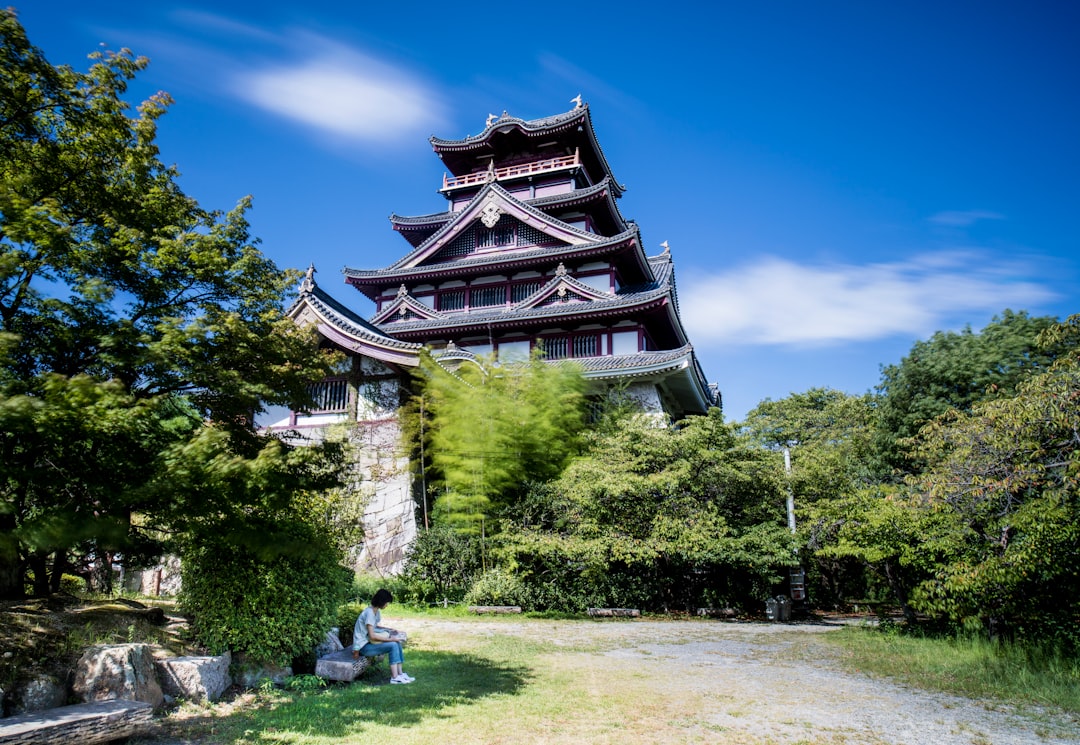
Begin at Ōtemachi Station (exits C10 or C13) and walk toward the Imperial Palace East Plaza. Your first major composition opportunity is the Nijubashi Bridge framed between pine trees. Use a telephoto lens (85mm to 200mm equivalent) to compress the bridge against the background tower of the Fushimi Turret. The classic shot places the round arch and its reflection forming a perfect circle — but challenge yourself to find the asymmetric frame, catching a solitary jogger mid-stride along the gravel path.
The palace itself is not open for general public entry except on January 2 (New Year’s greeting) and December 23, but the outer grounds and plaza are completely accessible and endlessly photogenic.
Imperial Palace East Gardens (Kōkyo Higashi Gyoen)
Open Tuesday through Sunday (closed Monday and Friday, as well as certain imperial event days), the East Gardens are free to enter and represent one of the best free photography locations in all of Tokyo. Pick up a plastic token at the entrance — you’ll return it on exit — and make your way through the Ōte-mon Gate, an original Edo-period gate that frames beautifully against a clear sky.
Inside, head immediately to the Honmaru area, the former innermost keep of Edo Castle. The stone foundation platform — all that remains of the original castle tower destroyed in 1657 — offers a sweeping elevated view across the garden that works especially well with a wide-angle lens to show the vast stonework in the foreground and the Tokyo skyline punctuated by distant towers in the background.
The Ninomaru Garden, a traditional Japanese strolling garden within the East Gardens, rewards patience. Position yourself near the central pond for reflections of manicured pine trees, and in autumn, the surrounding trees provide a layered canopy of reds and oranges that fall into the still water.
My personal tip: come right after a light rain has passed. The moss on the old stone foundations deepens into an almost emerald green, and the wet gravel paths render with a richness in photos that the dry, washed-out version most visitors see simply can’t match.
Kitanomaru Park and the Budokan
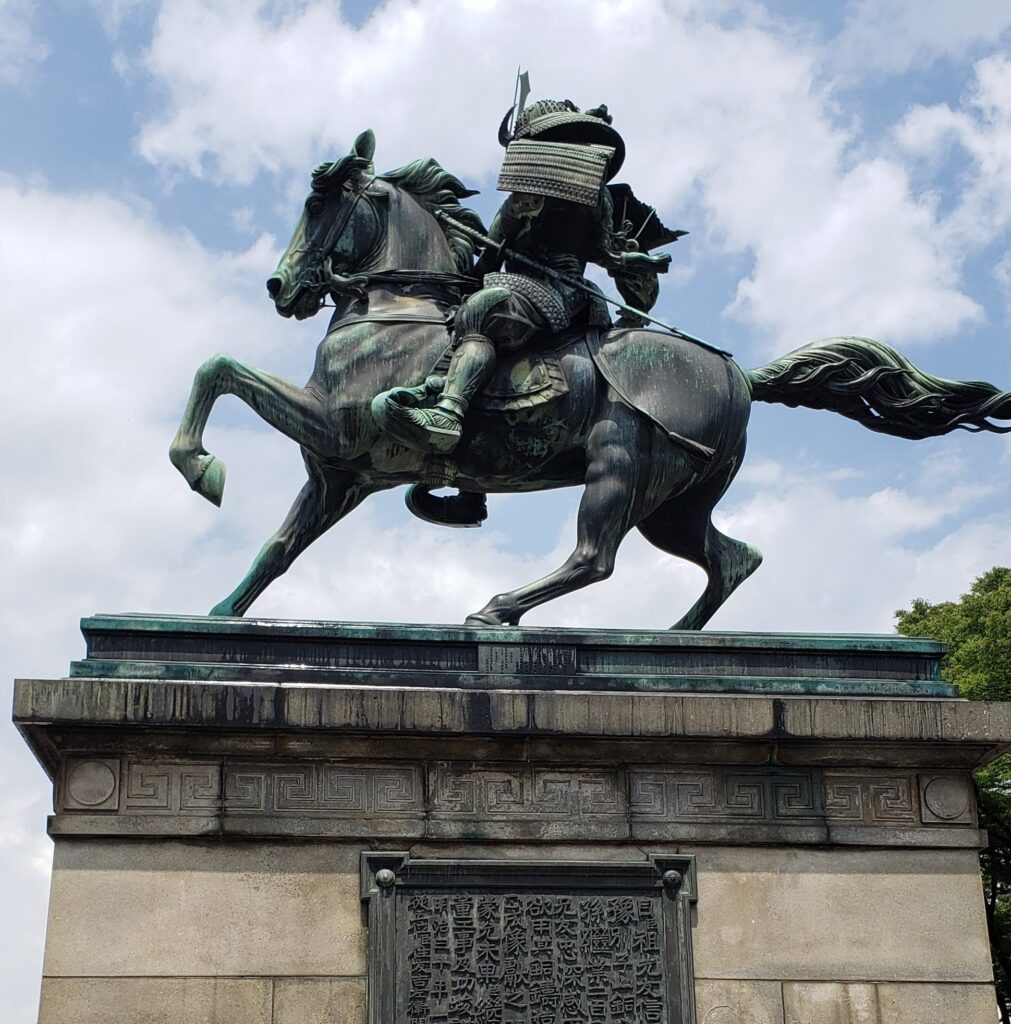
Exiting the East Gardens through the Kitahanebashi-mon Gate brings you into Kitanomaru Park, a less-visited but visually rewarding section of the imperial green belt. The park’s forested paths and the broad moat that borders its eastern edge offer calm, contemplative compositions away from the busier southern plazas.
Nippon Budokan, the famous octagonal martial arts and concert arena, sits within the park. Its distinctive onion-domed roof with a golden phoenix on top is a unique architectural subject — try shooting it from the Kitanomaru moat path where the roofline rises above the treeline. In cherry blossom season, this is an underrated sakura viewing and shooting spot compared to the more crowded Chidorigafuchi just steps away.
Chidorigafuchi Moat: The Crown Jewel Shot
No photography-focused walking tour of Chiyoda is complete without time at Chidorigafuchi. Walk south along the moat path from Kitanomaru Park toward Hanzomon Station. The approximately 700-meter promenade is bordered on one side by castle stone walls and on the other by the moat’s dark water.
In spring, the weeping cherry trees that line the bank create a canopy of pale pink that reflects in the water below. For the iconic low-angle shot, crouch near the water’s edge and use a wide aperture to throw the cherry blossoms in the background into a soft bokeh while keeping one hanging branch sharp in the foreground. During peak bloom, rowboats can be rented nearby, and shooting from the water level looking back at the tree-lined bank is an unforgettable and unique perspective.
Yasukuni Shrine: Architecture, Light, and Layers
A short walk north brings you to Yasukuni Shrine, a site of immense historical complexity but also genuine architectural and photographic interest. The massive steel torii gate — one of Japan’s largest — creates a powerful minimalist frame when shot on a clear blue-sky day with a wide lens. The approach path (sando) lined with trees provides dappled light on bright mornings and atmospheric mist on cool autumn days.
The shrine’s inner buildings, with their distinctive nagare-zukuri architectural style, are beautifully lit in late afternoon when the sun angles in from the west and gilds the cypress wood and copper roofing. For similar architectural and photography opportunities at other Tokyo sacred sites, explore the Meiji Shrine and Omotesando walk.
Eating and Resting Between Shots
After hours of walking and shooting, Chiyoda offers some excellent refueling options that won’t break your budget. The Kitanomaru Park area has small vendors near the moat, perfect for a quick onigiri and canned coffee while reviewing your shots on your camera display. For a longer break, Café Kudeta near Hanzomon and several kissaten (traditional Japanese coffee shops) around Kudanshita Station offer quiet interiors where you can charge your camera batteries and edit on a laptop without feeling rushed. Most open by 8 AM, making them ideal post-sunrise-shoot destinations.
For lunch, the basement food halls (depachika) of the Marunouchi and Ōtemachi skyscrapers near the palace’s east side offer beautiful bento boxes — which, incidentally, make fantastic flat-lay subjects if you’re building content for a travel photography portfolio. If you’re exploring Tokyo’s culinary side more deeply, Tokyo’s food scene offers everything from Michelin-starred ramen to unforgettable izakaya experiences.
Practical Photography Tips for the Route
🗾 Book on Viator: Book a Private Photoshoot →
- Permits: No special photography permits are required for personal or travel photography anywhere along this route. Commercial film crews require clearance from the Imperial Household Agency.
- Tripods: Allowed in the East Gardens and all public areas, but use common sense during crowded periods.
- Gear: A versatile zoom (24-105mm equivalent) handles 90% of this walk. A dedicated wide-angle (16-24mm) earns its weight at Nijubashi and the castle foundation. A 70-200mm lets you isolate architectural details and compress the bridge reflection.
- Getting There: Ōtemachi Station (Tokyo Metro Marunouchi, Chiyoda, Hanzomon, Tozai, and Mita lines) is the ideal starting point. The Marunouchi-Otemachi area has coin lockers if you need to stash a bag.
One late afternoon in November, I lingered at Yasukuni longer than I’d planned. The sun dropped to just the right angle and lit up the copper roofing of the inner shrine for maybe four or five minutes — the whole structure suddenly looked like it had been dipped in gold. I shot fifty frames in a near panic, and then it was gone, the light gray again, and I just stood there for another minute not quite ready to walk away.
Final Thoughts on Chiyoda as a Photographer’s Destination
🗾 Book on Viator: Night Photography Tour →
Chiyoda Ward rewards the photographer who plans with intention but also remains open to surprise — the shaft of light that breaks through overcast skies and illuminates the Ninomaru pond, the solitary runner whose red jacket punctuates a grey morning plaza, the tourist whose reflection bends in the curve of the moat. This is not a district where you rush through a checklist. It is a place where you set up, wait, breathe, and let Tokyo’s quietest, oldest layer reveal itself one frame at a time. Come with a full battery, an empty memory card, and plenty of time — and leave with the shots that make people stop scrolling.