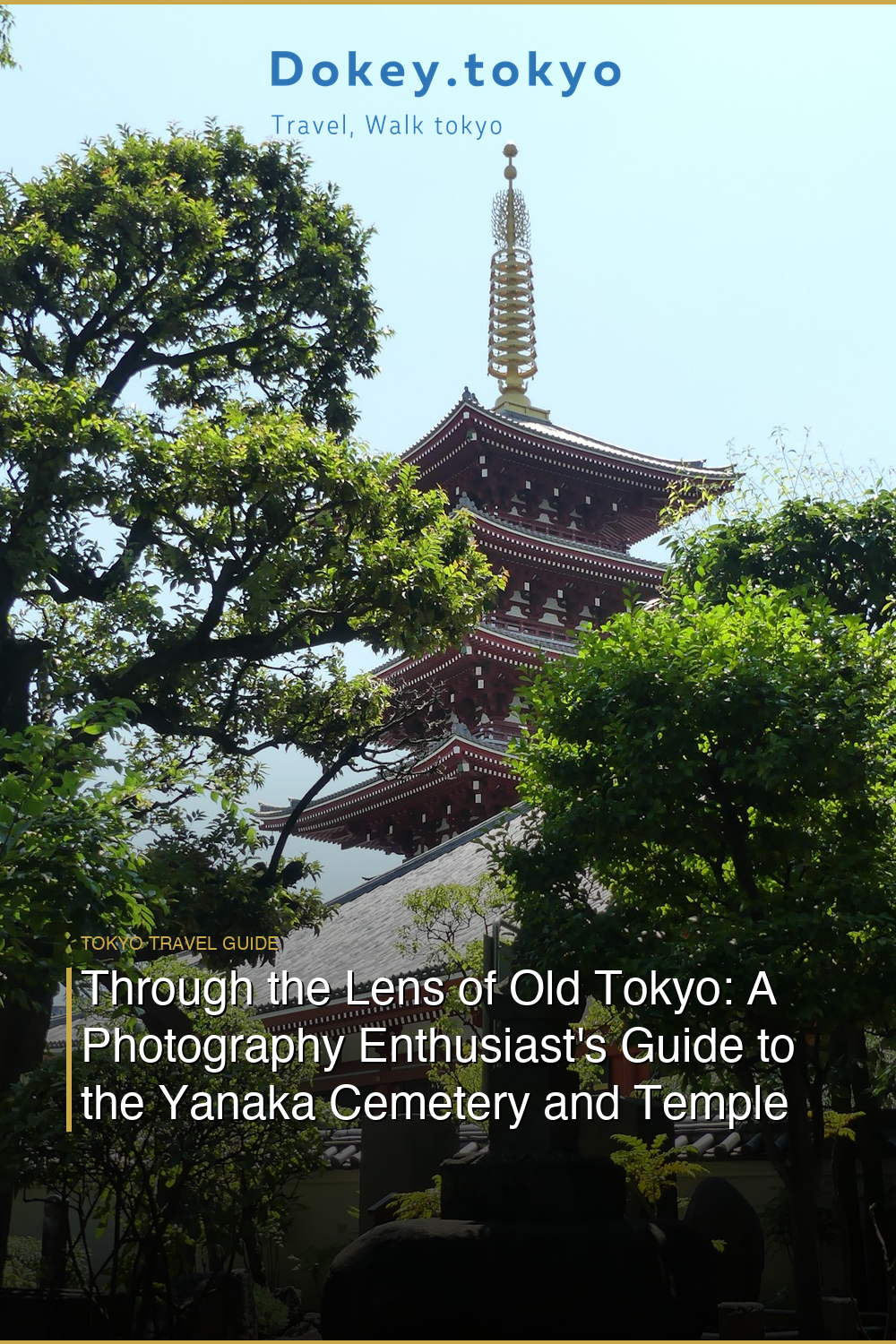
There is a version of Tokyo that doesn’t appear in neon-lit Instagram feeds or bullet train montages. It lives in the weathered stone of a century-old grave marker catching the last amber light of a November afternoon, in the shadow a pine tree throws across a moss-covered lantern, in the sound of a temple bell echoing through a narrow alley where a cat sits completely unbothered by your presence. Yanaka is that version of Tokyo — and for photographers, it is nothing short of a pilgrimage site. Unlike the manicured perfection of Meiji Shrine or the controlled chaos of Shibuya Crossing, this northeastern pocket of the Taito ward survived the 1923 Great Kanto Earthquake and the WWII firebombing almost entirely intact. What you walk through here is genuinely old Japan, preserved not in a museum but in living, breathing streets where elderly residents still sweep their stoops every morning and tofu shops have been run by the same family for four generations.
The first time I stepped off the Nippori Station exit onto the stone path that leads directly into the cemetery, it was just past 7 a.m. and the light was doing something I still struggle to describe — it came through the canopy of zelkova trees in long, tilted shafts, the kind of light that makes your hands shake a little before you’ve even raised the camera. The air smelled like cedar, incense from a nearby temple, and something faintly damp and green, like a forest floor after rain. I stood there for a full two minutes before I took a single frame, just breathing it in.
Why Yanaka Is a Photographer’s Dream
🗾 Book: Yanaka and Nezu historic old town walk →
🎫 Book: Old Tokyo Photography Tour →
Yanaka Cemetery (谷中霊園, Yanaka Reien) spans roughly 10 hectares and contains over 7,000 grave plots, including the tombs of former shoguns and celebrated Meiji-era figures. But what makes it extraordinary for photography is not its historical prestige — it’s the texture. Every surface here tells a story. Lichen-covered stones lean at improbable angles. Iron grave fences have rusted into shades of amber and sienna that no filter can replicate. Weathered kanji characters blur at their edges like brushstrokes caught in rain. The main avenue — a broad, cherry blossom-lined path called the Sakura-dori — becomes one of Tokyo’s most jaw-dropping sakura corridors in late March and early April, but don’t make the mistake of only visiting in spring. Each season reframes the cemetery entirely. For fellow photography enthusiasts exploring Tokyo’s visual treasures, Tokyo Imperial Palace East Gardens offers similar seasonal rewards year-round.
The Light: When to Shoot and Where to Stand
For photography, the golden hour here is genuinely golden — arrive at 6:30 to 7:00 a.m. in autumn and winter, or just before 5:00 a.m. in peak summer, and the slanted morning light transforms the Sakura-dori into something medieval and glowing. The row of stone grave markers along the eastern fence catches that light beautifully from the west side of the avenue. Midday is harsh and flat — use that time to walk the smaller residential temple grounds instead. Evening light, especially in autumn when the maples turn, hits the old stone with warm copper tones that I’ve never been able to recreate in post-processing — what you capture in-camera is what you get.
The Temple Circuit: Five Stops Every Photographer Must Make
🗾 Book: Meiji Shrine, Asakusa temple morning tou →
🗾 Book: Tokyo history and Shinto temple private →
🎫 Book: Historic Temple District Tour Tokyo →
The cemetery sits at the heart of a cluster of Buddhist temples that extends outward into the surrounding streets. Building a walking route through them takes about three to four hours at a relaxed pace — ideal if you’re stopping every forty steps to crouch down and reframe a composition (which, let’s be honest, you will be).
Tennō-ji Temple
Directly adjacent to the cemetery’s main entrance on the Nippori side, Tennō-ji is anchored by a massive bronze Buddha cast in 1690 — the third largest in the Kanto region. The contrast of the dark, patinated bronze against the soft gray sky on an overcast day creates a naturally diffused, almost studio-quality portrait light. Shoot from low and to the left for the best angle; from that position, you eliminate the modern fence from your frame entirely.
Yanaka Reien’s Cat Population
This one isn’t a temple, but it deserves its own category. The cemetery is famous among locals for its resident cats — dozens of semi-feral felines who treat the grave markers as personal furniture and the tree roots as napping platforms. For street and animal photography, this is unreal material. Bring a 50mm or 85mm lens and set your aperture to f/2 or wider. The bokeh you get with a cat in the foreground, a row of moss-covered stones behind it, and that long cemetery avenue stretching into the distance — that single frame has won me more compliments than almost anything else in my portfolio.
Daien-ji Temple
A short walk south from the cemetery, Daien-ji is smaller and far less visited than Tennō-ji, which makes it ideal. The stone lanterns lining the approach path are densely covered in moss and algae, and after rain — which I now deliberately plan my Tokyo trips around — they become extraordinary macro subjects. I discovered this temple only because I got slightly lost following a tabby cat through a back lane and ended up at a rusted wooden gate. A woman who was sweeping the courtyard looked up, waved me in without a word, and went back to sweeping. That’s Yanaka.
Yanaka Ginza Shopping Street: The Human Element
Every great photography walking tour needs human texture, and Yanaka Ginza provides it in abundance. This retro shotengai (shopping street) runs just west of the cemetery and is lined with tiny vendors selling grilled chicken skewers, fresh-baked melon bread, sweet potato snacks, and handmade ceramics. The architecture is pure post-war Showa era — faded signage, wooden facades, laundry hanging over narrow alleyways. Shoot here in the late morning when vendors are setting up but tourist crowds are still thin. The butcher shop at the northern end of the street has a hand-painted sign and a display case that is a still-life composition all on its own. For more of Yanaka’s vintage charm, consider exploring vintage kimono shopping in nearby Komagome, where the same timeless aesthetic extends to traditional dress.
Food, Fuel, and Cafés Built for Long Shooting Days
🎫 Book: Yanaka Cemetery Temple Walking Tour →
You will walk far, crouch often, and completely lose track of time here. I speak from experience — I once looked up from the viewfinder at what I thought was mid-morning and discovered it was 2:30 p.m. and I hadn’t eaten. There are a few places along the route that are essential.
Yanaka Beer Hall (near Yanaka Ginza) is an atmospheric converted old house where you can rest your legs with a cold craft beer and decent bar food. More importantly, the interior — dark wood, hanging bulbs, old posters — is itself a shooting location. Ask to sit near the window.
Kayaba Coffee is a short detour east toward Nezu, housed in a 1938 building that looks like it belongs on a film set. Order the egg salad toast with a hot coffee. The morning light through the wooden lattice windows hits the table at a diagonal that makes even a simple breakfast look like a scene from a Yasujiro Ozu film. If you’re seeking similar atmospheric culinary experiences in Tokyo, the Tsukiji Inner Market food tour offers equally compelling breakfast photography opportunities with a different urban energy.
Practical Tips for Photography Enthusiasts
What to bring: A wide-to-standard zoom (24-70mm equivalent) covers the architecture and street scenes. A short telephoto (85-135mm) isolates grave markers and cats with gorgeous compression. A small tripod or gorilla pod is useful for the early morning low-light shots inside temple grounds.
Respectful shooting: The cemetery is an active burial ground where families come to pay respects. Do not photograph mourners or funeral ceremonies. Keep your voice low. Do not climb on grave markers for a better angle — yes, this needs to be said.
Getting there: Take the JR Yamanote Line to Nippori Station (North Exit) for the direct cemetery entrance, or Nezu Station on the Tokyo Metro Chiyoda Line for the southern temple approach. The walk between the two stations covers the full route.
Best seasons: Late March to early April for sakura. Late November for maple foliage and cold, crystalline light. February for emptiness and frost on stone surfaces — an underrated choice that I prefer above all others.
It was a cold February afternoon on my fourth visit here when I finally got the shot I’d been chasing for years — a single stone grave marker, snow barely dusting its top edge, a single plum blossom branch from a neighboring garden reaching into the upper left corner of the frame, and a cat sitting at its base, eyes closed, completely at peace. The cemetery was entirely silent except for the distant clang of a temple bell from somewhere I couldn’t identify. I pressed the shutter once. I didn’t need to press it again.
Final Thoughts Before You Go
Yanaka doesn’t reward rushing. It rewards the photographer who arrives before the city wakes up, who follows a cat down an unnamed lane, who sits on a temple step for twenty minutes waiting for the light to shift exactly two degrees to the left. This is not a destination you visit — it is a place you surrender to. And every single time I come back to Tokyo, it’s the first place I go.