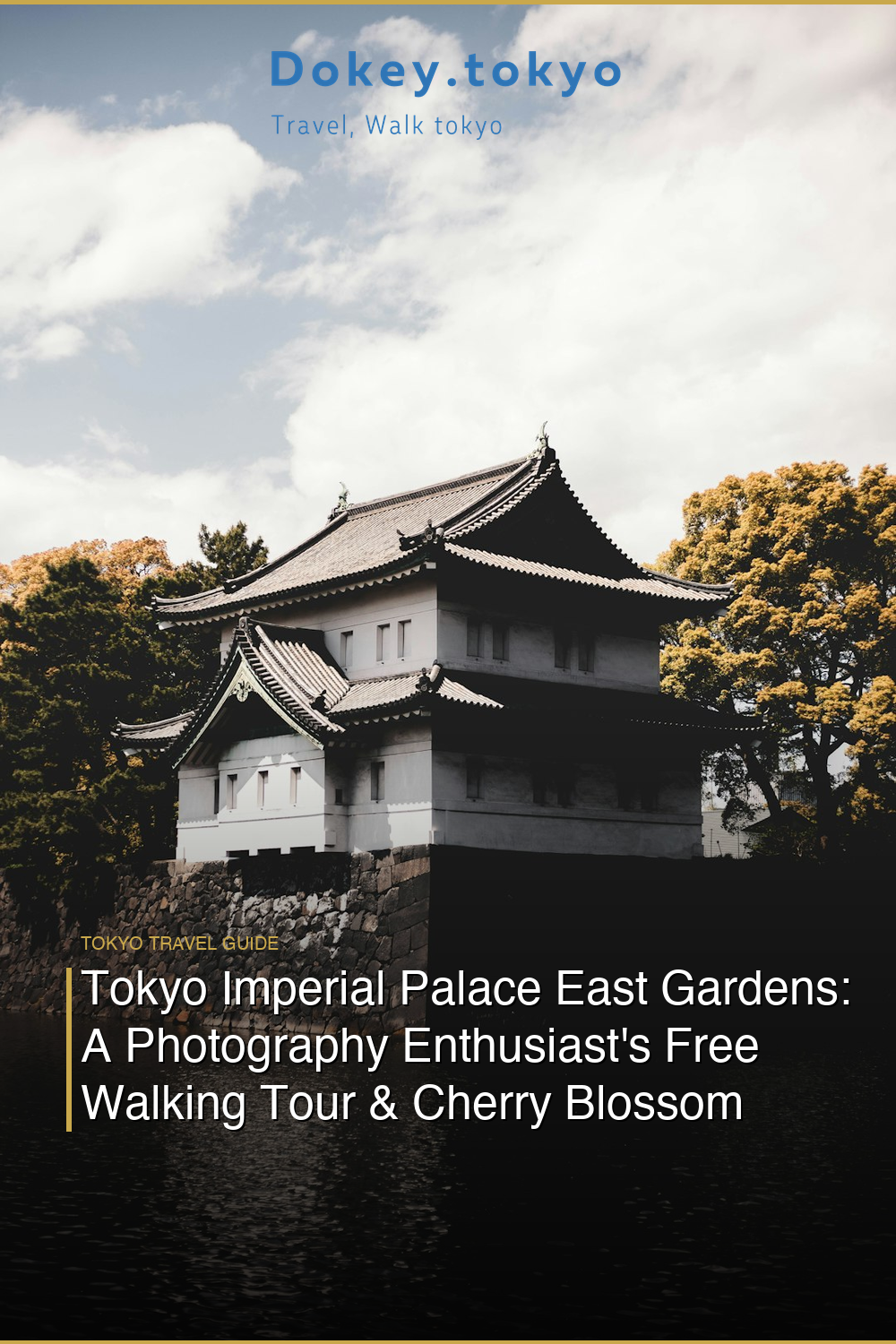
There’s a moment in Tokyo that still catches first-timers completely off guard: you’re surrounded by nine million people, vending machines on every corner, neon signs humming overhead — and then you turn a corner near the Imperial Palace moat and suddenly the city just… exhales. The Imperial Palace East Gardens (Higashi Gyoen) are one of the best-kept secrets in budget travel, not because they’re hard to find, but because nobody quite believes something this beautiful is completely, utterly, permanently free.
The first time I walked through the Ōtemon Gate, I remember stopping dead in my tracks. It was 8:40 in the morning in late March, and the low spring light was slicing gold through a tunnel of pale pink cherry blossoms so dense I couldn’t see the path beyond them. The air smelled faintly of wet stone and something sweet I couldn’t name — later I realized it was osmanthus from a nearby shrub. A crow called from somewhere in the old castle ruins above me, and a retired Japanese man in a flat cap nodded and said, very quietly, ‘Ii desho?’ — ‘Beautiful, isn’t it?’ It was the kind of moment you’d pay five hundred dollars to manufacture on a tour. Here, it was free.
Why the Imperial Palace East Gardens Are a Budget Traveler’s Dream
Let’s get the headline out of the way: admission is free, every single day they’re open (Tuesday and Friday are closing days, so plan around that). The gardens cover about 21 hectares of what was once the inner citadel of Edo Castle, and they contain over 200 cherry trees, traditional Japanese garden landscaping, ancient stone castle walls, and sweeping views that cost absolutely nothing to enjoy.
For travelers keeping a strict daily budget — think hostels, convenience store meals, and subway passes — this is your golden ticket to a genuinely world-class experience with zero financial guilt. No entrance fee, no timed tickets, no reservation system. Just show up, hand over your plastic token at the gate (you return it on the way out — a charming old-school system), and walk in.
Hours and Closing Days
The gardens are generally open from 9:00 AM to 4:30 PM (last entry 4:00 PM), with extended hours in summer. They’re closed on Tuesdays, Fridays, and during late December through early January. Always double-check the Imperial Household Agency website before visiting, especially around national holidays, when hours can shift unexpectedly.
The Cherry Blossom Guide: When and Where to Go
🗾 Book on Viator: Cherry Blossom Tour: Asakusa, Ueno & Imp →
Timing Your Visit
Sakura season in Tokyo typically peaks between late March and early April, though climate shift has been pushing it slightly earlier in recent years. The East Gardens hit their most photogenic moment when the somei yoshino (the classic pale-pink variety) reaches full bloom — usually around the last week of March. But here’s what most tourists miss: the gardens also host yaezakura (double-flowered cherry trees) that bloom a full two weeks AFTER the somei yoshino, meaning you can catch gorgeous blossoms well into mid-April when every other famous hanami spot has gone green again.
For budget travelers, this matters enormously. The mid-April window means cheaper flights and hostels, thinner crowds, and cherry blossoms that feel almost secretive in their quiet beauty.
The Best Cherry Blossom Spots Inside the Gardens
Sannomaru Shozokan Area: This northern section near the Museum of the Imperial Collections holds some of the tallest, most dramatic cherry trees in the gardens. Arrive at opening time (9:00 AM) to get them in golden morning light with almost nobody else around.
The Ninomaru Garden: A traditional Japanese strolling garden with a small pond that perfectly reflects blossoms on calm mornings. Budget tip: this spot photographs beautifully with even a smartphone because the composition is already built for you — frame the pagoda-style stone lantern with blossoms overhead and you’re done.
The Former Tenshu Dai (Castle Keep Ruins): Climb the stone base of what was once the tallest castle tower in Japan. The cherry trees ringing the base create a natural frame, and the elevated viewpoint gives you a perspective over the entire garden. Standing here at 9:30 AM on a Tuesday — oh wait, they’re closed Tuesdays — I mean a Wednesday, watching the mist burn off the moat while a groundskeeper raked gravel below me, was genuinely one of the most cinematic moments I’ve had in Tokyo.
Your Free Self-Guided Walking Route
🗾 Book on Viator: Imperial Palace Garden Cherry Blossom Hi →
Here’s the route I personally walk every time I visit, optimized for someone with a full morning and no tour guide:
Enter via Ōtemon Gate (easiest access from Ōtemachi Station, exits C13a or C13b — the subway ride from most central hostels runs you about ¥180). Collect your plastic entry token and head northeast.
Stop 1 — Hyakunin Bansho Guard House: Just inside the gate, this restored guardhouse dates to the Edo period. Spend five minutes here reading the English plaques; the context makes everything that follows more meaningful.
Stop 2 — Sannomaru Shozokan (Museum of the Imperial Collections): Free entry, world-class Japanese art. Even if museums aren’t your thing, walking through costs nothing and takes 20 minutes. The rotating exhibitions have shown Edo-period screens and imperial ceramics that would cost ¥2,000+ to see at a private museum.
Stop 3 — The Main Cherry Grove: Follow the path north and you’ll hit the main concentration of somei yoshino trees. This is where I once watched an elderly woman in a kimono standing completely still under the blossoms for a full three minutes, her eyes closed, like she was memorizing the moment. I didn’t take her photo. Some things you just watch.
Stop 4 — Tenshu Dai Ruins: Climb up, look out, feel the history under your feet.
Stop 5 — Ninomaru Garden: Loop south, slow down, sit on a bench by the pond. This is where budget travel becomes luxury travel — you have nowhere to be and something genuinely beautiful to look at.
Exit via Hirakawamon Gate: A quieter, atmospheric exit that puts you near the north moat path, perfect for a post-garden stroll.
Eating Well on a Budget: Before and After the Gardens
The gardens themselves don’t have a restaurant (there’s a small refreshment area that operates seasonally), so budget your meals around the visit.
Before: Grab breakfast at a 7-Eleven or FamilyMart near Ōtemachi Station. An onigiri (rice ball) costs ¥130-¥170, and a hot coffee from the machine is ¥110. This is not a consolation-prize meal — the salmon onigiri from 7-Eleven is genuinely excellent, and eating it on the moat wall before the gates open at 9:00 AM is a small, perfect ritual.
After: Walk ten minutes northeast to the Kanda area, where you’ll find lunch sets (teishoku) at old-school Japanese restaurants for ¥800-¥1,000 — soup, rice, a main dish, and pickles. One specific spot I return to every time is a tiny tonkatsu place on a side street near Shin-Kanda Station with a handwritten menu and a lunch cutlet set for ¥950. The owner once told me, in careful English, ‘We have been here forty years. Cherry blossom season is our favorite.’ That felt like the whole city in one sentence.
Practical Tips for Budget Travelers
Getting There: Ōtemachi Station (multiple subway lines) is the easiest approach. A 24-hour subway pass costs ¥600 and is worth every yen during sakura season when you’ll be bouncing between parks.
What to Bring: A reusable water bottle (water fountains are inside the gardens), a convenience store snack, a light layer even in late March (mornings near the moat are cold), and a fully charged phone for photos.
Crowds: Arrive at 9:00 AM sharp on a weekday. By 11:00 AM on a cherry blossom weekend, the gardens fill considerably — still manageable compared to Ueno Park, but noticeably busier.
Language: English signage throughout the gardens is excellent. You will not get lost or confused.
Photography Hack: The moat path outside the gardens (completely free, no entry required) along the western side toward Nijubashi Bridge offers some of the most iconic cherry blossom + palace wall shots in the city. Walk it in the direction of the morning light for best results.
Just before I left the gardens on my most recent visit, I sat down on a low stone wall near the Ninomaru pond and ate the second half of a strawberry daifuku I’d bought that morning from a convenience store — soft mochi, sweet red bean, the bright cold shock of a whole strawberry inside. A group of schoolchildren in matching yellow hats ran past laughing, their sneakers slapping the gravel path. A single cherry blossom petal drifted down and landed on my sleeve and stayed there, perfectly intact, for a count of three seconds before the breeze took it. I thought: this is what Tokyo gives you for free.
The Bottom Line
The Imperial Palace East Gardens are proof that the best experiences in travel aren’t always the ones you pay for. For budget travelers who’ve been told Tokyo is too expensive, this place is your counterargument — 21 hectares of history, horticulture, and seasonal beauty that asks nothing of your wallet and gives everything in return. Go at opening time, bring your convenience store breakfast, wear comfortable shoes, and let the city surprise you. It will.
Ready to experience it?