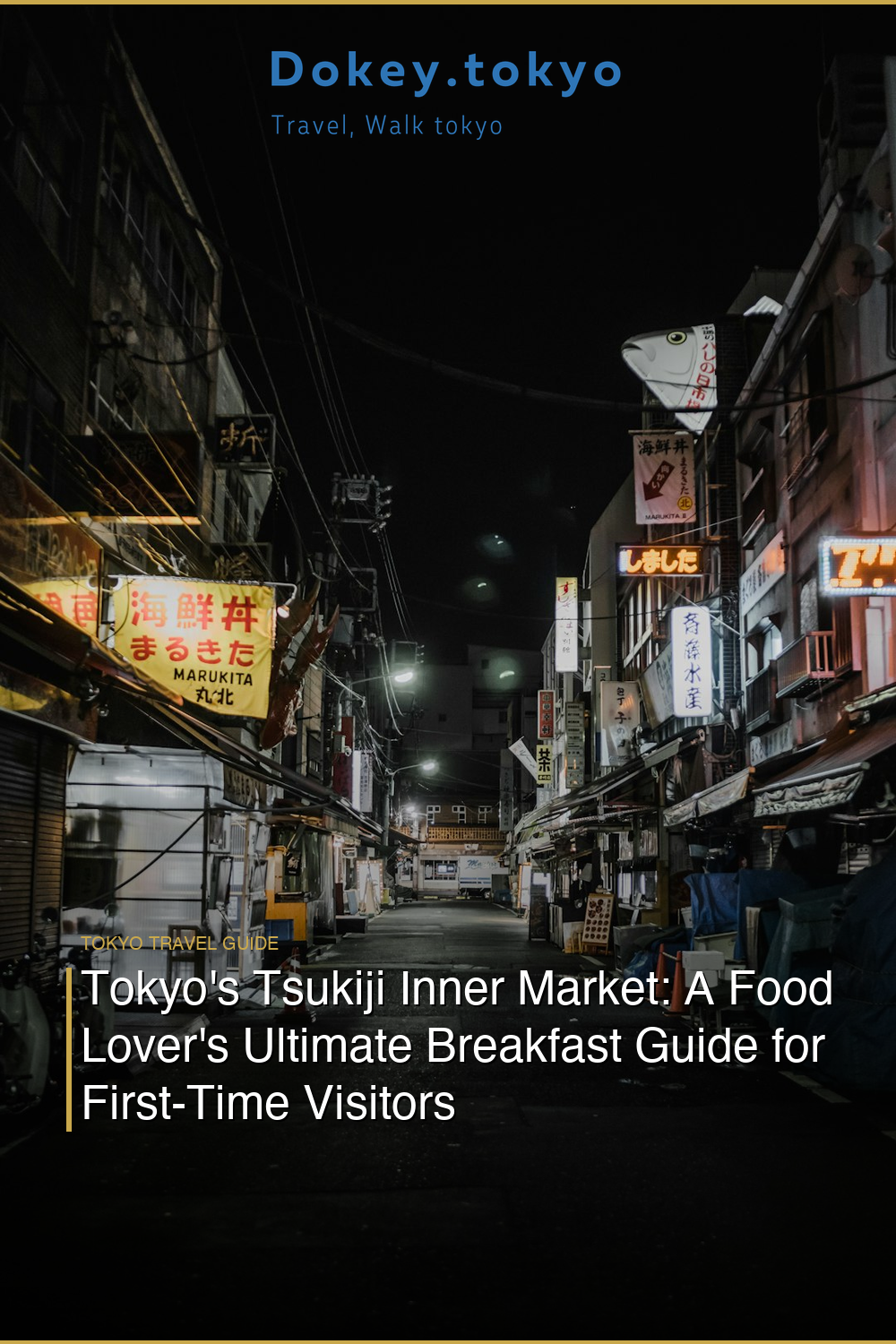
There is a moment, somewhere between stepping off the Hibiya Line and rounding the first narrow alley of Tsukiji Inner Market, when your senses simply stop keeping up. The smell hits you first — cold brine, charcoal smoke, and something sweet and caramelized drifting from a tamagoyaki pan — and then the sound: rapid-fire Japanese, the clatter of styrofoam boxes, the wet slap of a tuna block hitting a cutting board. If you’ve never done a Tsukiji inner market food tour before, I want to be honest with you: nothing quite prepares you for it, and that is entirely the point.
The first time I walked into Tsukiji at 6:45 in the morning, my eyes were still half-shut from a red-eye flight and I was clutching a paper cup of vending machine coffee like it was a life raft. Within ten minutes, a vendor pressed a warm skewer of grilled scallop into my hand without asking, and I stood there in the pale January light, juice running down my wrist, thinking: this is why people fly to Tokyo. That scallop tasted of the sea and butter and something faintly smoky, and it cost me 300 yen. I have chased that feeling on every visit since.
What Is Tsukiji Inner Market — And Why First-Timers Get It Wrong
Let’s clear up the confusion right away, because as a first-time visitor you have almost certainly read conflicting things online. When people talk about visiting Tsukiji today, they usually mean one of two things: the Outer Market (Jogai Shijo), which is the lively street-food strip open to tourists every day, and the Inner Market (Jonai Shijo), which relocated its famous wholesale fish auction to Toyosu in 2018 but still exists in a transformed, deeply local form.
The Inner Market today is a smaller cluster of working vendors, sushi counters, knife shops, and specialty food stalls tucked inside the original covered building footprint. It is less photographed than the Outer Market, which is exactly why you should go there first. Most first-time visitors stick to the outer strip, graze on uni and tamago, and leave feeling like they’ve ticked a box. The Inner Market is where you eat with locals — fishmongers on break, chefs doing final supply runs, and the occasional sharp-eyed retiree who arrives at 5:30 am because old habits die hard.
How to Plan Your Tsukiji Morning: Timing Is Everything
🗾 Book: Toyosu Tuna Auction and Tsukiji Food →
🎫 Book: Tokyo Seafood Market Experience →
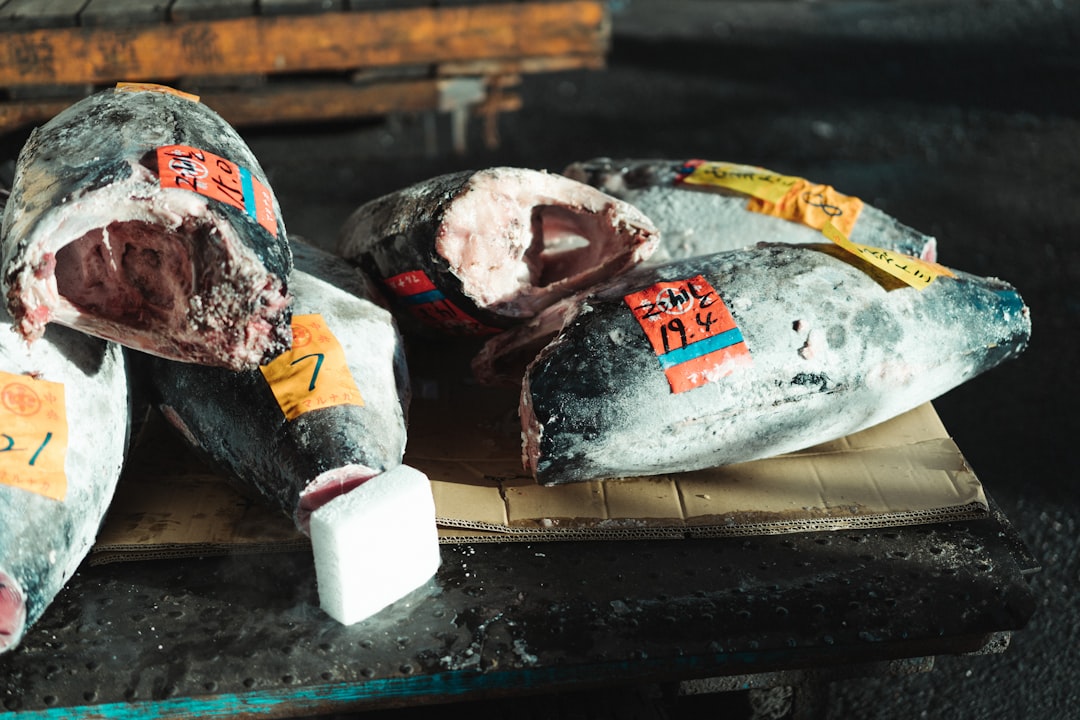
Arrive Before 8:00 AM — Seriously
If your guidebook says to arrive by 9:00 am, ignore it. The best energy, the shortest queues at the most beloved counters, and the widest selection of fresh product exist between 6:30 and 8:00 am. Yes, that means setting an alarm for 5:45. Yes, it is worth it. The Tsukiji Station on the Hibiya Line drops you a five-minute walk from the market, and that early-morning walk through the still-quiet Chuo ward streets is its own quiet Tokyo moment.
For first-time visitors who are jet-lagged (and let’s be honest, most of you will be), this timing actually works in your favor. Your body thinks it’s mid-afternoon. Use it.
What to Wear and Bring
Wear closed-toe shoes — the floor inside the covered market is often wet and occasionally slippery from ice melt and fish water. Bring a small amount of cash in small denominations: many Inner Market stalls are cash-only and do not make change easily for 10,000-yen notes. A budget of 2,000–3,500 yen (roughly $15–25 USD) will cover a full, deeply satisfying breakfast crawl. Bring a light bag or tote rather than a rolling suitcase — the alleys are narrow.
The Inner Market Food Tour: Where to Eat and What to Order
🗾 Book: Tsukiji Fish Market Food Walking Tour →
🗾 Book: Tsukiji Seafood Tastings Behind the Scen →
🎫 Book: Tsukiji Market Food Tour →
🎫 Book: Local Breakfast in Tsukiji →
Stop 1: Tamagoyaki at Tsukiji Yamaguchi
Your first stop should be one of the tamagoyaki (Japanese rolled omelette) specialists near the Inner Market entrance. Tsukiji Yamaguchi is one of the oldest, operating since 1924, and they make both sweet and dashi-savory versions. Order the dashi-maki tamago — it’s soft, trembling, almost custard-like inside, and it comes wrapped in a paper sleeve still warm enough to heat your palms. This is breakfast as architecture. First-time visitors often expect it to taste like an omelette. It doesn’t. It tastes like comfort in a different language.
Stop 2: Sushi for Breakfast at Sushi Dai or Daiwa Sushi (with honest queue advice)
Every travel article about Tsukiji will mention the legendary sushi counters. I will not pretend the queues don’t exist — at Sushi Dai, the line can stretch to two hours on weekends — but I will give you the tip that actually works: come on a weekday and join the queue by 6:00 am. Bring something to read. Chat with the person next to you; they are almost certainly as excited as you are, and half the Tsukiji experience is the anticipation.
The omakase set at these counters runs around 4,000–5,000 yen and includes 10–12 pieces chosen by the chef based on what came in that morning. The uni, when it’s in season, is a specific shade of golden-orange that I have never seen at a sushi restaurant anywhere else in the world. It dissolves before you can fully register it.
On my third visit, I arrived early enough to get a counter seat next to a retired fishmonger named Kenji-san who had been eating at the same stool every Tuesday for eleven years. He pointed at my tuna and said, in careful English: “This one — very fatty today. Lucky.” He was right. I have never tasted otoro like that before or since.
Stop 3: Fresh Oysters and Grilled Scallops in the Covered Alleys
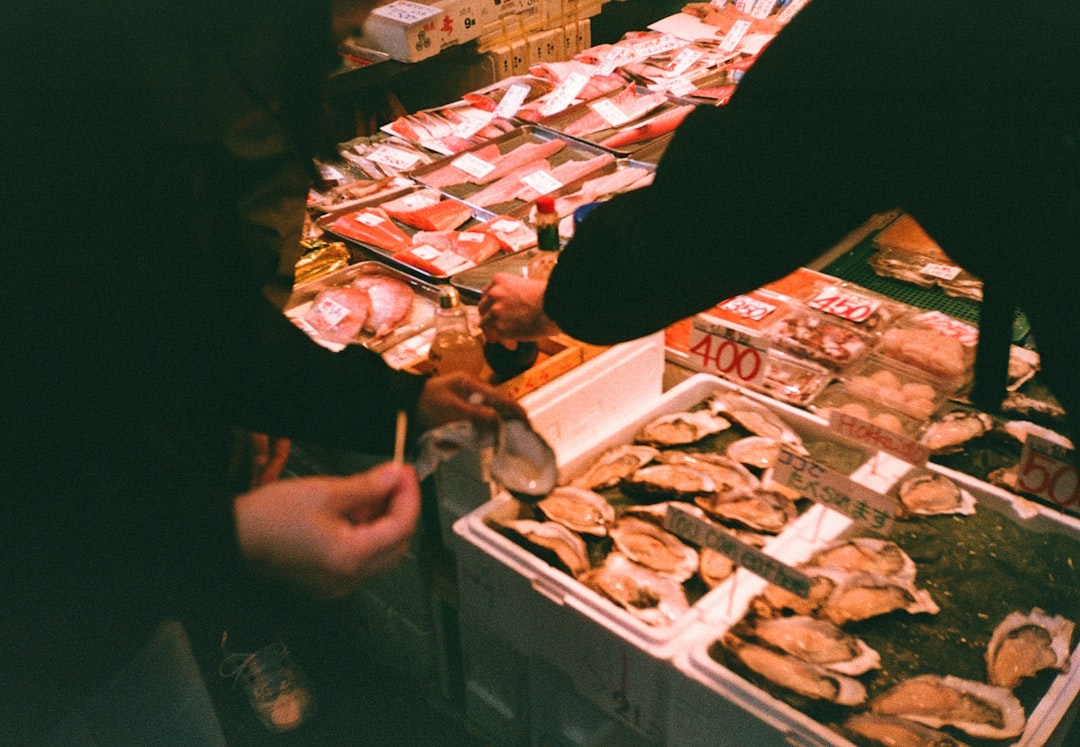
Once you’ve had sushi, wander deeper into the covered market alleys. This is where the Inner Market earns its reputation as a local space rather than a tourist one. Small vendors sell fresh oysters for 100–200 yen each, served with a squeeze of lemon and nothing else. Grilled hotate (scallops) are cooked on tiny charcoal grates and handed to you on skewers. There are also vendors selling monkfish liver (ankimo), sea urchin on rice crackers, and cured salmon roe that glistens like jewels under the fluorescent lights.
Stop 4: Breakfast Soup at a Standing Noodle Counter
After the richness of raw fish, your stomach will thank you for something warm and clean. Several small standing noodle counters operate inside and just outside the Inner Market, serving asari clam miso soup and simple ramen from early morning. These spots have no English menus and no tourist pricing. Point at what the person next to you is having. Nod. You will not regret it.
Local Culture Tips for First-Time Visitors
The Unwritten Rules of Market Etiquette
Tsukiji Inner Market is a working space, not a theme park. First-time visitors sometimes forget this. A few ground rules that will earn you respect:
- Do not touch produce or fish without permission. It seems obvious; people still do it.
- Step aside if a vendor cart or bicycle needs to pass. They will not slow down for you.
- Eat while standing or find a designated eating area. Walking and eating is accepted; blocking a stall entrance while eating is not.
- Ask before photographing vendors or their stalls. Most will say yes if you ask with a smile and a small bow. If you’re interested in capturing the market’s visual beauty, check out our photography guide to the Tsukiji tuna auction for additional tips on composition and timing.
A Few Japanese Phrases That Will Change Your Morning
You do not need to speak Japanese to navigate Tsukiji, but three phrases will make every interaction warmer: Ikura desu ka? (How much is it?), Hitotsu kudasai (One, please), and Oishii! (Delicious!). That last one, delivered with genuine feeling after a vendor hands you something extraordinary, will earn you a smile that you’ll carry around all day.
The Moment That Keeps Bringing Me Back
On my most recent visit, just after 7:00 am on a grey November morning, I sat on an upturned milk crate outside a tiny stall eating a bowl of clam miso soup with both hands wrapped around it. Steam curled up into the cold air. Around me, the market moved and clattered and smelled of the ocean. A vendor across the narrow aisle was sharpening a knife with long, rhythmic strokes, and the sound mixed with the distant hiss of a gas burner and someone laughing in a back room. I looked down at my soup — the clams were open, orange and briny and perfect — and I thought about how this exact scene has played out in some version every morning for nearly a century. There is something about Tsukiji that makes time feel both urgent and irrelevant at once.
Final Practical Notes Before You Go
Tsukiji Inner Market is open most days from approximately 5:00 am to 2:00 pm, with many stalls closing by noon. It is closed on Sundays, Wednesdays, and Japanese public holidays — check the official schedule before you go, as this is the number one mistake first-time visitors make. The nearest stations are Tsukiji (Hibiya Line) and Tsukijishijo (Oedo Line). A taxi from central Shinjuku takes about 20 minutes early in the morning with no traffic.
Bring your appetite, bring your patience for queues, and bring the willingness to point at things you cannot name and eat them anyway. That is the only real requirement for making the most of a Tsukiji inner market food tour. The rest, Tokyo will handle for you.