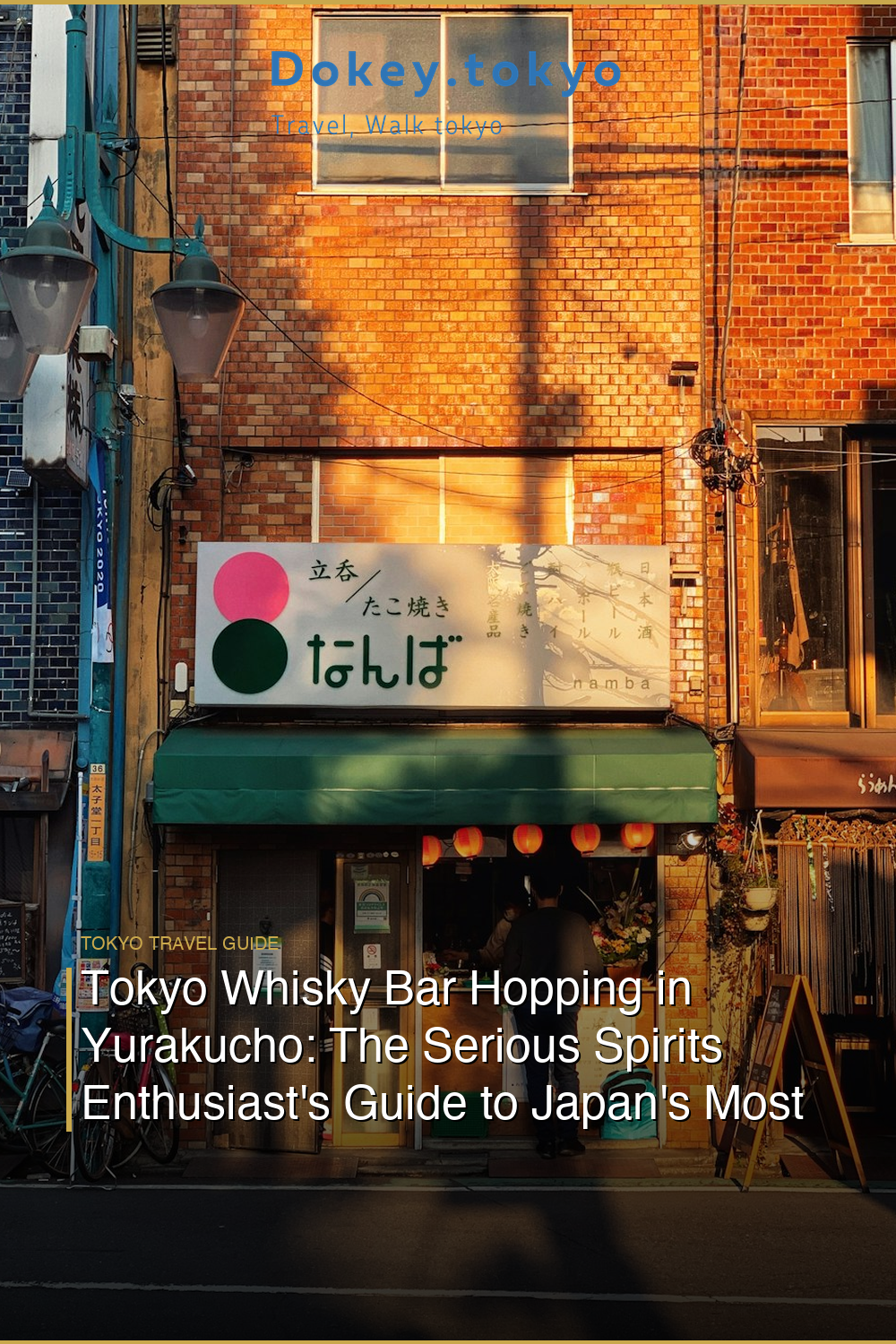
If you’ve ever stood in front of a back bar lined with 400 bottles of Japanese whisky and felt your knees go genuinely weak, you already understand why Yurakucho exists for people like us. Tucked beneath the elevated JR train tracks between Yurakucho and Shimbashi stations in central Tokyo, this gritty, neon-lit stretch of izakayas, smoky yakitori joints, and serious whisky bars is one of the most electrically alive drinking neighborhoods on earth — and it’s almost entirely overlooked by the mainstream travel crowd who are busy queuing for cocktails in Ginza. For spirits enthusiasts who travel specifically to drink well, Yurakucho is not a detour. It is the destination.
I still remember the first time I ducked under those train tracks on a drizzly October evening, the overhead rails groaning and shuddering as a Yamanote Line train thundered above me. The air smelled like charcoal smoke, soy-glazed chicken fat, and something faintly peaty — and I genuinely couldn’t tell if that last part was wishful thinking or reality. It wasn’t. Thirty seconds later I was pressed into a narrow bar stool, and a bartender with immaculate white gloves was placing a Yamazaki 18 in front of me without me having said a single word. He had simply looked at me, looked at the rain on my jacket, and decided. That moment cost me nothing in words and everything in certainty: I would be back here every visit for the rest of my life.
Why Yurakucho Is the Right Neighborhood for Whisky Connoisseurs
Tokyo has no shortage of excellent whisky bars — you’ll find them in Shinjuku, Ginza, Nakameguro, and Shimokitazawa. But Yurakucho operates on a different frequency. The bars here are intimate, unapologetically old-school, and staffed by bartenders who have spent decades rather than years developing their craft. The neighborhood also benefits from its geography: the high-arched brick spaces beneath the train tracks lend themselves naturally to the kind of moody, close-quarters atmosphere where serious whisky drinking thrives. You’re not here for a cocktail list or an Instagram backdrop. You’re here because a bartender with thirty years of experience just pulled out a bottle of Karuizawa 1984 and wants to know if you can tell the difference between a sherry butt and a bourbon cask finish.
The Whisky Culture You Need to Understand Before You Go
Japanese whisky bar etiquette for enthusiasts is simple but worth knowing. Speak quietly. Don’t rush. Never pour your own drink. If a bartender recommends something rather than asking what you want, let them — this is their art form and they will not steer you wrong. Most serious whisky bars in Yurakucho operate what’s known as a omakase style for spirits, where the bartender reads your preferences through brief conversation and steers the evening accordingly. Tell them what you love (Islay scotch? Aged bourbon? Fruity highland malts?) and what you’re curious about, and they will take it from there.
The Essential Yurakucho Whisky Bar Hopping Route
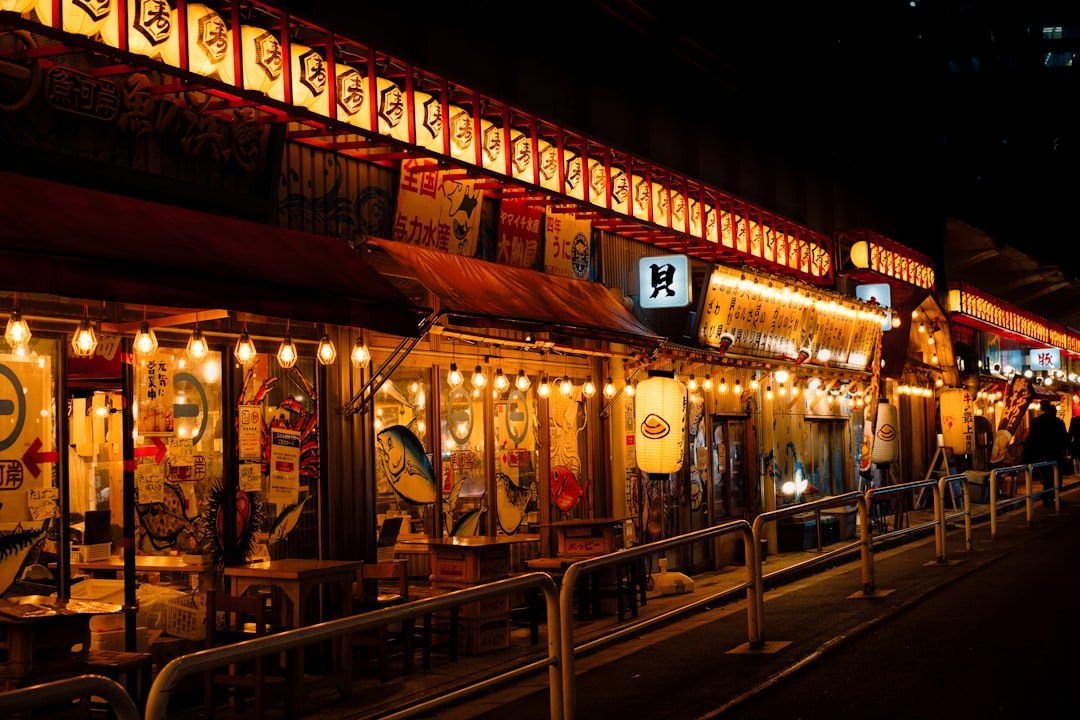
A proper whisky bar hop through Yurakucho should cover three to four bars across four to five hours. More than that and you’ll miss the depth of each place; fewer and you’ll miss the full spectrum of what this neighborhood offers. Start early — around 7:00 PM — so you can secure a seat before the after-work Tokyo crowd arrives in force around 8:30 PM.
Bar Hinomoto: Where to Begin
Start under the tracks at Bar Hinomoto, one of the old-guard establishments that has been serving whisky and yakitori since the postwar era. This is not a bar that appears in glossy travel magazines, and that’s exactly the point. The selection leans heavily toward Japanese whisky — expect strong representation from Suntory and Nikka — but the real draw is the house-poured mizuwari (whisky with water and ice) served with charcoal-grilled tsukune. Ordering a Nikka From The Barrel mizuwari here and eating skewered chicken under a ceiling darkened by decades of smoke is one of those experiences that recalibrates your understanding of what whisky is actually for.
During one visit I noticed a regular — a salaryman in a loosened tie — quietly mentioning to the bartender that he’d had a difficult week. Without a word, the bartender reached for a Miyagikyo 12-year single malt that wasn’t on the menu board and set it down in front of him. When I asked about it later, the bartender told me with a shrug: “That bottle is for people who need it.” If you ask specifically and respectfully, you may find a few off-menu pours available at Hinomoto for guests who demonstrate genuine appreciation.
Whisky Bar King: The Encyclopedic Stop
Your second stop should be one of the neighborhood’s more well-stocked establishments in the Yurakucho Gado-shita arcade. Several bars here carry north of 300 Japanese whisky expressions, including significant allocations of vintage Karuizawa, pre-closure Hanyu, and aged Chichibu releases that are nearly impossible to find outside Japan. This is where you bring your whisky notebook, because you will taste things here that you may never encounter again. Focus your tasting on expressions unavailable in your home country — ask specifically for cask-strength expressions or distillery-exclusive bottlings, which represent genuine value compared to international retail prices.
The Art of the Three-Dram Tasting
For spirits enthusiasts doing a multi-bar evening, I strongly recommend limiting yourself to two or three carefully chosen pours per bar. It sounds conservative, but Japanese whisky pours are generous — typically 30ml to 45ml — and the quality is high enough that you want your palate sharp for the next bar. Between stops, eat. The yakitori stalls between the bars exist for this exact purpose, and a few skewers of negima (chicken and leek) or tsukune with tare sauce are the ideal palate reset.
Cocktail Bar Léon: The Precision Stop
No serious whisky hop through Yurakucho is complete without at least one stop at a bar where the bartenders practice the Japanese art of hard shake cocktail technique. At Cocktail Bar Léon — a narrow, seven-seat masterpiece of a room — the whisky selection is curated rather than encyclopedic, but the craft is extraordinary. This is where you order a whisky highball made with house-carbonated water and watch it constructed with the precision of surgery. Japanese bartenders have elevated the highball — fizzy, cold, bracingly clean — into a serious art form, and understanding it will permanently change how you drink whisky at home.
Practical Tips for the Whisky Enthusiast Traveler
Budgeting: Premium Japanese whisky pours in Yurakucho range from ¥1,500 to ¥8,000 per glass depending on the expression. Rare vintage Karuizawa can exceed ¥15,000 per pour. Set a per-bar budget in advance and communicate it openly to your bartender — they respect this and will find you the best possible pour within your range.
Language: English is limited but manageable. Download the Whisky Magazine Japan app before your trip — it has a useful glossary of whisky terms in Japanese. Even better, bring a small notebook with your favorite expressions written in kanji; bartenders will beam when you make that effort.
Dress code: Smart casual is the standard. Yurakucho’s whisky bars are not jacket-required formal, but you’ll feel conspicuously out of place in athletic wear. Think: what you’d wear to visit a serious wine shop, then add one layer because the bars can be cool.
Best time to visit: October through March is ideal. The cool weather suits whisky drinking, the post-work salarymen crowd creates wonderful ambient energy, and there are no major holidays crowding the bars. Avoid Golden Week (late April to early May) entirely — even these off-the-beaten-path bars fill to capacity.
Getting there: Yurakucho Station on the JR Yamanote Line. Walk toward the train tracks (look for the brick arches) and follow your nose toward smoke and whisky.
One Moment That Made It All Real
On my fourth trip to Yurakucho, somewhere around 10:30 PM on a cold February night, I found myself at a seven-seat bar I’d never visited before — drawn in simply by the sound of a Chet Baker record bleeding through the door. The bartender, who had been working that same bar for over twenty years based on the photos lining the wall, poured me an unmarked glass of something amber and waited. It was a 1988 Karuizawa, sherry cask, and the first sip tasted like dried figs, old leather, and a faint thread of incense — exactly the way I imagine a very old temple might taste if temples could be tasted. I didn’t speak. Neither did he. The train thundered overhead, the smoke drifted in from the yakitori next door, and for about four minutes, that bar was the whole world.
Making the Most of Your Yurakucho Whisky Journey
Yurakucho rewards the traveler who comes prepared, moves slowly, and treats the experience as a conversation rather than a checklist. The bartenders here are craftspeople with deep knowledge and genuine pride — engage with them, not just their bottles. Ask questions about the distilleries, the aging processes, the regional differences between Yoichi and Miyagikyo. Show curiosity and you will receive generosity in return.
For serious spirits enthusiasts, this neighborhood represents something genuinely rare in modern travel: a place where the thing you love most is practiced at the absolute highest level, in an atmosphere that has remained stubbornly, beautifully itself. Tokyo changes constantly, but under those train tracks, something ancient and smoky and deeply serious holds its ground. You just have to know where to duck in.