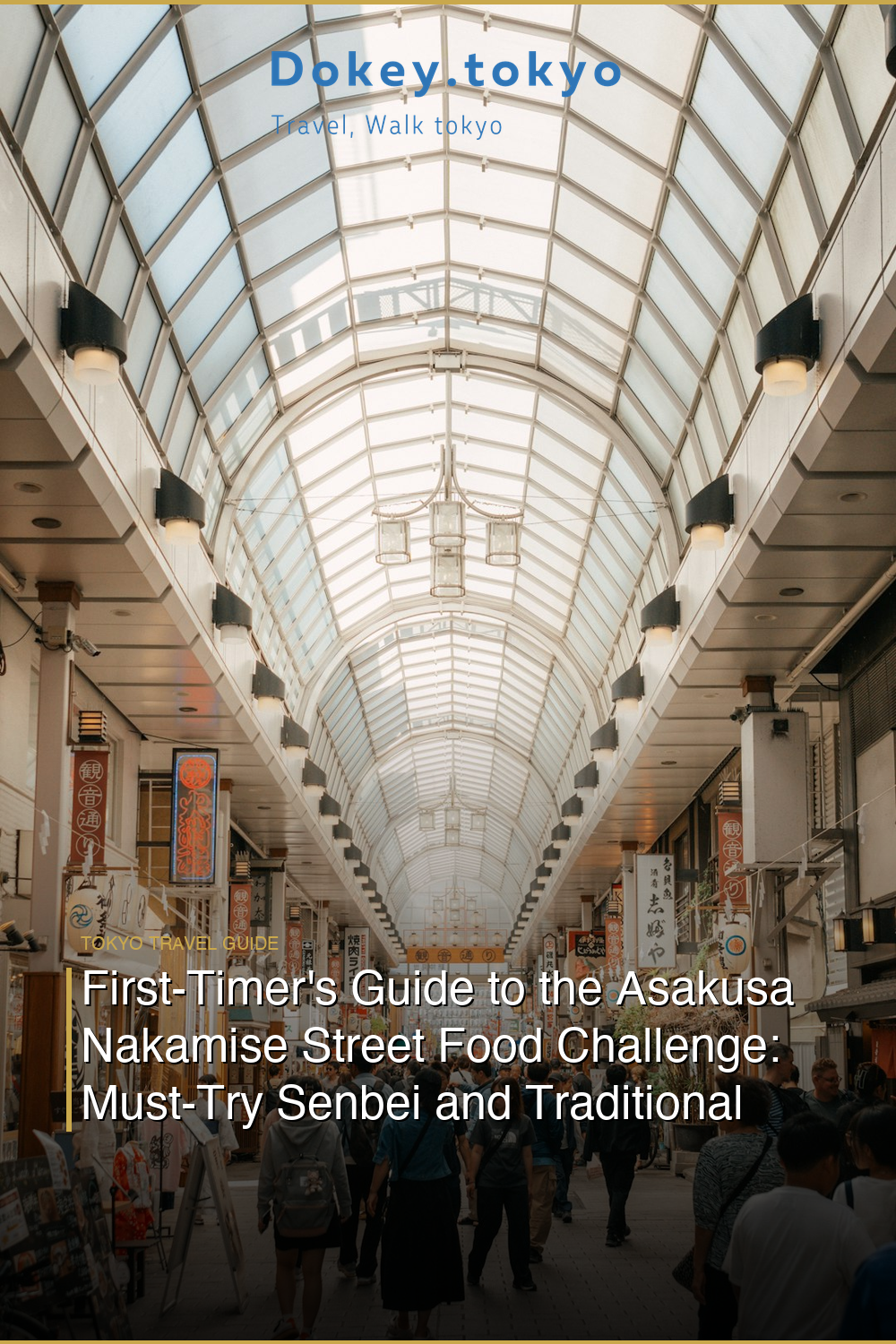
There’s a moment that happens to almost every first-time visitor to Asakusa — you step off the Ginza Line subway, walk toward the thundering red gate of Kaminarimon, and suddenly your senses are completely hijacked. The smell hits you first: something sweet, something smoky, something caramelized and ancient all at once. Then you see it — Nakamise-dori, a 250-meter corridor of traditional shops and wooden stalls stretching all the way to Senso-ji Temple, packed shoulder to shoulder with locals, schoolchildren, tourists, and grandmothers in kimono clutching paper bags of freshly made snacks. You want to try everything. You also have absolutely no idea where to start.
I remember the first time I walked down Nakamise like it was last Tuesday. It was a cool October morning, maybe 9:30 a.m., and the street was just waking up — shopkeepers sliding open their wooden shutters, the sharp crack of senbei hitting a wire grill, the faint trace of sesame oil warming in the autumn air. I stood at the entrance with my paper map (yes, actual paper) and felt genuinely, joyfully lost. That feeling, I later realized, is exactly the point.
If you’re visiting Asakusa for the first time and want to make the most of the legendary Nakamise street food scene without wasting money on tourist traps or accidentally skipping the best bites, this guide is written specifically for you.
What Is Nakamise-Dori and Why Does It Matter?
🗾 Book on Viator: Historic Tokyo district walking and cult →
Nakamise Shopping Street is one of Japan’s oldest shopping streets, with a history stretching back over 1,700 years — almost as old as Senso-ji Temple itself. Originally, the stalls were operated by locals who were granted the right to sell goods along the temple approach in exchange for keeping the grounds clean. Today, around 89 official shops line the main arcade, and dozens more spill into the surrounding side streets of Shin-Nakamise and the old Nishi-Sando area. If you’re interested in exploring other historic shopping arcades in Tokyo, Kuramae Nakamise’s hidden craft quarter offers a similarly immersive experience with a focus on artisanal goods.
For a first-time visitor, this street is not just a shopping experience — it’s a living, edible introduction to Edo-period food culture. The snacks sold here aren’t modern tourist inventions. Many recipes have been passed down through the same families for four or five generations. When you bite into a freshly grilled senbei here, you’re tasting something people have been tasting in this exact spot for centuries.
The Senbei Challenge: Everything You Need to Know Before You Eat
🗾 Book on Viator: Asakusa shrine, market, and fish market →
Senbei (煎餅) are Japanese rice crackers, and Nakamise is ground zero for some of Tokyo’s finest. But not all senbei are created equal — and as a first-timer, knowing the difference will save you from spending 500 yen on a stale pre-packaged cracker from a glass display case when the freshly grilled version is right next to it.
Freshly Grilled Senbei vs. Pre-Packaged
The most important rule on Nakamise: always look for the smoke. Shops that grill senbei to order in front of you — usually over charcoal or an electric grill — are the ones worth stopping at. The crackers arrive warm in your hand, slightly crispy on the outside, chewy in the center, and brushed with a dark, savory soy glaze that caramelizes in the heat. The sound is part of the experience: a rhythmic tapping, a hiss of soy sauce hitting hot rice, the occasional soft crunch as the shopkeeper turns the cracker with tongs.
Look specifically for Kuya (久や), a Nakamise staple that grills thick, hand-shaped senbei in classic shoyu (soy sauce) and also offers nori-maki versions wrapped in a sheet of toasted seaweed. The nori maki senbei is, in my completely non-negotiable opinion, one of the top five things you can put in your mouth in all of Tokyo.
Flavor Profiles to Try
- Shoyu senbei — The classic. Bold, salty, umami-forward. Pairs well with literally everything.
- Shichimi senbei — Brushed with seven-spice blend (shichimi togarashi). A gentle heat that builds slowly.
- Ume (plum) senbei — Tart, slightly sweet, and utterly addictive.
- Sweet senbei (sugar-coated) — A thin, brittle cracker with a crystallized sugar crust. Perfect for those with a sweet tooth.
I once asked a shopkeeper at a grill near the middle of the arcade which flavor she recommended for a first-timer, and without hesitating she handed me a still-warm shichimi senbei from the grill — no charge, just a gesture. “First time?” she said in English, smiling. “Start with this one. It explains Japan.” I’ve never forgotten that.
Beyond Senbei: The Full Nakamise Traditional Snack Lineup
🗾 Book on Viator: Tokyo market food walking with tastings →
Senbei might be the headliner, but Nakamise’s supporting cast is just as extraordinary. Here’s what a first-timer absolutely must not walk past.
Ningyo-yaki (人形焼き)
These small, golden, cake-like sweets are shaped like the five characters of Senso-ji — the thunder god, the wind god, lanterns, pigeons, and the temple’s famous kaminari (thunder) crest. They’re made fresh, poured into iron molds, and filled with sweet red bean paste (anko). The outside is a soft, slightly crispy castella-style sponge. Eat them hot. Do not wait. The difference between a hot ningyo-yaki and a cold one is the difference between magic and a snack.
Imo-yokan (芋羊羹)
A dense, wagashi-style sweet made from sweet potato and sugar, pressed into a firm block and served in slices. It sounds simple. It is extraordinary. The natural sweetness of the Japanese satsumaimo (sweet potato) comes through cleanly, with a slightly earthy finish. Funawa (舟和) is the legendary shop for this — they’ve been making it since 1902 and have a Nakamise-area location that always has a small line.
Kaminari Okoshi (雷おこし)
The unofficial snack of Asakusa. These puffed rice and sugar crackers are sold in tall, colorful boxes and come in flavors ranging from original and peanut to matcha, black sesame, and sakura. They’re crunchy, not too sweet, and genuinely easy to eat by the handful. The name means “thunder” — a nod to Kaminarimon Gate — and makes a perfect, lightweight souvenir for your first Japan trip.
Melonpan Ice Cream (Bonus Discovery)
This one isn’t ancient, but it’s glorious: several stalls now sell freshly baked melonpan (a sweet bun with a sugary cookie crust) sliced open and stuffed with soft serve ice cream. It’s warm, cold, crispy, creamy, and completely over the top in the best way. Look for the lines — there’s always a line.
Practical Tips for First-Time Visitors Tackling Nakamise
Best Time to Visit
For your first time, go early — aim to arrive by 9:00 to 9:30 a.m. Most shops open around 10:00 a.m., but the few that are already operating serve a peaceful, uncrowded Nakamise that feels entirely different from the midday chaos. Alternatively, arrive around 4:30 p.m. when the crowds thin and the afternoon light turns the red lanterns golden.
Avoid weekend afternoons between 11:00 a.m. and 2:00 p.m. unless you enjoy being gently crushed by enthusiastic tourists — myself included on my second visit.
Budget Breakdown
Nakamise is genuinely one of the most affordable food experiences in Tokyo. A single freshly grilled senbei costs around ¥150–¥300 (approximately $1–$2 USD). A bag of kaminari okoshi runs ¥400–¥600. A ningyo-yaki set of five pieces is usually under ¥500. Budget around ¥2,000–¥3,000 total (about $15–$20 USD) for a full Nakamise snack crawl, and you’ll eat like royalty. For those planning to explore street food across multiple Tokyo neighborhoods, Yokohama Chinatown’s budget food tour offers another excellent low-cost eating experience just a short train ride away.
Navigation Strategy
Don’t rush straight down the main arcade on your first pass. Walk the entire length once, hands in pockets, just looking. Note what’s smoking, where the lines are, what smells call to you. Then double back and eat with intention. The side streets — particularly the alleys just west of the main arcade near Shin-Nakamise — hide older, less-visited shops that often have the most character and the least markup.
The Moment That Still Stays With Me
On one late-October afternoon visit, the sky had gone that particular shade of deep blue that only exists in Japan in autumn, and the paper lanterns along Nakamise had just flickered on. I was standing outside a tiny senbei stall near the temple end of the arcade, holding a warm nori-maki cracker with both hands, watching a grandmother in a pale lavender kimono share a bag of ningyo-yaki with her granddaughter — the little girl biting the thunder god’s head off first, giggling. The cracker in my hands was still warm enough to steam faintly in the cool air. I took a bite, and between the soy and the sesame and the sound of temple bells starting to ring somewhere behind Senso-ji, I thought: this is why you travel.
Making Your Nakamise Visit Count
Nakamise-dori is one of those rare places that genuinely lives up to its reputation — but only if you show up hungry, curious, and willing to follow the smoke. As a first-time visitor to Tokyo, this street is one of the single best introductions to what Japanese food culture actually feels like at street level: generous, precise, unassuming, and quietly extraordinary. If you’re planning to dive deeper into Tokyo’s traditional shopping and food culture, our guide to Senso-ji and Nakamise souvenirs provides additional context on the best local treats to bring home.
Bring cash (most stalls don’t take cards), wear comfortable shoes, and whatever you do — don’t skip the freshly grilled senbei. Let the shopkeeper choose the flavor for you. Trust me on this one.