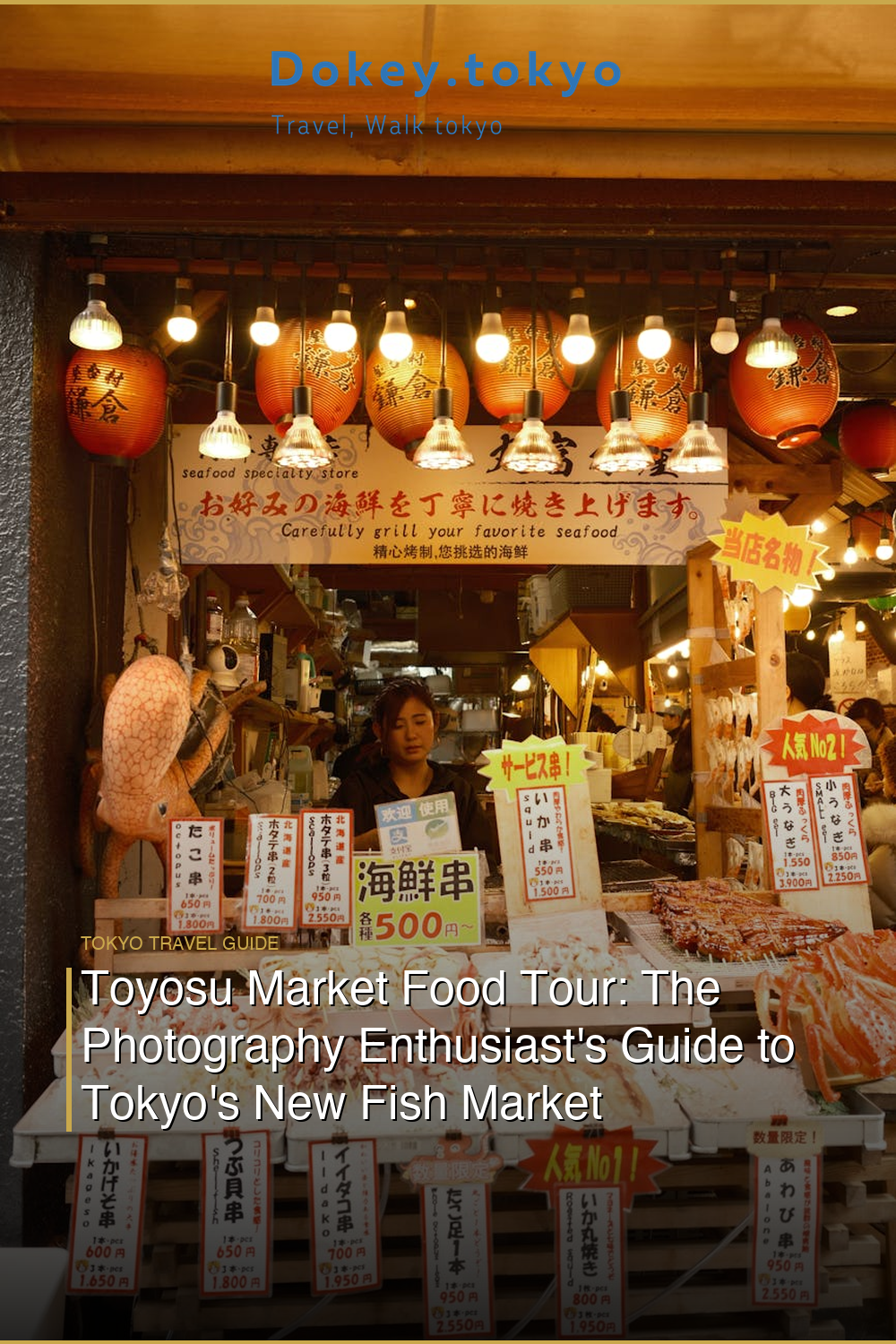
If you’ve ever stood inside Tsukiji Outer Market at 7am, camera in hand, elbowing through tour groups to photograph a grilled scallop that twenty other people are also shooting — you know exactly why Toyosu Market feels like a revelation. Moved from its legendary predecessor in 2018, Toyosu is bigger, cleaner, and frankly, more photogenic than most travel bloggers will admit. The modern glass-and-steel architecture creates an industrial drama that Tsukiji’s cramped alleyways simply couldn’t offer. And the food? It hasn’t gone anywhere. In fact, the restaurants inside Toyosu are among the freshest, most serious seafood dining experiences in all of Japan.
I remember stepping off the Yurikamome Line at Shijo-mae Station at 5:47am on a cold February morning, the sky still ink-black above Tokyo Bay. The market’s outer viewing galleries were already humming with a low mechanical vibration — forklifts gliding past massive frozen tuna like a slow ballet — and the air hit me immediately: a sharp, saline coldness, like walking into the inside of the ocean itself. I had my wide-angle lens mounted and my hands were already trembling, though I couldn’t tell if it was the cold or the anticipation.
Why Toyosu Market Is a Photographer’s Dream
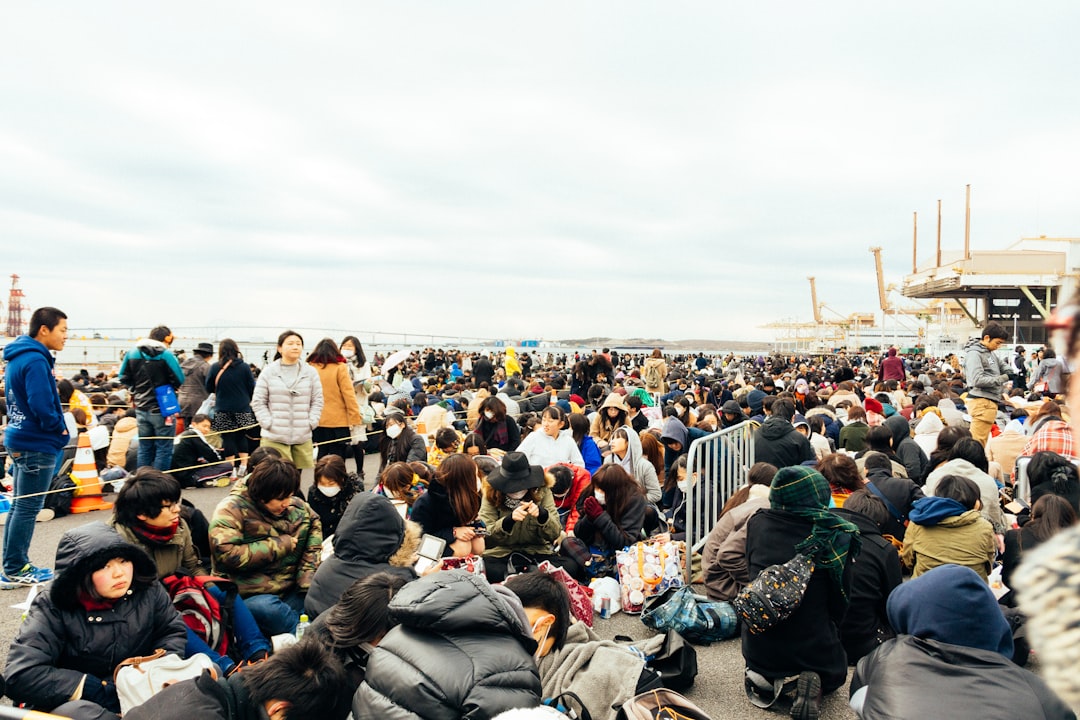
Let’s get something straight: Toyosu is not Tsukiji. Tourists who arrive expecting the chaotic, film-set energy of the old market sometimes feel disappointed — and that disappointment is their loss. For photographers, Toyosu’s design is genuinely brilliant. The intermediate wholesale area and the tuna auction floor are visible through elevated glass corridors, which means you’re shooting down at working fishmongers and towering stacks of bluefin tuna from above, with natural light filtering in from large windows. This top-down perspective creates images you simply cannot replicate at ground level.
The Tuna Auction Viewing Gallery
The tuna auction is the crown jewel, and it runs in the early morning hours starting around 5:30am. A limited number of visitor passes are available — apply online in advance through the Tokyo Metropolitan Central Wholesale Market website, because these spots fill up weeks ahead, especially on weekends. Arrive early. The gallery opens before the auction begins, and the pre-auction stillness — rows of glistening, frozen tuna tagged with handwritten bid cards under harsh fluorescent light — is actually more visually striking than the auction frenzy itself. Shoot wide to capture the scale, then switch to a longer focal length to isolate individual fish and the auctioneer’s hand gestures.
Industrial Architecture as Your Backdrop
The market’s Fruit and Vegetable Building and the Fish Intermediate Wholesale Market both have long, cavernous corridors that create extraordinary leading lines. Visit between 6:30am and 8:00am when carts loaded with polystyrene boxes are being wheeled at speed through these passages — the motion blur against sharp background detail is something that requires almost no post-processing to look cinematic. Bring a lens that handles low-light well, because the interior lighting is a mix of fluorescent and natural, and it rewards a camera body with solid high-ISO performance.
The Food Tour: What to Eat and How to Photograph It
🗾 Book on Viator: Tuna Auction & Toyosu Market Tour →
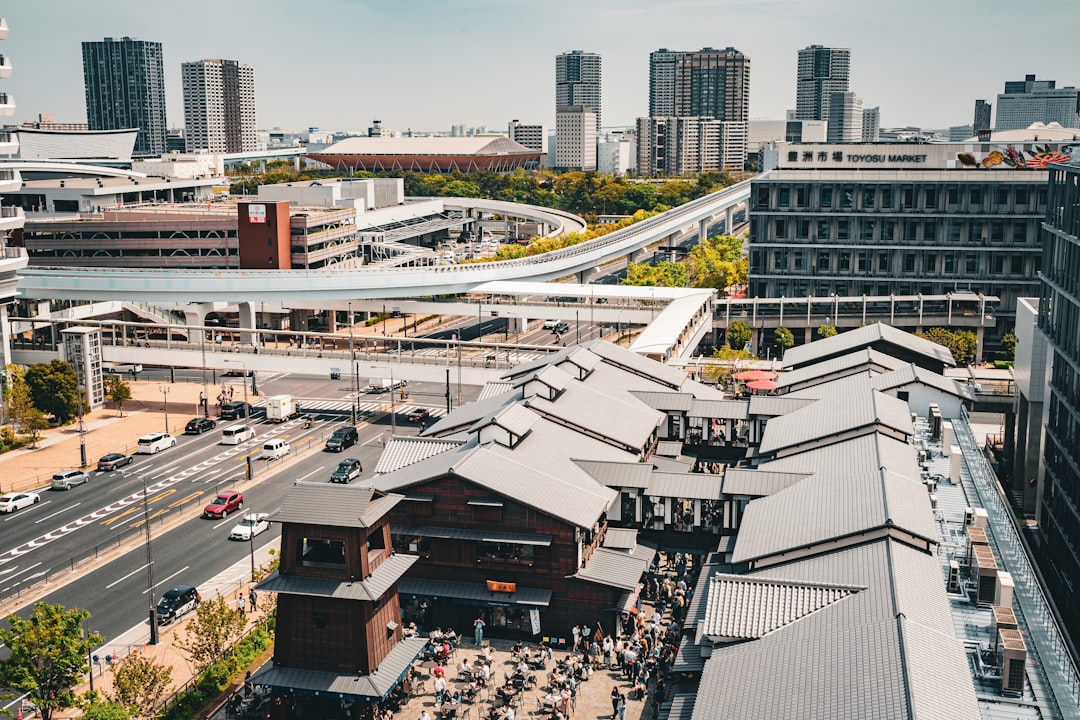
Here’s where your food tour begins in earnest. Toyosu Market has a dedicated restaurant zone called the Uogashi Yokocho (Fish Market Alley) on the sixth floor of the Fish Intermediate Wholesale Market building. This strip of maybe a dozen restaurants opens as early as 5am and serves the people who actually work here — that alone tells you everything about the quality.
Uni Don (Sea Urchin Rice Bowl)
This is the dish you came for. Order the uni don at any of the sit-down restaurants inside the market and you’ll receive a lacquered bowl of warm sushi rice topped with a golden mound of creamy, just-shucked sea urchin. The color contrast — deep orange uni against white rice, often garnished with a single shiso leaf — is a gift to any food photographer. Shoot from directly above using your phone or a compact camera if space is tight; the booths are small. Order during the first seating (before 7am) for the best light spilling through the restaurant windows.
Maguro Sashimi Sets
Bluefin tuna sashimi here isn’t just fresh — it’s that morning fresh, which changes the visual texture entirely. The flesh has a deep burgundy translucence rather than the dull red you find at most supermarkets. Use a shallow depth of field to focus on the leading edge of a slice with the rest falling into soft bokeh. Ask for the set that includes both akami (lean tuna) and otoro (fatty tuna) for the visual contrast between the two.
One discovery that genuinely stopped me mid-bite: a tiny counter restaurant near the far end of the alley — I won’t name it because the sign is only in Japanese and that’s half the fun — serves a grilled tuna collar (kama) as an off-menu morning special. The oyaji behind the counter, a weathered man in his sixties with a white headband, pointed at my camera and said something in Japanese that his colleague translated as: “Don’t photograph until you taste first.” He was right. The first bite of charred, fatty meat near the jaw bone was so intensely flavored that I genuinely forgot I had a camera in my hand for about ninety seconds.
Tamagoyaki and Supporting Cast
Don’t sleep on the thick, sweet tamagoyaki (rolled omelette) sold at market stalls. It’s bright yellow, perfectly rectangular, still warm, and photographs beautifully against the rustic wooden counter surfaces. It’s also typically under ¥300 and requires zero Japanese language skills to purchase — just point. If you’re interested in exploring other food-focused market experiences in Tokyo, Senso-ji and Nakamise offers a completely different vibe with local food stalls and traditional snacks.
Practical Tips for the Photography-Focused Food Tripper
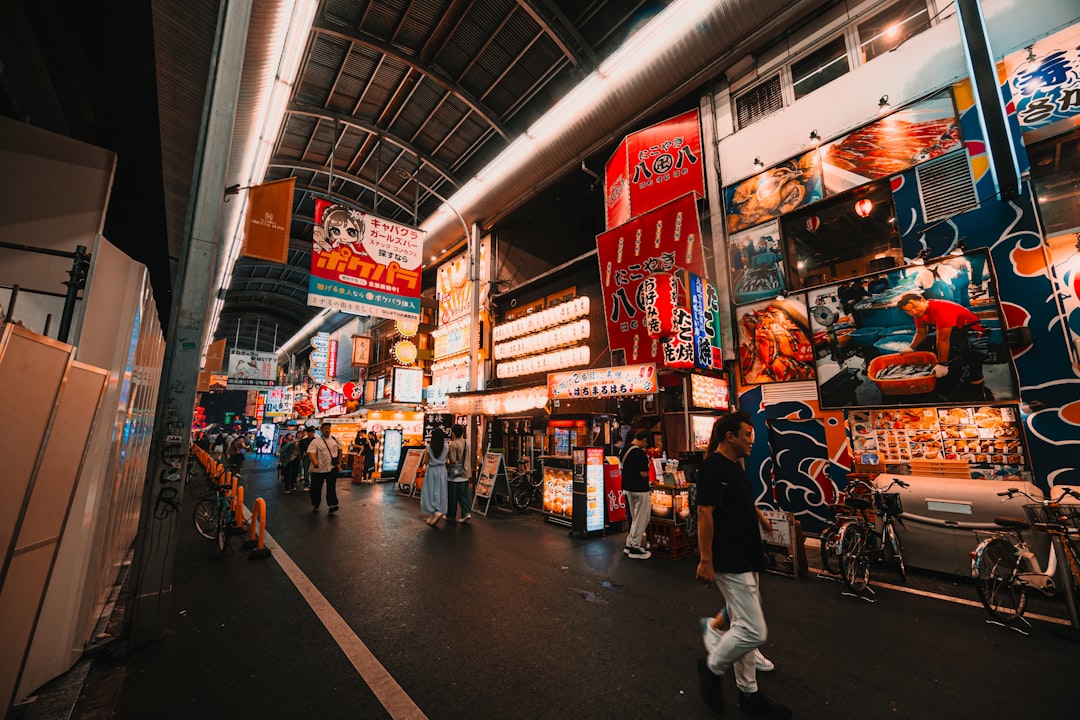
Getting There
Take the Yurikamome Line from Shimbashi Station to Shijo-mae Station (市場前駅) — it’s the most direct route and costs around ¥400. The monorail ride itself, curving above Tokyo Bay at dawn with the Rainbow Bridge visible in the background, is worth having your camera ready before you even arrive.
What to Bring
- A mirrorless or DSLR body with solid high-ISO performance (ISO 3200 minimum)
- A wide-angle lens (16–35mm equivalent) for the auction gallery and corridors
- A 50mm or 85mm for food close-ups
- A lightweight travel tripod or gorilla pod for low-light corridor shots (check regulations at the viewing gallery)
- A compact carry-on bag rather than a rolling suitcase — the market floors get busy and you need to move fast
Best Time to Visit
The absolute golden window is 5:30am to 8:30am. By 9am, the wholesale trading winds down, the energy drops, and the photographic opportunities thin out significantly. The market is closed on Wednesdays, Sundays, and Japanese public holidays — always verify the official holiday schedule before you plan your trip, because a wasted early alarm is a painful thing.
Respecting the Space
This is a working market, not a tourist attraction — at least to the people inside it. Keep your camera out of workers’ faces without acknowledgment. A small nod and a smile before raising your lens almost always earns you a nod back, and occasionally something better: a fishmonger who waves you closer to show you a particularly spectacular piece of tuna, holds it up like a trophy, and grins while you shoot. I’ve had this happen more than once at Toyosu, and it never gets old.
Beyond the Market: The Surrounding Area
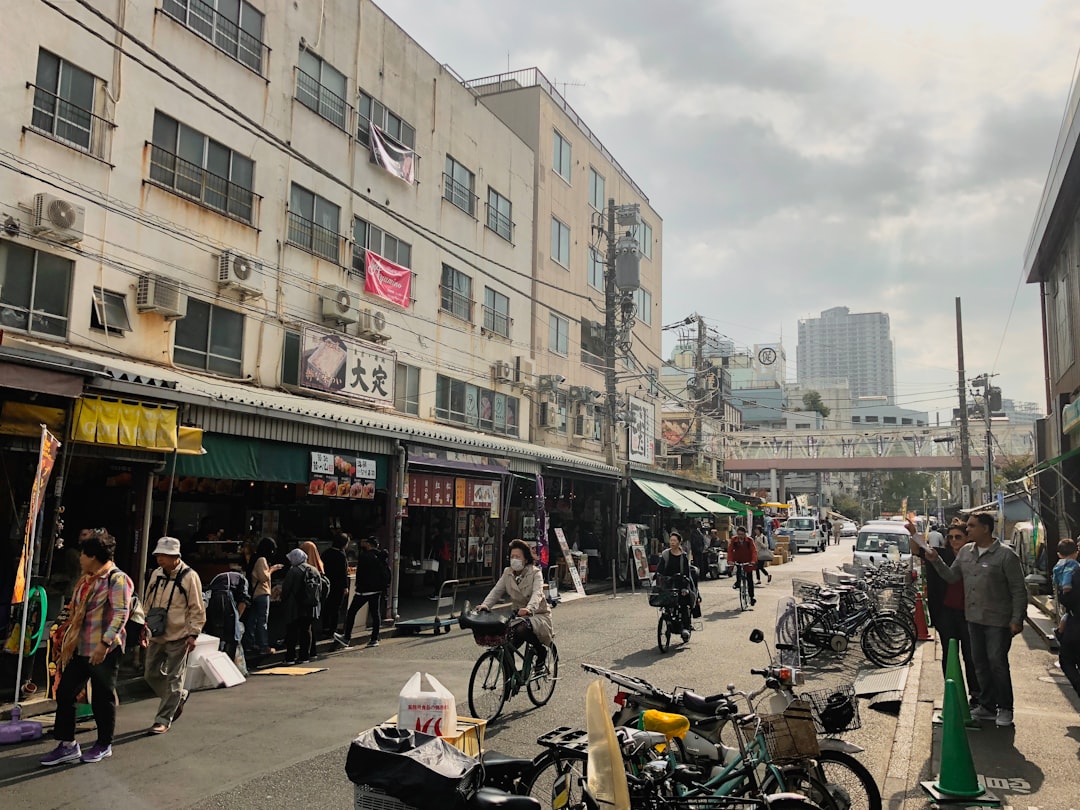
Toyosu Market sits in a modern waterfront district that offers a few unexpected photography extensions. The teamLab Planets art installation is a ten-minute walk away and opens later in the morning, making it a natural second stop after your market breakfast. The reflective water floors and immersive digital gardens offer a jarring, beautiful contrast to the raw industrialism of the fish market. If you shoot both in the same morning, your editing folder will look like two different cities — which, in a way, is exactly what Tokyo is.
Just before I left on my most recent visit, I sat on a concrete barrier outside the market at around 8:15am, eating a small container of salmon roe I’d bought for ¥500 from a stall vendor, spooning individual orange pearls onto a cracker while the morning sun finally broke through the cloud cover and lit up the bay in a flat, silver-gold sheet. A cargo ship was moving slowly in the distance. Every worker who walked past me looked purposeful, unhurried, completely at home in this enormous building. I took exactly one photograph in that moment — of my own hand, holding the container, the market entrance blurred behind it — and it’s still the image I think of when someone asks me what Toyosu actually feels like.
Final Thoughts
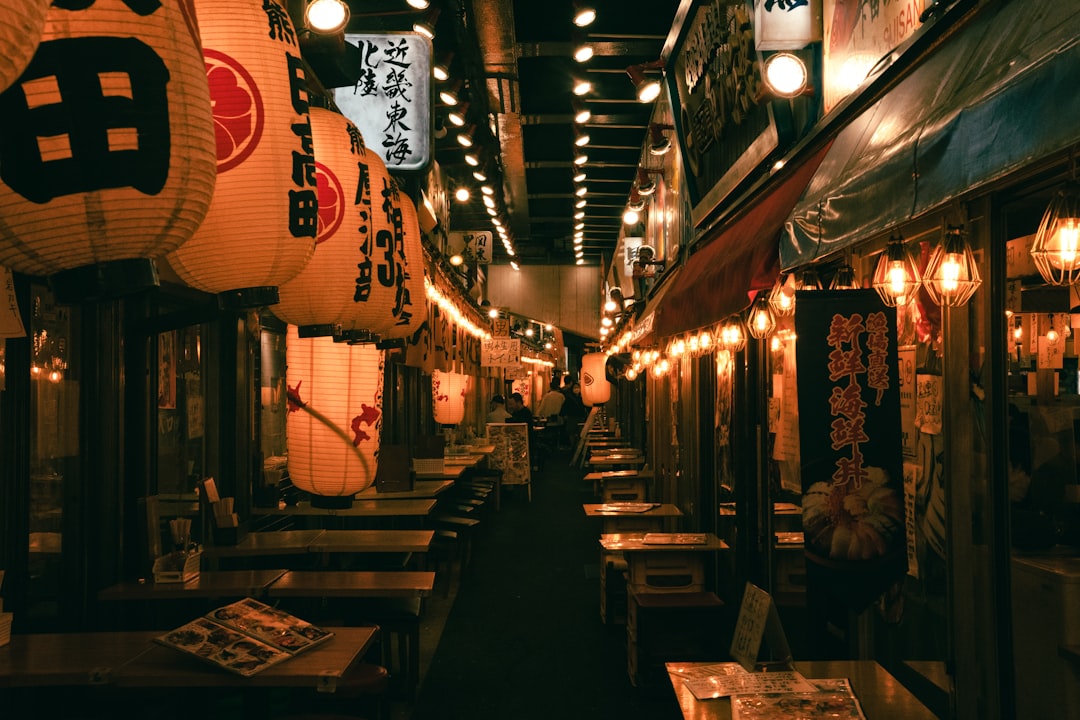
Toyosu Market doesn’t hand you its best moments — you have to show up early, plan your auction visit in advance, eat without overthinking, and keep your eyes open for the light that changes every twenty minutes as the sun climbs above Tokyo Bay. For photographers who love food and food culture, there is genuinely no other morning experience in Tokyo that rewards this level of intentionality. Tsukiji was magic, and its outer market still thrives. But Toyosu is where Tokyo’s seafood future lives, and if you bring a good camera and a real appetite, it will absolutely deliver.
Ready to experience it?
🗾 Book on Viator: Morning Market Adventure: Toyosu & Tsuki →