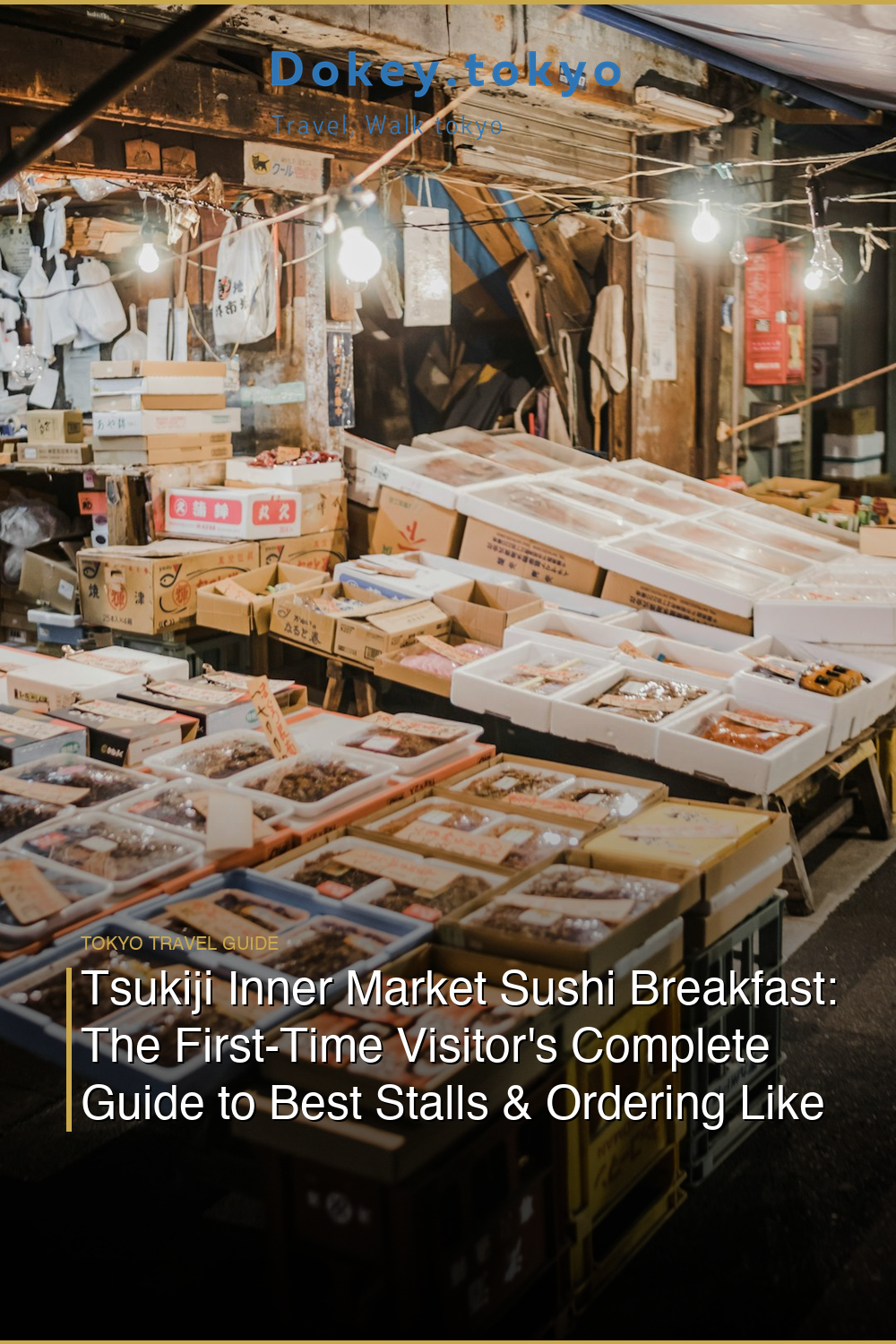
There’s a moment — and if you go, you’ll know exactly what I mean — when you round the corner into Tsukiji’s inner market at 7am and the whole world suddenly smells like the ocean. Not in a bad way. In a primal, deeply alive way, like the sea itself has been compressed into one narrow alley lined with white-aproned vendors, styrofoam coolers, and the sound of knives hitting wooden boards in a rhythm that feels almost musical. For first-time visitors to Tokyo, this experience is genuinely disorienting in the best possible way — nothing prepares you for how simultaneously chaotic and choreographed it all is.
The first time I pushed through that crowd, rolling suitcase still in tow because I’d come straight from Narita, I nearly collided with a vendor carrying an enormous tuna collar on his shoulder like it was nothing. The cold morning air was sharp against my face, steam rising from miso soup cups being handed through tiny windows, and I stood there for a full thirty seconds just breathing it in — fish, salt, charcoal smoke, and something sweet I couldn’t identify until I spotted a woman grilling tamagoyaki right beside me. I was absolutely lost, completely underprepared, and somehow already certain this was the best decision I’d ever made.
What Is Tsukiji Inner Market (and Why You’re Going to the Right Place)
Let’s clear up the confusion that trips up almost every first-time visitor: there are two Tsukijis. The famous tuna auction moved to Toyosu Market in 2018, and that’s where the big commercial wholesale action happens now. But the Tsukiji Inner Market — also called Jogai Market or the outer market — is very much alive, thriving, and frankly more accessible and delicious for tourists than it’s ever been.
This is a labyrinth of roughly 400 small shops and stalls packed into the streets around the original market site in Chuo, Tokyo. The vendors here are mostly third and fourth-generation fishmongers, egg vendors, and sushi chefs who have been feeding Tokyo professionals and food pilgrims for decades. For first-time visitors especially, this is the real Tokyo food experience — no conveyor belts, no English menus laminated to the wall, just extraordinary fish and people who take serious pride in what they do.
When to Arrive: The First-Timer’s Timing Strategy
🗾 Book on Viator: Tsukiji Fish Market Food Walking Tour →
Forget what you read about needing to show up at 4am. That advice is outdated and honestly unnecessary unless you’re trying to photograph vendors restocking. For a sushi breakfast as a first-time visitor, the sweet spot is between 6:30am and 8:30am.
By 6:30am, the serious prep work is done and the good stuff — the uni, the fatty tuna, the freshly made tamago — is out and ready. Arrive after 9am and you’ll find longer lines, more tour groups, and some of the best items already sold out. The market officially winds down around noon, so don’t sleep in.
Getting There
Take the Tokyo Metro Hibiya Line to Tsukiji Station (Exit 1). It’s a two-minute walk. Avoid driving — the surrounding streets are a nightmare of delivery trucks before 9am.
The Best Sushi Stalls for First-Time Visitors
🗾 Book on Viator: Tsukiji Fish Market Food and Walking Tou →
🗾 Book on Viator: Tsukiji Fish Market Private Food Tour →
Here’s the honest truth: Tsukiji inner market does not have a single “best” stall. What it has is a collection of incredible specialists, and the magic is in building your breakfast from multiple stops like a seafood crawl. Think of it less like going to a restaurant and more like composing a meal, bite by bite.
Sushi Dai and Daiwa Sushi: The Famous Names Worth the Wait
Yes, these two sushi counters at the back of the market near the former auction building have legendary reputations, and yes, there will be a line. As a first-time visitor, I’d say do it once — but go on a weekday, arrive by 6am if you want to sit at Sushi Dai specifically, and understand you’ll wait 45 minutes to two hours. The omakase set at Sushi Dai (around ¥4,000–¥5,000) is a genuine 10-piece revelation. The maguro here almost dissolves before you can fully register it.
That said, don’t make this your only stop. The hidden joy of Tsukiji is grazing.
Nakaya: The Tamagoyaki Institution
Before anything else — even before sushi — find Nakaya and buy a piece of their dashimaki tamago on a stick. It’s warm, custardy, faintly sweet, and unlike any egg you’ve had before. This is a perfect first bite for first-time visitors because it costs about ¥150 and eases you in gently before you start spending on premium tuna. I discovered on my third visit that if you ask nicely, they’ll cut you a thicker end piece that’s slightly more eggy and less structured — the vendor, an older woman who clearly found my fumbling Japanese charming, handed it to me with a grin and said something I didn’t catch, but her tone said this is the good part.
Yonehana: The Teishoku Counter Hidden in Plain Sight
If you want to sit down and have a proper cooked breakfast alongside your sushi, look for Yonehana, a tiny counter tucked into the market that serves teishoku-style breakfasts — grilled fish, rice, miso, pickles — to market workers. It’s one of the least tourist-facing spots in the area and one of the most authentic. Arrive before 7:30am or you won’t get a seat.
Freshest Uni and Ikura: Look for Specialty Shellfish Vendors
For first-time visitors who want to try sea urchin, skip the tourist-facing stalls at the market entrance and walk deeper into the covered alleys. The uni here, particularly from Hokkaido, is sweeter and creamier than almost anything you’ll find in a standard Tokyo sushi restaurant. Budget around ¥1,500–¥2,500 for a small tray with rice.
How to Order Like a Local: A First-Timer’s Honest Script
This is the part that intimidates most first-time visitors most — and I promise it’s easier than it looks. Here’s what actually works:
Point confidently. Almost every stall has the product visible. Eye contact, a nod toward the item, and holding up one finger works universally. No Japanese required.
Learn three phrases:
– Kore wo kudasai (これをください) — “I’ll have this, please”
– Ikura desu ka (いくらですか) — “How much is it?”
– Oishii! (おいしい!) — “Delicious!” — Use this liberally. Vendors genuinely light up.
Carry cash. Most stalls are cash-only. Bring at least ¥5,000–¥8,000 for a full breakfast crawl with multiple stops. ATMs are available at the 7-Eleven just outside the market.
Don’t linger at the counter. This is a working market. Eat standing or step to the side. Stall owners appreciate efficiency — they have regulars to serve.
Skip the premium sets if you’re budget-watching. Many stalls offer à la carte pieces for ¥200–¥600 each. A phenomenal breakfast of 5–6 pieces plus tamago and miso soup can cost under ¥3,000 if you shop strategically.
What to Eat Beyond Sushi
🗾 Book on Viator: Tsukiji Fish Market Food Walking Tour →
First-time visitors sometimes tunnel-vision on sushi and miss the other extraordinary things happening in these alleys:
- Grilled tuna jaw (kama) — smoky, rich, messy, and unforgettable
- Oysters on the half shell — eaten cold with a squeeze of lemon right at the counter
- Fresh scallops grilled in the shell with butter and soy
- Clam miso soup — many stalls offer this for ¥300–¥500 and it is the most restorative thing you can drink at 7am
Navigating the Market Without Losing Your Mind
🗾 Book on Viator: Tsukiji Fish Market Food and Walking Tou →
🗾 Book on Viator: Tsukiji Fish Market Private Food Tour →
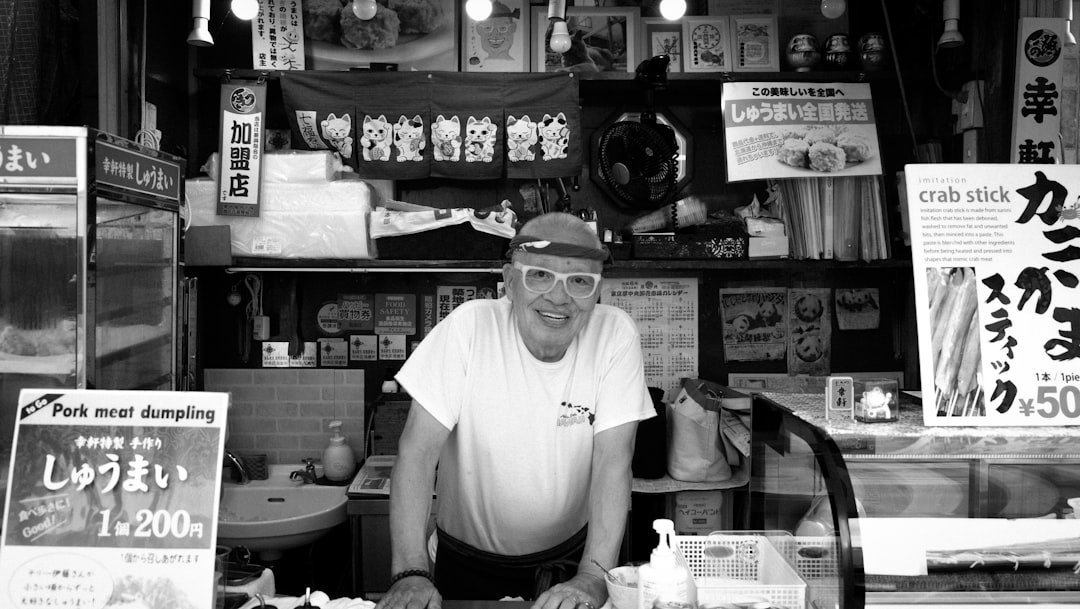
Tsukiji inner market is genuinely confusing for first-time visitors. The alleys are narrow, there are no clear maps posted, and the layout rewards wandering over planning. My practical advice: don’t plan. Walk in, follow your nose, stop when something looks incredible, and double back when you get lost. Getting lost is the experience.
Wear comfortable shoes you don’t mind getting wet — the lanes are often hosed down and perpetually damp. Dress in layers because it’s cold early, then warms quickly as the crowds build. Leave your rolling suitcase at the hotel.
At around 8am on my most recent visit, I found a small counter with no signage I could read, run by a man who looked to be in his seventies with the kind of focused quiet that made me not want to disturb him. I pointed to the otoro — the fatty tuna belly — and he placed two pieces in front of me without a word. The first piece hit my tongue and I actually closed my eyes without meaning to. It was that specific kind of richness that isn’t heavy, that kind of umami that makes you understand why people fly across the world for a piece of fish. He glanced at me when I opened my eyes and gave a single, small nod, like he’d seen that reaction ten thousand times and still found it satisfying.
Final Practical Notes for First-Time Visitors
- Best days: Tuesday through Friday. Monday can be slow after weekend closures; weekends are crowded with domestic tourists.
- What to skip: Any stall with a large English menu board at the front and photos of sushi. These are fine, but you can do better.
- Combine with: A walk to nearby Hamarikyu Gardens afterward to decompress. The 30-minute stroll along the Sumida River after breakfast is genuinely peaceful.
- Budget benchmark: ¥3,000–¥6,000 for a full, excellent breakfast experience.
Tsukiji on your first Tokyo trip isn’t just a meal. It’s a two-hour immersion in how this city actually works — efficiently, proudly, with enormous skill applied to things most people take for granted. Go hungry, go early, and go without a rigid plan. The market will take care of the rest.