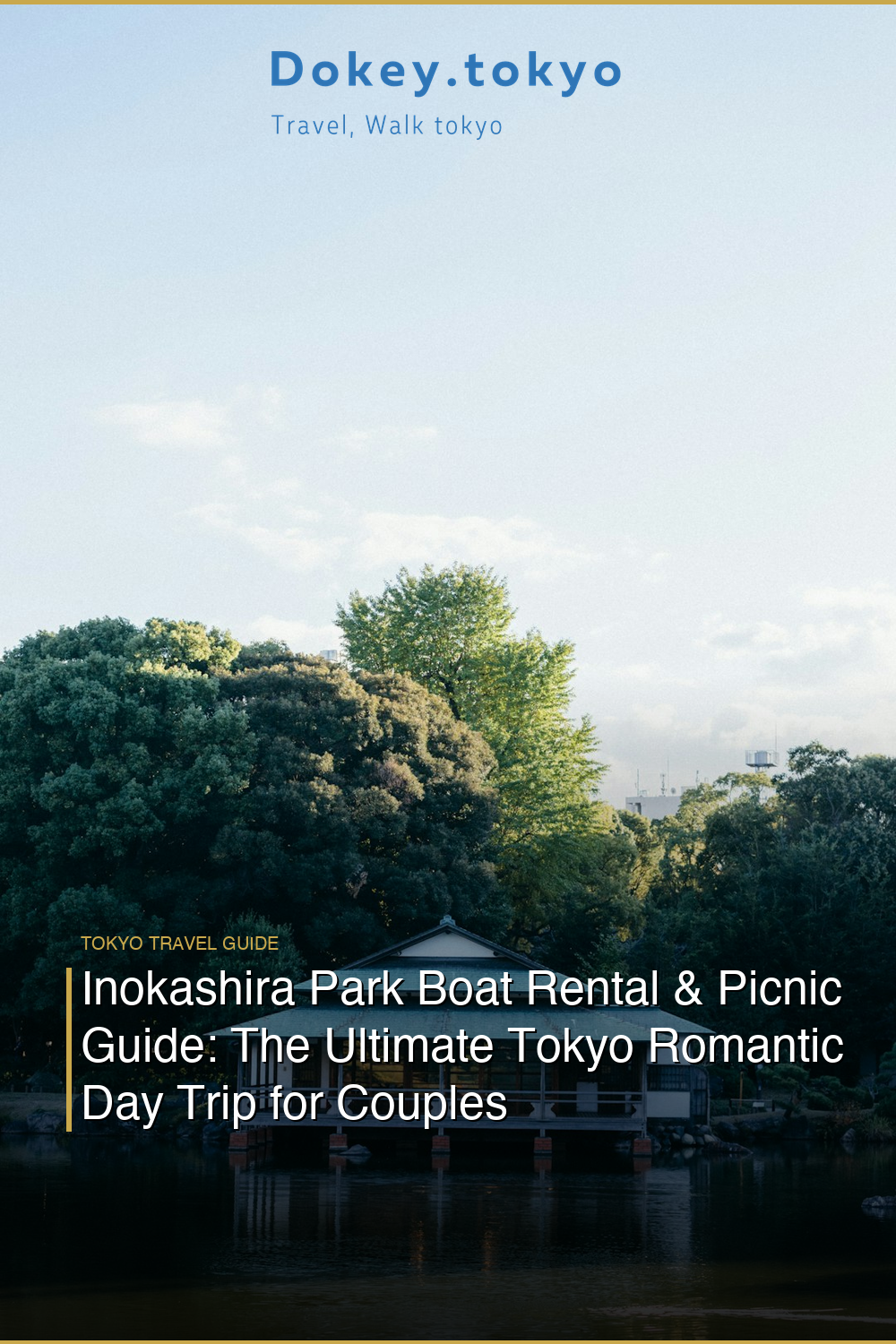
There’s a moment that happens on Inokashira Pond when the paddle boat stops and the city just… disappears. The skyscrapers vanish behind a curtain of zelkova trees, the usual Tokyo roar softens into birdsong and the gentle slap of water against your hull, and you look at the person across from you and think — this is why we came to Japan. Inokashira Park, tucked into the leafy Kichijoji neighborhood in western Tokyo, is the kind of place that Tokyo insiders cherish and first-time visitors almost always miss. If you and your partner are craving a break from the neon-drenched intensity of Shinjuku or Shibuya, this park offers something genuinely rare in one of the world’s most densely packed cities: slow, romantic stillness.
I still remember the first time I stepped through the park’s main entrance on a Tuesday morning in late March. The air smelled like damp earth and something sweet — the faint sugary drift of yakitori smoke from a vendor just outside the gates — and the pale pink cherry blossoms were maybe three days from full bloom, holding their breath. My travel companion grabbed my arm and just said, “Oh.” That one syllable said everything.
Why Inokashira Park Is Tokyo’s Best Kept Romantic Secret
Most travel guides point couples toward Shinjuku Gyoen or Ueno Park, and while those are beautiful, they’re also enormous and often crowded with tour groups. Inokashira Park has a neighborhood-intimate quality that larger parks can’t replicate. The park wraps around a central pond roughly 600 meters long, and everything — the boat dock, the picnic lawns, the small Benzaiten shrine, the food stalls, the zoo entrance — is within easy walking distance of everything else. Nothing feels like an expedition here. It feels like your own backyard.
The park sits a gentle 15-minute walk from Kichijoji Station, or you can exit directly at Inokashira-Koen Station on the Keio Inokashira Line. We always take the Kichijoji exit and walk through the shotengai shopping street on the way — past the mochi shops and vinyl record stores and tiny kissaten coffee counters — because that stroll is half the romance before you even arrive.
The Boat Rental: Everything Couples Need to Know
Types of Boats Available
The boat rental dock sits on the eastern side of the pond and is impossible to miss — just follow the sounds of laughing couples and the sight of those iconic white swan pedal boats gliding across the green water. You have two main choices:
Swan Pedal Boats (Swan Boats): These are the signature Inokashira experience. Two-person swan boats are ¥700 for 30 minutes. They’re kitsch in the best possible way — you’re essentially sitting inside a giant white plastic swan — and pedaling side by side with your partner while navigating around the weeping willows has an effortless romance to it.
Row Boats: For couples who want something that feels more classic and cinematic, the traditional rowboats are ¥600 for 30 minutes. One of you rows, one of you relaxes and trails their fingers in the water. You do the math on who gets which role.
Practical Booking Tips
The boat dock opens at 9:30 AM and closes at 5:00 PM (last boarding at 4:30 PM), with hours extending slightly in summer. There is no reservation system — it’s first-come, first-served — so on weekends during cherry blossom season (late March to early April), expect a wait of 30 to 60 minutes. My honest advice? Arrive at the dock before 10:00 AM on weekends, or come on a weekday when the wait is minimal. Weekday afternoons around 2:00 PM are genuinely magical — the light goes golden, the weekend crowds thin out, and the pond feels almost private.
One thing I discovered completely by accident on my third visit: if you ask the boat rental staff nicely about which corner of the pond is least trafficked, they’ll often point you toward the narrow western channel near the Benzaiten shrine. It’s shaded, quieter, and the overhanging branches make it feel like you’ve paddled into a Miyazaki film.
The Benzaiten Shrine: A Romantic Detour
Right in the middle of the pond sits a small island accessible by a wooden bridge, home to the Inokashira Benzaiten shrine. Benzaiten is the goddess of love, music, and beauty — and local legend claims that couples who row to the shrine together are cursed to break up. We went anyway, because frankly, I find romantic superstitions charming rather than alarming, and the shrine is genuinely beautiful. Whether you’re a believer or a skeptic, visiting together becomes its own playful shared memory.
The Picnic Guide: Where to Sit, What to Eat, and When to Go
Finding Your Perfect Picnic Spot
Inokashira Park has several distinct picnic environments, and choosing the right one for the mood you want matters.
The Main Lawn (East Side of the Pond): The largest open grassy area, best for sunny days when you want space to spread out a blanket. This is prime cherry blossom real estate in spring. It gets busy on weekends but has a festive, community energy that’s infectious.
The Wooded Northern Path: If you want intimacy over spectacle, walk the tree-lined northern path around the pond. There are scattered benches and small grassy clearings tucked between the trees. This is where I’d take a partner on a second or third visit, when you know the park well enough to explore beyond the obvious.
Near the Western Footbridge: A quieter, slightly hidden area where locals with dogs tend to gather in the late afternoon. Bring a blanket, face the water, and watch the light change.
What to Eat: Building the Perfect Inokashira Picnic
Kichijoji’s shotengai (covered shopping arcade) and the streets surrounding the park exit are a picnic-building paradise. Here’s what to look for:
Satou Meatshop Menchi Katsu: This is non-negotiable. Satou, a legendary butcher shop just outside Kichijoji Station’s north exit, sells freshly fried menchi katsu (minced beef and pork cutlets) from a street window. They cost about ¥240 each and the queue is always worth it — the crust shatters when you bite in and the inside is juicy, peppery, and deeply savory. Wrap them in the provided paper and carry them to the park while they’re still hot.
Bakery Bread from Andersen or Mominoki: Several excellent European-style bakeries in Kichijoji sell perfect picnic bread — crusty baguettes, soft milk rolls, and seasonal pastries that pair beautifully with Japanese convenience store cheese spreads.
Supermarket Sushi and Onigiri: The Inageya supermarket near the park entrance is stocked with excellent grab-and-go Japanese fare. Grab a pack of assorted nigiri, some inari sushi, and a couple of Pocari Sweat drinks, and you have a complete, affordable picnic for well under ¥2,000 per person.
Convenience Store Wine: Yes, really. Lawson and FamilyMart near the station carry surprisingly decent small-bottle wines and canned chu-hi cocktails. Sitting on a park blanket with a canned yuzu sour in hand, watching the swan boats drift past, is one of Tokyo’s most underrated pleasures.
Best Times to Visit for Couples
Cherry Blossom Season (Late March–Early April): The most romantic, the most crowded. Worth the chaos if this is your first Tokyo spring. Book your accommodation in Kichijoji early.
Golden Week and Summer Evenings: The park stays open and lively into summer. Evening picnics in late June and July, when the fireflies occasionally appear near the water’s edge, are extraordinary.
Autumn Foliage (November): The zelkova and ginkgo trees turn amber and copper, and the reflected colors on the pond water make every photograph look composed. November is the hidden gem season — fewer tourists, comfortable temperatures, and softer light.
Weekday Winter Mornings: If you want the park almost entirely to yourselves, a crisp January or February morning is startlingly peaceful. Bring good coats and buy hot canned coffee from the park vending machines.
Getting There and Nearby Additions to Your Day
Take the Keio Inokashira Line from Shibuya Station directly to Kichijoji (about 30 minutes, ¥200). After the park, spend the evening exploring Kichijoji’s eating and drinking scene — particularly the Harmonica Yokocho alley, a labyrinth of tiny bars and izakayas where you can share small plates of yakitori and cold Sapporo and disappear into a very Tokyo kind of evening intimacy.
It was our last evening in Tokyo on that same March trip, and we’d gone back to the park at 4:45 PM — almost closing time — just to sit by the water one more time. The vendor near the entrance was wrapping up, and she handed us two slightly bent mitarashi dango skewers (the ones with the sticky soy glaze) at a discount because she was closing down. We sat on a stone wall with our legs dangling, eating the warm, chewy dango while the last swan boats came in for the night and the sky turned the color of a persimmon, and I thought: no itinerary I’ve ever planned has produced a moment half as good as this one I didn’t plan at all.
Final Thoughts: Why Inokashira Belongs on Every Couple’s Tokyo Itinerary
Inokashira Park isn’t Instagram-famous or listed in every “top 10 Tokyo” listicle, and that’s precisely its greatest gift to couples seeking something genuine. It’s a place where Tokyo exhales, where the city’s famous efficiency gives way to aimless, unhurried afternoons. Rent the boat. Pack the menchi katsu. Sit under the zelkova trees until the light goes gold. The city will still be there when you’re ready to return to it — but this kind of quiet, I promise you, is something you’ll be trying to find your way back to for years.