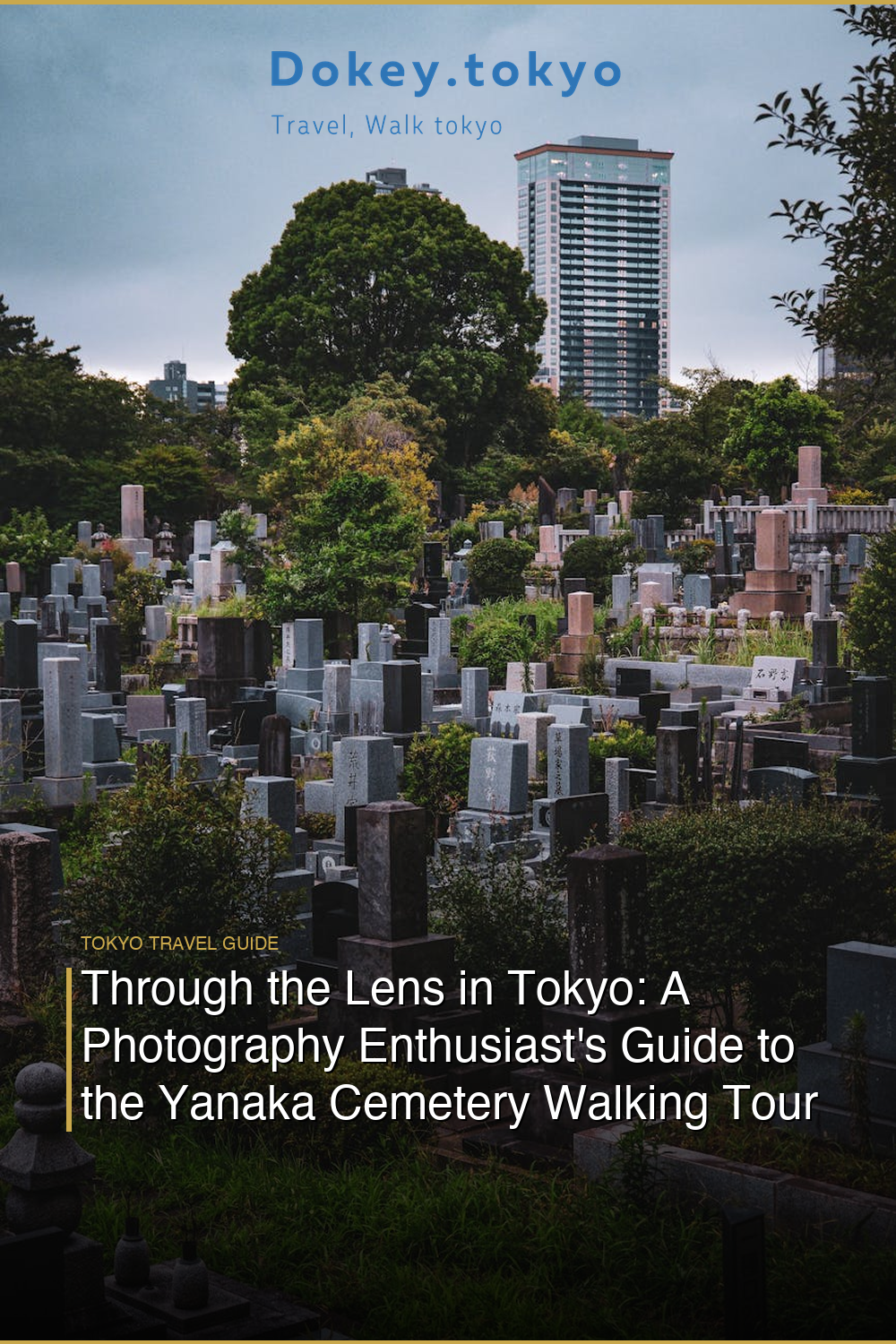
If you’ve been chasing neon-lit crossings and robot restaurants across Tokyo, I need you to stop, put the wide-angle lens away for a moment, and let me tell you about the place that genuinely changed how I photograph this city. Yanaka Cemetery — a sprawling, 100,000-square-meter historic graveyard tucked inside the old shitamachi district of Yanaka — is the kind of location that doesn’t show up in glossy Tokyo guidebooks but absolutely wrecks your memory card in the best possible way. It’s atmospheric in a way that feels almost European, almost cinematic, deeply Japanese, and completely unlike anything else in one of the world’s most photographed cities. For photographers who want texture, shadow, story, and soul, this is your pilgrimage.
I remember the first time I stepped through the eastern entrance on a cool October morning, mist still clinging low between the rows of stone lanterns. The air smelled of damp earth and chrysanthemums — someone had just left fresh offerings at a nearby grave — and a single crow called out from somewhere deep in the cedar trees. My hands were shaking slightly, and not from the cold. I raised my 35mm prime and didn’t put it down for three hours.
Why Yanaka Cemetery Is a Photographer’s Dream
🎫 Book: Yanaka Cemetery Walking Tour Tokyo →
🎫 Book: Tokyo Historic Temples Photography Tour →
🎫 Book: Atmospheric Graveyard Cemetery Tours Tok →
Yanaka Cemetery (谷中霊園, Yanaka Reien) was established in 1874 during the Meiji era and is the resting place of over 7,000 people, including the last Tokugawa shogun, Yoshinobu. But forget the history lesson for a second — what matters to you as a photographer is this: the light here is extraordinary.
The cemetery’s wide central avenue, lined with hundreds of cherry trees, creates a tunnel effect in early spring that turns golden in late afternoon. In autumn, the zelkova and ginkgo trees ignite in amber and rust. Even in winter, the bare branches cast graphic, spidery shadows across centuries-old grave markers that feel like something straight out of a Kurosawa film. Every season here is a different exhibition.
The Best Light Windows for Shooting
For golden hour magic, arrive between 4:30–5:30 PM in summer or 3:00–4:00 PM in autumn. The low sun cuts between the trees at a steep angle and catches the lichen on the old stone perfectly. Early morning — before 8 AM — gives you the cemetery almost entirely to yourself, wrapped in a bluish, still light that’s perfect for moody, contemplative compositions. I personally prefer the morning. The silence amplifies everything.
Compositional Goldmines Inside the Cemetery
Don’t just walk the main avenue. Duck left and right into the older sections where the graves are tightly packed, moss-furred, and wonderfully disheveled. Look for:
- Tilted stone markers partially reclaimed by ivy — incredible for close-up macro shots with a shallow depth of field
- Old stone lanterns (tōrō) with their small hollow chambers — if you shoot at dusk with a fast lens wide open, you can sometimes catch the ambient city glow flickering inside
- The cat colony — Yanaka is famous for its semi-feral cats, and the cemetery has several resident felines who have zero interest in your camera and will give you the most nonchalant, regal portraits imaginable
- Grave offerings — small sake cups, flowers, incense sticks — these quiet still-life moments are deeply moving when framed against weathered kanji inscriptions
One afternoon, while I was crouched low shooting one of the cemetery cats curled on a warm grave stone, an elderly man stopped beside me, peered at my camera, and simply said in English: “She likes photographers. She’s used to it.” He smiled and walked on. I never got his name, but that cat portrait — whiskers sharp, background of blurred grave markers — is still one of my favorite images from all my years shooting Tokyo.
The Nearby Temple Circuit: Three Must-Visit Stops
🗾 Book: Yanaka and Nezu historic old town herita →
🗾 Book: Tokyo history and Shinto shrine private →
🗾 Book: Meiji Shrine, Asakusa temple morning exp →
Yanaka’s temples are not afterthoughts. They are essential frames within the same atmospheric story you’re already telling with your camera. Plan at least two to three hours for the temple circuit that surrounds the cemetery.
Tennō-ji Temple
Situated directly within the cemetery grounds, Tennō-ji is one of Tokyo’s oldest Buddhist temples. The main hall is photogenic in a subdued way — wooden, darkened with age, flanked by stone guardians wearing red bibs. But the real find is the massive bronze Buddha (Yanaka Daibutsu) seated in the courtyard. At 2 meters tall, it’s modest by Japanese standards, but the patina on this statue — centuries of greenish bronze oxidation streaked with rain — photographs beautifully against a shallow sky. Shoot it from the left side in morning light for maximum texture.
Yanaka Reien’s Tokugawa Yoshinobu Grave Section
The shogun’s grave is roped off but still visible and makes a powerful anchor for any wide-angle shot showing the divide between Tokyo’s feudal past and its buzzing present — you can sometimes hear Yamanote Line trains in the distance while framing this centuries-old imperial grave. That sonic contrast, ancient and modern, tells the whole Tokyo story.
Daienji Temple
A short walk north from the cemetery, Daienji is less visited and absolutely worth it. The temple houses stone effigies of the 500 rakan (disciples of Buddha), arranged in weathered rows beneath an open-air canopy. Each face is different — some serene, some anguished, some almost comedic — and they photograph beautifully with a longer focal length, compressing rows of expressions into layered, textured frames. Come here for intimate portrait-style shooting without a human subject.
Yanaka Ginza: Refueling Your Creative Battery
After hours of shooting, your legs and your creative eye both need a break. Head to Yanaka Ginza, the old-school shotengai (covered shopping street) that runs along the cemetery’s southern edge. This narrow street of mom-and-pop shops, grilled skewer stalls, and tiny sweet shops is itself a photography goldmine — handwritten price signs, hanging lanterns, shop cats, elderly shopkeepers in aprons — but it’s also where you eat. If you’re interested in exploring more of Tokyo’s distinctive vintage and artisanal shopping districts, the area’s charm is similar to what you’ll find when vintage kimono shopping in nearby Komagome.
Grab a menchi katsu (deep-fried minced meat cutlet) from one of the butcher shops along the street and eat it standing up on the steps overlooking the rooftops at sunset. It’s crispy, slightly sweet, salty, and absurdly satisfying. A paper tray costs about ¥200. Wash it down with canned coffee from one of the vending machines tucked between shops — this is not a fancy neighborhood, and that is entirely the point.
For sit-down refueling, Kayaba Coffee has been serving the Yanaka neighborhood since 1938. The interior — dark wood, old clocks, analog warmth — is as photogenic as the cemetery itself. Order the egg salad toast set and a hot coffee. Sit by the window. Let your card write itself.
Practical Tips for Photography Enthusiasts
What to bring: A 35mm or 50mm prime lens for street and portrait work, a macro or 85mm for grave detail and temple statuary, and a lightweight tripod if you plan to shoot at dusk. A circular polarizer is useful in bright autumn and spring light to manage reflections on stone surfaces.
Dress for the walk: You’ll cover 3–5 kilometers easily if you do the full cemetery-plus-temple circuit. Comfortable shoes are non-negotiable. The cemetery paths are paved but sometimes uneven in the older sections.
Etiquette matters deeply: This is an active cemetery where families come to pay respects. Keep your voice low, never step on or climb grave markers for a shot, and ask before photographing people who appear to be mourning or praying. Most locals are surprisingly warm and curious about foreign photographers here — I’ve had several spontaneous conversations — but respect is the foundation of every interaction.
Best seasons: Cherry blossom season (late March–early April) is spectacular but crowded. Autumn foliage (mid-November) is the sweet spot for dramatic color with fewer crowds. Winter mornings offer minimalist, fog-wrapped compositions that feel entirely otherworldly.
Getting there: Take the JR Yamanote Line to Nippori Station and exit via the South Exit. The cemetery entrance is a five-minute walk. No admission fee.
Just before I packed up my bag on my last visit, the late afternoon sun dropped below the treeline and sent a single shaft of amber light directly down the main cherry-blossom avenue, illuminating a scatter of fallen petals on the gravel path. A woman in a grey coat stood alone at a grave, her back to me, head bowed. I didn’t raise my camera. Some frames belong only to the moment — and Yanaka, more than anywhere else I’ve photographed in Tokyo, understands the difference between what is meant to be captured and what is meant simply to be felt.
Before You Go
Yanaka Cemetery isn’t a tourist attraction. It’s a living, breathing piece of Tokyo’s soul that happens to be one of the most visually rich walking experiences in the entire city. For photographers, this dedicated photography guide to the Yanaka Cemetery walking tour offers even deeper insights into composition and technique. Come early, come quietly, and come ready to see a version of Tokyo that most visitors fly home having completely missed. Your best shot from this trip might not be the Shibuya crossing. It might be a mossy stone, a ceramic cat, and the particular quality of light on a Thursday morning in Yanaka.