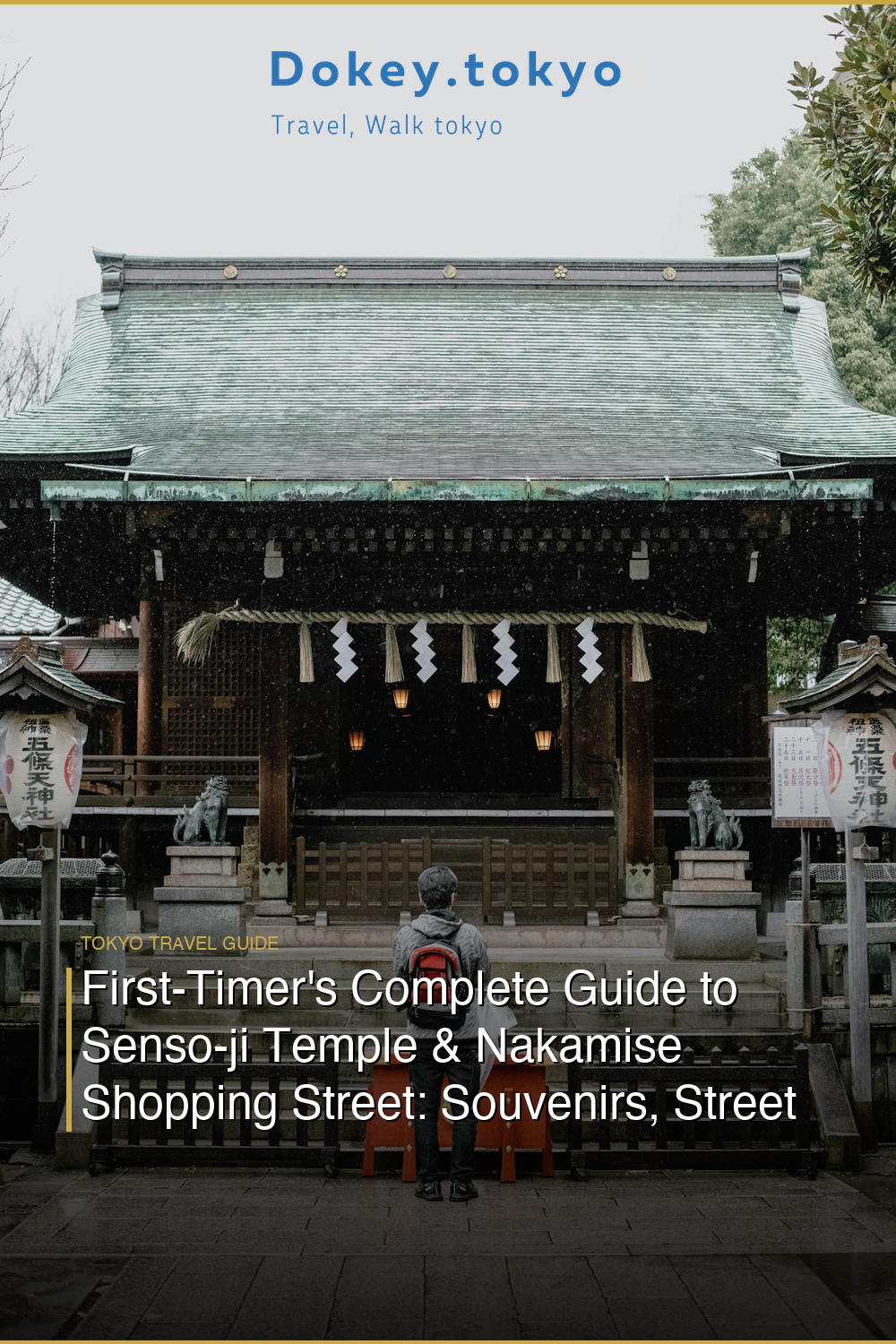
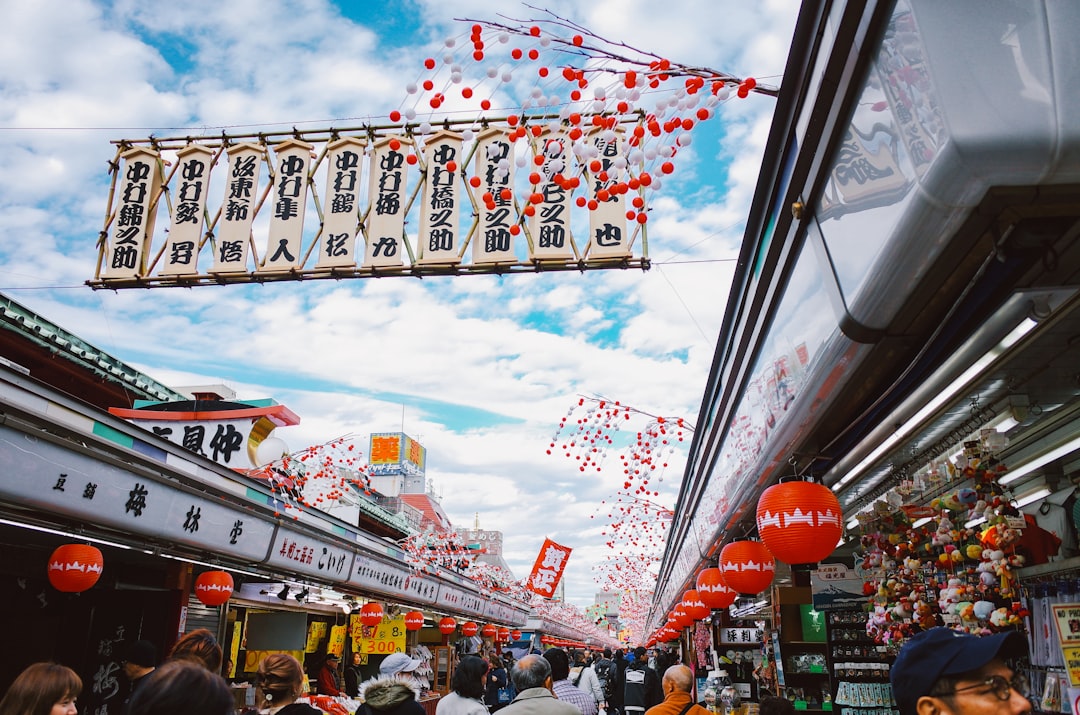
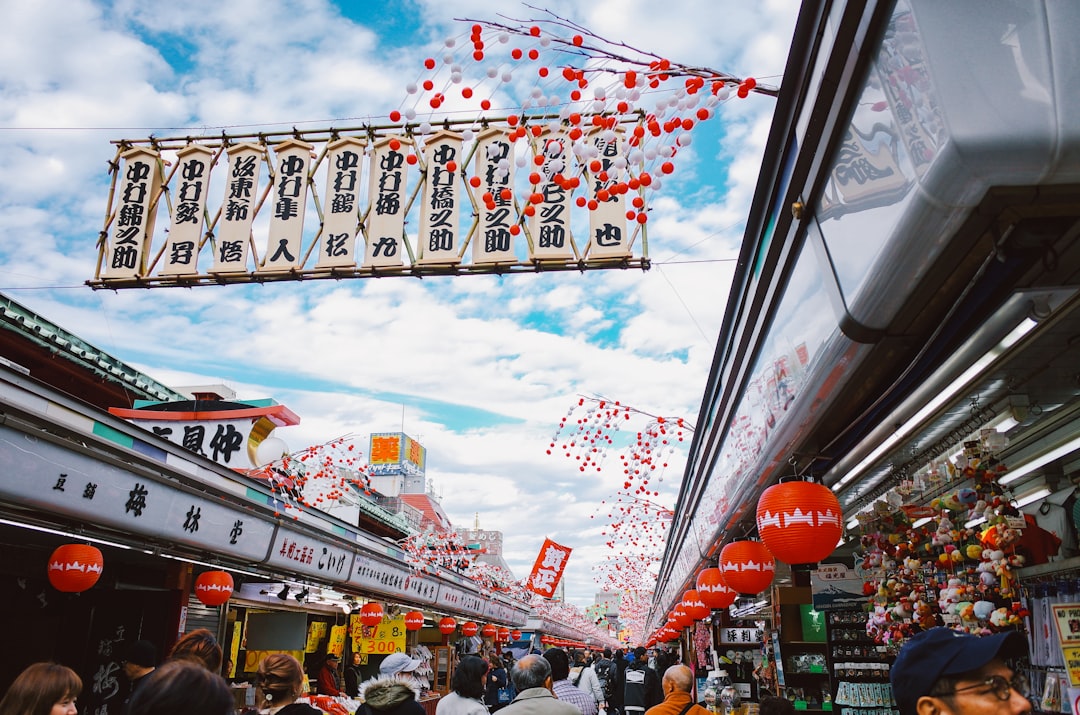
There’s a moment every first-time Tokyo visitor experiences at Senso-ji Temple that no travel brochure can fully prepare you for. You step through the massive Kaminarimon Gate — the one with that legendary red paper lantern hanging from its center — and suddenly the noise of modern Tokyo dissolves into something ancient, layered, and alive. Nakamise Shopping Street stretches ahead of you like a gauntlet of color and aroma, vendors calling out from either side, the smell of sweet ningyo-yaki cakes mingling with incense smoke drifting in from the temple grounds. Your senses genuinely don’t know where to begin. Trust me, that overwhelm is completely normal — and it’s exactly why you need a plan before you arrive.
I still remember my first morning at Senso-ji like it was last Tuesday. I arrived just after 7:30 a.m. on a crisp October day, and the low autumn light was pouring gold through the gate, catching the smoke from the giant incense cauldron in the main courtyard. A group of elderly Japanese women in coordinating pink jackets were quietly praying at the main hall, completely unhurried, while a crow landed on the temple roof and sat there like it owned the place. I genuinely stopped walking for a full minute just to absorb it. That image — the incense smoke, the crow, the pink jackets — is burned into my memory as one of my favorite Tokyo moments ever.
Why Senso-ji Is the Perfect First Stop in Tokyo
🗾 Book: Meiji Shrine, Asakusa & Market Tour →
🗾 Book: Must See Places in Tokyo Day →
🎫 Book: Asakusa Cultural Walking Tour with Local →
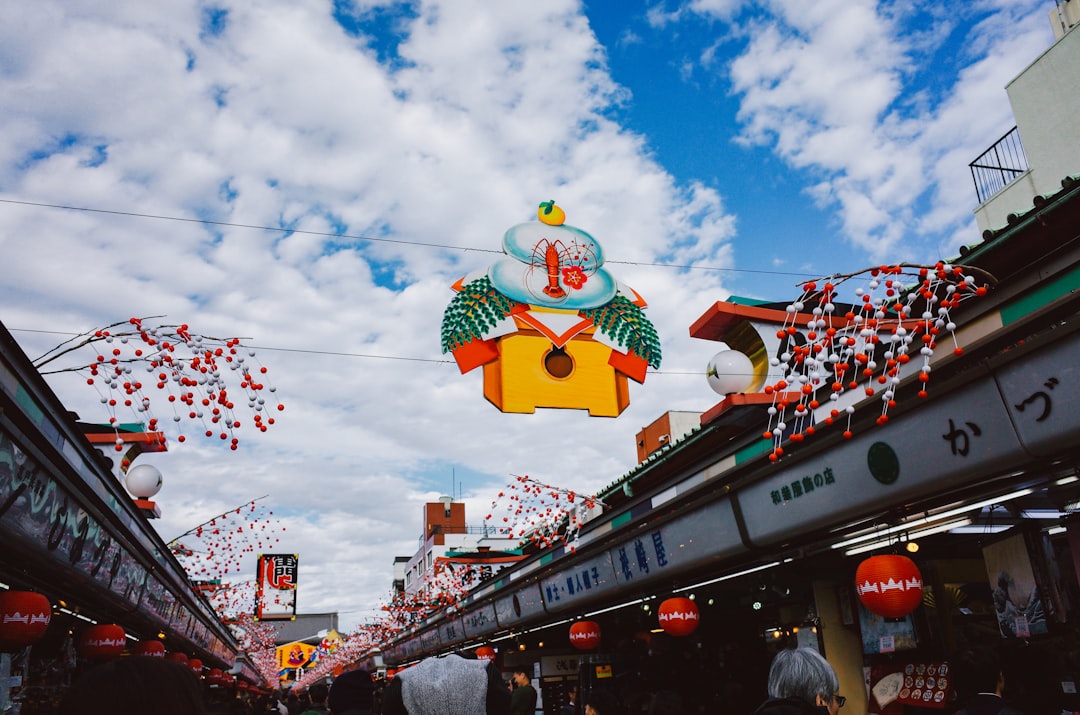
For first-time visitors, Senso-ji in Asakusa ticks every box. It’s Tokyo’s oldest temple, founded in 628 AD according to legend, and it operates as a fully active place of worship — which means you’re not visiting a museum relic. You’re stepping into real spiritual life. That distinction matters enormously for the atmosphere you’ll experience.
The complex is also completely free to enter, which is a relief when you’re still figuring out your budget in those first Tokyo days. The main hall, the five-story pagoda, the Nakamise corridor, and all the surrounding shrine buildings are yours to explore without spending a yen — unless you want to (and you will).
Getting There as a First-Timer
The easiest route is the Tokyo Metro Ginza Line to Asakusa Station (Exit 1), which puts you about a three-minute walk from Kaminarimon Gate. If you’re staying in Shinjuku or Shibuya, you can also take the Tobu Skytree Line from Asakusa for easy access. Google Maps handles this routing reliably, so don’t overthink it. Just make sure you have a Suica or Pasmo IC card loaded before you leave your hotel — fumbling with cash at the ticket machine while jet-lagged is a rite of passage, but an avoidable one.
Pro tip for first-timers: Visit on a weekday if your schedule allows. Weekends and national holidays at Senso-ji are genuinely shoulder-to-shoulder packed. I’ve been there on a Sunday in August and could barely shuffle forward. A Tuesday morning in spring? Practically meditative.
Nakamise Shopping Street: What to Actually Buy
🎫 Book: Senso-ji Temple & Nakamise Street Tour →
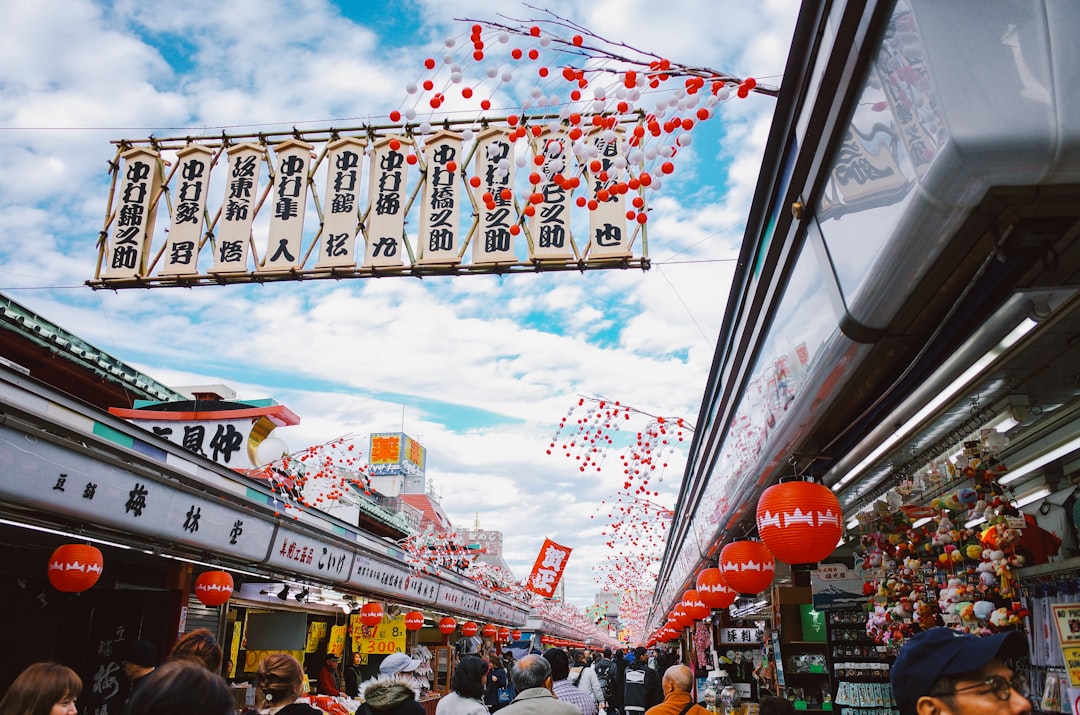
Nakamise is roughly 250 meters of shopping corridor leading from Kaminarimon to the temple’s Hozomon Gate, lined with about 89 shops selling traditional Japanese crafts, snacks, and souvenirs. For first-timers, it’s tempting to panic-buy everything in the first ten minutes. Resist that instinct. Walk the entire length once without buying anything, get your bearings, then go back for what genuinely spoke to you. For a more detailed exploration of the street and photography tips, check out the Asakusa Nakamise Shopping Street Advanced Guide.
Best Traditional Souvenirs Worth Your Money
Tenugui (hand-dyed cotton cloths): These flat, multi-purpose cotton cloths are one of the most underrated souvenirs in Japan. They’re lightweight, packable, and come in gorgeous traditional patterns — Mt. Fuji motifs, cherry blossoms, seasonal imagery. Several Nakamise shops sell authentic hand-dyed versions for around ¥800–¥1,500. They work as scarves, furoshiki wrapping cloth, wall art, or dish towels.
Kokeshi dolls: The simple wooden dolls with round heads and cylindrical bodies are a quintessentially Japanese folk craft. Prices range from ¥500 for small tourist-grade ones to several thousand yen for hand-painted artisan pieces. Look for shops slightly off the main Nakamise corridor in the side alleys — Nakamise’s parallel shopping lanes called Shin-Nakamise and the surrounding Asakusa streets often have better quality at lower prices.
Folding fans (sensu): Practical, beautiful, and genuinely useful if you visit during Tokyo’s humid summer months. Look for ones with hand-painted motifs rather than printed designs — you can feel the difference in quality immediately.
Chopstick sets: Individual pairs with lacquered finishes or bamboo craft work make excellent gifts and pack flat. Many shops will let you test the grip weight before buying.
One discovery that genuinely surprised me: tucked into a tiny shop near the far end of Nakamise, almost at the Hozomon Gate end, I found a vendor selling hand-stamped washi paper bookmarks for just ¥200 each — an elderly man who made them himself using traditional woodblock prints. He spoke almost no English but gestured proudly at a framed photo of himself winning a local craft competition. I bought six. They were the hit of every gift I brought home that trip.
Nakamise Street Food: What to Eat (and What to Skip)
🗾 Book: Asakusa Temple & Local Food Stops →
🎫 Book: Tokyo Street Food & Souvenir Experience →
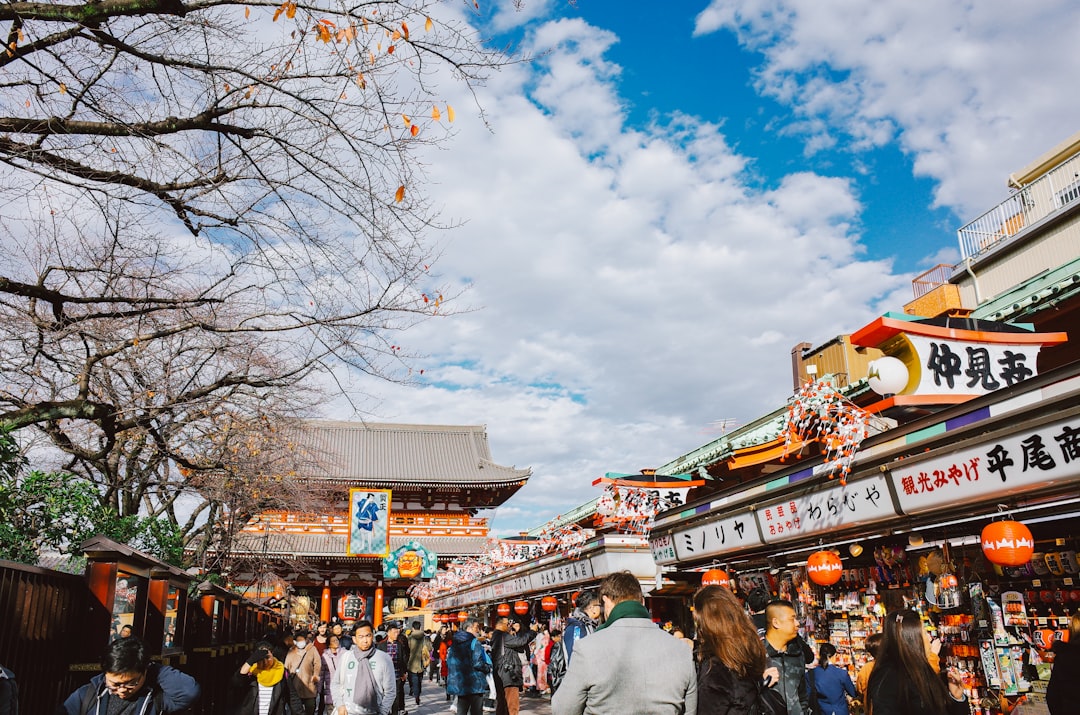
The street food on Nakamise is genuinely delicious, but as a first-timer you should know that some of the most photogenic stalls are also the most aggressively tourist-priced. Here’s how to eat smart.
Must-Try Street Foods
Ningyo-yaki: These small, golden-brown cakes shaped like traditional figures — pagodas, Kaminarimon lanterns, pigeons — are Asakusa’s signature snack. Filled with sweet red bean paste (anko) and cooked in iron molds right in front of you, they cost around ¥600–¥800 for a bag of five or six. Eat them warm. The crispy exterior gives way to soft, subtly sweet filling, and the smell of the batter hitting the hot iron is one of those Tokyo sense memories you’ll carry forever.
Imo-kenpi (sweet potato chips): Long, crunchy sticks of caramelized sweet potato that you’ll find in cellophane bags at several vendors. These are addictive in the most dangerous way and also pack perfectly as a snack for long Shinkansen rides later in your trip.
Melonpan ice cream: A specialty in the Asakusa area — a fresh-baked melonpan (sweet bread with a crispy cookie crust) sliced open and filled with soft-serve ice cream. It’s enormous, it’s messy, it photographs magnificently, and it tastes exactly as good as it looks. Budget around ¥600.
Kaminari-okoshi (thunder crackers): These traditional puffed rice crackers flavored with sesame or peanut are the original Asakusa souvenir food — sold here for over 200 years. Pick up a box as an edible gift; they travel well and taste better than they look.
What to Skip
The generic “Japanese snack mix” bags in bright packaging near the gate are almost universally overpriced and available cheaper at any convenience store or Don Quijote. Same with the green tea Kit-Kats — charming, but you’ll find better prices at Narita Airport or Shibuya’s grocery stores.
Practical First-Timer Tips for Visiting Senso-ji
Best time to visit: The temple grounds open at 6:00 a.m. (the main hall inner sanctum opens at 6:00 a.m. in summer and 6:30 a.m. in winter). Arriving between 7:00–8:30 a.m. gives you the most peaceful experience. Most Nakamise shops don’t open until 10:00 a.m., but the early morning light on the temple is extraordinary and the serious photographers know this. For more insight on capturing this special light, explore the Golden Hour at Senso-ji: A Photography Enthusiast’s Guide to Beating the Crowds in Asakusa.
Omikuji fortune slips: Pay ¥100 to shake a metal canister and draw a numbered stick, then find the corresponding drawer for your paper fortune. If it’s bad luck (which happens often — about 30% of fortunes are unfavorable), fold it and tie it to the wire rack near the fortune drawers to leave the bad luck behind. First-timers often skip this; don’t.
Dress code: Senso-ji has no strict dress code, but modest, comfortable clothing is appropriate. You don’t need to remove shoes to enter the main hall.
Cash: Many Nakamise vendors still prefer or exclusively take cash. Have ¥5,000–¥10,000 in smaller bills accessible before you arrive.
One Moment That Stays With Me
Late on my third visit to Senso-ji — it was around 5:30 p.m. on a November evening, that blue hour just before Tokyo’s lights take over — I sat on a stone bench near the main hall and watched a young couple in full kimono take photographs near the incense cauldron. The woman reached into the smoke with both hands and swept it toward her face in the traditional gesture for good health, laughing at something her partner said, her red obi glowing against the smoke. The smell of the incense was thick and cedar-sweet, and temple lanterns had just flickered on around the courtyard. Nobody was rushing. It felt, for exactly one minute, like Tokyo had exhaled.
Making the Most of Your First Senso-ji Visit
Senso-ji rewards those who slow down. As a first-time visitor, you’ll be tempted to sprint through and check it off the list — resist that completely. Give yourself at least three hours: one hour for the temple grounds and rituals, ninety minutes for a proper Nakamise walk and street food session, and thirty minutes just to sit in the surrounding Asakusa neighborhood streets, which are full of craft shops, ramen spots, and old-school kissaten (Japanese coffee shops) that haven’t changed since the 1970s. If you’re interested in exploring similar atmospheric neighborhoods, consider taking a photography walking guide from Senso-ji Temple to Tsukishima Monja.
This neighborhood is, in many ways, the most intact piece of old Edo Tokyo still standing. And your first time here only happens once. Walk slowly. Eat the ningyo-yaki while it’s hot. Draw the omikuji even if you’re skeptical. And show up early enough to watch the morning light do what it does to that lantern.
You’ll thank yourself later.