There’s a particular kind of silence that settles over you the first time Mt. Fuji appears through a train window — not the polite quiet of a library, but the breathless, gut-punch stillness of encountering something so impossibly large and perfectly shaped that your brain momentarily refuses to process it. I’ve made this day trip from Tokyo more times than I can count, each time with a different lens, a different season, a different obsession. And every single time, Fuji wins. Whether you’re shooting with a mirrorless workhorse or a vintage film camera you found in Tokyo’s antique shops, this mountain will reward your dedication in ways that no other subject in Japan can match.
I remember my very first approach on the Fujisan Limited Express — it was a crisp November morning, maybe 6:40 a.m., and the entire car had gone wordless. The light was this thin, almost liquid silver, and when Fuji finally appeared above the treeline without a single cloud in its way, the woman sitting across from me let out a soft, involuntary “ah” in Japanese — a sound so purely human I felt it in my chest. I had my 70-200mm already out of my bag, but I just sat there for a full thirty seconds, hand on the barrel, just looking.
Planning Your Shot List Before You Leave Tokyo
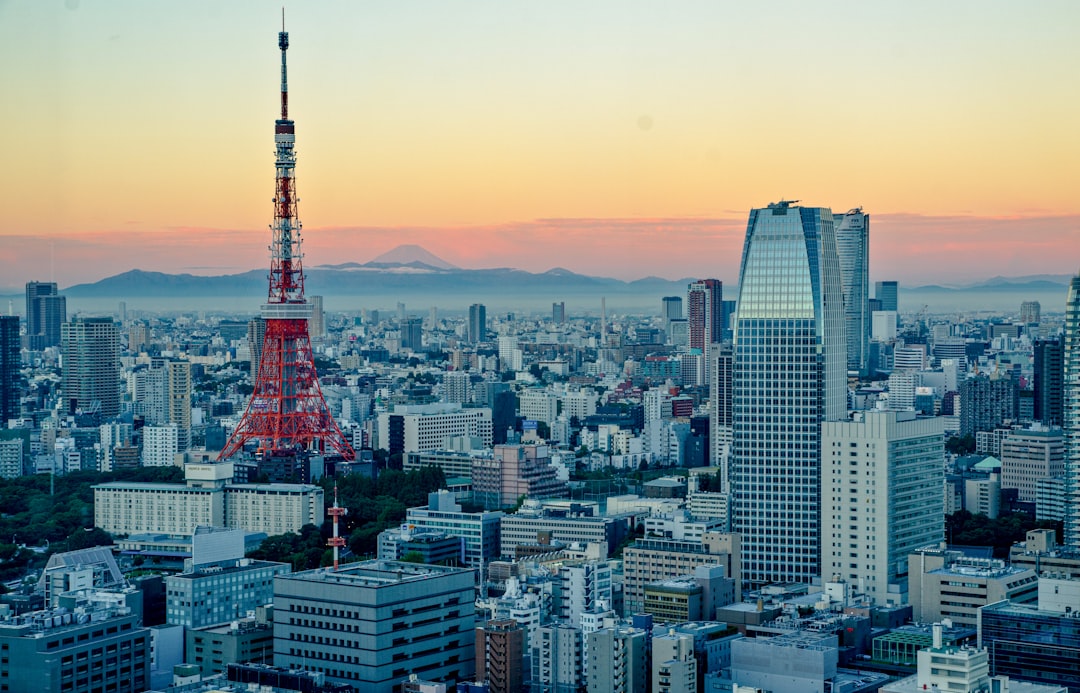
The biggest mistake photography enthusiasts make on this day trip is showing up without a visual game plan. Mt. Fuji is jaw-dropping, yes — but it’s also deceptively challenging to photograph well. The mountain is enormous, the light changes dramatically throughout the day, and the most iconic foreground elements (the five Fuji Lakes, torii gates, pagodas, cherry blossoms) require you to be in very specific places at very specific times.
Before you pack your bag, ask yourself: Do I want reflections? Go to Lake Kawaguchiko or Lake Yamanakako at dawn — the surface is glassy before the wind picks up around 9 a.m. Do I want the classic red pagoda framing? Head to Chureito Pagoda for sunrise. Do I want an intimate, crowd-free composition? The north shore of Lake Shoji is your answer.
The Gear Checklist That Actually Matters
- Wide-angle lens (16-35mm equivalent): Essential for capturing Fuji’s full scale against a dramatic sky
- Telephoto (100-400mm): Compresses the mountain magnificently against the town below; brilliant from Oshino Hakkai
- Circular polarizer: Cuts reflection glare on lake surfaces and deepens that cyan sky
- Sturdy travel tripod: Non-negotiable for pre-dawn and blue-hour shots
- Extra batteries: Cold mountain air drains batteries 30-40% faster than Tokyo city shooting
- Microfiber cloths: Morning mist will find your lens no matter what
The Four Best Photography Locations on a Single Day Trip
🗾 Book on Viator: Private Mt. Fuji & Hakone Full Day Tour →
1. Chureito Pagoda at Sunrise (Fujiyoshida)
This is the shot. The five-story vermilion pagoda with Fuji floating behind it is arguably the most reproduced image in all of Japan travel photography — which means your challenge is making it feel personal and new. Arrive before 5 a.m. in spring or autumn. You’ll climb 397 steps in near-darkness (bring a headlamp), and at the top, you’ll likely find a small clutch of dedicated photographers already staking positions.
The secret the crowds don’t know: walk about 40 meters past the main pagoda viewpoint and look back at a slight diagonal angle. You lose a tiny bit of the pagoda but gain an extraordinary sense of depth and layering — town lights below, pagoda mid-frame, Fuji presiding over everything like a patient deity. The cherry blossoms in late March through mid-April frame this composition in a way that will make your followers think you hired a production team.
2. Lake Kawaguchiko Northern Shore (Kawaguchiko)
For reflection photography, nothing beats the northern shore of Lake Kawaguchiko between 5:30 and 7:30 a.m. on a calm, clear morning. The inverted Fuji in the still water creates a near-perfect symmetry that plays brilliantly in both landscape and square formats. Use a 2-stop graduated ND filter to balance the bright sky against the darker water surface, and shoot in RAW — the dynamic range here will push your camera hard.
I once stumbled upon a tiny wooden fishing dock about 200 meters east of the main Kawaguchiko Music Forest viewpoint, completely unmarked and slightly overgrown. A local fisherman named Kenji was already there at 5 a.m., and when he saw my tripod he simply pointed at the water and said “kirei” — beautiful. He was right. The dock added a leading line into my composition that transformed an already stunning scene into something genuinely cinematic.
3. Oshino Hakkai (Hidden Gem for Telephoto Work)
Most day-trippers skip Oshino Hakkai in favor of the lake shores, and that is their loss and your gain. This cluster of eight sacred spring ponds sits about 15 minutes by bus from Kawaguchiko Station, surrounded by traditional thatched-roof buildings. For telephoto photographers, this is paradise — you can compress Mt. Fuji behind the farmhouses and ponds to create images that look pulled from a Meiji-era woodblock print.
Shoot between 10 a.m. and noon when the sun is high enough to illuminate the white snow cap without harsh shadows. The ponds themselves are crystal-clear (water from Fuji’s snowmelt, filtered over decades through volcanic rock), and a 100mm macro shot of the reflected mountain in the shallow water surface is something I’ve never seen anyone else post — which tells you everything about how under-visited this angle is.
4. Fuji Five Lakes Region at Blue Hour (Evening)
If your schedule allows you to stay until dusk — and I strongly encourage you to take the later express back to Shinjuku — the blue hour at Lake Yamanakako is extraordinary. The mountain silhouettes against a gradient that runs from deep indigo to burnt tangerine, and if you’re there in winter (December through February), the lenticular cloud cap that frequently crowns Fuji’s summit catches the last light in a way that looks almost artificially dramatic. It’s not. That’s just Fuji being Fuji.
Getting There: The Photographer’s Transportation Logic
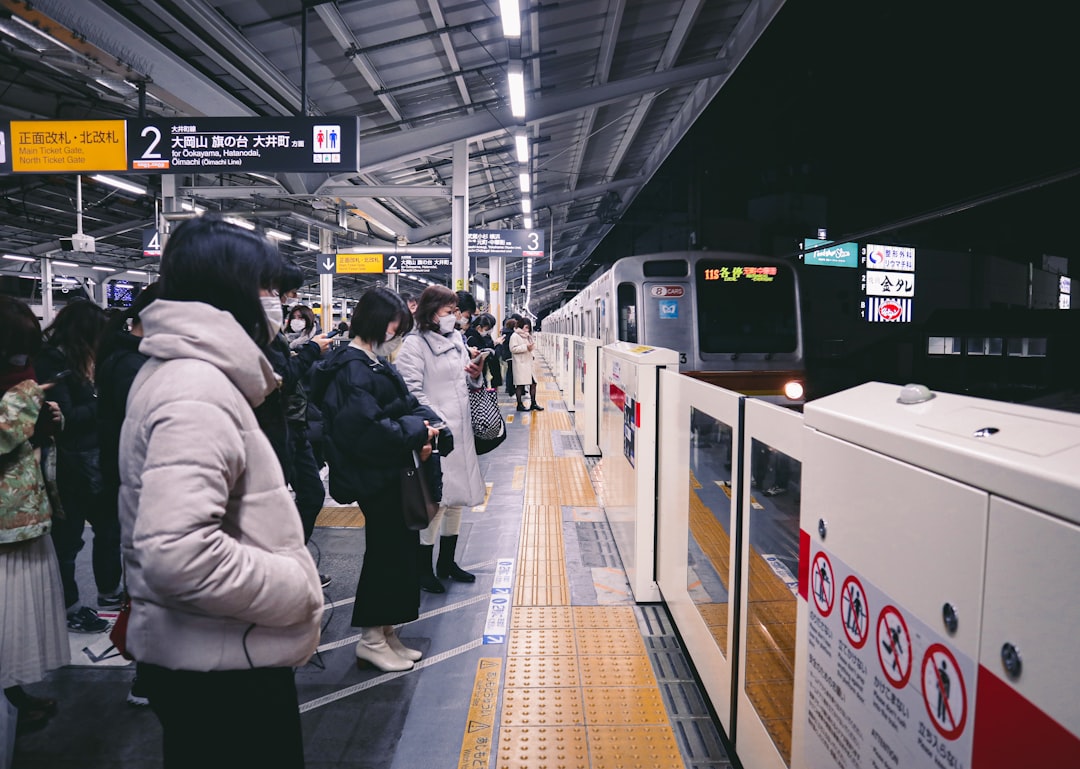
From Shinjuku Station, the Fujisan Limited Express (Fujikyuko Line) is your best option — it runs direct to Fujisan Station and Kawaguchiko Station, takes approximately 2 hours, and costs around ¥4,000 one-way. The Keio Highway Bus from Shinjuku Bus Terminal is cheaper (around ¥1,750 one-way) but takes 2-2.5 hours depending on traffic, and you’ll lose flexibility.
For photographers, flexibility is everything. Book the train, buy a Fujikyuko Tourist Pass (around ¥1,500 for two days), and use the local Retro Bus that loops between Kawaguchiko, Oshino Hakkai, and Saiko to hop between locations as the light dictates. The bus runs frequently from 8 a.m., but for pre-dawn Chureito access, you’ll need a taxi from Fujiyoshida Station (approximately ¥1,200-1,500).
Food Stops That Won’t Cost You the Golden Hour
Photographers don’t eat like normal tourists — we eat fast, we eat well, and we refuse to be inside during magic hour. The solution at Kawaguchiko is Fujiyama Kitchen, a small cafeteria-style spot near the lake that serves Fujisan curry (a curry rice shaped and colored to resemble the mountain) in under 10 minutes. It’s gimmicky and delicious and deeply photogenic on its own — the white curry snow-cap is made from soft-boiled egg. Eat it, photograph it, move on.
For something more substantial, Houtou Fudo near the lake serves houtou noodles — a thick, flat, udon-adjacent noodle cooked in miso pumpkin broth, a regional specialty of Yamanashi Prefecture. Order the standard houtou (¥1,400), find a window seat facing the lake, and let yourself sit still for exactly 25 minutes. You’ve earned it.
The Moment I Keep Coming Back For
It was late October, about 4:47 p.m., standing at the eastern edge of Lake Kawaguchiko with a 200mm lens on my Sony A7R and absolutely nothing in my mind except the color happening in front of me. The mountain had turned this impossible shade of rose-gold, the kind of pink you associate with overexposed Instagram filters but which was, in that moment, aggressively, stubbornly real. A shinkansen would have gotten me back to Tokyo faster, but I’d chosen the slow train specifically to stay for this light. I pressed the shutter 34 times in about 90 seconds. When I reviewed the shots on the train home, image number 19 — slightly underexposed, Fuji’s silhouette sharp against a burning sky — was the best photograph I’ve taken in six years of travel shooting.
Practical Tips for the Photographer’s Day Trip
- Best months for clarity: October, November, December, and January offer the highest percentage of clear Fuji days and the most dramatic snow cap
- Check Fuji visibility: Use the Fujisan Telop site or the Mt. Fuji Tenki app before you leave Tokyo — nothing is sadder than a a clouded-out summit
- Crowds at Chureito: Arrive before 5:30 a.m. in peak seasons; after 8 a.m. it becomes a tripod traffic jam
- Respect the sites: Several locations around the five lakes are in active push-back against photography tourism — never cross barriers, never shoot from private property, and always bow when a local makes eye contact
- Layer aggressively: Even in summer, pre-dawn at elevation is cold. Numb fingers and camera dials are a miserable combination.
The mountain doesn’t care how good your gear is. It doesn’t care about your follower count or your portfolio ambitions. It simply exists, massive and ancient and occasionally magnificent, and your only job on this day trip is to be awake enough, patient enough, and present enough to catch it in a moment of grace. Do that, and you’ll come home with images that feel less like photographs and more like memories.