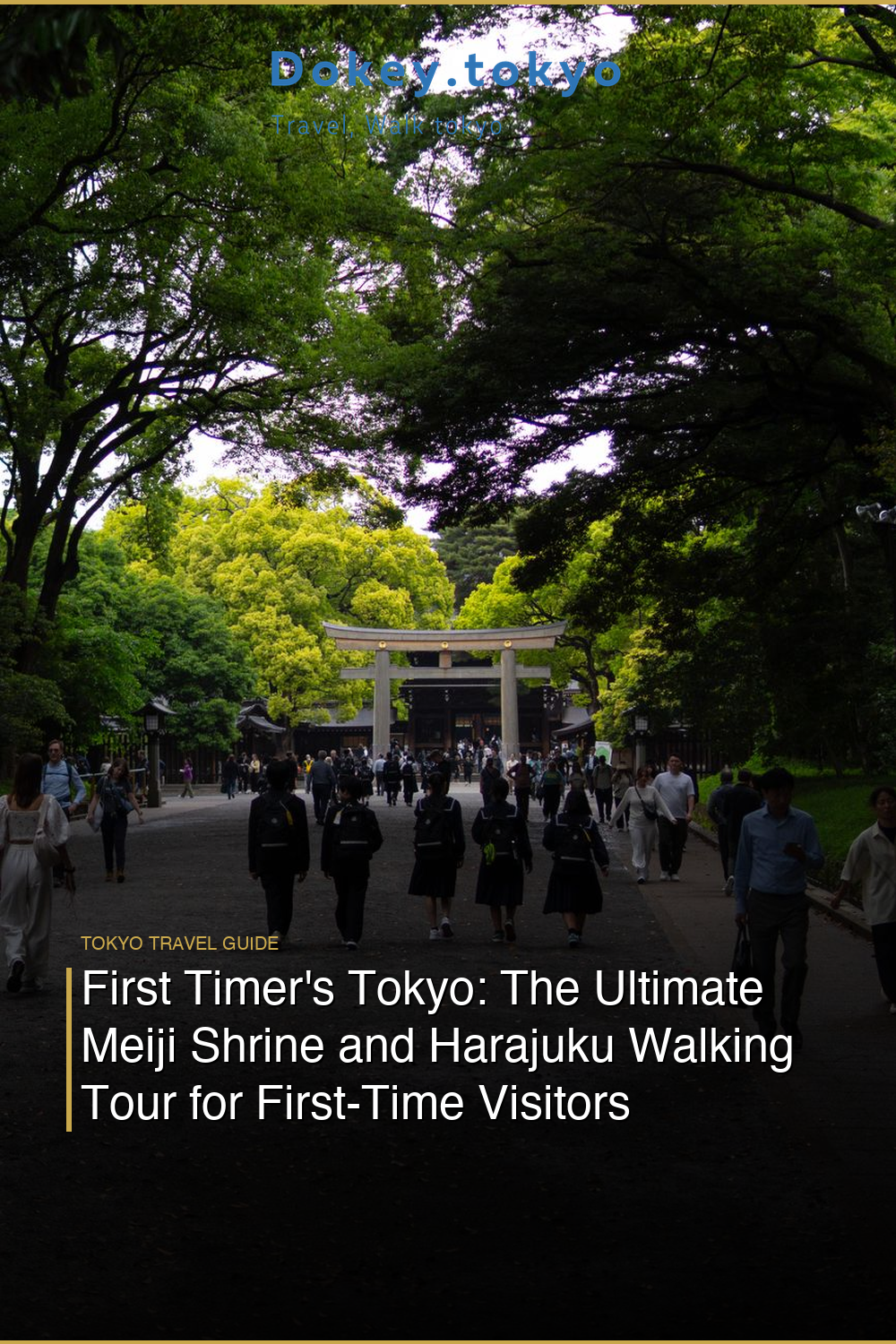
There’s a moment — and if you do this walk right, you will absolutely have it — where you step off the Yamanote Line at Harajuku Station, cross a bridge, and suddenly the roar of Tokyo dissolves into the hush of a forest. One second you’re in the most densely wired city on Earth. The next, you’re walking under a cathedral of camphor trees so tall they block out the sky, and the air smells like cedar bark and something ancient you can’t quite name. That’s Meiji Shrine greeting you, and for a first-time visitor, it is one of the most disorienting and wonderful gifts Tokyo has to offer. This walk — from the forested serenity of Meiji Jingu all the way through the technicolor chaos of Takeshita Street — is the single best introduction to Tokyo I can think of, because it shows you both souls of this city before lunch.
I still remember the first time I arrived at the torii gate just after 8am on a Tuesday in late October. The light was coming through the trees at a low angle, dappling the gravel path in gold, and a group of school children in matching yellow hats were filing past in total silence, their sneakers crunching softly. I stood there holding my paper map — yes, a paper map, it was my very first trip — with my heart genuinely pounding. I had read about Meiji Shrine a hundred times, but nothing prepared me for the scale of that entrance, or for the smell of damp earth and incense that hit me the moment I stepped under the wooden arch.
Why This Walk Works Perfectly for First-Timers
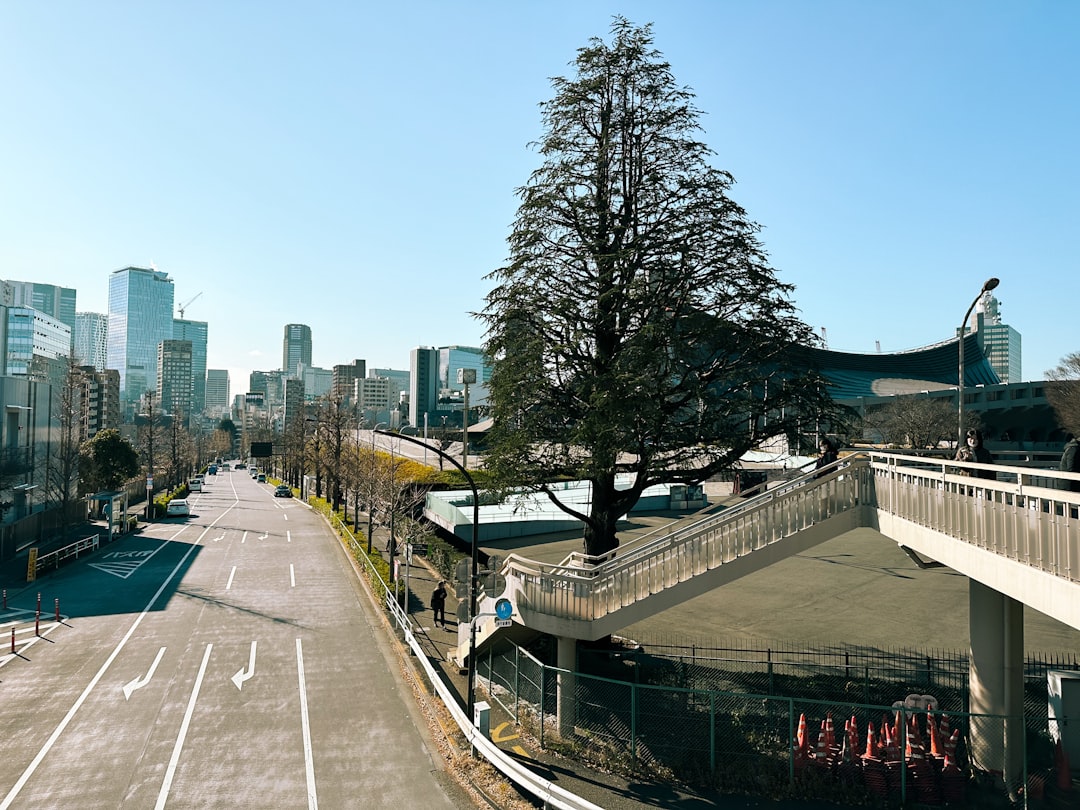
If you’re visiting Tokyo for the first time, decision fatigue is real. The city is so enormous and so full of things to do that many first-timers waste their first full day riding trains back and forth across town, half-jet-lagged and overwhelmed. This walk solves that problem completely. Meiji Shrine and Harajuku sit practically on top of each other — the entire route, done at a leisurely pace with food stops, takes about four to five hours and covers roughly three kilometers. You finish feeling like you’ve experienced something genuine rather than just ticked boxes off a tourist checklist.
Start your morning at Meiji Shrine, do Harajuku’s Takeshita Street midmorning when the crowds are still manageable, drift into Omotesando for lunch, and you’ve had a full, rich, Tokyo day — all within a walkable radius.
Meiji Shrine: What to Actually Do (And What to Skip)
🗾 Book on Viator: Local Guide, Custom Stops & Hidden Gems →

The Grand Approach
Enter from the main southern entrance near Harajuku Station. The gravel path stretches nearly 700 meters through dense woodland — this forest, remarkably, was entirely planted by hand in 1920 when the shrine was built, and it now contains over 120,000 trees. Walk slowly. Resist the urge to get your phone out immediately. Let your nervous system recalibrate from travel stress. For a first-time visitor, this walk alone — before you even reach the shrine — is worth the trip to Tokyo.
The Main Shrine Courtyard
When you reach the main hall, you’ll see a queue of visitors waiting to offer a prayer. As a first-timer, absolutely do this. The ritual is simple: toss a coin into the offering box (any coin works, though a five-yen coin with the hole in the middle is considered lucky), bow twice deeply, clap twice, make your wish or express gratitude, then bow once more. Nobody will judge you for doing it as an outsider — in my experience, Japanese visitors are genuinely pleased when foreign travelers engage respectfully with the ritual.
The Wish Barrels and the Sake Barrels
To the right of the main path you’ll find two famous photo spots that every first-timer should see: the towering wall of sake barrels (kazaridaru) wrapped in straw and stacked head-high, gifted by sake breweries across Japan, and nearby, a wall of Burgundy wine barrels gifted by French wineries — a reminder that Meiji was the emperor who opened Japan to Western culture. On the opposite side, look for the ema wall: hundreds of small wooden plaques where visitors have written their prayers. Reading these (the ones written in English) is quietly moving.
The Iris Garden (Seasonal Gem)
If you visit in mid-June, pay the small entry fee to the Inner Garden (¥500). The iris garden inside reaches peak bloom during this time and it is, without exaggeration, one of the most beautiful things I’ve ever seen in Tokyo — a riot of purple, white, and violet reflected in still water, completely hidden from the city outside.
Crossing Into Harajuku: The World Shifts
🗾 Book on Viator: Temples, Culture & Modern City Highlight →
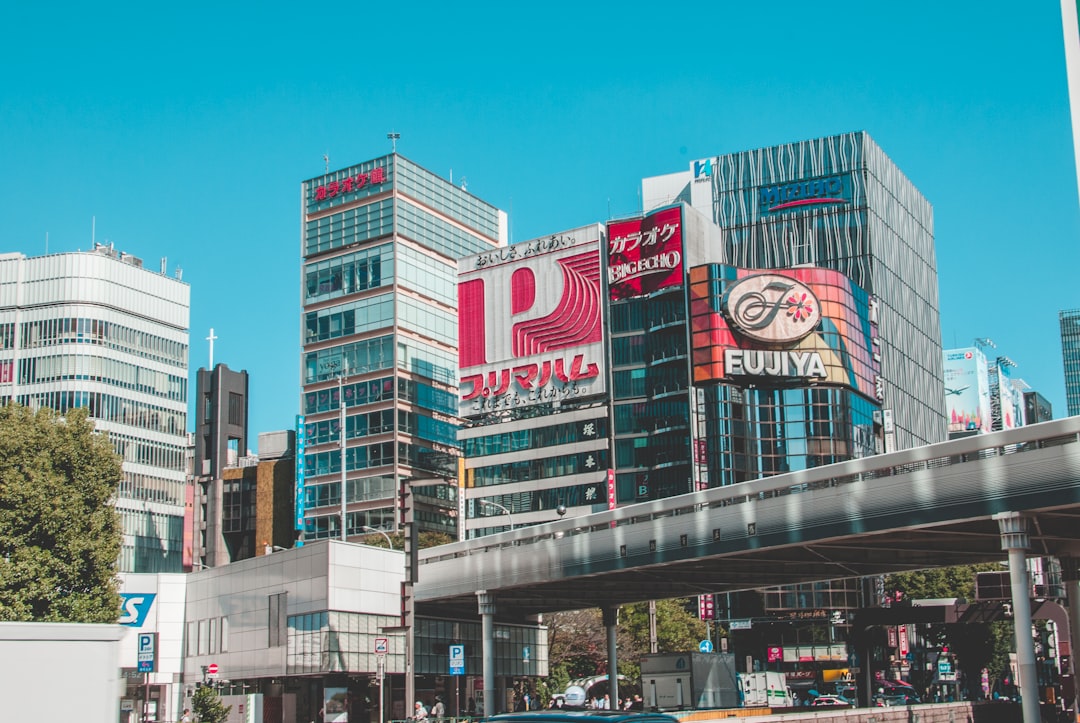
Leave Meiji Shrine through the northern exit, cross the bridge over the JR tracks, and you’re immediately in a different universe. Harajuku hits you with a sensory wallop: J-pop leaking from storefronts, the sweetness of fresh crepes drifting from street stalls, clusters of teenagers in layers upon layers of fashion that you’ll struggle to categorize.
Takeshita Street
Takeshita-dori is narrow, pedestrian-only, and gloriously chaotic. For first-timers, go before 11am to avoid the worst of the weekend crowds (though even then it’s lively). This is not a street for serious shopping on your first visit — it’s a street for watching, absorbing, and trying things. Here’s what to actually eat:
- Rainbow cotton candy: absurdly photogenic, sold at multiple stalls, costs around ¥600-800
- Crepes: Harajuku crepes are a legitimate institution, not a tourist gimmick. Order the strawberry and fresh cream version from Marion Crepes — it’s been here since 1976 and the crepe is impossibly thin, the cream barely sweetened
- Takoyaki: a few steps off Takeshita you’ll find small stalls selling octopus balls hot enough to burn your tongue. Do it anyway.
I discovered by accident that the small alley running parallel to Takeshita Street — called Cat Street, accessible through a narrow gap between shops — is where the more interesting, lower-key vintage and independent fashion boutiques actually live. A shopkeeper named Kenji, who spoke perfect English and had lived in Portland for three years, pointed me toward a rack of deadstock 1990s Japanese denim that I still regret not buying.
Omotesando: Where the Walk Finds Its Rhythm
Walk south from Takeshita Street for about ten minutes and the aesthetic shifts entirely. Omotesando — sometimes called Tokyo’s Champs-Élysées, though it has far better architecture — is a wide, zelkova tree-lined avenue with flagship stores designed by the world’s best architects. For first-timers, just walking this street is the activity. Look up at the Prada building (all bubble glass), the organic curves of the TOD’S building, and the extraordinary Omotesando Hills complex designed by Tadao Ando. If you’re interested in Tokyo’s architectural and design scene, Omotesando is essential viewing.
Lunch on Omotesando
Bills (the Australian brunch institution with a Tokyo outpost) is popular but frequently has lines. Instead, duck into the Omotesando Hills basement food hall and grab a bento box or sit-down lunch at one of the smaller counters — the quality is exceptional and the prices are surprisingly reasonable for the postcode. Alternatively, walk two minutes to Commune 2nd, an open-air food market tucked into a small lot off Omotesando, where a rotating cast of small food trucks serves everything from Korean rice bowls to handmade pasta.
Practical Tips for First-Timers Doing This Walk
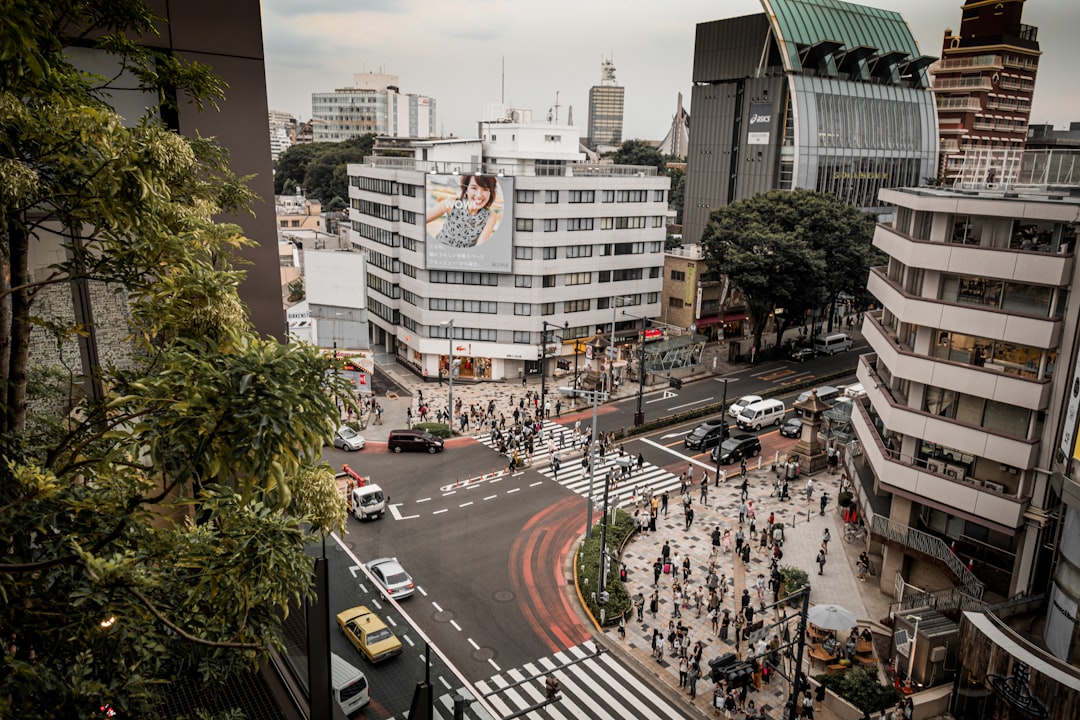
Getting There
Take the JR Yamanote Line to Harajuku Station. It’s a five-minute walk from the station to the main torii gate of Meiji Shrine. There’s no need for a taxi or subway transfer — just follow the wooden signs from the station exit.
Best Time to Visit
Weekday mornings between 8am and 10am are the quietest at Meiji Shrine. If you visit on a Sunday, arrive even earlier — locals use the grounds for morning walks and you may witness a traditional wedding procession, which is breathtaking but draws crowds. Avoid major Japanese public holidays for Takeshita Street unless you enjoy being gently compressed by ten thousand teenagers.
What to Wear
Meiji Shrine has no formal dress code, but you’ll be walking on gravel paths for extended periods. Comfortable shoes are non-negotiable. There are no bag check facilities, so pack light — a small daypack with water (grab a bottle from any convenience store before you enter) is all you need.
Costs
Meiji Shrine is free to enter. The Inner Garden costs ¥500. Takeshita Street snacks will run you ¥1,500-2,500 if you try two or three things. Budget ¥1,500-2,500 for lunch on Omotesando. Total day cost (excluding transport): roughly ¥4,000-6,000, or about $27-40 USD.
One Moment I Keep Coming Back To

On my fourth visit to Tokyo, I sat on a wooden bench just inside the Meiji Shrine Inner Garden at around 4:45pm, twenty minutes before closing. The other visitors had filtered out and I was nearly alone. A single grey heron landed on the edge of the pond without a sound, stood completely still for a full two minutes, then lifted away over the treeline. The city — Tokyo, ten million people, neon and noise and velocity — existed exactly one kilometer from where I sat, and I could not hear a single thing except wind through the iris leaves. I ate the last half of a Harajuku crepe from a paper cone and thought: this is why I keep coming back.
Final Thoughts for Your First Tokyo Day
This walk works because it gives you contrast — the thing Tokyo does better than any city I’ve visited. Ancient and electric. Silent and deafening. Green and neon. As a first-time visitor, you don’t need a packed itinerary on day one. You need a route that makes you feel Tokyo rather than just photograph it. Start at the torii gate in the early morning quiet, follow the gravel path, clap your hands at the shrine, eat a crepe on Takeshita Street, and finish lunch under the zelkova trees on Omotesando. By early afternoon, Tokyo will have introduced itself properly — and you’ll spend the rest of your trip trying to get to know it better.
Ready to experience it?
🗾 Book on Viator: Explore Meiji Shrine with a Cultural Gui →