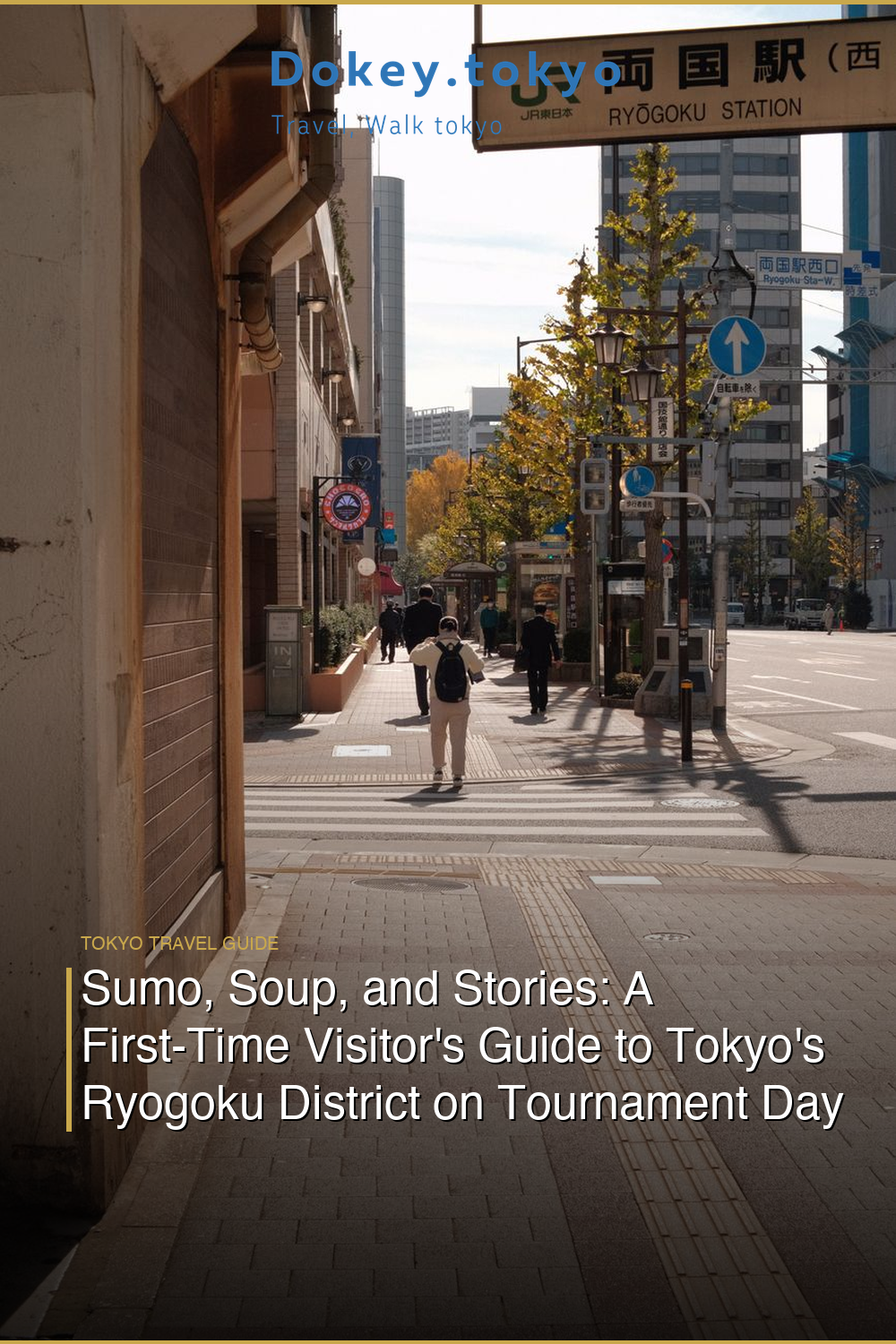
If you’ve landed in Tokyo for the first time and you’re scrolling through options thinking, should I go to Shibuya Crossing or should I do something I’ll actually tell stories about for the next decade? — let me save you the deliberation. Get yourself to Ryogoku on a tournament day. Nestled on the eastern bank of the Sumida River, this compact, almost time-capsule neighborhood is where Japan’s ancient sport of sumo wrestling still breathes and sweats and roars. It’s not a theme park version of Japan. It’s the real thing, and first-time visitors who stumble into it often tell me it becomes the highlight of their entire trip.
I still remember the moment the Sobu Line train doors opened at Ryogoku Station and a wall of sound and smell hit me — grilled meat and dashi broth drifting from a chanko nabe shop on the street level, the deep rumble of a crowd commentary echoing from someone’s phone, and three enormous men in yukata sandals walking calmly past a convenience store like it was the most normal thing in the world. It was 9:30 in the morning, the January tournament was already underway, and I felt that particular travel electricity you only get when you know you’re exactly where you’re supposed to be.
Understanding the Ryogoku Sumo Calendar: When to Go
This is the most important logistical fact for first-time visitors: sumo tournaments don’t happen every month. The Grand Sumo Tournaments (called Honbasho) held in Tokyo occur three times a year — January, May, and September — each running for 15 consecutive days at the Kokugikan Arena. If your Tokyo dates don’t align with these windows, you’ll still love Ryogoku, but you’ll miss the full electric atmosphere. Book your Tokyo visit around one of these tournament windows and you’re already winning.
Each tournament runs from roughly 8:00 AM to 6:00 PM. The lower-ranked bouts happen in the morning to a nearly empty arena — which is actually a brilliant time to go if you want front-row proximity and a relaxed, almost meditative experience. The top-division wrestlers (Makuuchi) take the dohyo from around 3:30 PM onward, and that’s when the crowd surges and the roar becomes something physical you feel in your chest.
Buying Tickets as a First-Timer
Tickets for the Kokugikan go on sale online through the official Japan Sumo Association website and through Ticket Pia. Box seats (masu-seki) are the famous floor-level cushioned squares designed for four people — romantic in theory, genuinely cramped in practice, and completely worth it for the atmosphere. Arena seats (chair seats) on the upper levels are more comfortable and cheaper, ranging from ¥3,800 to ¥8,500 depending on tier. For first-timers, I always recommend arriving early with a same-day ticket if you can get one — the morning bouts give you time to absorb the rituals, the salt-throwing, the referee costumes, the drumming ceremony, without the pressure of a packed house.
Walking the Ryogoku Neighborhood: A First-Timer’s Route
Arrive at least 90 minutes before you want to enter the Kokugikan. Ryogoku is small but dense with character, and the walk from the station to the arena takes only five minutes — so you have time to actually see the neighborhood.
Edo-Tokyo Museum (Check Renovation Status)
The Edo-Tokyo Museum sits directly behind the Kokugikan and is one of Japan’s great history museums, covering the city’s transformation from feudal Edo to modern Tokyo with remarkable scale models and artifacts. Note: it has undergone renovation periods, so check its opening status before your visit. Even if it’s closed, the plaza around it is worth walking through.
Eko-in Temple and the Sumo Memorial
Two minutes from the station, Eko-in Temple is where sumo tournaments were held outdoors for over 200 years before the Kokugikan was built. There’s a small sumo memorial stone in the grounds. It’s quiet and easy to miss, but standing there knowing generations of rikishi trained and competed on that very earth — it adds real weight to the sport when you watch it later.
The Stable Walk
Ryogoku is home to more than 20 sumo stables (beya), and on tournament mornings, wrestlers in yukata and wooden sandals walk the streets between their stables and the arena. This is not staged. Just walking from the station to the Kokugikan on a tournament morning, I’ve passed by groups of enormous, calm, focused athletes going about their morning like regular commuters. Hang around the streets between 8:00 and 10:00 AM and keep your eyes open. A local shopkeeper near the Tomozuna Stable entrance once waved me over and whispered, “Morning practice finishes at eight — sometimes they walk that street,” pointing left down a narrow road I’d completely missed. She was right. I stood at the corner for ten minutes and watched three wrestlers walk past in complete silence.
Chanko Nabe: The Post-Match Feast You Cannot Skip
🗾 Book on Viator: Sumo Show with Chanko Nabe Lunch →
Chanko nabe is the protein-rich hot pot stew that sumo wrestlers eat in enormous quantities to build and maintain their mass. Chicken, tofu, vegetables, miso or soy broth, sometimes fish — it varies by stable and chef. In Ryogoku, several restaurants are owned and run by retired wrestlers, which means the recipes are genuinely from inside sumo culture, not approximations of it. Like the specialized food tours in other Tokyo neighborhoods, chanko nabe dining is its own immersive culinary experience.
Top Chanko Nabe Restaurants for First-Timers
Chanko Tomoegata is the most famous and most visited, and the reputation is earned. Founded by a former wrestler and just a short walk from the Kokugikan, the lunch sets (from around ¥1,500) are generous and warming. Go for the chicken miso chanko — the broth has a depth that takes hours to build. On tournament days, the lunch rush starts at noon and the wait can stretch to 30 minutes, so arrive before 11:30 AM or go after the early evening bouts.
Chanko Kawasaki is a little less tourist-polished, a little more neighborhood-diner in atmosphere, and the staff are used to first-time visitors who don’t speak Japanese. Point at the menu, nod enthusiastically, and you’ll be taken care of. Their tofu-heavy chanko is lighter and perfect if you’ve been eating your way through Tokyo for several days and your stomach needs a gentler touch.
Chanko Izakaya Yoshiba occupies an extraordinary space — a former sumo practice hall where an actual training dohyo sits in the center of the restaurant. You eat surrounding it. On busy tournament nights, there’s a traditional performance here as well. Book ahead if you want evening seats during tournament weeks.
What to Order Besides Chanko
Most chanko restaurants also serve yakitori skewers and gyoza as side dishes. The gyoza at Tomoegata is not on the main menu — ask for it. A woman at the table next to me on my third visit casually ordered them and when I asked what they were she laughed and said, “Secret menu. Just ask.” They arrived crispy-bottomed and plump, and I ordered a second plate immediately.
Practical Tips for First-Time Visitors to Ryogoku
Getting there: Take the JR Sobu Line to Ryogoku Station (about 10 minutes from Akihabara, covered by the IC card on your Suica or Pasmo). The East Exit drops you practically at the Kokugikan’s doorstep.
Cash vs. card: Most chanko nabe restaurants in Ryogoku are cash-preferred. Bring ¥5,000–¥10,000 in cash for food, entrance fees, and souvenirs. There’s a 7-Eleven near the station with an international ATM.
Dress code: There is none, but wear comfortable shoes — you’ll walk more than you expect. If you’re lucky enough to get masu-seki box seats, you’ll also be sitting cross-legged on cushions for extended periods, so avoid tight jeans.
Souvenirs: The Kokugikan gift shop sells official programs, wrestler photo cards (bromides), cushion seat covers, and the most beautiful ceramic chanko bowls. The wrestler photo cards are cheap, collectible, and the most Tokyo-specific souvenir you’ll bring home.
Tournament etiquette: Cheer freely during bouts, but between them the arena is hushed and respectful. Don’t stand up and move around during active matches. Snacks and beer are sold inside — eating in your seat is completely normal and part of the experience.
Late on a September evening, the final bout of the day finished and the arena exhaled into quiet, and I sat in my masu-seki box finishing the last of a cold Sapporo while the ceremonial bow-twirling (yumitori-shiki) played out in the ring below — one lone wrestler spinning a great ceremonial bow in sweeping, practiced arcs under the arena lights, the crowd barely rustling, just watching. The whole city felt far away. That quiet ceremony after all that thunder and collision is the moment I keep returning to Ryogoku for: the stillness that comes after the storm.
Planning Your Day in Ryogoku: A Simple First-Timer’s Timeline
- 8:30 AM — Arrive, walk the neighborhood, spot wrestlers on morning walk
- 9:00 AM — Enter the Kokugikan, watch lower-division bouts in a nearly empty arena
- 11:30 AM — Exit for early chanko nabe lunch at Tomoegata before the rush
- 1:00 PM — Return to the arena, browse the gift shop, find your seat
- 3:30 PM — Makuuchi bouts begin; stay for the championship-level fights
- 6:00 PM — Tournament ends; join the post-match crowd at Chanko Kawasaki or Yoshiba for dinner
Ryogoku is one of those rare places in Tokyo where the ancient and the everyday coexist without performance. Nobody is putting on a show for tourists. The wrestlers are athletes focused on their sport. The chanko restaurants are feeding locals who grew up on this food. And the neighborhood’s narrow streets still carry centuries of this tradition without a heritage museum plaque in sight. For a first-time visitor trying to understand what Japan actually feels like beneath the neon — start here.