If you want to experience Tokyo at its most cinematic, a night drive through the city is something you simply cannot miss. The neon-lit highways, the glittering Rainbow Bridge reflected on Tokyo Bay, and the quiet grandeur of Odaiba after dark — it all feels like driving straight into a movie. This guide covers one of the best night drive routes in Tokyo: from Kachidoki through Ginza and Kaigan Dori, across the Rainbow Bridge, through Odaiba, and all the way to Haneda Airport Terminal 3. Whether you’re a driving enthusiast, a first-time visitor, or simply looking for where to go for a night drive in Tokyo, this route delivers unforgettable views with every kilometre.
The Best Night Drive Route in Tokyo: Kachidoki to Haneda
🗾 Book on Viator: JDM Night Drive to Daikoku PA →
It’s early fall and the weather is cooler (about 25 degrees Celsius). This time I drove from Kachidoki to Haneda Airport (Terminal 3) via the Rainbow Bridge. The route takes roughly 45–60 minutes without traffic, though you’ll want to slow down and soak in the scenery — especially on the bridge itself. The roads are well-lit, easy to navigate, and surprisingly quiet after 8 PM, making this one of the most accessible and enjoyable night drives Tokyo has to offer.
Starting Point: Kachidoki and the Ginza Approach
First, we started from Kachidoki and headed northwest along Ginza. Even at night, Ginza is one of Tokyo’s most visually striking streets — the high-end boutiques and restaurants glow warmly against the dark sky, and the wide boulevard feels grand even when traffic is light. It’s a great warm-up stretch before the more dramatic bay-area scenery begins.
You can see the old Tsukiji Market on the left. Since the wholesale fish market operations moved to Toyosu Market, the area has quietened considerably — the hustle of early-morning tuna auctions replaced by a more subdued atmosphere. It’s a reminder of how rapidly Tokyo evolves, and seeing it at night, softly lit and nearly empty, gives it a surprisingly nostalgic feel.
Kaigan Dori: The Calm Before the Bridge
Passing through the Ginza-Tsukiji area, you will enter Kaigan Dori with Hama Rikyu Shrine on your left. The garden is closed at night, but its dark, tree-lined silhouette against the city glow creates a beautiful contrast. It was around 20:00 when we were driving, and there weren’t many cars on the road, so we were able to enjoy the drive at a relaxed pace. This stretch is smooth, well-lit, and sets the tone perfectly for what’s coming next. Keep your eyes open for the subtle views of Tokyo Bay peeking between the buildings as you head toward Takeshiba.
Rainbow Bridge at Night: Tokyo’s Most Iconic Night Drive Highlight
🗾 Book on Viator: Tokyo Drift Night Drive with Hotel Picku →
Head to the Takeshiba area and enter the Rainbow Bridge from there. This is, without question, the crown jewel of any Tokyo night drive. The Rainbow Bridge stretches 918 metres across Tokyo Bay, and driving over it at night is a genuinely breathtaking experience. The suspension cables are illuminated in white, green, or red depending on the season and occasion, reflecting off the dark water below. On clear nights, you can even spot the lights of Yokohama in the distance.
The night view of the bay area is very beautiful and it is probably one of the best drives in Tokyo. After the climb, Odaiba appears on the right, and Fuji TV’s distinctive silver sphere building is lit up — a futuristic landmark that looks especially dramatic against the night sky. Take your time on the bridge if traffic allows; this is the kind of view that stays with you long after the drive is over.
Pro tip: The bridge is free to drive across as part of the Metropolitan Expressway, and it’s accessible 24 hours a day. Peak scenic time is between 8 PM and midnight, when the illuminations are at their best and traffic is minimal.
Odaiba After Dark: A Different Side of Tokyo’s Famous Bay District
Once you cross the Rainbow Bridge, you’ll enter the Odaiba area — and it’s a complete transformation from the daytime tourist hub you may have visited before. At night, the crowds thin out dramatically, and the atmosphere shifts from busy theme-park energy to something far more atmospheric and serene. The wide, clean streets of Odaiba are perfect for a slow cruise, letting you take in the skyline views back toward central Tokyo.
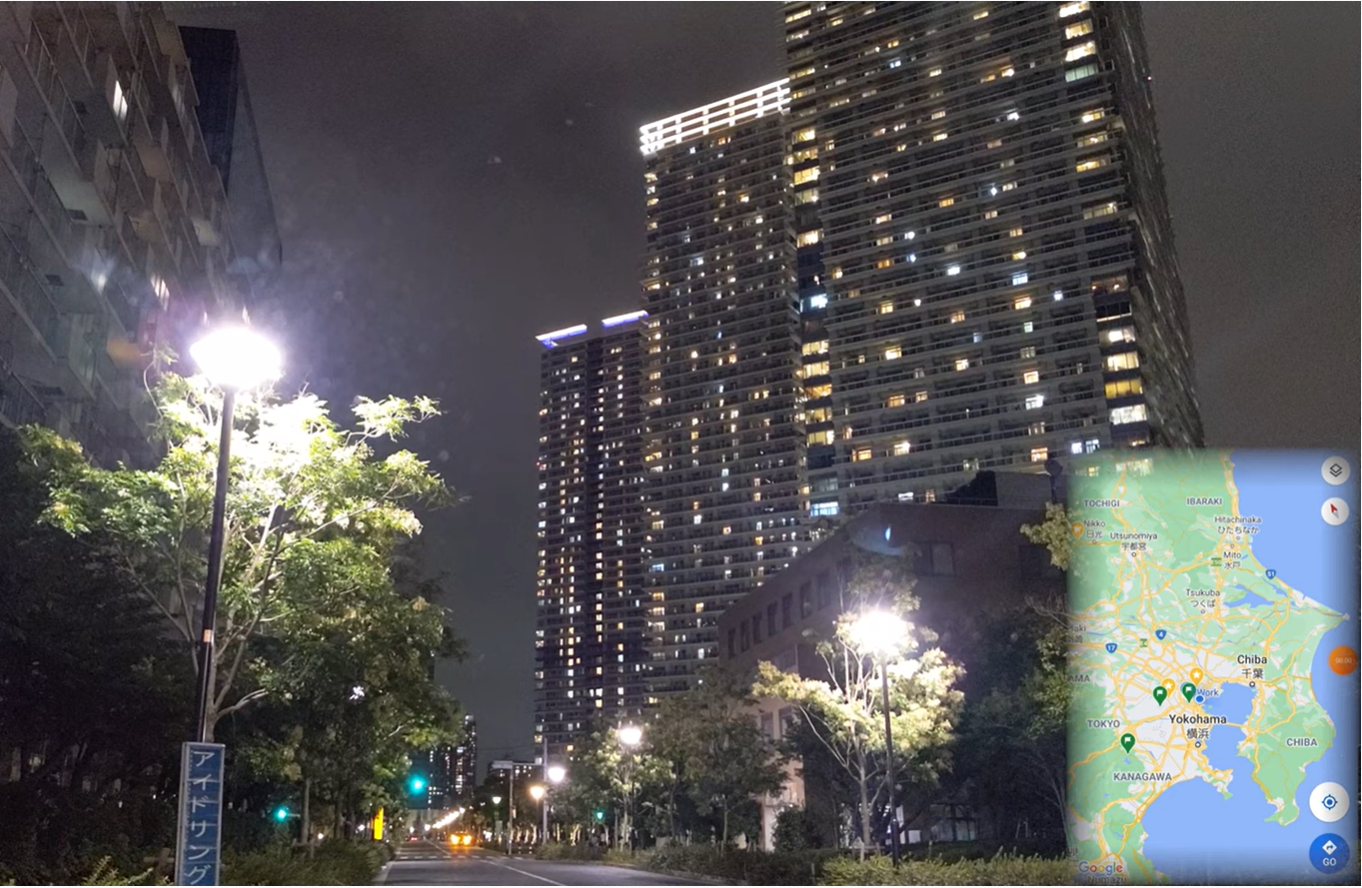
Although Odaiba is famous as a tourist area, at night it reveals another face: a genuine residential district, home to several high-rise tower apartments whose windows glow with the quiet light of everyday life. It’s a fascinating contrast — the shopping malls and entertainment complexes go dark, while the residential towers hum with activity. Driving through Odaiba at night gives you a rare glimpse of Tokyo as locals actually live it.
Key landmarks to watch for on your Odaiba night drive include the life-size Unicorn Gundam statue (lit up beautifully at night), the palette-lit Fuji TV headquarters, and the sweeping boardwalk area where you’ll get unobstructed views of the Rainbow Bridge and the Tokyo skyline — one of the most photographed vantage points in the entire city.
Haneda Airport Terminal 3: The End of the Road (and Worth the Trip)
After passing through the Odaiba area, I headed to Haneda Airport. The rain started to fall again and hit the windshield — but even in the rain, the expressway to Haneda has its own moody beauty, with the runway lights and aircraft beacons visible in the distance as you approach.
This time I headed to Terminal 3, one of the three terminals, which was built in 2010 and is mainly used for international flights. The terminal itself is worth a visit even if you’re not flying — the rooftop observation deck offers spectacular views of planes taking off and landing at night, and the EDO KOJI shopping area inside the terminal recreates the atmosphere of old Tokyo in a surprisingly immersive way.
Narita Airport used to be the main international gateway for the Tokyo metropolitan area, but its location roughly two hours from the city centre was always a significant inconvenience. Since the expansion of Haneda Airport’s international terminal, access to central Tokyo has improved dramatically — just 30 minutes by train or car. Today, Haneda handles tens of millions of international passengers annually and is widely considered one of the world’s best airports. As a final destination on a Tokyo night drive, it offers a sense of arrival and departure that feels uniquely fitting.
More Tokyo Night Drive Routes Worth Exploring
🗾 Book on Viator: JDM Car Meet & Daikoku PA Night Tour →
The Kachidoki–Rainbow Bridge–Haneda route is just one of many incredible options for a night drive in Tokyo. Here are a few other routes and spots that driving enthusiasts consistently recommend:
Tokyo Expressway Loop (Shuto Expressway)
The Shuto Expressway inner loop — known among car enthusiasts as one of the most iconic urban driving roads in the world — winds through the heart of the city past landmarks like Tokyo Tower, the Imperial Palace, and Akihabara. At night, with light traffic and the city glittering around you, it’s an almost surreal experience. This is the road that inspired the iconic highway scenes in Initial D and countless other Japanese automotive pop culture moments.
Daikoku Parking Area: The Heart of JDM Car Culture
If you’re a car enthusiast, no Tokyo night drive guide would be complete without mentioning Daikoku PA (Daikoku Parking Area) in Yokohama, just a short drive from central Tokyo. This famous expressway rest stop has become a legendary gathering spot for JDM (Japanese domestic market) car culture, with everything from rare supercars and modified Skylines to pristine kei cars showing up on weekend nights. It’s a living automotive museum and a must-visit for anyone who loves cars. The atmosphere is friendly, the machines are extraordinary, and the experience is completely unique to Japan.
Shibuya to Roppongi via Aoyama Dori
For a more urban, fashion-forward night drive experience, the stretch from Shibuya through Aoyama and into Roppongi is hard to beat. The streets are lined with designer boutiques, galleries, and restaurants, and the late-night crowd gives the whole area a vibrant, cosmopolitan energy. This route is especially good late on a Friday or Saturday night, when the city truly comes alive.
Tips for Your Tokyo Night Drive
Before you head out, here are a few practical tips to make the most of your Tokyo night drive experience:
- Best time to go: Between 9 PM and midnight on weeknights for the lightest traffic and best atmosphere. Weekends can get busier near Odaiba and the Shuto Expressway.
- Driving licence: Foreign visitors can drive in Japan using an International Driving Permit (IDP) alongside their home country licence. Japan drives on the left.
- Car rental: Major rental companies like Times Car, Nissan Rent-a-Car, and Toyota Rent-a-Car have locations near major train stations. Book in advance, especially during peak seasons.
- ETC cards: Most expressways in Tokyo charge tolls. Ask your car rental company for an ETC card (electronic toll collection) to avoid stopping at toll booths.
- Navigation: Google Maps works well in Tokyo, but many rental cars also come with Japanese GPS systems. Download offline maps before you go.
- Parking: Parking in central Tokyo is limited and expensive. Plan your start and end points around areas with accessible parking, or use a coin parking lot (コインパーキング).
- Weather: Tokyo’s fall (September–November) is ideal for night drives — mild temperatures, clear skies, and beautiful city lights. Summer can be humid; winter brings crisp, clear visibility.
Frequently Asked Questions: Night Drive Tokyo
Where is the best place to go for a night drive in Tokyo?
The best night drive route in Tokyo is widely considered to be the bay area loop: starting from Kachidoki or Ginza, crossing the Rainbow Bridge into Odaiba, and continuing toward Haneda Airport. This route offers stunning views of Tokyo Bay, the illuminated Rainbow Bridge, the Fuji TV building in Odaiba, and the city skyline. The Shuto Expressway inner loop through central Tokyo is another top choice, especially for car enthusiasts who want to experience the iconic urban expressway that has inspired so much of Japan’s car culture. For a more social experience, Daikoku Parking Area in nearby Yokohama is a legendary meet-up spot for JDM car fans.
Is it safe to drive in Tokyo at night?
Yes, driving in Tokyo at night is generally very safe. Japanese roads are well-maintained and well-lit, traffic signals are clearly marked, and Japanese drivers are known for following road rules carefully. Night-time traffic is also significantly lighter than during the day, making the experience more relaxed and enjoyable. Foreign visitors can drive legally in Japan with a valid International Driving Permit (IDP) and their home country licence. Remember that Japan drives on the left side of the road.
What time is best for a night drive in Tokyo?
The sweet spot for a Tokyo night drive is between 9 PM and midnight, particularly on weeknights. By this time, rush hour is long over, the city lights are fully illuminated, and the roads are calm enough to enjoy the scenery without stress. Weekend nights can be slightly busier near popular areas like Odaiba, Shibuya, and Roppongi, but even then the driving experience is far more relaxed than during daylight hours. If you want to catch the Rainbow Bridge illuminations, note that they typically run until midnight.
Do I need a special licence for a night drive in Tokyo?
No special licence is required for a night drive in Tokyo. Foreign tourists can drive in Japan using an International Driving Permit (IDP) paired with their valid home country driving licence. IDPs are available through automobile associations in most countries (such as AAA in the US, RAC or AA in the UK, or JAF in Japan). Make sure your IDP is based on the 1949 Geneva Convention format, as Japan does not accept all IDP formats. If you’d rather not drive yourself, guided night tours of Tokyo are available through operators like Viator and offer a hassle-free way to experience the city after dark.
Can I do a Tokyo night drive without a car — are there guided tours?
Absolutely. If you’d prefer to leave the driving to someone else, there are excellent guided night tours of Tokyo that cover many of the same highlights — including the Rainbow Bridge, Odaiba, and the bay area. Some tours even focus specifically on JDM car culture, taking you to Daikoku Parking Area and other iconic spots. These are a fantastic option for visitors who aren’t confident driving on the left, don’t have an IDP, or simply want to sit back and enjoy the views. Check the tour buttons above for some of the highest-rated options currently available.
How long does a Tokyo night drive typically take?
It depends on your route and how many stops you make, but the classic Kachidoki–Rainbow Bridge–Odaiba–Haneda route takes approximately 45 to 90 minutes of driving time. If you stop in Odaiba for photos or a walk along the waterfront, or detour to Daikoku PA, add another 30–60 minutes. A full evening dedicated to exploring Tokyo by car — including the Shuto Expressway loop, a bay area cruise, and a stop at Haneda — could easily fill three to four hours. Most people find it hard to stop once they get started; Tokyo at night is endlessly captivating.