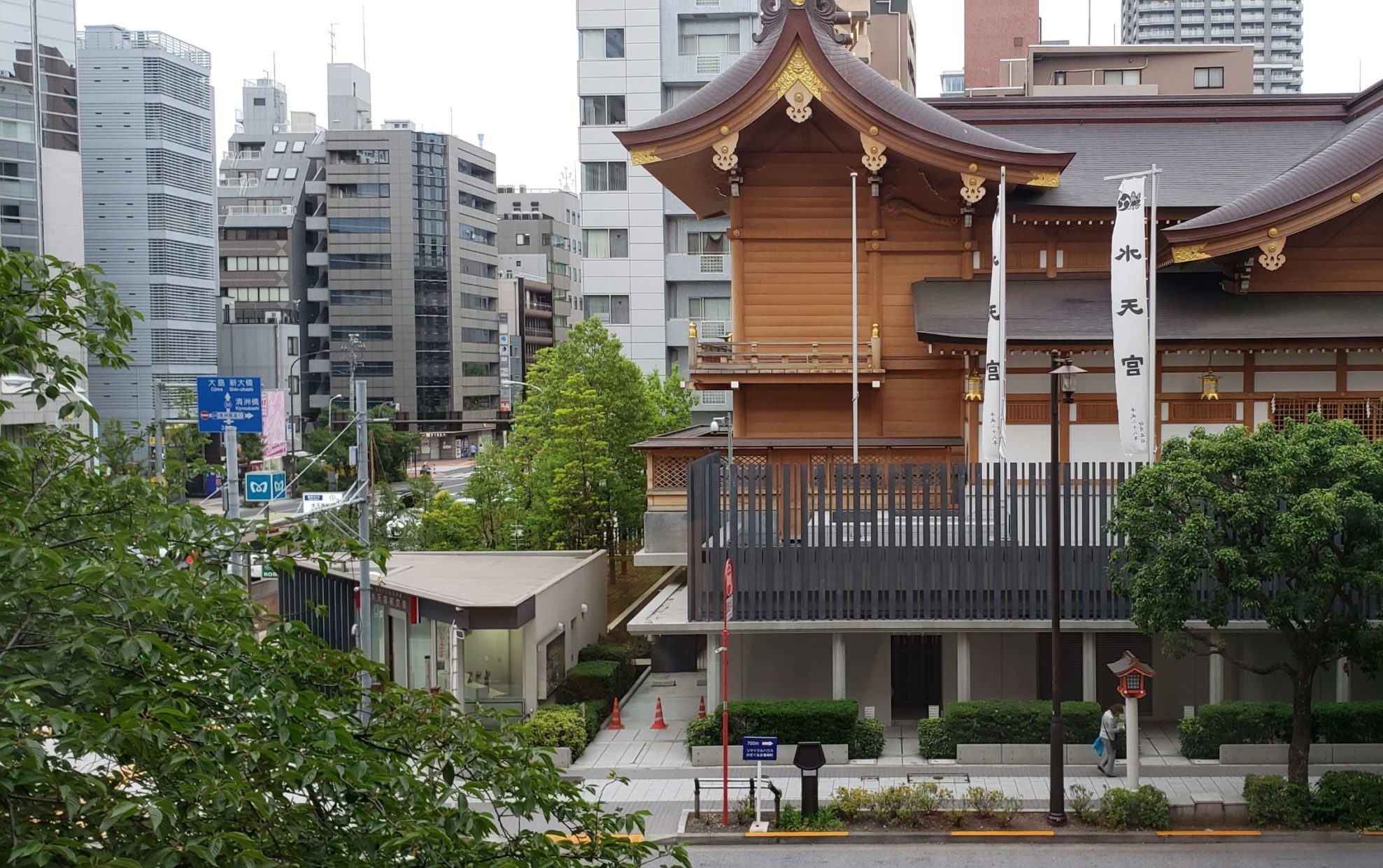
The first time I walked into Suitengu Shrine clutching a positive pregnancy test in my pocket, I cried into a vending machine coffee on the corner of Ningyocho. That was six years ago. My daughter is now five, and every single trip back to Tokyo, we make the same pilgrimage — first to thank the gods of safe childbirth, then to wander through the jewelry workshops of nearby Ginza where I’ve slowly built a collection of tiny milestone pieces marking her life. If you’re an expecting mother, a new mom, or someone trying to conceive who’s planning a Tokyo trip, this little corner of the city was practically designed for you.
Why Suitengu Shrine Speaks to Mothers-to-Be
Suitengu (水天宮) isn’t on most first-time Tokyo itineraries, and honestly? That’s part of its magic. Tucked between Ningyocho and the edges of Nihonbashi (a 2-minute walk from Suitengumae Station on the Hanzomon Line), it’s the most famous shrine in Japan for anzan — safe pregnancy and childbirth. Japanese women have been coming here for over 200 years, and on inu no hi (the “day of the dog,” which rotates through the calendar every 12 days), the place is packed with pregnant women in their fifth month receiving their obi belt blessings.
I remember my second visit, six months pregnant, standing in line behind a Japanese woman who must have been around 38 weeks. Her mother-in-law was fussing with her maternity sash. When she caught me watching, she smiled and gestured for me to go ahead of her. I didn’t have the language to refuse politely, so I bowed about fourteen times and went. That small kindness — extended to a foreigner with a visibly Western pregnancy bump — is something I think about whenever someone asks me why I keep coming back to Tokyo.
The shrine is open daily from 7:00 AM to 6:00 PM, and entry is free. The amulets (omamori) for safe pregnancy run about ¥1,000–¥2,000. If you’re not pregnant yet but hoping to be, ask specifically for the kosazuke (child-blessing) charm. There’s also a beloved bronze dog statue in the courtyard — rub the puppies for fertility and the mother dog for safe delivery. I rubbed both. Vigorously. No shame.
One tip from experience: avoid weekends if you want a quiet visit. I went on a Tuesday morning around 9 AM in October, and the courtyard was almost empty — just me, two elderly women praying side by side, and the soft clack of someone’s wooden geta sandals on the stone. That’s the Suitengu I love best.
The Walk from Ningyocho to Ginza: Don’t Skip It
Most guidebooks tell you to hop the metro back. Don’t. The walk from Suitengu to Ginza takes about 25 minutes if you’re not pregnant, maybe 40 if you are (factor in bathroom stops — there’s a clean one in COREDO Muromachi, trust me on this). The route takes you through Nihonbashi, across the historic bridge, and straight into the northern edge of Ginza’s jewelry district.
I made this walk at seven months pregnant in a freezing January, bundled in a borrowed haramaki belly warmer, stopping every few blocks for a hot can of corn soup from a vending machine. It remains one of my favorite Tokyo memories. The neighborhood smells like roasted senbei crackers from the shops on Amazake Yokocho, and you’ll pass tiny taiyaki stands where you can grab a fish-shaped pancake stuffed with sweet red bean for ¥200. (Tip for expecting moms: the anko paste is generally safe, but skip the matcha-cream versions if your doctor warned you about caffeine.)
Ginza’s Jewelry District: Where I Buy a Piece for Every Milestone
Ginza has been Tokyo’s jewelry heartland since the Meiji era, and what most travelers don’t realize is that you don’t need a Mikimoto-pearl budget to participate. Yes, the flagship Mikimoto building on Chuo-dori is dazzling — and if you want to splurge on a single pearl pendant to commemorate your pregnancy, this is the place. I bought my “first trimester survival” pendant here for ¥38,000, a baby Akoya pearl on a delicate chain. The saleswoman, Mariko-san, brought me green tea and let me sit in the showroom for forty minutes when I had morning sickness. She remembered me on my next visit two years later. Remembered me.
But here’s the secret most travel writers miss: behind the main avenue, on the smaller backstreets between Ginza 1-chome and 4-chome, are family-run ateliers where Japanese craftspeople have been making jewelry for generations. Ginza Tanaka (on Chuo-dori, near Exit A9) specializes in gold and has gorgeous baby-themed charms — I bought a tiny gold omamori-shaped pendant for my daughter’s first birthday for around ¥15,000.
For something more contemporary, I love K. Uno in the Ginza Inz building, where you can design custom pieces. They specialize in birthstone jewelry, and the staff speak excellent English. I had them make a pendant with my daughter’s birthstone (peridot) embedded in a tiny silver crane — the symbol of longevity and protection in Japanese culture. It cost about ¥45,000 and took six weeks to ship, but they handle international delivery beautifully.
Most jewelry shops in Ginza open around 11:00 AM and close by 8:00 PM. Avoid Sundays when Chuo-dori becomes a pedestrian zone — beautiful, but if you’re tired from pregnancy or pushing a stroller, the crowds can be exhausting.
The Cultural Layer Most Tourists Miss
There’s a tradition I want you to know about, because it might