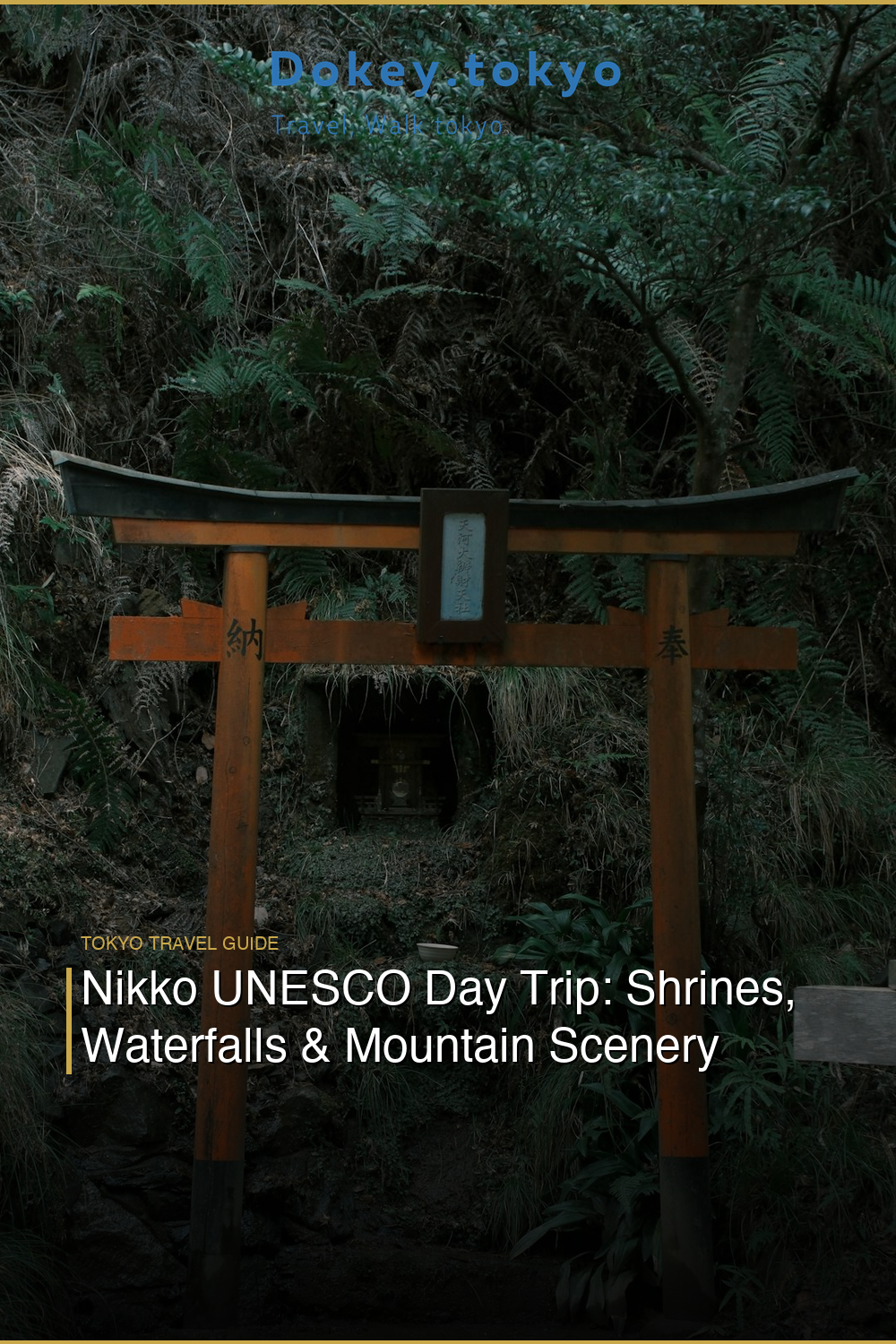
If you’ve been scrolling through Instagram wondering how anyone captures those jaw-dropping shots of vermillion gate-ways half-swallowed by ancient cedar trees, drenched in morning mist — the answer is Nikko, and it is every bit as photogenic as the best frame you’ve ever double-tapped. Just two hours north of Tokyo by the Tobu Limited Express, this mountain town is a UNESCO World Heritage treasure chest that rewards anyone who shows up with a camera, a full battery, and a willingness to wake up before the tour buses arrive.
I still remember stepping off the train at Nikko Station for the first time at 7:14 a.m. on a mid-October morning. The air hit me like a cold compress — sharp, clean, carrying the faint resin smell of cedar that seemed to seep out of the mountain itself. The platform was almost empty, the low autumn sun throwing long amber shadows across the wooden station facade, and I thought: this is what it feels like to arrive somewhere before the world does.
Why Nikko Is a Photographer’s Dream
Nikko is not a single attraction — it’s a layered landscape that shifts from ornate Edo-period architecture to raw volcanic wilderness within a single afternoon. The UNESCO designation covers the Shrines and Temples of Nikko, a collection of 103 buildings set across a forested hillside, but the photographic range extends far beyond those gates. You have the thundering curtain of Kegon Falls, the mirror-still surface of Lake Chuzenji, serpentine mountain roads draped in maple fire during autumn, and sacred cryptomeria avenues where the light falls in cathedral columns. In short, every lens you own will earn its keep.
Planning Your Shoot: The Best Time to Visit Nikko
Autumn (Late October – Mid-November): Peak Color Season
This is the non-negotiable golden window for photographers. The maple and zelkova trees ignite in scarlet and gold, layering perfectly against the green cedar backdrop and the red lacquer of Tosho-gu’s rooflines. Crowds are real, but they arrive after 9 a.m. — get there before then and you’ll have the pathways to yourself in the low-angle morning light.
Spring (Late April – Early May): Cherry Blossoms and Mist
Sakura blooms arrive a little later in Nikko than in Tokyo due to the elevation. The combination of pale pink blossoms against dark wooden shrine structures is quietly devastating in the best way. Morning fog is common in spring and turns the cedar forest into something from a Hayao Miyazaki film.
Winter (December – February): Snow and Silence
If you want Nikko almost entirely to yourself and you don’t mind cold fingers on your shutter, winter delivers otherworldly shots of snow-capped shrine roofs and frozen waterfalls. Bring hand warmers — you will thank yourself.
The Shot List: Must-Photograph Locations
🎫 Book on Klook: Nikko day trip from Tokyo (Toshogu Shrin →
Shinkyo Bridge — Arrive at Dawn
The Sacred Bridge (Shinkyo) arches over the Daiya River in a confident curve of vermillion lacquer, and at dawn, with river mist rising and the trees pressing in from both banks, it earns every cliché ever written about it. Position yourself on the public footpath downstream and shoot slightly upriver to capture the bridge with the forested hillside rising behind it. The entry fee to walk the bridge (¥300) is worth it for the view looking back toward the mountains.
Tosho-gu Shrine Complex — The Detail Shots
Tosho-gu is where your macro lens comes out. The Yomeimon Gate — sometimes called the Gate of Sunsets because artisans allegedly worked on it until dusk each day — is encrusted with over 500 individual carvings of animals, flowers, and mythological figures. I spent 40 minutes on that gate alone, working through wide establishing shots, then closing in on individual panels: a sleeping cat, a crowing rooster, a swirling dragon disappearing into cloud.
A local shrine worker I chatted with near the Nemuri-neko (Sleeping Cat) carving pointed me toward a small side path most visitors walk straight past — it leads up steep stone steps to Ieyasu Tokugawa’s actual mausoleum, Okusha, buried in a cedar grove so dense and still that you can hear your own heartbeat. The diffused light filtering through those ancient trees at 8:30 a.m. is unlike anything I’ve managed to recreate anywhere else in Japan.
Kegon Falls — Timing Is Everything
Take the Chuo Bus from Nikko Station up the Irohazaka switchback road (about 45 minutes, ¥1,100 each way) to reach Kegon Falls, where 97 meters of Lake Chuzenji’s water drops into a churning basin. For shooting, the paid elevator (¥570) takes you down to a viewing platform at the base — that’s where you get the full vertical frame with the rainbow mist catching morning light. Arrive before 10 a.m. to avoid tour group congestion on the platform.
Lake Chuzenji — Reflections and Wide Landscapes
After Kegon Falls, walk ten minutes to the lake’s eastern shore. On calm mornings, the surface reads like polished pewter, reflecting the tree-covered caldera walls above. This is where your wide-angle earns its keep. Shoot east for the mountain backdrop, or turn west for softer backlit water scenes in the afternoon.
Fueling Your Shoot: Food and Drink in Nikko
Don’t let photography tunnel-vision make you skip lunch — Nikko’s food scene has real personality. Yuba (tofu skin) is the town’s signature ingredient, served in everything from delicate soup to creamy sashimi-style dishes. The small restaurants clustered along Omotesando, the main approach road to the shrines, serve warming yuba ramen for around ¥1,000 — exactly what your cold hands need after a morning in the mountains.
For coffee before your dawn shoot, the 7-Eleven opposite Nikko Station opens early and is entirely judgment-free about photographers in full gear buying canned café au lait at 6:30 a.m. There are also a handful of traditional teahouses inside the shrine complex grounds where you can sit with matcha and wagashi sweets between shooting locations — the pause is genuinely useful for resetting your eye.
Practical Photography Tips for Your Nikko Day Trip
Getting There
From Asakusa Station in Tokyo, the Tobu Nikko Line Limited Express (Revaty) runs directly to Nikko Station in about 1 hour 50 minutes. The Tobu Nikko All Area Pass (around ¥4,780 from Asakusa) covers your round-trip train fare plus unlimited bus rides in Nikko — essential if you’re doing the full loop from shrines to falls to lake.
What to Carry
- A wide-angle lens (16–35mm range) for shrine gates and waterfall full-frames
- A telephoto or macro (100mm+) for carving details and compressed cedar-avenue shots
- A sturdy tripod — morning light is low and the waterfall base platform benefits enormously from slow shutter speeds
- Polarizing filter for cutting glare on Lake Chuzenji
- Extra batteries: cold mountain air drains them faster than Tokyo ever will
Respect the Space
Tripods are restricted inside parts of Tosho-gu during busy hours — always check current rules with shrine staff, who are genuinely helpful and often quietly pleased that someone is paying attention to the details. Drone photography is prohibited throughout the UNESCO zone.
Start Early, End Well
Aim for an 8 a.m. arrival at the shrines — tour groups from Tokyo typically reach Nikko between 10 and 11 a.m. By the time the crowds arrive, you should be on the bus heading up to Kegon Falls. Plan to return to Nikko town by 4 p.m. to catch the late afternoon light on Shinkyo Bridge one more time before your train.
At around 4:45 p.m. on that October trip, I was back at Shinkyo Bridge with the sun dropping behind the ridge and the bridge lit in a deep amber that made the lacquer glow like it was generating its own heat. A group of schoolchildren in matching yellow hats were crossing the footpath nearby, laughing at something I couldn’t hear, their voices carrying over the river sound. I set my shutter to 1/15 and caught the bridge, the motion blur of a single passing cedar branch, and the last slice of mountain light — and I knew it was the frame I’d come for without ever knowing I was looking for it.
Final Thoughts Before You Book That Train
Nikko rewards photographers who do one thing above all else: slow down. The instinct is to sprint through the UNESCO complex checking monuments off a list, but the real shots — the ones that make people ask where that was taken — come from the quiet pauses. The side path you weren’t supposed to find. The 40 minutes on one gate. The second visit to the same bridge in different light. Give yourself a full day, leave Tokyo on the first express, and let the mountain set the pace. Your memory card will not be disappointed.