If you’ve ever wanted a single neighborhood in Tokyo that gives you ancient forest silence, jaw-dropping architecture, and secret moss-covered shrines — all within a 30-minute walk — then Meiji Shrine and Omotesando are about to ruin every other destination for you. I say that with complete sincerity and zero apology. This corner of Tokyo is the reason I keep coming back, camera bag slung over one shoulder, memory cards freshly formatted, heart already racing before I’ve even stepped off the Yamanote Line.
I still remember my first time arriving at Harajuku Station at 6:15 in the morning, fog clinging to the torii gate like it had been placed there specifically for my frame. The air smelled of cedar and damp earth — not the city smell I expected — and the crunch of gravel under my boots was the only sound for a full five minutes. I felt like I had accidentally walked into someone’s private ritual, and honestly, I had.
Why This Area Is a Photographer’s Dream
Meiji Shrine and Omotesando sit in a kind of impossible balance — one is a forested Shinto sanctuary dedicated to Emperor Meiji and Empress Shoken, the other is Tokyo’s most architecturally stunning boulevard, lined with flagship stores designed by the likes of Tadao Ando and Herzog & de Meuron. For photographers, this contrast is the entire point. Within two kilometers, your camera can capture ancient ritual and contemporary design, street fashion and silent prayer.
The Forest Walk: Meiji Jingu’s Inner Path
The approach to Meiji Shrine itself — that long, gravel-paved path flanked by 120,000 trees donated from across Japan — is where your best shots will happen if you show up before 7 AM. The tree canopy creates what photographers call a natural tunnel effect, and when morning light filters through the cryptomeria cedars in long diagonal beams, it looks almost artificially perfect. It is not. Bring a wide-angle lens and shoot from low to the ground to capture the full compression of the canopy above you.
Timing your visit for weekdays between late October and early December gives you the added bonus of autumn foliage — the edges of the forest take on deep amber and burgundy tones that contrast beautifully with the dark wood of the shrine structures. If you visit during iris season (mid-June), the inner garden (Otaguro Park area near the shrine) offers some of the most painterly botanical compositions I’ve ever photographed.
Shooting the Torii Gates
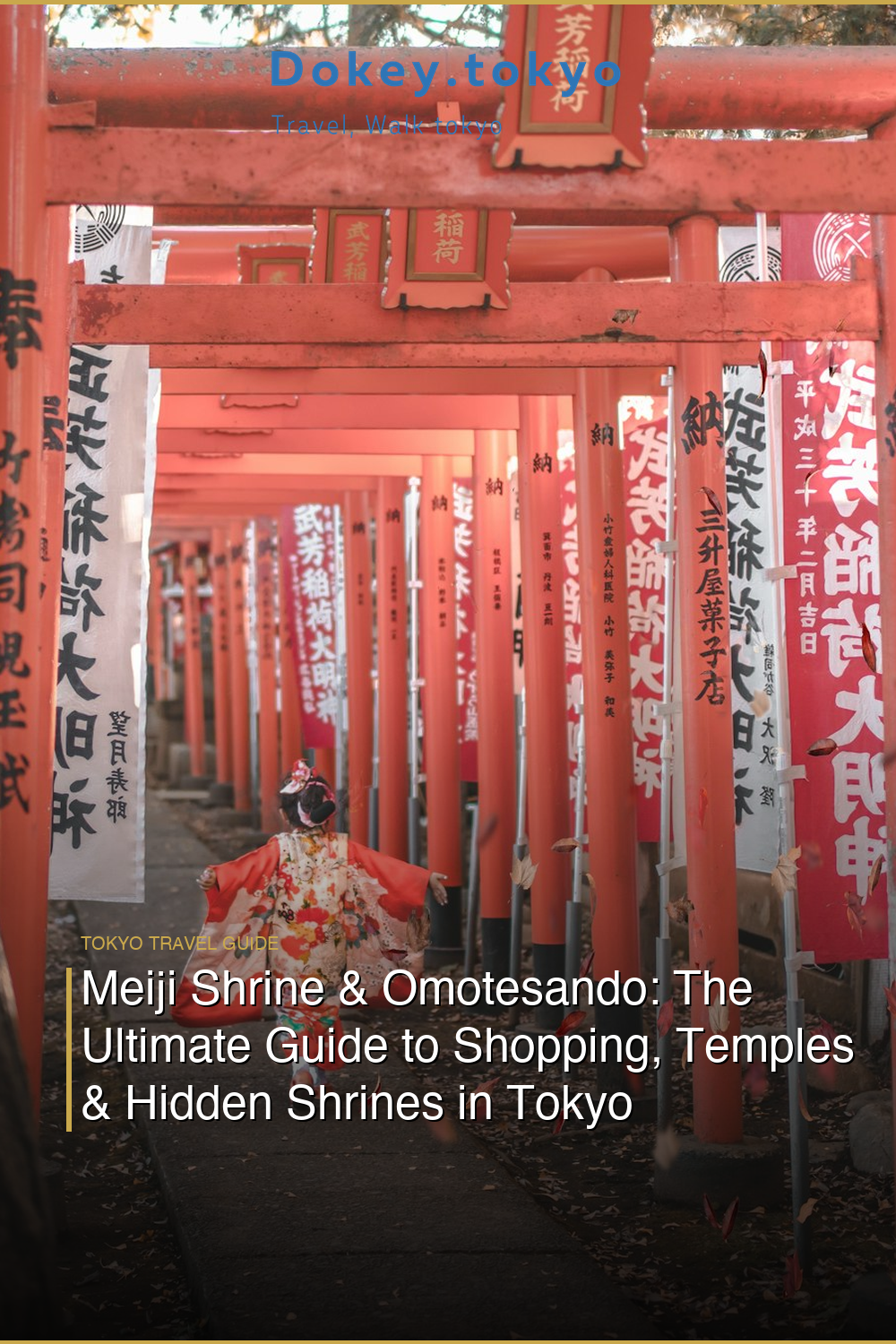
The main torii at Meiji Shrine — one of the largest wooden torii gates in Japan at nearly 12 meters tall — is everyone’s first shot, and for good reason. But here’s the move most visitors miss: walk past the gate, turn around, and shoot back through it with the gravel path and canopy framing the gate from behind. The reverse perspective eliminates the crowds gathering at the front and gives you a quieter, more compositionally interesting image.
A local park volunteer named Tanaka-san told me one morning to look for the secondary torii gate near the treasury museum — it catches the early light differently and almost never has anyone standing in front of it. He was completely right. I spent 40 minutes there alone with my tripod and came away with some of the best architectural-spiritual crossover shots of my entire Tokyo archive.
Harajuku’s Hidden Shrines: The Shots Nobody Posts
🗾 Book on Viator: Temples, Culture & Modern City Highlight →
Between Meiji Shrine and the Omotesando boulevard lies a dense pocket of smaller shrines and sacred spaces that most tourists walk straight past. Togo Shrine, about a 10-minute walk from Harajuku Station, is dedicated to Admiral Togo Heihachiro and sits beside a small pond filled with koi. On Sunday mornings, a flea market fills the grounds — antique kimonos, old ceramics, vintage cameras — and the combination of market color against the shrine’s dark timber makes for incredibly layered street photography.
Yoyogi Park: The Wild Card Shot
Directly adjacent to Meiji Shrine, Yoyogi Park is one of those locations where you simply cannot predict what you’ll find. I’ve photographed a man practicing classical guitar under a ginkgo tree, a group of rockabilly dancers in full 1950s regalia, families having hanami picnics, and a woman in a wedding kimono posing for portraits — all on the same Sunday afternoon. For portrait and street photographers, the park’s open meadows and wooded edges offer both candid and golden-hour opportunities that feel nothing like staged tourism.
Bring a 50mm or 85mm prime lens for the park. Natural compression between subjects and backgrounds is extraordinary in autumn and spring when the park is softly lit and full of locals actually living their lives.
Omotesando: Where Architecture Becomes the Subject
🗾 Book on Viator: Local Guide, Custom Stops & Hidden Gems →
Once you’ve exhausted the shrine and forest, walk south along Omotesando-dori and prepare to switch modes entirely. This is Tokyo’s Champs-Élysées — if the Champs-Élysées had been redesigned by obsessively detail-oriented Japanese architects and populated with some of the most beautifully dressed humans on earth.
The Flagship Store Architecture Trail
For architecture photographers, Omotesando is a pilgrimage route. The Prada store (Herzog & de Meuron, 2003) with its diamond-shaped glass facade catches light in prismatic ways that change completely depending on time of day and cloud cover. The Tod’s building (Toyo Ito, 2004) uses an interlocking elm-tree concrete pattern as its structural facade — shoot it at blue hour when the interior light bleeds through the organic lattice. Tadao Ando’s Omotesando Hills (2006) has a spiraling internal atrium that, shot from the bottom looking up with a wide-angle, looks like a futurist cathedral.
I usually walk this architectural trail starting around 4 PM, catching the buildings in warm afternoon light, then staying for blue hour around 5:30-6 PM in winter (or 7 PM in summer) when the facades are lit from within. The contrast between warm interior glow and the cooling blue sky above is a composition that rewards patience.
Side Streets: Ura-Harajuku for Street Style
The small streets branching off Omotesando — locally called Ura-Harajuku — are where Tokyo’s street fashion actually lives. Cat Street is the most famous, a pedestrian lane lined with independent boutiques, vintage shops, and the kind of effortlessly cool cafes where the coffee is served in hand-thrown ceramic mugs and the music is always something you can’t quite identify but immediately love.
For street portrait photographers, ask permission — a simple “shashin ii desu ka?” (May I take a photo?) goes a long way. Many Harajuku regulars are actually happy to be photographed and will sometimes invite you to shoot them properly. I’ve had entire impromptu portrait sessions arranged this way, resulting in some of my most shared travel images.
Where to Eat and Refuel (For the Shooting Schedule)
Photographers on a dawn-to-dusk schedule need food that doesn’t slow you down. In the Omotesando area, Bread, Espresso & (known locally as Mü) opens early and does a French toast called “pain perdu” that is thick, egg-soaked, and honestly the best reason to stop moving. Afuri on Omotesando serves yuzu ramen — a broth so bright and citrus-forward it almost tastes translucent — perfect for a warm mid-day reset between shooting sessions.
For late afternoon, grab a soft-serve matcha cone from one of the small stands near Takeshita Street. It’s photogenic, delicious, and costs about ¥400. Your followers will thank you.
Practical Tips for Photography Enthusiasts
- Tripods inside Meiji Shrine: Not permitted inside the inner sanctum area. Use a mini-tripod or gorilla pod on ground level on the approach path.
- Drone photography: Strictly prohibited throughout the shrine grounds and Yoyogi Park.
- Golden hour timing: In spring and autumn, aim for 5:30-6:30 AM arrival at Meiji Shrine. Crowds arrive by 8 AM on weekdays, earlier on weekends.
- Respect during ceremonies: If you arrive and find a wedding procession moving through the shrine grounds, lower your camera until the procession passes. The soft-spoken shrine staff will appreciate it, and so will your karma.
- IC Card for transport: Load a Suica card at Harajuku Station. It covers every transit option in the area and means you can chase light without fumbling for cash.
Late one October afternoon, just before the shrine closed, I watched a priest in white robes walk slowly across the courtyard raking the gravel into precise parallel lines while the last orange light fell across the compound walls. He didn’t look up. The sound of the rake was rhythmic and dry, like something between music and silence. I didn’t raise my camera. Some moments, you just have to let exist.
Your Shot List, Your Journey
Meiji Shrine and Omotesando will give you everything — spiritual gravity, architectural ambition, street fashion chaos, forest stillness, ramen steam, and matcha sweetness — if you show up with curiosity rather than a checklist. Come early, stay late, let the neighborhood tell you where to point your lens. Tokyo always rewards the patient eye, and this particular corner of the city has been doing it for over a century.