If someone told you before your first Tokyo trip that you’d be standing on a narrow alley at 7:30 in the morning, chopsticks in hand, eating the best egg you’ve ever tasted in your life while vendors shouted around you in Japanese — would you believe them? Probably not. But that’s exactly what a morning at Tsukiji Outer Market does to you. It pulls you in before you’re fully awake, feeds you something extraordinary, and sends you back into the city completely converted. For first-time visitors especially, this is not a tourist attraction. This is a full-body introduction to what Tokyo actually tastes like.
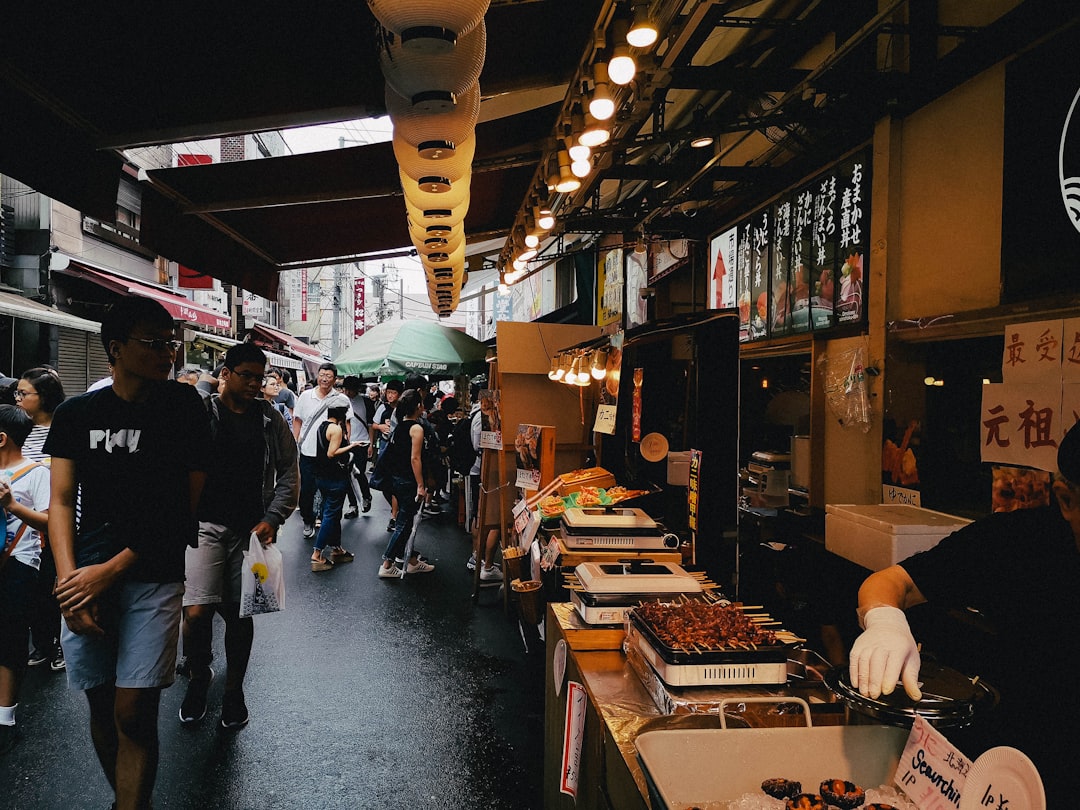
I still remember my first morning there like a film sequence burned into my memory. I arrived just past 7am in early October, and the air hit me first — a sharp, briny cold layered with the sweetness of charcoal smoke drifting from a tamagoyaki grill somewhere nearby. The market lanes were already humming, vendors calling out to each other in clipped, cheerful Japanese, styrofoam boxes stacked tall, and the sound of knives hitting wooden boards in a quick, confident rhythm. I was jet-lagged, slightly lost, and completely, instantly awake.
What Is Tsukiji Outer Market — And Why First-Timers Should Go Here First
Let’s clear up one thing that confuses almost every first-timer: the famous Tsukiji Fish Market that you’ve seen in food documentaries? The inner wholesale market where buyers bid on giant bluefin tuna at dawn? That moved to Toyosu in 2018. But the Outer Market — the public-facing strip of food stalls, specialty shops, and casual eateries that surrounds the old site — stayed exactly where it was, and it is absolutely still worth your early alarm.
The Tsukiji Outer Market stretches along a grid of narrow lanes near Tsukijishijo Station on the Toei Oedo Line. It’s walkable from Ginza, which is helpful if you’re staying in central Tokyo. Roughly 400 shops and stalls operate here, selling everything from fresh seafood and dried goods to kitchen knives, Japanese pickles, and tamago — the sweet rolled egg that has become the unofficial mascot of this market.
For first-timers, the Outer Market is the perfect first Tokyo food experience because it’s accessible, it’s open-air, it’s cash-friendly, and it requires absolutely zero reservation. You just show up hungry.
The Tamagoyaki Deep Dive: What to Order and Where to Stand
🗾 Book on Viator: Tsukiji Fish Market Food Walking Tour →
If you only eat one thing at Tsukiji, make it tamagoyaki. This sweet, layered rolled omelette is a breakfast staple across Japan, but the versions sold hot off the copper pans at Tsukiji are something else entirely. They’re thick, slightly springy, still steaming inside, with a gentle sweetness that doesn’t feel like dessert — it feels like comfort.
The most famous spot for tamagoyaki is Tamagoya, a small stall that has been grilling these eggs for generations. You’ll know it by the line and the smell. Order the plain version your first time — just egg, dashi broth, and a whisper of mirin. It costs around ¥400–¥500 for a skewered piece, and they hand it to you warm, wrapped in a small piece of paper.
Here’s what I didn’t expect on my second visit: I noticed the vendor at Tamagoya was also offering a cheese-stuffed version that wasn’t listed on any menu board I could find. I only spotted it because the couple ahead of me pointed to a tray behind the counter. I asked about it with enthusiastic hand gestures and broken Japanese, and the vendor grinned and handed me one. It was absurdly good — the richness of cheese against the sweet dashi egg — and I’ve never seen it mentioned in any travel guide. Ask and point; the vendors at Tsukiji are used to curious tourists and genuinely enjoy sharing.
Tamagoyaki Tips for First-Timers
- Go before 8:30am if you want the shortest lines and the freshest batches
- Bring cash in small bills — most stalls don’t accept cards, and ¥1000 notes are ideal
- Eat it immediately; tamagoyaki is exponentially better hot
- Some stalls offer free tasting samples — never say no
The Sashimi Bowl Experience: Where to Sit and What to Expect
Now for the main event. A fresh sashimi bowl — or kaisendon — at Tsukiji is the kind of meal that makes you want to cancel your afternoon plans and just sit quietly with the memory of it. These bowls are typically served over short-grain white rice, piled with whatever the vendor considers peak freshness that morning: fatty tuna (toro), sweet shrimp (amaebi), salmon (sake), sea urchin (uni), scallops, and more.
For first-timers, a few restaurants inside the market lane offer seated kaisendon at breakfast hours, typically opening between 6:30am and 7am. Sushisay, Nakamura, and several unmarked counter restaurants with hand-written menus outside their doors are excellent entry points. Don’t stress about finding the “best” one. The quality floor at Tsukiji is so high that almost any bowl from a busy, well-trafficked spot will be exceptional.
Expect to spend ¥1,500–¥3,000 for a standard kaisendon. If you want toro (fatty tuna) on top, that pushes the price higher but is absolutely worth it at least once. Point at photos on menus if your Japanese is limited — most stalls have visual menus, and vendors are patient and helpful.
What to Order If It’s Your First Time
- Kaisen-don set (assorted sashimi bowl with miso soup and pickles) — a safe, delicious start
- Uni-don (sea urchin bowl) if you’re feeling adventurous — only do this at Tsukiji, where freshness matters most
- Maguro don (tuna-only bowl) if you want to taste the classic without overwhelm
Navigating the Market as a First-Timer: Practical Logistics
Tsukiji Outer Market is compact but easy to get disoriented in, especially when you’re hungry and distracted by everything around you. Here’s what you need to know before you go:
Getting There: Take the Toei Oedo Line to Tsukijishijo Station (Exit A1). From Ginza, it’s a 10-minute walk. From Shinjuku, it’s about 20 minutes by subway.
Best Time to Arrive: Between 6:30am and 8am for the fullest experience. The market peaks early and starts winding down by 11am, with some stalls closing by noon. First-timers who show up at 10am often find sold-out signs on the best items.
What to Bring:
– Cash only (most stalls) — carry ¥5,000–¥10,000
– A small backpack or tote (you’ll end up buying things)
– Comfortable shoes — the lanes are uneven
– A light layer even in summer — the covered sections trap sea-smell but the open sections get morning wind off the bay
What to Skip: Avoid the sit-down tourist-facing restaurants with English-only menus and photos of everything plastered on windows — they’re often overpriced and don’t represent the real Tsukiji experience. Go where you see Japanese locals eating standing up.
Beyond Breakfast: Other Things Worth Tasting While You’re There
🗾 Book on Viator: Tsukiji Food Tour with 6+ Tastings →
If you have extra time and stomach space, the Outer Market rewards wanderers. Look for:
– Freshly grilled scallops sold by the shell, drizzled with butter and soy
– Thick-cut tamagoyaki sandwiches — yes, this is a thing, and it’s delicious
– Japanese pickles (tsukemono) sold by the scoop from giant barrels
– Dashi broth samples offered by specialty shops — silky, umami-forward, and free
– Kitchen knives if you’re a home cook — the quality is remarkable and prices are competitive
At around 8:45am on my most recent visit, I found a tiny stall tucked near the back of the market’s second lane selling grilled scallops. The vendor was an older man who handed me a shell with one gloved hand, pointed at the drizzle of soy sauce pooled in the hinge of the scallop, and said simply, “Tabete” — eat. I ate. The scallop was so fresh it had an almost milky sweetness, and the soy caramelized around the edges of the shell into something that tasted like the sea had been distilled into a single perfect bite. I stood there for a moment before I realized the vendor was already laughing at my expression.
One Last Thing Before You Go
Tsukiji Outer Market as a first-time Tokyo experience sets a standard that the rest of your trip will quietly try to match. You will eat extraordinary things in Tokyo — that is guaranteed — but there is something about the combination of early morning light, market energy, and food this fresh and this casually excellent that makes Tsukiji feel like the city’s truest self. Go hungry. Arrive early. Say yes to everything someone hands you. And when you get back to your home country and taste a grocery store sashimi tray, you’ll understand exactly why this market stays in your memory long after the jet lag fades.
Ready to experience it?
🗾 Book on Viator: Tsukiji Fish Market Private Food Tour →