The first time I stepped out of Shimbashi Station as a solo female traveler, I expected the chaos of Ginza next door — instead, I found a salaryman handing me a tiny umbrella because it had just started drizzling, and an old yakitori master nodding at me through the smoke of his grill like I’d been coming there for years.
That’s Shimbashi. It’s Ginza’s older, slightly rumpled cousin — and for women traveling alone in Tokyo, it might just be the most quietly welcoming neighborhood in the city. I’ve returned six times now, and I keep telling my girlfriends the same thing: if you want the polish of Ginza without the intimidating boutique-staff stares, if you want izakaya culture without the tourist menus, if you want to feel safe wandering at 11 p.m. with a full belly and a slight buzz — come here.
Why Shimbashi Works So Well for Solo Female Travelers
Let me be honest about something. The first solo trip I took to Tokyo, I stayed in Shinjuku and felt swallowed by it. The second time, in Roppongi, I dodged more than a few overly friendly strangers near the station. Shimbashi was my third try, and it stuck.
The neighborhood is heavily corporate — meaning the crowds are mostly office workers grabbing dinner, then heading home on the Yamanote Line. It empties out predictably by 11:30 p.m., the streets are lit, and koban (police boxes) are everywhere. I’ve walked back to my hotel after midnight more times than I can count without a single uncomfortable moment.
It’s also walkable to almost everywhere I actually want to go: Ginza in 8 minutes, Hibiya Park in 10, Tsukiji Outer Market in 15, and the Hamarikyu Gardens just south. Shimbashi Station itself is on the Yamanote, Ginza, Asakusa, and Yurikamome lines, plus the JR Tokaido. For a woman planning day trips out to Kamakura or Yokohama solo, this is gold.
Slipping into the Izakaya Alleys Without the Awkwardness
Okay, here’s the thing about izakayas that nobody tells solo women: walking into one alone for the first time is terrifying. I remember standing outside one of the red-lantern joints under the train tracks near the SL Plaza for a solid five minutes, watching salarymen pile in, convincing myself I’d be stared at.
I finally pushed through the noren curtain at a place called Beer Bar Ren (a tiny spot just east of the station), and the master immediately pointed at the counter seat at the end — the spot where regulars sit solo. No fuss. He slid me a hot oshibori, poured a draft Sapporo (¥600), and gestured at the chalkboard menu. Two hours later I’d had grilled shishito peppers, a perfectly charred chicken thigh skewer, and a conversation in broken Japanese-English with the man next to me who insisted on showing me photos of his cat.
That’s the Shimbashi izakaya formula I now swear by for solo women:
- Look for counter seating (カウンター席) — you’re not awkward, you’re the ideal customer
- Go early, around 5:30–6:30 p.m., when the masters have time to be kind
- The alley under the tracks (called Niku Yokocho area, just east of the station) is denser, smokier, and surprisingly female-friendly because the regulars treat first-timers like a novelty
My other repeat stop: Tsukimi Burger… wait, no — Yakitori Ton Ton under the JR tracks. Six seats. The master speaks zero English. I just point. The chicken liver skewer costs ¥180 and changed my entire opinion on liver.
If you want a slightly more polished experience where you don’t have to be brave, Shimbashi Tofuya Ukai’s smaller sister kaiseki spots in the area do beautiful set menus around ¥4,000–6,000 with private tables. Great for nights when you want to be alone with a book.
The Ginza Shopping I Actually Recommend (From the Quiet Side)
I’m not going to pretend I shop at Chanel. But I love wandering Ginza’s edges from Shimbashi, because you enter through the south end where the foot traffic is gentler.
My favorite slow afternoon: walk north up Sotobori-dori from Shimbashi Station, and within ten minutes you hit Itoya, the twelve-story stationery wonderland. I’ve spent three hours here, easily. The washi paper floor is meditative. I bought a hand-bound notebook for ¥1,400 on my last trip that I still write in. Open 10 a.m.–8 p.m., 10 a.m.–7 p.m. Sundays.
For something completely different, Muji Ginza (the flagship) has an entire floor of fresh produce, a bakery, and a tiny hotel attached. I duck in for their salt-and-pepper rice crackers and oat milk lattes when I need a quiet hour.
Here’s my solo-female tip: the Ginza Six rooftop garden is free, open until 11 p.m., and almost always empty in the early evening. I’ve watched the sunset over the city alone from there with a Family Mart matcha latte and felt completely safe. It’s a five-minute walk from Shimbashi.
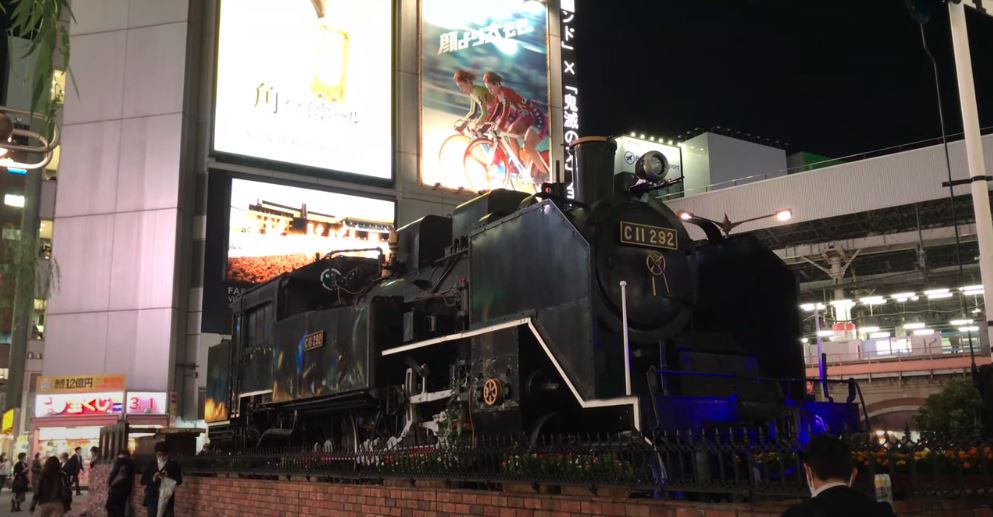
If you want something genuinely Shimbashi-local, check the SL Plaza area outside the Hibiya exit — there’s an old steam locomotive parked there as a landmark, and the side streets behind it have small craft shops, a few vintage kimono dealers, and antique watch stores where I once watched a woman in her 70s haggle for twenty minutes over a 1960s Seiko.
Slipping into Culture Without the Crowds
Here’s where Shimbashi really earned my loyalty. The cultural stuff nearby is criminally under-visited.
Hamarikyu Gardens is a 12-minute walk south of the station. ¥300 entry. I went on a