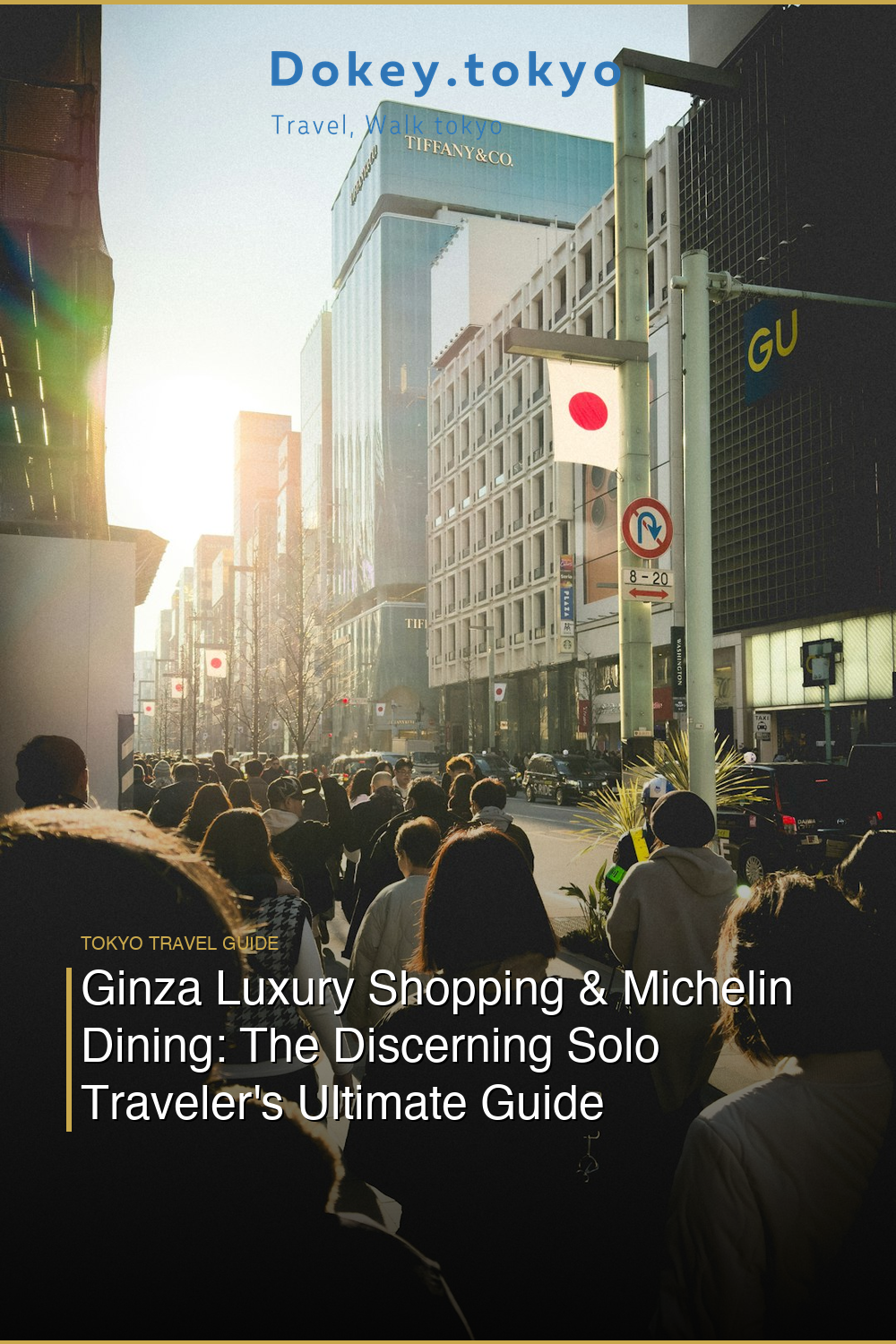
There’s a particular kind of confidence that washes over you the moment you step out of Ginza Station and feel the weight of one of the world’s most glamorous neighborhoods settle around your shoulders. Ginza isn’t just a shopping district — it’s a statement. For the solo traveler who has saved up, planned meticulously, and decided that this trip is the one where they finally say yes to the best of everything, there is no neighborhood on earth quite like it. You don’t need a partner, a group, or a tour guide to access Ginza’s highest pleasures. In fact, going solo might be the only way to truly savor them.
I still remember stepping out of the Ginza exit on a crisp October evening, the last of the golden hour light bouncing off the Chanel and Cartier facades like something out of a film set. The air had that particular Tokyo quality — cool, faintly perfumed by bakery vents and department store fragrances drifting from open doors — and the street was humming with that low, purposeful energy of people who know exactly where they’re going. I stood there for a full two minutes, doing nothing, just letting the place land on me. That’s the luxury Ginza gives the solo traveler first: the freedom to stop and actually feel it.
Understanding Ginza Before You Shop
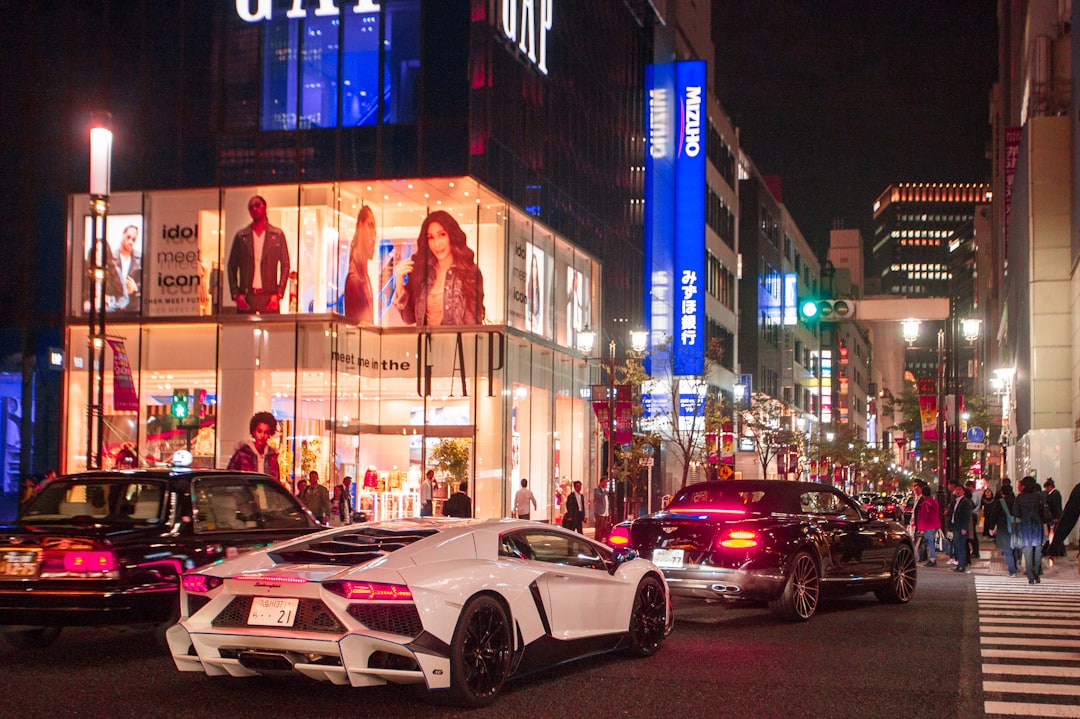
Ginza sits in Chuo Ward, roughly a 10-minute metro ride from Tokyo Station, and its main artery — Chuo-dori — transforms into a pedestrian paradise every weekend afternoon from around 12 PM to 5 PM (April through September) or 12 PM to 4 PM (October through March). This is called Hokosha Tengoku, or “Pedestrian Heaven,” and for the solo luxury traveler, it’s the single best way to orient yourself. No cars, no rush — just you, the architecture, and the window displays that are genuinely worth treating as art.
The neighborhood is organized on a grid, and the blocks are numbered: the higher the chome number, the more relaxed and gallery-heavy the area. Ginza 1-chome through 4-chome is where the heavy-hitters live — Hermès, Louis Vuitton, Prada, Dior. Ginza 6-chome through 8-chome softens into Japanese luxury brands, contemporary art spaces, and quieter restaurant streets that reward slow exploration.
The Luxury Shopping Circuit: Where to Spend Wisely
🎫 Book: Ginza Luxury Shopping Tour →
Ginza Six (GSIX)
If you only have one afternoon, make it Ginza Six. Opened in 2017 on the site of the legendary Matsuzakaya department store, this 13-floor retail complex is curated rather than crammed. The basement levels house extraordinary Japanese food products — lacquerware lunch boxes, single-origin wagashi sweets, aged sake — that make far more meaningful souvenirs than anything you’ll find in an airport. The rooftop garden on the 13th floor is free, almost always uncrowded, and offers a skyline view that pairs perfectly with a solo glass of Champagne from the bar up there.
The Hermès Maison
The Renzo Piano-designed Hermès building at Ginza 5-chome is non-negotiable. Even if you’re not buying (though their Ginza-exclusive scarves are dangerously tempting), go in. The staff at Hermès Ginza are famously attentive without being predatory — I’ve spent 45 minutes in there, bought nothing, handled a Kelly bag in a color I’d never seen outside of their atelier, and left feeling genuinely respected. As a solo traveler, you’ll notice that Japanese luxury retail culture treats the solo shopper as the ideal customer: all attention, no distraction.
Wako Department Store
The clock tower at the Wako building is Ginza’s most iconic landmark, and the store itself is a study in Japanese luxury restraint. Unlike the European flagship stores, Wako sells almost exclusively Japanese goods — watches, jewelry, silk, ceramics — at price points that range from special occasion to truly aspirational. Their window displays are changed seasonally and are considered works of art by the local creative community.
Michelin Dining in Ginza: A Solo Traveler’s Game Plan
🗾 Book: Ginza Sumo Show with Kaiseki Dinner →
🗾 Book: Wagyu & Sake Pairing Tasting Experience →
🗾 Book: Michelin Star Ramen Tasting at Tsuta →
🎫 Book: Michelin Dining Experiences →
🎫 Book: Tokyo Gourmet Food Tours →
Here’s where Ginza gets complicated for solo travelers: many of Ginza’s most celebrated restaurants are omakase counter-style, which is, counterintuitively, absolutely perfect for dining alone. A single seat at a sushi or kaiseki counter is not a consolation prize — it’s the coveted position. You’re directly in front of the chef. You watch every movement. You receive the full performance.
Sushi Saito (Three Michelin Stars)
The hardest reservation in Tokyo, possibly in the world. You will almost certainly not get in on your first trip. I’m telling you about it anyway because knowing it exists will make you understand what Ginza-adjacent sushi culture is reaching toward. If you have a connection through a luxury hotel concierge — and I’ll tell you more about that below — pursue it.
Sushi Yoshitake (Three Michelin Stars)
This is your realistic three-star target. Eight seats, an intimate counter on the 8th floor of a Ginza building, and Chef Masahiro Yoshitake’s legendary edomae technique. The omakase runs around ¥50,000–¥60,000 per person and is worth engineering your entire trip around. Book through their official website at least two months in advance, or ask your hotel concierge the moment you confirm your travel dates.
Quintessence (Three Michelin Stars, French)
Chef Shuzo Kishida’s French fine dining institution in Shirokanedai is a short taxi from Ginza and represents Japanese mastery of classical French cuisine. The vegetable courses alone — hyper-seasonal, sourced from farms Chef Kishida visits personally — have made me rethink what vegetables can be. This is also one of the more solo-friendly Michelin tables in the city because the dining room is quiet, the pacing is generous, and you will want every uninterrupted second to focus on the food.
Practical Michelin Tip: The Luxury Hotel Concierge Is Your Secret Weapon
Stay at the Peninsula Tokyo, the Mandarin Oriental, or the Palace Hotel Tokyo, and use your concierge aggressively. These hotels maintain direct relationships with Ginza’s top restaurants and can secure reservations that are genuinely impossible through public booking systems. The moment I mentioned to the concierge at my hotel that I’d been trying to book a particular two-star tempura counter for weeks, she picked up the phone, spoke in rapid Japanese for three minutes, and handed me a confirmed reservation for the following evening. That’s the move.
Between Shops and Stars: How to Spend the Hours
Gallery Hopping in Ginza
Ginza has more art galleries per square kilometer than almost any neighborhood in Asia. For those interested in photography and visual arts, the Roppongi Art Triangle offers a complementary experience with its museums and galleries. The Okamoto Taro Memorial Museum is a short detour. The Ginza Graphic Gallery on Ginza 7-chome always has a visually stunning exhibition, always free. For contemporary Japanese ceramics, visit Matsuya Ginza’s seventh-floor gallery space — I’ve stumbled into extraordinary solo exhibitions by living masters there on a random Tuesday afternoon.
The Kissaten Culture
Ginza’s old-school coffee shops — kissaten — are vanishing, but a handful survive. Cafe de l’Ambre on Ginza 8-chome has been roasting coffee since 1948. The owner, the late Ichiro Sekiguchi, began serving customers when he was in his nineties. The shop still uses his roasting philosophy. Order the iced coffee aged three years in the barrel. Sit alone. Don’t rush.
Best Time to Visit Ginza as a Solo Luxury Traveler
October and November are my unreserved recommendation. The air is cool and clean, the light is extraordinary — that particular low, golden autumn light that makes every glass facade in Ginza look like it’s lit from within — the fashion seasonal transitions mean the boutiques are stocked with their best pieces, and the restaurant menus hit their peak with autumn ingredients: matsutake mushroom, Pacific saury, early winter crab. Spring (late March to mid-April) is a close second, but the cherry blossom crowds add a tourism layer to Ginza that slightly dilutes the intimate solo experience. If you’re planning a springtime visit to Tokyo, Yoyogi Park’s cherry blossoms offer a different flavor of Tokyo’s seasonal magic, though Ginza in spring can feel less exclusive as a result.
I had one of those moments in Ginza that I replay like a favorite film clip: it was 9 PM on a Wednesday in late October, and I was finishing the last of a ¥4,000 glass of aged Burgundy at a tiny wine bar on a Ginza backstreet called Suzuran-dori, the kind of place with six seats and bottles stacked floor to ceiling. The sommelier — a compact, serious woman in her forties — had slid the glass across without a word after I described what I was in the mood for. Outside, through the window, a man in a perfectly cut charcoal suit walked past carrying a single Wako bag, the gold logo catching the streetlight. I thought: this is exactly what I came here for. Not the wine, not the suit, not even the street — but the feeling that the city had been arranged specifically to reward paying attention.
Practical Logistics for the Solo Luxury Traveler
- Getting there: The Tokyo Metro Ginza Line, Marunouchi Line, and Hibiya Line all stop at Ginza Station. From Narita, the Narita Express to Shimbashi is your cleanest connection.
- Dress code: Ginza has none officially, but you’ll feel better — and be treated better — if you dress intentionally. Smart casual at minimum; Japanese luxury retail culture responds warmly to effort. If you’re interested in fashion shopping beyond Ginza, Harajuku’s vintage stores offer a completely different perspective on Tokyo fashion culture.
- Cash vs. card: High-end boutiques accept cards universally. However, some Michelin-starred counters are still cash-only. Withdraw yen from a 7-Eleven ATM before your dinner.
- Solo safety: Ginza is extraordinarily safe at any hour. As a solo traveler, you will attract zero unwanted attention and considerable respectful service.
- Language: English proficiency is high in Ginza’s luxury tier. At Michelin restaurants, most counters have English menus or English-speaking staff at this price point.
Ginza rewards the solo traveler in a way that few luxury destinations in the world manage. It is a neighborhood that has quietly organized itself around excellence, discretion, and attention to detail — which are, not coincidentally, the exact qualities that make traveling alone such a profound pleasure in the first place. Go. Eat everything. Buy the one thing you’ve always wanted. Sit in the kissaten alone with your three-year-aged coffee and feel the particular satisfaction of having chosen exactly right.