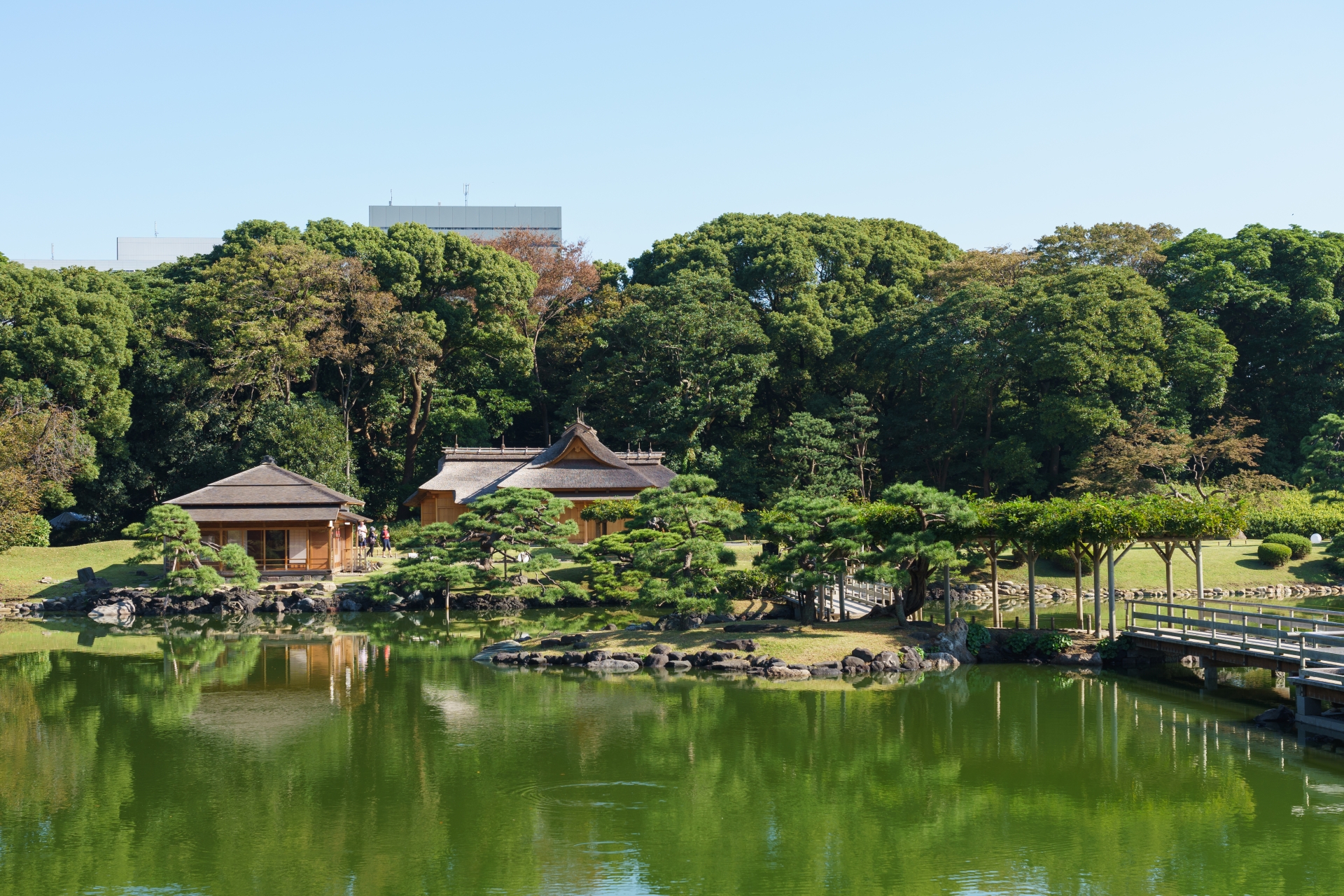
The first time I walked into Hamarikyu Gardens with my Nikon slung around my neck, I almost cried. Not from sadness — from that specific photographer’s gut-punch when you realize you’ve stumbled into a location so layered, so cinematically perfect, that you’ll need at least three return visits to do it justice. The skyscrapers of Shiodome rising behind 300-year-old pine trees. A traditional teahouse floating on a tidal pond. Cherry blossoms framing a glass-and-steel skyline like a Hokusai print remixed for 2025. If you shoot landscapes, portraits, architecture, or that elusive “old-meets-new Tokyo” frame everyone chases on Instagram — this is the article you needed before you booked your flight.
This is my photographer’s guide to Hamarikyu Gardens, written for the people who pack two lenses to breakfast.
Why Hamarikyu Is a Photographer’s Dream (and Why Most Tourists Miss It)
Hamarikyu Onshi Teien sits on Tokyo Bay where the Sumida River empties out, a 25-hectare green island wedged between the Shiodome business district and the harbor. It opened to the public in 1946, but its history goes back to 1654, when it was the falconry grounds of the Tokugawa shogunate. Later, it became a detached palace garden for the imperial family. That layered history is visible in the frame — the stone walls, the duck hunting blinds (yes, you can still see them), the pine grown into a horizontal cloud — all sitting under a backdrop of corporate towers.
I remember my second visit, on a gray January morning. I’d come in through the Otemon Gate (the main entrance near Shiodome Station) expecting a quick walkthrough. Instead, I spent four hours there. The light kept changing. The reeds along the tidal pond shifted from pewter to gold as the sun broke through. A heron landed on a stone lantern and held perfectly still for what felt like a full minute. That kind of garden — where the subjects come to you — is rare.
Practical bit: entry is just ¥300 for adults, and the garden is open 9:00 AM to 5:00 PM (last entry 4:30). For what you get, it’s almost embarrassingly cheap. I always tell photographer friends to budget a half-day minimum.
The Three Hundred-Year-Old Pine: Your First Shot
Walk straight from the Otemon entrance, past the ticket booth, and within a minute you’ll see it: the Sanbyaku-nen no Matsu — the 300-Year Pine. Planted in 1709 by the sixth shogun, it sprawls horizontally like a green wave frozen mid-crash, held up by dozens of wooden supports.
Here’s my hard-won tip: don’t shoot it from the obvious angle (the tourist path looking straight on). Walk around it and crouch low on the far side. From there, you can frame the gnarled trunk against the Shiodome skyscrapers behind it. Use a wide lens — 24mm or wider. I shot mine on a 16-35mm at f/8 and got the contrast I’d been chasing for years: living history versus glass towers, no caption needed.
Morning light hits the south side of the pine best. If you can be at the gate when it opens at 9, you’ll have maybe 45 minutes before the tour groups arrive. Use them.
Nakajima no Ochaya: The Teahouse Shot Everyone Wants
The image that probably made you save this article — the wooden teahouse on stilts over the still pond, mirrored perfectly in the water — is Nakajima no Ochaya. Built in 1707, destroyed and rebuilt several times, it’s reached by a long zigzag wooden bridge called Otsutai-bashi.
Now, here’s where I’ll be honest with you: the postcard reflection shot is heavily dependent on tide and wind. The pond is Shioiri no Ike — a tidal pond connected to Tokyo Bay, so the water level genuinely rises and falls. Twice on my visits, I got there to find ripples and harsh chop. The third time — a windless October afternoon around 3 PM — the surface went glass. That was the shot.
Then I did something I’d been putting off: I actually went inside the teahouse.
For ¥850, you sit on a tatami platform with the pond at eye level, and a kimono-clad host brings you a bowl of frothy matcha and a wagashi sweet shaped to match the season (mine was a tiny pressed-sugar maple leaf). I shoved my camera under the low table and just sat there. Through the open shoji, I watched a black-crowned night heron stalk something in the reeds. The matcha was vegetal and slightly bitter, the sweet melted to pure perfume on my tongue, and for fifteen minutes I forgot about photographing anything. Honestly? It was the single best ¥850 I spent in Tokyo. Bring cash — they don’t always take cards smoothly here, and you don’t want to fumble with Apple Pay in a 300-year-old teahouse.
A note for portrait shooters: the light filtering through the shoji screens inside the teahouse is unreal. Soft, directional, golden. If you’re traveling with a partner or model, this is your shot.
Seasonal Strategy: When to Actually Visit
This is where most guides fail photographers — they tell you “spring is nice.” Useless. Here’s what I’ve actually shot, season by season:
Late March to early April (cherry blossoms): The garden has a designated sakura zone near the north end with around 100 trees. It’s beautiful, but it’s not Ueno-level dense. The unique angle here is yaezakura (late-blooming double cherries) in mid-April, when the famous parks have cleared out. I shot pink double-blossoms with a Shiodome skyscraper behind them on April 18th one year — zero other photographers in frame.
Late April to early May: This is the secret weapon. The nanohana — rapeseed flower field — expl