Book Tours & Activities
What Is Tsukishima? Tokyo’s Hidden Downtown Gem in the Bay Area
If you’re looking for an authentic slice of old Tokyo life just minutes from Ginza, Tsukishima (月島) should be at the top of your list. Tucked along the coast of Chuo Ward near the mouth of the Sumida River, this fascinating island neighbourhood blends centuries-old shitamachi (downtown) charm with a striking modern skyline of luxury tower apartments. Whether you’re coming for the legendary monjayaki pancakes, the riverside walking paths, or simply to experience a side of Tokyo that most tourists never find, Tsukishima delivers something genuinely special.
Tsukishima was created through land reclamation by expanding the original Tsukuda and Ishikawa islands. It is located northeast of Kachidoki, and next to Kachidoki Station on the Oedo Line is Tsukishima Station. The neighbourhood was born around the end of the 19th century, making it the first reclaimed land settlement in Tokyo — and it has been quietly thriving ever since.
Getting to Tsukishima: Access & Transport
Tsukishima is surprisingly easy to reach from central Tokyo. The most convenient access is via Tsukishima Station, served by two lines:
- Tokyo Metro Yurakucho Line — direct connections from Ginza-itchome, Marunouchi, and Ikebukuro
- Toei Oedo Line — direct connections from Shinjuku and Roppongi
From Ginza, Tsukishima is just one stop away on the Yurakucho Line — under 5 minutes by train. You can also walk from Ginza in about 20–25 minutes along a pleasant riverside route, or take one of the regular bus services that connect Tsukishima to Tokyo Station in roughly 10 minutes. This exceptional transport access is one of the main reasons Tsukishima has become one of the most sought-after residential addresses in all of Tokyo.
Famous for Monja-yaki: Tsukishima Monja Street
No visit to Tsukishima is complete without eating monjayaki — and this neighbourhood is the undisputed capital of this beloved Tokyo soul food. Just outside Exit 7 of Tsukishima Station, you’ll find Tsukishima Monja Street (もんじゃストリート), a bustling strip packed with more than 50 monjayaki restaurants where locals and visitors alike gather to cook and eat at iron teppan griddles built right into the tables.
Monjayaki is Tokyo’s answer to Osaka’s okonomiyaki — a savoury pan-fried batter dish loaded with cabbage, seafood, meat, and various toppings. The key difference is the much runnier batter, which is spread thin on the griddle and scraped up with small metal spatulas as it crisps. It’s messy, communal, and utterly delicious. More information about Monjayaki can be found on this site.
The method of making monjayaki is unique, so be sure to check out how to make it before you go out to eat. Most restaurants on Monja Street offer English menus or picture menus, and the staff are generally happy to show first-timers the cooking technique. Budget around ¥1,500–¥2,500 per person for a satisfying monjayaki meal. Lunchtime on weekdays is the least crowded time to visit; weekend evenings can see long queues at popular spots.
Sosaku (Creative) Monjayaki: A New Wave of Japanese Cuisine in Tsukishima
While traditional monjayaki remains the star of the street, Tsukishima has also developed a reputation for sosaku (創作, creative) monjayaki — innovative, Japanese-inspired variations that push the boundaries of this classic dish. Restaurants across Monja Street now experiment with premium ingredients like wagyu beef, sea urchin, truffle oil, and seasonal vegetables, creating upscale versions that have attracted food lovers from across Japan and beyond.
This creative culinary scene reflects a broader trend across Tokyo’s dining landscape, where chefs combine deep respect for Japanese culinary tradition with a bold, experimental spirit. For visitors interested in Japanese sosaku cuisine in Tsukishima, the neighbourhood offers a rare chance to taste both the humble origins of a beloved street food and its exciting modern evolution — all on the same block.
Residential Area with Tower Apartments: Life in Modern Tsukishima
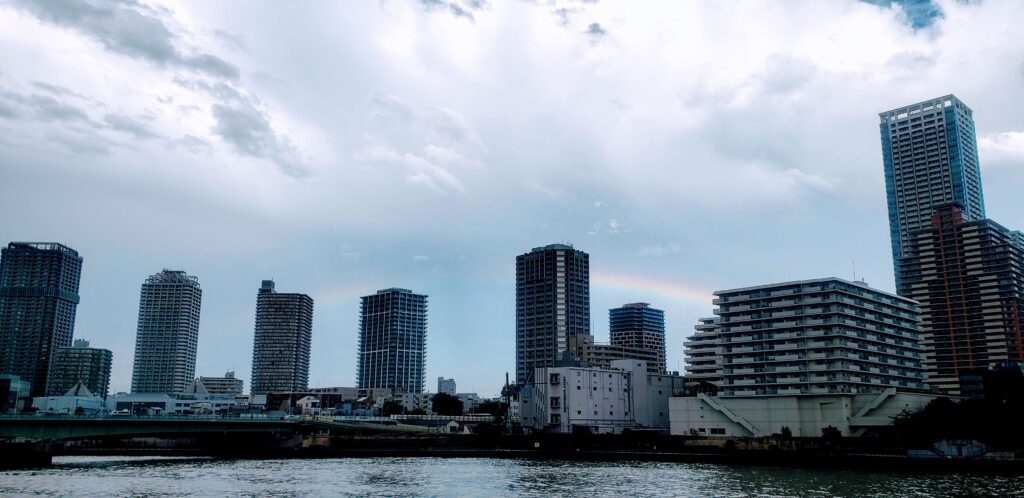
Step away from Monja Street and you’ll quickly notice Tsukishima’s other defining feature: a dramatic skyline of gleaming high-rise tower condominiums. There are more than 30 tower condominiums of 30 stories or more standing in Tsukishima, making it one of the most densely concentrated tower apartment districts in all of Japan. It is consistently ranked among the most popular and desirable residential areas in Tokyo.

The appeal is easy to understand. Residents enjoy the best of both worlds: a short walk to the upscale boutiques and restaurants of the Ginza area, a quick bus ride to Tokyo Station (about 10 minutes), and the immediate surroundings of a warm, tight-knit shitamachi community. Local shotengai (shopping streets), neighbourhood temples, small parks, and old-school kissaten coffee shops give Tsukishima a lived-in human scale that many newer Tokyo developments completely lack.
The area also has a reputation as a wonderful place to raise children, thanks to good local schools, safe streets, riverside green spaces, and a strong sense of community among long-term residents. Expat families and young Tokyo professionals have been drawn here in growing numbers over the past decade, and the neighbourhood has responded with an increasing range of international restaurants, bilingual services, and cosmopolitan amenities — all without losing its distinctly Japanese soul.
Artemis Tower Tsukishima: An Iconic Landmark
Among Tsukishima’s many impressive high-rises, Artemis Tower Tsukishima stands out as one of the neighbourhood’s most recognisable landmarks. This sleek residential skyscraper is a prime example of the luxury tower living that has transformed Tsukishima’s skyline over the past two decades. Its striking architecture, commanding views of Tokyo Bay, and premium facilities have made it a benchmark for upscale urban living in the bay area.
The tower’s presence — along with dozens of comparable developments — has brought a new demographic to the neighbourhood while simultaneously raising Tsukishima’s profile both domestically and among international visitors and residents. For tourists, these towers serve as useful navigation landmarks, and their ground-floor retail spaces often include cafes and convenience stores that are handy for a quick bite between sightseeing stops.
History of Tsukishima: Tokyo’s First Reclaimed Island
The town of Tsukishima was born about 100 years ago, at the end of the 19th century. In fact, it has a longer history than nearby Kachidoki, and was the first city in Tokyo to be established as a reclaimed land district. This pioneering origin gives Tsukishima a unique place in Tokyo’s urban history — a neighbourhood that literally rose from the waters of Tokyo Bay through human ingenuity and hard labour.
In its early decades, Tsukishima developed as a working-class industrial community, home to factory workers, fishermen, and tradespeople who gave the area its enduring shitamachi spirit. Traditional wooden townhouses (machiya) and long nagaya row houses once dominated the streetscape. While most of these have now been replaced by modern buildings and tower apartments, a handful of historic structures and old shotengai shopping streets still survive, giving visitors a tangible connection to Tsukishima’s fascinating past.
The neighbouring island of Tsukuda — one of the original islands from which Tsukishima was expanded — is also well worth exploring. Tsukuda preserves some of the oldest surviving urban fabric in central Tokyo, including a picturesque waterfront lined with traditional houses, a historic lighthouse, and the famous Sumiyoshi Shrine. Together, Tsukuda and Tsukishima form one of the most historically layered and visually rewarding neighbourhoods in the entire city.
What Else to See and Do in Tsukishima
Beyond monjayaki and tower-gazing, Tsukishima rewards curious visitors who take the time to wander. Here are some highlights to add to your itinerary:
- Tsukuda Island & Sumiyoshi Shrine — A short walk from Tsukishima Station leads to this remarkably preserved historic waterfront. The small Sumiyoshi Shrine hosts one of Tokyo’s liveliest summer festivals every three years.
- Tsukuda Lighthouse (Tsukuda Shokutodai) — One of the last remaining stone lighthouses in Tokyo, dating to 1866. A quiet but evocative piece of Tokyo maritime history.
- Harumi Triton Square — A large mixed-use commercial complex a short walk away, with shops, restaurants, and a pleasant waterfront promenade perfect for an evening stroll.
- Riverside Walking & Cycling — The banks of the Sumida River and the surrounding canals offer lovely walking and cycling routes with views of the bay, bridges, and the city skyline.
- Tsukishima Shotengai — The old shopping street running parallel to Monja Street gives a glimpse of everyday neighbourhood life, with local grocers, traditional sweet shops, and old-fashioned izakayas.
Book Tours & Activities
Tsukishima FAQ: Your Questions Answered
What is Tsukishima in Tokyo known for?
Tsukishima is best known for two things: monjayaki (Tokyo-style savoury pancakes) and its dramatic concentration of luxury tower apartments. Monja Street, just outside Exit 7 of Tsukishima Station, has over 50 restaurants specialising in this beloved local dish. At the same time, the neighbourhood’s skyline is defined by more than 30 high-rise condominiums of 30 floors or more, making it one of Tokyo’s most sought-after residential addresses. The area also has significant historical depth as Tokyo’s first reclaimed land settlement, founded at the end of the 19th century.
What is Artemis Tower Tsukishima?
Artemis Tower Tsukishima is one of the landmark residential skyscrapers in the Tsukishima neighbourhood of Tokyo. It is representative of the wave of luxury high-rise tower condominiums that have been built in Tsukishima over the past two decades, transforming the bay-area neighbourhood into one of central Tokyo’s most prestigious addresses. The tower is notable for its architecture, premium facilities, and sweeping views of Tokyo Bay and the city skyline. It has become an iconic part of the Tsukishima landscape and is a useful landmark for visitors navigating the area.
What is Japanese sosaku (creative) monjayaki in Tsukishima?
Sosaku (創作) monjayaki refers to creative, innovative variations on the traditional Tokyo monjayaki recipe. While classic monjayaki uses simple ingredients like cabbage, seafood, and savoury batter, sosaku versions incorporate premium or unexpected ingredients — such as wagyu beef, sea urchin, cheese, truffle, or seasonal vegetables — to create elevated, chef-driven interpretations of the dish. Tsukishima’s Monja Street is home to numerous restaurants that offer both traditional and sosaku monjayaki menus, making the neighbourhood a destination for food lovers interested in the evolution of Japanese street food culture.
How is Tsukishima different from other Tokyo neighbourhoods?
Tsukishima stands apart from most other Tokyo neighbourhoods in its remarkable combination of contrasts. It is simultaneously a historic shitamachi (old downtown) community with roots going back over 130 years and a hyper-modern tower apartment district. Unlike many Tokyo neighbourhoods that have lost their local character to redevelopment, Tsukishima retains active shotengai shopping streets, traditional festivals, and a strong community identity — all while being minutes from Ginza and Tokyo Station. This blend of deep local culture and urban convenience, found on a literal island in Tokyo Bay, makes Tsukishima a genuinely unique place in the city.
Is Tsukishima worth visiting as a tourist?
Absolutely. Tsukishima is one of Tokyo’s most rewarding off-the-beaten-path destinations for visitors. The combination of a unique local food experience (monjayaki on Monja Street), fascinating history (Japan’s first reclaimed land settlement), striking architecture (tower apartments and the historic Tsukuda waterfront), and easy access from central Tokyo makes it ideal for a half-day excursion. It pairs particularly well with a visit to nearby Tsukiji Outer Market, Hamarikyu Gardens, or the teamLab Planets museum in Toyosu — all within easy reach. Most visitors find that 2–3 hours is enough to explore the key sights and enjoy a leisurely monjayaki lunch or dinner.
How does Tsukishima compare to similar areas in Asia?
Tsukishima is often compared to other Asian urban waterfront districts that have undergone dramatic transformation from industrial or working-class origins to upscale residential and cultural destinations. What makes Tsukishima distinctive in the Asian context is the degree to which it has preserved its original community character alongside its modern redevelopment. While many comparable districts across Asia — from Seoul’s Han River apartment corridors to Singapore’s reclaimed bay-area suburbs — have been comprehensively rebuilt, Tsukishima still feels like a living, breathing neighbourhood where old and new genuinely coexist. For visitors interested in Japanese urban life and culture, this authenticity is one of its greatest attractions.