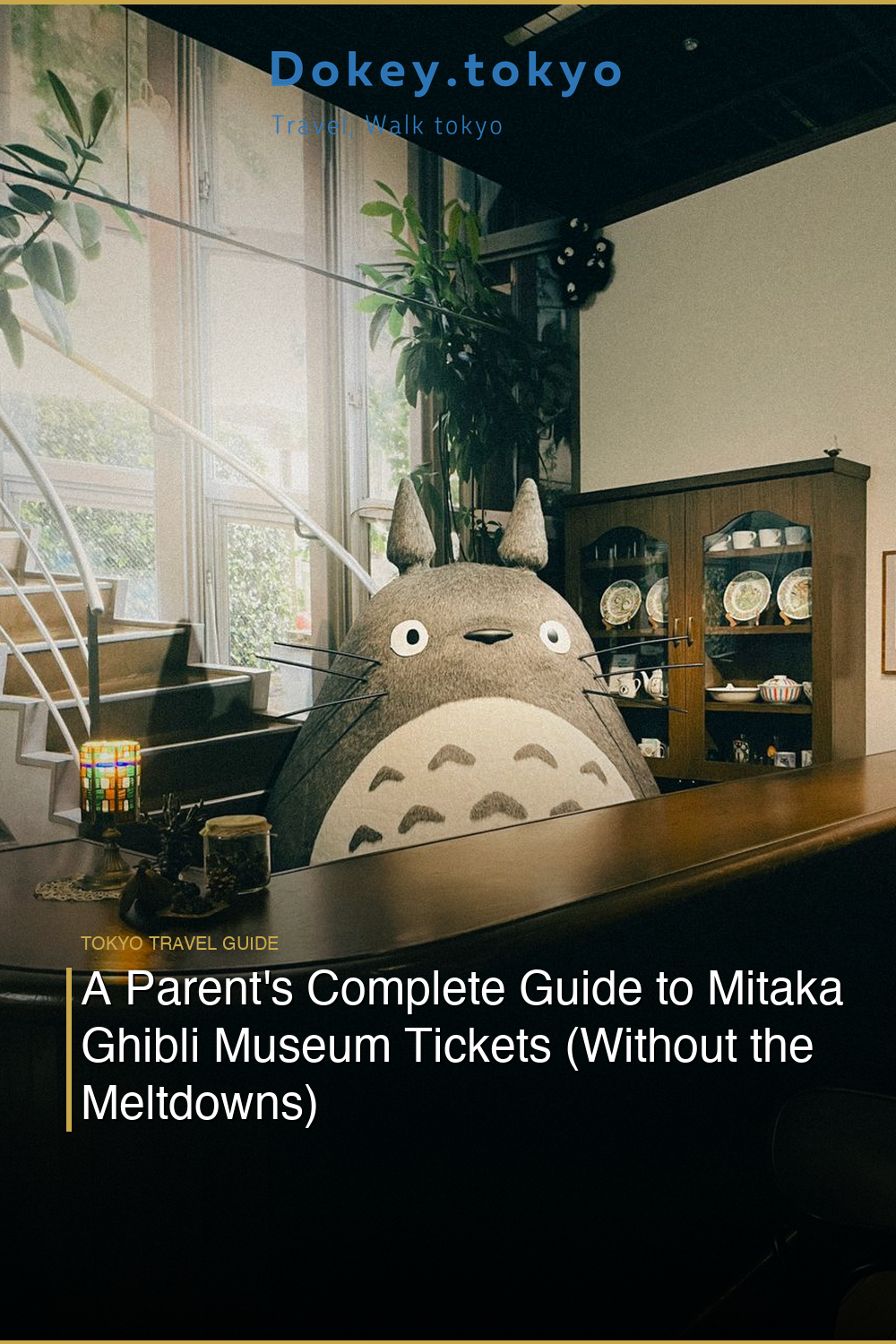
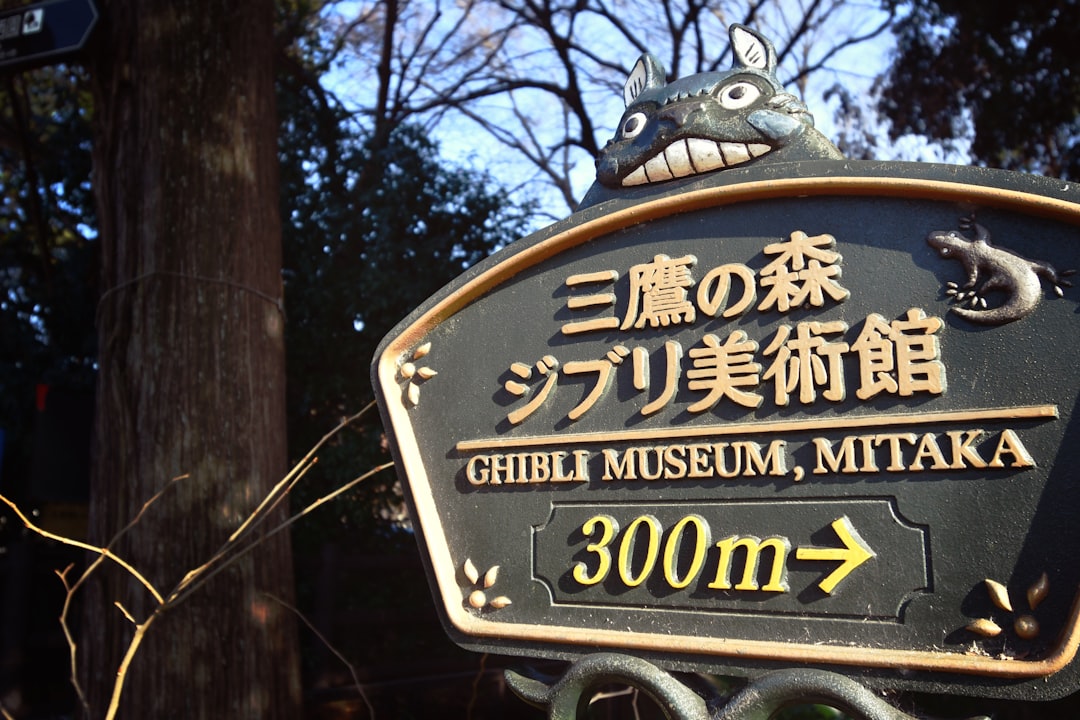
If you’ve ever tried to explain to a four-year-old why Totoro isn’t actually waiting inside the building to give them a hug, you’ll understand exactly the kind of adventure I’m talking about. The Mitaka Ghibli Museum is one of those rare places that lives up to its legend — a hand-crafted, Miyazaki-designed wonderland where stained glass cats dance overhead and a real Catbus sits waiting in a room that smells faintly of cedar and imagination. For families with young children, it’s not just a museum visit. It’s the closest thing to stepping inside a Studio Ghibli film that actually exists on this planet.
I still remember the moment my daughter Hana — she was three and a half at the time — grabbed my hand at the entrance gate and went completely silent. After forty-five minutes on the Chuo Line from Shinjuku and a walk through Inokashira Park, she’d been chattering non-stop. Then she saw the mosaic tile mural above the door and just… stopped. Her mouth opened. The late morning light was filtering through the tree canopy, and somewhere inside a music box melody was playing — I later found out it was a Nausicaä theme. That silence was worth every stressful ticket-purchasing moment.
Why Mitaka Ghibli Museum Tickets Are the Hardest Part of Your Trip
Let’s be brutally honest: securing Mitaka Ghibli Museum tickets is genuinely the most stressful part of planning this trip, especially when you’re coordinating around nap schedules and toddler attention spans. The museum operates on a timed-entry system with limited capacity, and tickets are released months in advance. They sell out within minutes — sometimes seconds — so you need a strategy.
How to Actually Buy the Tickets
For international visitors, the primary booking route is through Lawson ticket (Loppi machines at Lawson convenience stores in Japan) or through the official overseas reservation system via platforms like Klook or JTB. Here’s what families specifically need to know:
- Children under 4 are free, so you only need to purchase tickets for adults and children aged 4 and older.
- Ticket categories: Adults (¥1,000), Junior high & high school students (¥700), Elementary school children (¥400), Preschool children 4–6 years old (¥100), Under 4 (free).
- Tickets are sold for specific entry time slots — 10:00, 12:00, 14:00, and 16:00. For families with young kids, the 10:00 AM slot is gold. Kids are fresh, the museum is as calm as it gets, and you’re out before the early-afternoon cranky window.
- Overseas visitors can book via the Ghibli Museum’s overseas lottery system or through authorized third-party resellers. Check the official website (ghibli-museum.jp) for the current reservation calendar, which opens on the 10th of each month for the following month.
I’d strongly recommend booking the moment reservations open. Set a phone alarm. Have your credit card ready. Treat it like buying concert tickets for a band that never tours.
Getting There: The Journey Is Part of the Magic
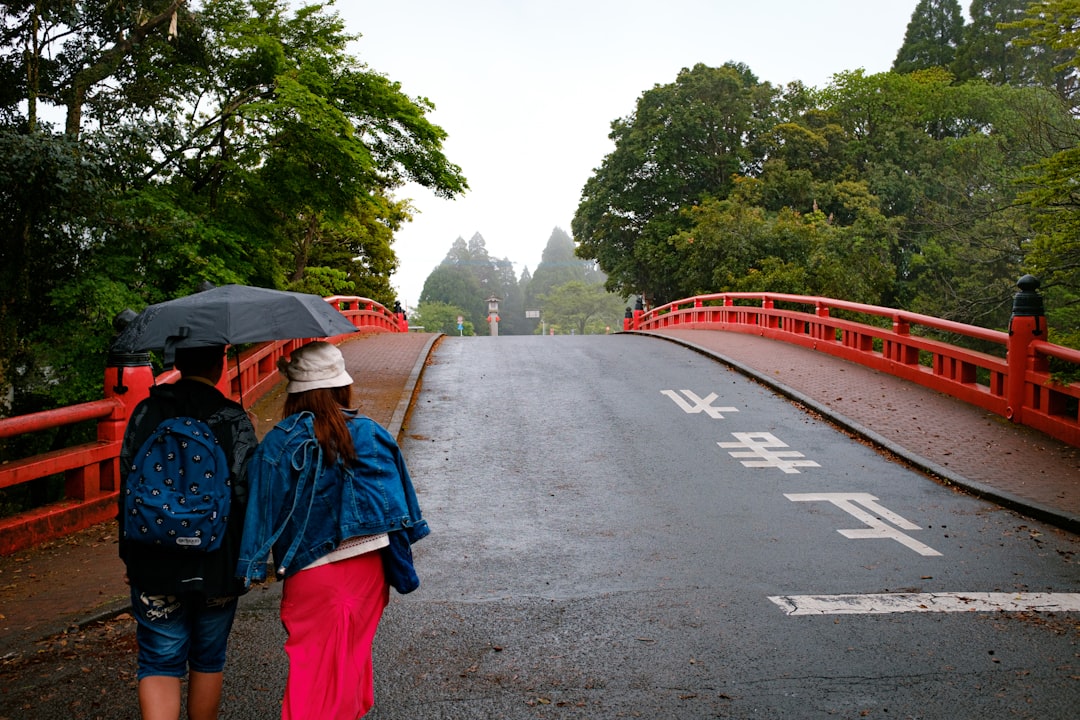
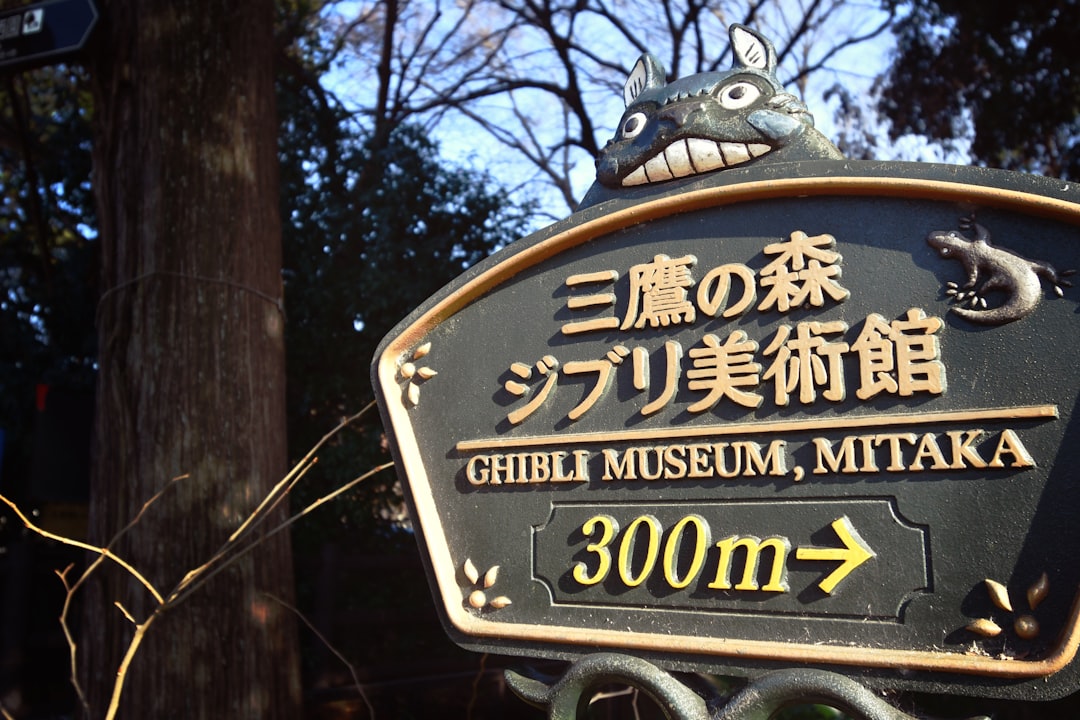
The museum is located in Mitaka, easily accessible from Shinjuku Station on the JR Chuo Line (about 15–17 minutes to Mitaka Station). From Mitaka Station’s south exit, you have two options:
- Walk through Inokashira Park (about 15–20 minutes): This is the option I always choose with kids. The path winds through the park past a pond, ducks, and sometimes street musicians. It’s genuinely beautiful.
- Take the Ghibli Museum bus: A small, Catbus-illustrated shuttle runs from the station directly to the museum. It costs ¥210 for adults and ¥110 for children. Toddlers will absolutely lose their minds over the Catbus illustrations on the side.
If you have a stroller, the park path has some uneven sections — manageable, but good to know. The bus is stroller-friendly.
What to Expect Inside: A Family-Specific Breakdown
🎫 Book on Klook: Mitaka Ghibli Museum tickets →
The Permanent Exhibitions
The museum has no traditional exhibition labels or linear path — it’s designed to be explored freely, which is both its magic and its potential chaos with kids. The ground floor features rooms dedicated to the animation process: hand-drawn cels, storyboard walls, and a spinning zoetrope featuring Totoro and Mei that will make your child absolutely scream with delight. Seriously, gather around that thing and watch their face.
The rooftop garden features a life-size Robot Soldier from Castle in the Sky, and it’s incredible — but getting up there with a stroller isn’t possible (stairs only). If your child is in a carrier or can walk, absolutely go up. The view of the tree canopy from up there at midday is surreal.
The Catbus Room: The Star Attraction for Little Ones
Here’s the thing nobody tells you upfront: the Catbus room is exclusively for children 12 and under. Adults cannot enter. You will be standing at the doorway watching your child disappear into an enormous fuzzy Catbus while you just… wait. And grin. And maybe tear up a little.
When we visited, I struck up a conversation with one of the museum staff members — a soft-spoken woman named Keiko who’d worked there for six years. She told me that the museum intentionally keeps adults out of that room so children feel a sense of ownership over the space. “Children need places that are just for them,” she said, and I’ve never forgotten it. It reframed the whole philosophy of the museum for me.
The Saturn Theater
Every timed-entry ticket includes one screening in the Saturn Theater, a small cinema that shows exclusive Ghibli short films not available anywhere else. The current rotation changes periodically. Films run about 10–15 minutes. For toddlers, the dark room and sitting still can be challenging — my daughter lasted about 8 minutes before she wanted out, and that’s okay. Staff are kind and patient. Sit near the aisle just in case.
Food & Drink: What to Eat Near Mitaka Ghibli Museum
The museum has a small café called Straw Hat Café (Mugiwara Bōshi), located on the rooftop level. It serves simple themed foods and drinks — think Jiji-shaped cookies and seasonal drinks. Lines can be long; I’d suggest sending one adult to queue while the other supervises kids in the garden.
For a proper meal, head into Kichijoji (one stop from Mitaka on the Chuo Line) before or after your visit. Kichijoji is one of Tokyo’s most charming neighborhoods and is well-loved by locals — not tourist-facing at all. For families, Satou on Sun Road shopping arcade does legendary menchi-katsu (deep-fried minced meat cutlets) that even picky toddlers will eat. They’re ¥220 each, crispy on the outside, and juicy enough that you’ll buy three. My daughter called them “meat donuts” and demanded them for breakfast the next morning.
Inokashira Park itself is perfect for a picnic — grab onigiri from a Lawson near Mitaka Station before the walk in.
Practical Family Tips Nobody Else Will Tell You
- Arrive 10 minutes before your time slot, not early. There’s no benefit to arriving 45 minutes ahead — you’ll just stand outside with increasingly restless kids.
- Bring a carrier for under-2s. Strollers must be stored at the entrance and the interior is not stroller-accessible.
- Download the Ghibli Museum map in advance and plan your “must-do” moments (Catbus, zoetrope, Saturn Theater) in order of your child’s energy levels.
- No photography is allowed inside the main building. This is a hard rule, enforced kindly but firmly. You can photograph the exterior, garden, and rooftop freely.
- Restrooms are well-maintained and have baby-changing facilities — a detail that matters more than any adult will admit until they need it.
- The gift shop is at the exit, not the entrance. Prepare your children (and yourself) emotionally.
The Best Time to Visit with Young Kids
Weekday mornings in October through early December are my personal sweet spot. The summer heat and school holiday crowds make July and August genuinely exhausting for small children. Cherry blossom season (late March–April) is stunning but crowded. Fall gives you cooler air, golden light through the park trees, and slightly thinner crowds — though “thin” is relative when every ticket is pre-sold.
Just before we left, my daughter asked a staff member if Totoro was sleeping somewhere in the museum. The woman crouched down to her level — completely seriously — and whispered that Totoro only appears when children are very quiet and patient. Hana tiptoed the entire way back through the park, eyes scanning every shadow between the trees. The late afternoon light had gone amber and low, cutting golden stripes across the path, and she was absolutely convinced she’d seen something move near the roots of a large camphor tree. I didn’t correct her. Some magic is better left intact.
Final Thoughts: Is It Worth the Ticket Hunt?
Every single stressed minute of the ticket-buying process disappears the moment you walk through those gates with a small person who still believes in the possibility of soot sprites living in the corners of old buildings. The Mitaka Ghibli Museum is not just worth visiting — for families raising children on Studio Ghibli films, it is genuinely one of those rare travel experiences that delivers on every promise. Book early, go at 10 AM, bring snacks, and let your kid show you how to see it properly.