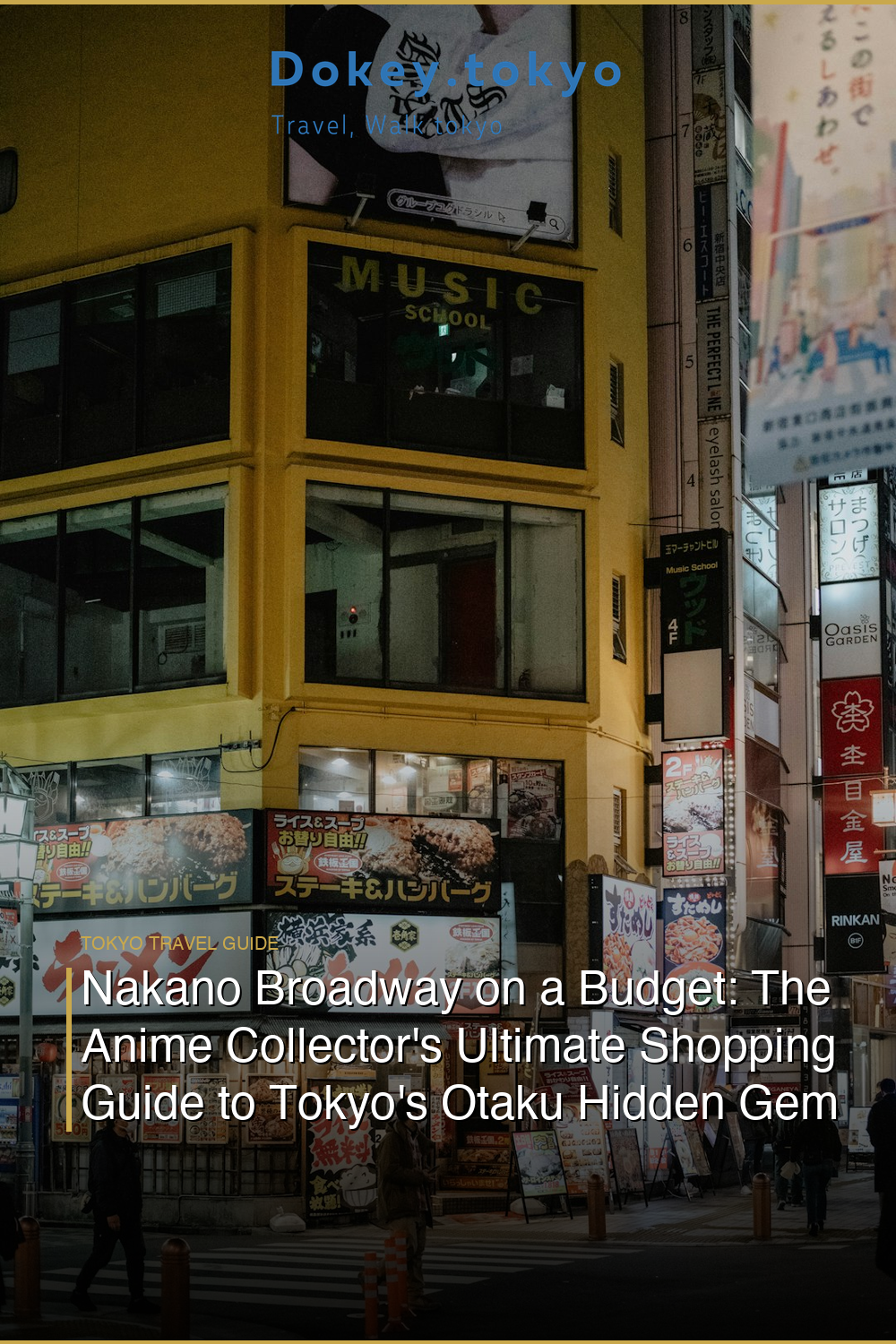
If someone had told me five years ago that the most thrilling shopping experience of my entire Tokyo life wouldn’t happen in Akihabara, I would have laughed. But here’s the truth that every serious anime collector eventually discovers: Nakano Broadway is where the real magic lives. Tucked behind a cheerful covered shopping arcade just twelve minutes from Shinjuku on the Chuo Line, this four-story labyrinth of second-hand shops, vintage toy dealers, and obsessively curated collectible stalls is everything Akihabara wishes it still was — before the tourist buses arrived.
The first time I stepped off the train at Nakano Station and walked through the Sun Mall arcade toward Broadway, the smell hit me before anything else: old paper, dust, and that specific metallic sweetness of aging plastic that every collector knows in their bones. It was a Tuesday morning around 10:30 a.m., the arcade still quiet, a fruit vendor arranging strawberries outside his stall, and I remember my pulse actually quickening as the Broadway entrance came into view — that blocky, slightly faded 1970s signage looking almost aggressively unglamorous. I felt like I was about to open a treasure chest someone had forgotten to lock.
Why Nakano Broadway Beats Akihabara for Budget Collectors
🗾 Book: Akihabara Anime Walking Tour Hidden Gems →
🎫 Book: Shibuya Shinjuku Anime District Tour →
Let me be direct: Akihabara is incredible, but it has become increasingly polished and tourist-facing. Prices at many Akihabara flagship stores reflect that. Nakano Broadway operates on a different economy. The shops here are mostly smaller independent dealers competing fiercely with each other across the same four floors, which means prices stay genuinely competitive, and patient shoppers are rewarded.
For a budget otaku traveler aiming to maximize their haul, this matters enormously. I’ve regularly found pre-owned Dragon Ball Z figures in excellent condition for ¥300–¥800, vintage Ultraman soft vinyl toys for under ¥2,000, and complete manga volumes from beloved series at ¥100–¥200 each — prices that would make any Akihabara retailer nervous.
The Mandarake Empire: Your First Stop, Every Time
The undisputed anchor of Nakano Broadway is Mandarake, and understanding how it works will transform your visit. Mandarake isn’t a single store — it’s a constellation of roughly twenty specialized shops spread across floors 2, 3, and 4, each dedicated to a different category: one for garage kits, one for vintage shōjo manga, one for animation cels, one for cosplay costumes, one for boys’ toys from the Shōwa era. The categorization is almost obsessive in the best possible way.
Start at the Mandarake Complex on the 3rd floor and grab a store map from the information desk near the escalator. Yes, an actual paper map — this place is its own universe. Prioritize what you’re hunting before you arrive, because without a plan, you will spend four hours in the animation cel shop alone and forget to eat.
For budget shoppers specifically, head straight to the “Bargain Corner” bins that most Mandarake sub-shops maintain near their entrances. These are usually rolling carts or open crates filled with items priced ¥100–¥500 — staff overstock, items with minor box damage, or simply things that have been on shelves too long. I once pulled a mint-condition Neon Genesis Evangelion gashapon set of all six main characters from a ¥300 bin. The shop staff member nearby caught my expression and gave me an approving nod, the universal language of a fellow collector recognizing a good find.
Floor-by-Floor: How to Navigate Nakano Broadway
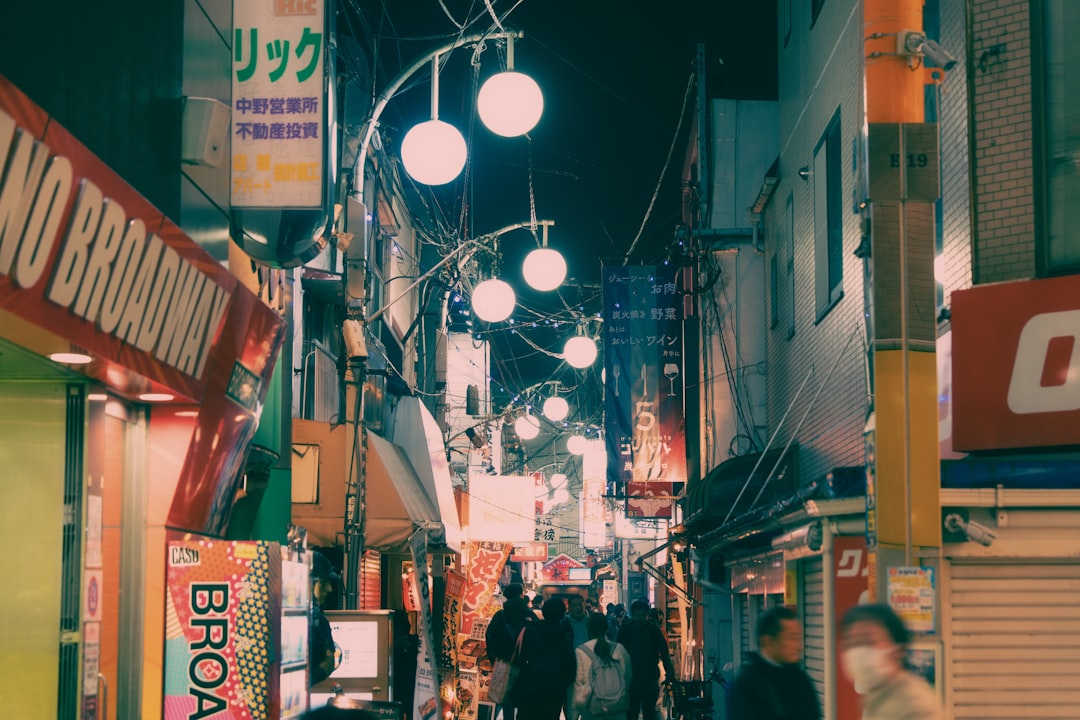
Ground Floor & Sun Mall Arcade
Don’t rush through the Sun Mall covered arcade connecting Nakano Station to Broadway — it’s about 300 meters of local life. You’ll pass a great yakitori stand that opens around 11 a.m., a cheap sushi conveyor belt restaurant (budget around ¥800–¥1,200 for lunch), and several 100-yen shops that are worth a quick pass for packaging supplies if you’re shipping purchases home. Broadway’s ground floor itself houses a supermarket and some clothing shops — less relevant for collectors, but the crepe stand near the entrance is a beloved local institution. Get the matcha custard crepe for ¥450 and eat it while planning your upstairs assault.
Second Floor: Vintage Toys, Retro Games & Rare Figures
This is where serious budget hunting happens. Beyond Mandarake’s sub-shops, the second floor hosts several independent dealers with names you won’t find on any tourist blog. Look for small glass-case stalls run by solo operators — these are often collectors themselves who’ve decided to sell duplicates, and their pricing can be startlingly reasonable because they’re not paying the overhead of a larger retail space.
Retro Famicom and Super Famicom game cartridges are abundant here, typically ¥200–¥1,500 depending on rarity. Even if you don’t own the hardware, loose cartridges from beloved JRPG series make lightweight, affordable souvenirs that pack flat. I bought a used copy of Final Fantasy V for ¥400 on my third visit and still have it on my bookshelf at home.
Third & Fourth Floors: The Deep Dive
The upper floors are where Nakano Broadway earns its cult reputation. Here you’ll find Mandarake’s most specialized departments: animation production cels (original hand-painted frames from classic anime — some affordable at ¥1,000–¥5,000, some heartbreakingly expensive), vintage garage kits, idol merchandise archives going back to the 1980s, and a genuinely astonishing selection of dōjinshi (self-published fan manga and art books) organized by fandom with almost academic precision.
For budget travelers, the dōjinshi section is a goldmine. Pre-owned copies frequently run ¥100–¥300, and the artistic quality from Japan’s doujin community is remarkable. Even if you can’t read Japanese, the illustration-heavy works are visually stunning and make unique gifts.
Practical Tips for Budget Otaku Travelers
🎫 Book: Vintage Collectibles Hunting Experiences →
Timing Your Visit
Nakano Broadway shops generally open between 10 a.m. and noon and close around 8 p.m. I always recommend arriving at 10:15 a.m. on a weekday — you’ll have the upper floors almost entirely to yourself for the first ninety minutes, which matters when you’re competing for the best bargain bin finds. Weekends, particularly Saturday afternoons, get noticeably crowded, and the serious local collectors do their shopping on weekday mornings. Follow their lead.
Avoid the last week of December and the first few days of January — the area hosts special sales but crowds become genuinely difficult to navigate.
Budget Breakdown for a Full Day
- Train from Shinjuku (Chuo Line): ¥168 each way
- Lunch at the Sun Mall sushi conveyor restaurant: ¥800–¥1,200
- Matcha crepe: ¥450
- Shopping budget: Entirely up to you, but ¥5,000–¥10,000 (roughly $35–$70 USD) can yield a genuinely impressive haul if you focus on second-hand items
- Total day budget: ¥7,000–¥12,000 is very comfortable
Shipping Finds Home
If your haul exceeds your luggage capacity — and it will — Japan Post’s EMS and SAL surface shipping services are your friends. The Nakano Post Office is a five-minute walk from the station, and staff are accustomed to helping foreigners ship packages. Bring your receipts, as some countries require customs documentation. Mandarake also offers a shipping service directly from larger purchases if you ask at the main information counter on the third floor.
Cash Is King
While some larger Mandarake departments now accept credit cards, many of the smaller independent stalls are cash only. There’s a 7-Eleven with an international ATM inside the Sun Mall arcade, roughly halfway between the station and Broadway. Withdraw before you start shopping.
The Local Geek Culture That Makes This Place Special
🗾 Book: Anime & Manga Culture with Local Expert →
🗾 Book: Anime & Manga Tour with Ramen →
🎫 Book: Tokyo Otaku Culture Walking Tours →
What separates Nakano Broadway from any ordinary mall isn’t just the merchandise — it’s the atmosphere of genuine collector obsession. On my most recent visit, I spent twenty minutes talking with an elderly gentleman in his seventies who was meticulously sorting through a crate of 1960s Tetsujin 28 robot toys, pulling out each one with the focused reverence of someone handling sacred objects. He spoke no English and my Japanese is conversational at best, but we communicated entirely through the universal collector gesture: holding up an item, widening eyes, and nodding slowly. He showed me which seller on the fourth floor had the most honest pricing for Shōwa-era tin toys and sent me off with a wave.
Late in the afternoon on that same visit, I found a wooden bench near a window on the third floor and sat down with a cold Pocari Sweat from a nearby vending machine, watching the light go amber over the Nakano rooftops while a teenage girl nearby examined a vintage Sailor Moon brooch with the expression of someone who had been searching for exactly this thing for years. I understood that feeling completely. That’s the specific emotional texture of Nakano Broadway — it’s not shopping, it’s archaeology.
Before You Go: A Few Final Honest Notes
Nakano Broadway is not a perfectly curated experience. Hallways are sometimes narrow, lighting in older sections can be dim, and the sheer density of merchandise requires patience and comfortable shoes. But for budget anime collectors, this is precisely the point. You are not a tourist being guided through a sanitized version of otaku culture — you are inside the actual thing, elbowing through the same bins as locals who have been coming here for decades.
Take the Chuo Line. Skip your third Akihabara maid café. Give yourself a full day, start with the matcha crepe, work floor by floor, and trust the bargain bins. Nakano Broadway doesn’t advertise itself. It doesn’t need to. The collectors always find their way here eventually.