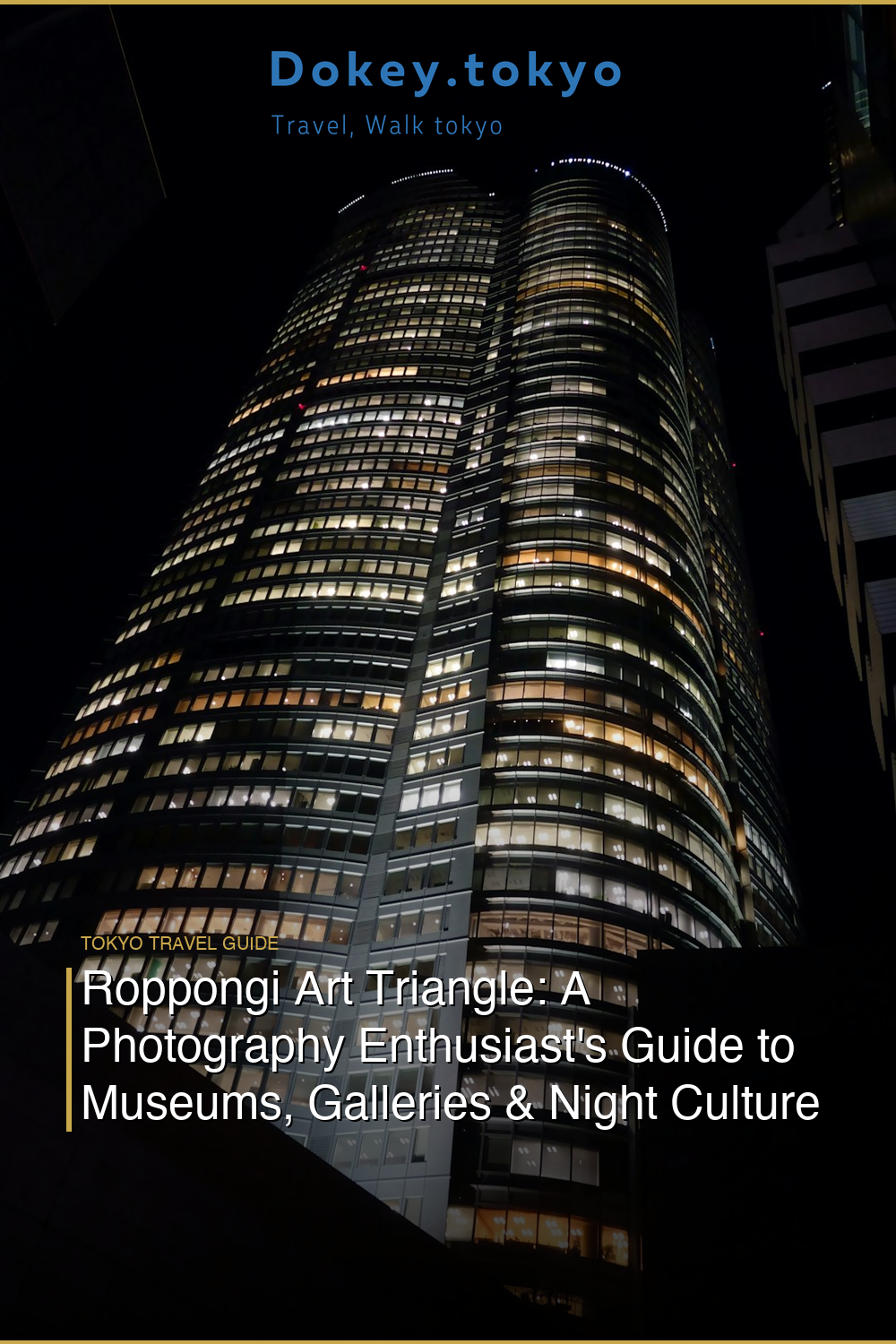
If you’ve ever stood in front of a photograph so arresting that your legs stopped working, Roppongi is your neighborhood. This dense, electrifying pocket of central Tokyo is simultaneously one of the world’s great art districts and one of its most visually chaotic nightlife zones — and for a photographer, that contradiction is pure gold. The Roppongi Art Triangle, anchored by three landmark institutions — Mori Art Museum, The National Art Center Tokyo, and Suntory Museum of Art — gives you high culture by day. Then, as the sun drops behind the Tokyo skyline, the streets themselves become your gallery: neon reflections in rain puddles, hostess clubs blazing pink and gold, salarymen loosening their ties outside yakitori stalls. Nothing quite prepares you for the sensory switch.
I still remember stepping out of Roppongi Station for the very first time at dusk, camera bag on one shoulder, and being stopped cold by the smell of grilled chicken fat from a tiny yakitori cart tucked under a convenience store awning. The sky behind the Mori Tower was doing something absurd — deep violet bleeding into a band of hot orange — and every window in sight was already lit up like a lantern. I stood there for a full two minutes before I even thought about shooting. That’s Roppongi: it ambushes you with beauty before you’re ready.
Understanding the Roppongi Art Triangle
🗾 Book on Viator: Japanese Culture Museums and History →
🎫 Book on Klook: Tokyo Roppongi Art Museum Tours →
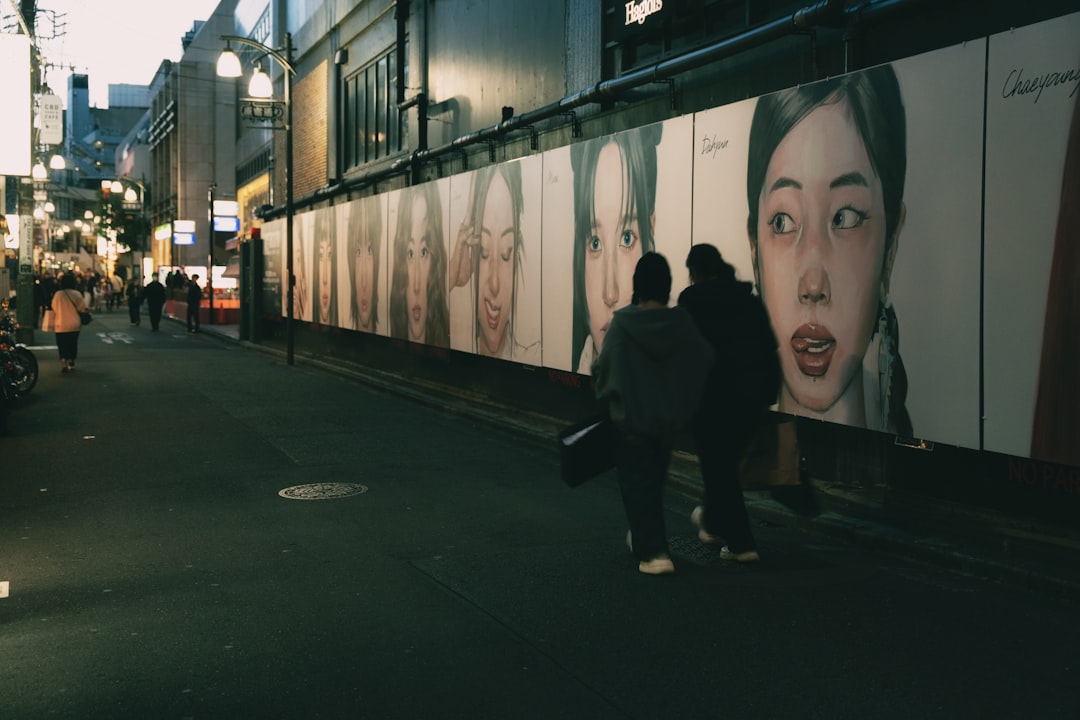
The term “Art Triangle Roppongi” is an official designation, and it’s worth understanding how each corner serves a different photographic appetite.
Mori Art Museum — Your Sky-High Canvas
Sitting on the 53rd floor of Mori Tower, the Mori Art Museum is the anchor of the triangle and one of the most architecturally dramatic exhibition spaces in all of Asia. The museum rotates contemporary shows roughly every few months, and the caliber is consistently international — think Ai Weiwei retrospectives, large-scale installation art, and boundary-pushing Japanese designers. For photographers, the real magic is that many exhibitions are photography-friendly (always check the signage per gallery), and the works themselves — often immersive, often enormous — are designed to be experienced with your whole body.
But here’s the tip that changes your visit: after your museum time, your ticket also grants access to the Tokyo City View observation deck on the 52nd floor, and there’s a rooftop option called Sky Deck (weather permitting). Come in the late afternoon, watch the city shift from golden hour to blue hour, and stay for the full night skyline. The spread is 360 degrees, and on clear nights you can see Fuji. I’ve shot that view a half-dozen times and it still doesn’t get ordinary.
Practical notes for photographers: Tripods are generally not permitted inside the museum galleries, but the observation deck allows them. Bring a wide-angle and a longer lens for compression shots of the cityscape. Arrive 90 minutes before sunset — the light shifts fast.
The National Art Center Tokyo — Architecture as the Art
A 10-minute walk from Mori Tower, NACT is the largest exhibition space in Japan, and its undulating glass façade — designed by architect Kisho Kurokawa — is worth the trip on its own. The building itself is the photograph. Shoot it from across the forecourt in the morning when the glass catches the light and the curves throw soft shadows along the ground. Inside, the dramatic interior atrium with its inverted cone structures will make your wide-angle lens weep with gratitude.
NACT doesn’t have a permanent collection — it exists purely to host exhibitions — which means what’s showing changes frequently and the caliber varies. Check the schedule at ntact.jp before you go. The museum café on the 3rd floor, perched inside one of those concrete cones, is genuinely surreal and the matcha cake is worth ordering just so you have an excuse to sit inside the architecture longer.
Suntory Museum of Art — Intimate and Exquisite
Over in Tokyo Midtown, the Suntory Museum is smaller and quieter than its two siblings, and that intimacy is its strength. The focus is traditional Japanese art — lacquerware, ceramics, glass, textiles — displayed with extraordinary care. Photography restrictions here are tighter (often no photos of the objects), but the space itself, designed by Kengo Kuma, is worth studying as a lesson in how light and material interact. Come here to refill your aesthetic vocabulary after the sensory overload of Mori and NACT.
Hidden Gallery Gems Around Roppongi
🎫 Book on Klook: Contemporary Art Gallery Experiences →
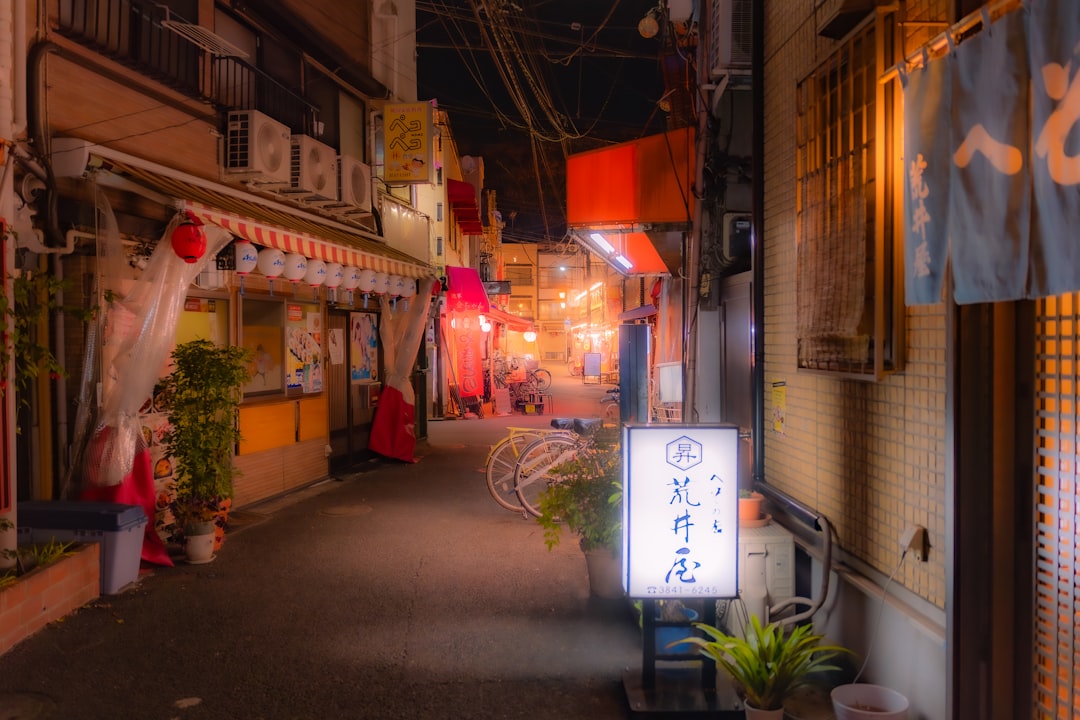
Beyond the triangle’s three anchors, Roppongi hides a genuinely vibrant gallery scene that most visitors completely miss because they’re fixed on the marquee names.
Gallery Koyanagi, gallery58, and Taka Ishii Gallery (now in Roppongi Hills) all operate at a serious commercial level and show works by Japanese artists who are increasingly recognized internationally. Walk the streets between Roppongi Crossing and Azabu-Juban and you’ll stumble into small project spaces with handwritten signs and shows running only a few days. These are the spots where you might be the only non-local in the room.
On one of my visits, I ducked into an unmarked door on a backstreet near Nishi-Azabu after noticing a single small photograph taped to the outside — a black-and-white portrait of an elderly fisherman. Inside was a photographer named Kenji showing 30 prints from a decade of work in Hokkaido’s fishing villages. He spoke almost no English; I spoke almost no Japanese. We spent 45 minutes communicating entirely through his prints, his hands, and Google Translate on my phone, and he eventually showed me his contact sheet for a shot I loved, pointing to all the frames he’d rejected before the one on the wall. That kind of encounter doesn’t happen at the tourist trail level.
Roppongi After Dark — When the Neighborhood Becomes the Exhibition
🗾 Book on Viator: Immersive Digital Art Experience →
🎫 Book on Klook: Night Culture Photography Walking Tour →
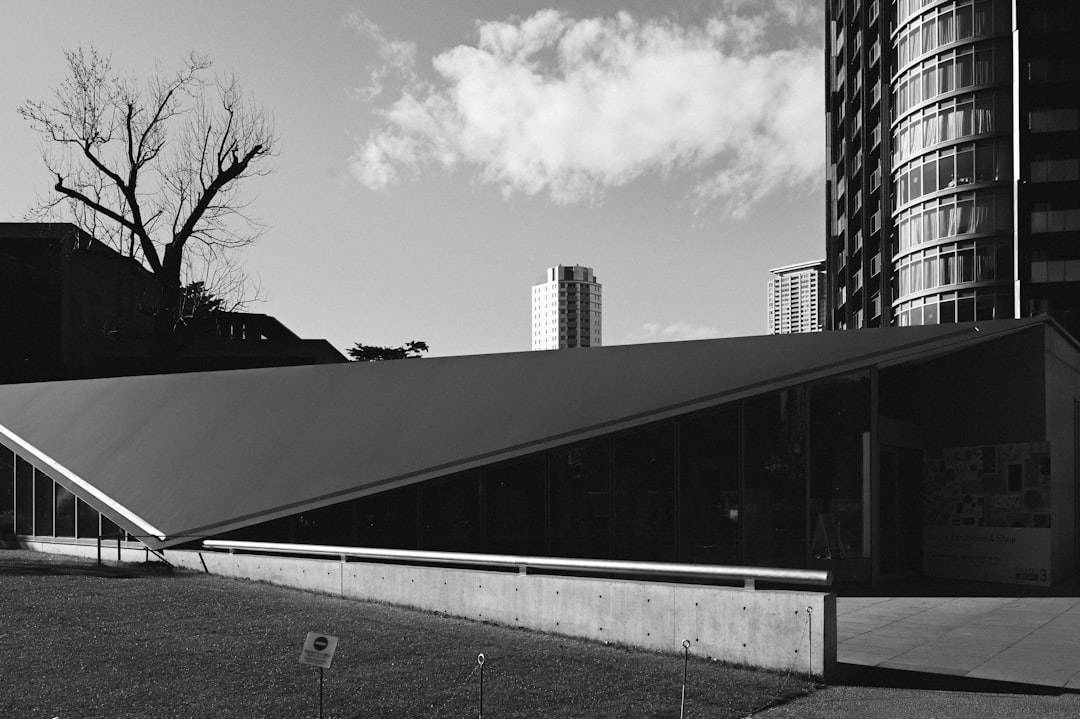
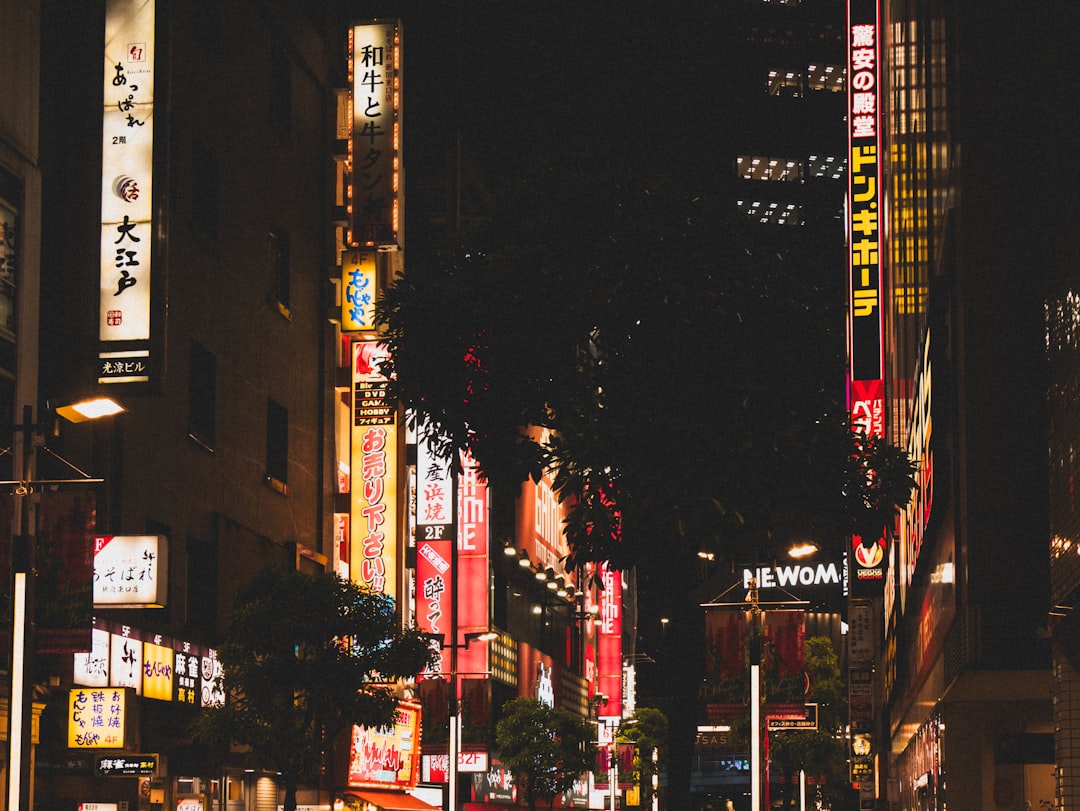
Here’s the truth that guidebooks often sanitize: Roppongi at night is chaotic, loud, and aggressively commercial in places — and for a photographer, it is absolutely extraordinary. The intersection at Roppongi Crossing is a non-stop stream of contradictions: businessmen, tourists, club promoters, couples on dates, delivery cyclists threading between taxis, the whole Tokyo social ecosystem compressed into one block.
Shoot from the pedestrian overpass looking down. Shoot from street level with a 35mm or 50mm prime and let the neon smear behind sharp foreground faces. The rain turns everything into a mirror — if you visit in the rainy season (June), budget one full night for post-rain street photography because the reflections are extraordinary.
For a drink that also doubles as a photogenic experience, head to Bar Piano in the basement of a low-rise building near Roppongi Hills — it’s tiny, jazz-lit, and serves a yuzu gin tonic that arrives in a coupe glass with a single large ice sphere and a twist of yuzu peel. It’s the kind of still-life you shoot, then drink. The bartender, a soft-spoken man who introduced himself only as Taro, told me that Chet Baker used to play in the space this bar now occupies. I don’t know if it’s true, but I believed it completely in that light.
Practical Tips for Photography Enthusiasts
🗾 Book on Viator: Interactive Celebrity Museum Experience →
Best time to visit: The Roppongi Art Triangle is a year-round destination, but the absolute sweet spot for photographers is November. The autumn light is golden, the sky is clear for skyline shots, and the crowds are thinner than summer. Cherry blossom season (late March to early April) is magical everywhere in Tokyo, but Roppongi specifically doesn’t have strong blossom spots — head to Tokyo Imperial Palace East Gardens for that and use Roppongi for its architecture and nightlife.
Getting around: All three triangle museums are walkable from Roppongi Station (Hibiya and Oedo lines). Tokyo Midtown (Suntory Museum) is a short walk or one subway stop. Good shoes matter — you’ll log 15,000+ steps easily.
Budget planning: Museum tickets range from ¥1,000 to ¥2,000 per institution. The combined Art Triangle Pass (available at each museum) saves money if you’re doing all three. Budget ¥3,000–¥5,000 for evening food and drinks — Roppongi skews more expensive than other neighborhoods, but counter-seated ramen near the station will run you ¥1,200 and is worth every yen.
Gear recommendation: A mirrorless body wins here over DSLR for street and low-light gallery work. Fast prime lenses (f/1.8 or faster) are essential for evening shooting. A small, lightweight tripod fits in a daypack and pays off enormously on the observation deck.
One Moment That Stays With You
It was just past midnight on my last Roppongi visit, and I’d been shooting for six hours straight. I sat down on a low concrete wall outside Roppongi Hills Artelligent Plaza, shoes off, reviewing the day’s frames. The plaza fountain was still running, throwing small arcs of water that caught the upward lighting in flashes of white. A couple walked past speaking quietly in Italian. Somewhere above me, 53 floors up, the Mori Art Museum was dark. I scrolled to a frame I’d taken inside the Mori that afternoon — a visitor standing alone in front of a massive abstract canvas, their silhouette dwarfed by the work — and realized I hadn’t planned that shot at all. It had just appeared, the way the best photographs always do in Tokyo: out of patience, presence, and the willingness to keep looking.
The Bottom Line
Roppongi rewards photographers who approach it with layers in mind. Spend your mornings in the museums studying how professionals use space and light. Spend your afternoons in the side-street galleries letting yourself be surprised. And spend your nights outside, on the pavement, shooting a city that never dims and never quite repeats itself. The Roppongi Art Triangle isn’t just a cultural itinerary — it’s a masterclass in seeing, and if you let it, it will make you a more patient, more perceptive photographer before you even get home.