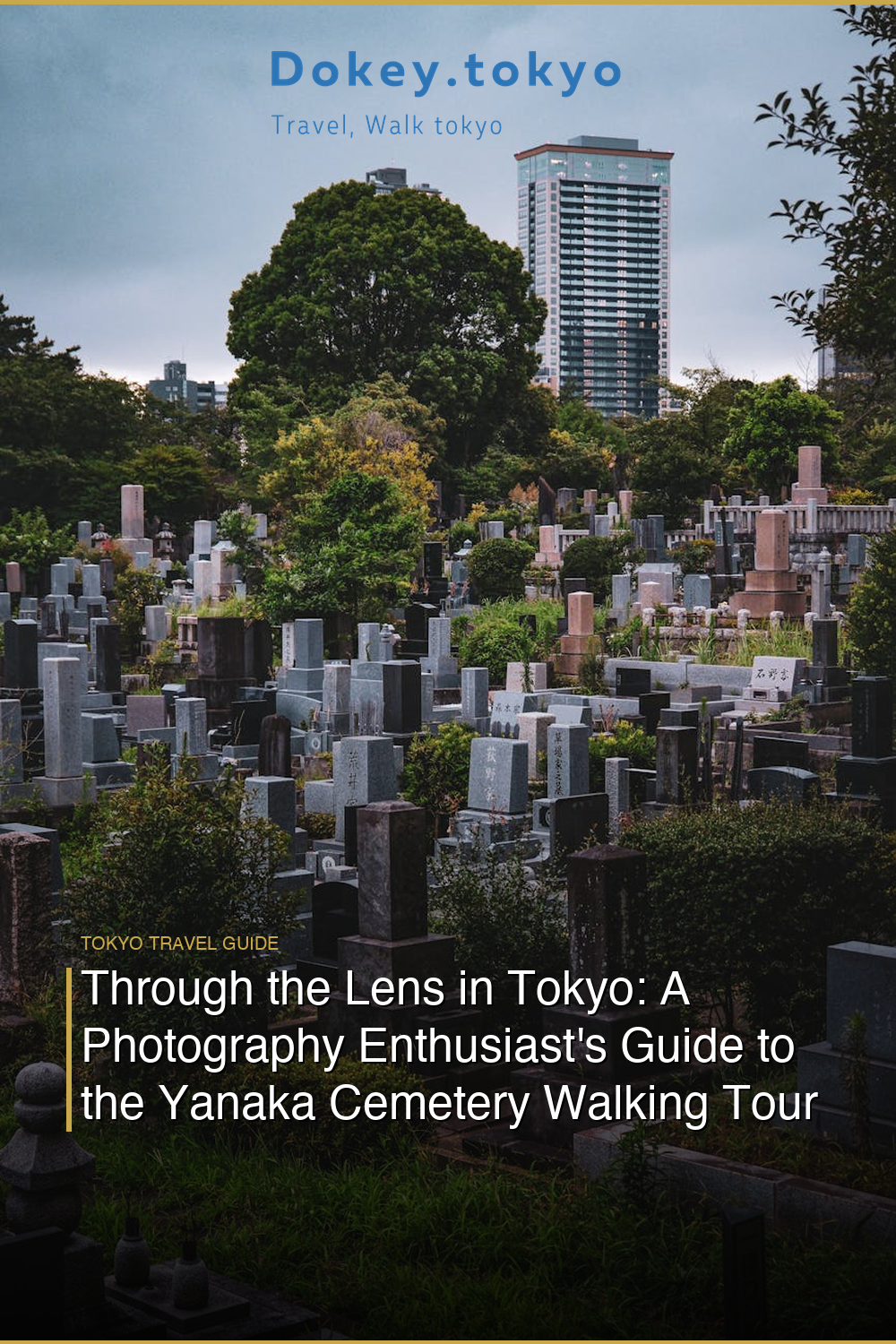
There’s a moment — and if you’ve ever chased light through a foreign city, you know exactly the one I mean — when a place stops you cold and makes you forget you’re even holding a camera. Yanaka Cemetery did that to me. Tucked into the quietly defiant Yanaka neighborhood of northern Tokyo, this sprawling Meiji-era graveyard is everything the city’s glossy tourism brochures ignore: mossy stone lanterns tilting at soft angles, ancient cherry trees with bark twisted like old rope, narrow gravel paths that dissolve into shadow and silence. For photographers, it’s less a cemetery and more a living, breathing canvas of wabi-sabi perfection.
I remember stepping through the main gate off Yanesen — the informal name for the tri-neighborhood area of Yanaka, Nezu, and Sendagi — on a cool October morning around 7:30 a.m., when the slanted autumn light was still golden and low. The smell hit me first: damp earth, cedar incense drifting from somewhere deeper inside, and faintly the sweetness of chrysanthemums left on a grave. A crow called once, loud and unhurried, and then the city went quiet. Standing there, I genuinely felt like I’d walked into a different century.
Why Yanaka Cemetery Is a Photographer’s Dream Destination
🎫 Book: Yanaka Cemetery Walking Tour Tokyo →
🎫 Book: Tokyo Historic Temples Photography Tour →
🎫 Book: Atmospheric Graveyard Historic Sites Tok →
Yanaka Cemetery (谷中霊園, Yanaka Reien) opened in 1874 and sprawls across roughly 10 hectares in Taitō ward. It’s the final resting place of over 7,000 souls, including the last Tokugawa shogun, Yoshinobu. But what makes it irresistible to photographers isn’t its historical pedigree — it’s the visual tension between decay and beauty, between the ancient and the quietly tended.
The main avenue, a long cherry-tree-lined boulevard called Sakura-dōri, is arguably the most famous sight. In late March and early April, the trees explode into full bloom and the petals rain down onto the stone graves below — it’s one of the most emotionally complex and gorgeous juxtapositions you’ll ever frame in a viewfinder. Life and death, pink and grey, celebration and solemnity. During hanami season, come at dawn (seriously, 5:30–6:00 a.m.) before the crowds arrive and the light is still cotton-soft. You will get shots that look like Hiroshi Sugimoto paintings.
The Four Visual Zones Every Photographer Should Work
Zone 1 — The Main Boulevard: Shoot down the Sakura-dōri with a telephoto lens compressed to collapse the rows of trees into layered depth. In autumn, the gingko trees turn blazing yellow. In summer, the canopy creates cathedral-like green tunnels of filtered light.
Zone 2 — The Old Stone Lanes: Veer off the main path and you’ll find moss-covered grave markers from the Meiji and Taisho eras, some so weathered the kanji has blurred into abstraction. These make extraordinary macro and close-up subjects. The contrast of rough stone and soft moss is tactile even in a photograph.
Zone 3 — The Western Edge near Tennō-ji: Where the cemetery meets Tennō-ji Temple, the architectural details reward a slow eye. Stone Buddhas, a five-story pagoda visible from the grounds, vermillion torii gates layered with lichen — these are frames that feel accidental but are absolutely intentional if you take your time.
Zone 4 — The Quiet Northeast Corner: Almost nobody goes here. I found it by following a cat (there are many resident cats in Yanaka Cemetery — photograph them, they are astonishingly photogenic and blessedly unafraid of cameras). The northeast corner has older, smaller graves clustered together with overgrown greenery pressing in. The light in late afternoon slices through the trees in hard, dramatic shafts. It looks like a Kurosawa frame.
The Nearby Temples: Building Your Walking Tour Route
🗾 Book: Yanaka & Nezu historic temples walking t →
🗾 Book: Meiji Shrine, Asakusa and local temples →
Yanaka Cemetery is the centerpiece, but the neighborhood rewards a full half-day walk that takes in several remarkable temples and shrines. Here’s the route I use every single time I visit.
Tennō-ji Temple
Directly adjacent to the cemetery, Tennō-ji dates to the 14th century and houses a large bronze Great Buddha (the Yanaka Daibutsu) that many visitors completely miss because they don’t know to look for it. The figure is 1.8 meters tall, green with age, and surrounded by stone offerings left by local worshippers. The morning light hits the Buddha’s face at roughly 9:00–10:00 a.m. and the shadows that fall across its features are extraordinary. Shoot from a low angle with a wide aperture and let the background go soft.
Nezu Shrine
A 10-minute walk south takes you to Nezu Shrine, which predates Yanaka by centuries and is significantly less crowded than Fushimi Inari in Kyoto despite offering nearly identical rows of vermillion torii gates. I cannot emphasize this enough: if you want the torii tunnel shot without 200 tourists in your frame, come to Nezu. Go early, go on a weekday, and the stone fox statues flanking the path will be damp with morning dew and completely, gloriously yours.
Yanaka Ginza — Where You Eat and Recharge
No photography walk is complete without fuel. Yanaka Ginza is a short, wonderfully retro shotengai (covered shopping street) that connects the cemetery area to the surrounding neighborhood. This is where locals actually shop, and it has that rare quality of being charming without being performatively charming. For breakfast or a mid-morning break, look for Kayaba Coffee — a renovated 1938 machiya townhouse serving egg salad sandwiches and hand-drip coffee that will make you want to stay in Tokyo forever. The interior light is warm and diffused through old glass windows; interior street photography opportunities are exceptional here.
One afternoon I was sitting outside Kayaba Coffee eating a piece of their tamagoyaki toast — a thick slab of sweet rolled omelette on milk bread, which I still dream about — when an elderly woman named Michiko-san sat nearby and started asking about my camera in careful, deliberate English. She’d lived in Yanaka her entire life, she said, and told me that behind the grocery store at the far end of Yanaka Ginza, there was a tiny shrine wedged between two buildings that most people walked past without noticing. She was right. I would have missed it entirely without her. It’s barely wider than my shoulders and absolutely perfect.
Practical Tips for Photographer Visitors
🗾 Book: Tokyo history and Shinto shrine private →
Best Time of Day and Season
- Golden hour (dawn): The single best time. The cemetery is technically open around the clock, and arriving before sunrise means you’ll have the entire space to yourself with the most atmospheric light imaginable.
- Late afternoon: The second-best option. Light goes horizontal, shadows lengthen dramatically, and the resident cats tend to emerge.
- Cherry blossom season (late March – early April): Iconic and genuinely worth the crowds if you go at dawn.
- Autumn foliage (late November): Less famous but arguably more beautiful for photography. The gingko trees turn amber-gold and the contrast with grey stone is sublime.
- Rainy days: Don’t skip rainy days. Wet stone, reflections in puddles, umbrellas — Yanaka Cemetery in the rain is moody and extraordinary.
Gear Recommendations
Bring a versatile zoom (something like a 24–70mm), a fast prime for the low-light interior shots at temples (a 35mm f/1.8 is ideal), and a macro lens if you have one. A small tripod or gorillapod is useful for dawn shots. Dress for quiet movement — gravel paths and respectful silence matter here.
Getting There
The most convenient access is Nishi-Nippori Station (JR Yamanote Line or Tokyo Metro Chiyoda Line) — exit and you’re at the cemetery’s north gate in under two minutes. Alternatively, Nezu Station on the Chiyoda Line puts you closer to Nezu Shrine if you want to walk the route in reverse.
Etiquette and Respect
This is an active cemetery where families come to tend graves. Keep voices low, avoid stepping over grave plots to reach a composition, and always ask yourself: would I want someone pointing a camera here if this were my family’s resting place? Generally, wide landscape shots of the grounds are entirely appropriate. Close-up shots of individual grave markers with names visible feel more invasive — use your judgment and your humanity.
One Last Frame Before You Leave
It was late November, maybe 4:45 p.m., and the sun had dropped just below the cemetery’s western tree line. The light turned everything amber and then almost immediately went grey. An older man in a grey jacket was trimming weeds around a grave with a small hand tool, moving with the slow deliberateness of someone who has done this ten thousand times. He set down a single white chrysanthemum against the dark stone. I didn’t photograph it — it felt like something that belonged only to him — but I will never forget the image. That restraint, that decision not to shoot, taught me more about photography than any lens ever has. Yanaka does that to you. It slows you down until you see what actually matters.
For photographers willing to trade the neon clichés of Shibuya and Shinjuku for something genuinely soul-stirring, Yanaka Cemetery and its surrounding neighborhood is the single most rewarding half-day in Tokyo. Bring your camera, bring patience, and go slow. The light here has been falling on these stones for 150 years. It will wait for you.