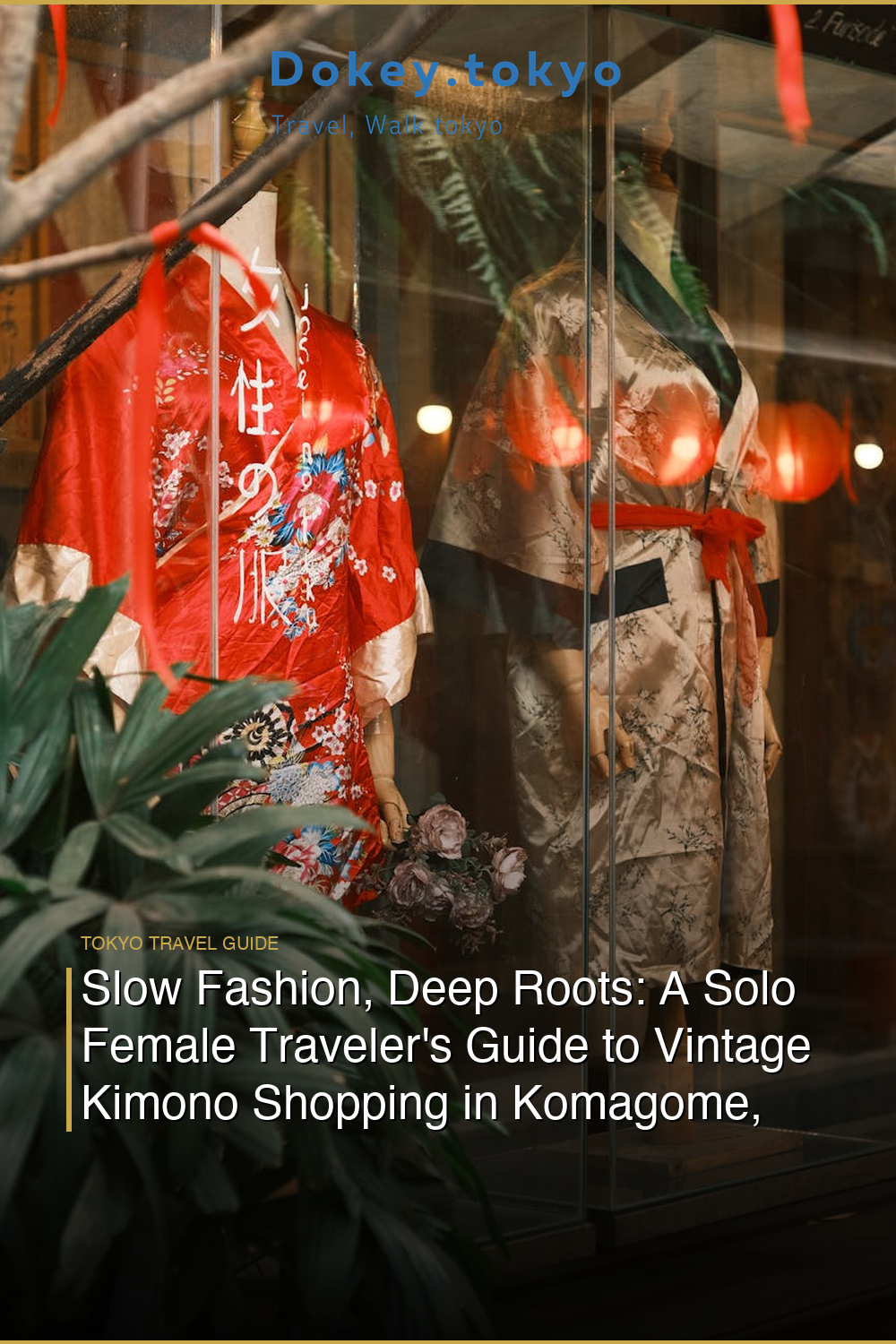
There’s a particular kind of travel magic that has nothing to do with crowds or bucket lists. It’s the magic of wandering into a neighborhood that wasn’t on anyone’s itinerary, pushing open a door that smells like cedar and old silk, and walking out two hours later holding something that belonged to a woman you’ll never meet — but somehow feel connected to. That’s exactly what vintage kimono shopping in Komagome did to me, and honestly, it ruined me for ordinary souvenir shopping forever.
I arrived at Komagome Station on a Tuesday morning in late October, stepping off the Yamanote Line into the kind of quiet that Tokyo rarely offers. The light was that low, golden autumn kind — the sort that makes every shopfront look like it’s posing for a photograph. A persimmon tree in someone’s courtyard had dropped fruit onto the pavement, and the whole street smelled faintly of woodsmoke and something sweet I couldn’t identify. I stood there for a full minute before I even looked at my map, just breathing it in.
Why Komagome Is the Perfect Neighborhood for Solo Female Kimono Hunters
🗾 Book on Viator: Private Kimono Tour with Professional Lo →
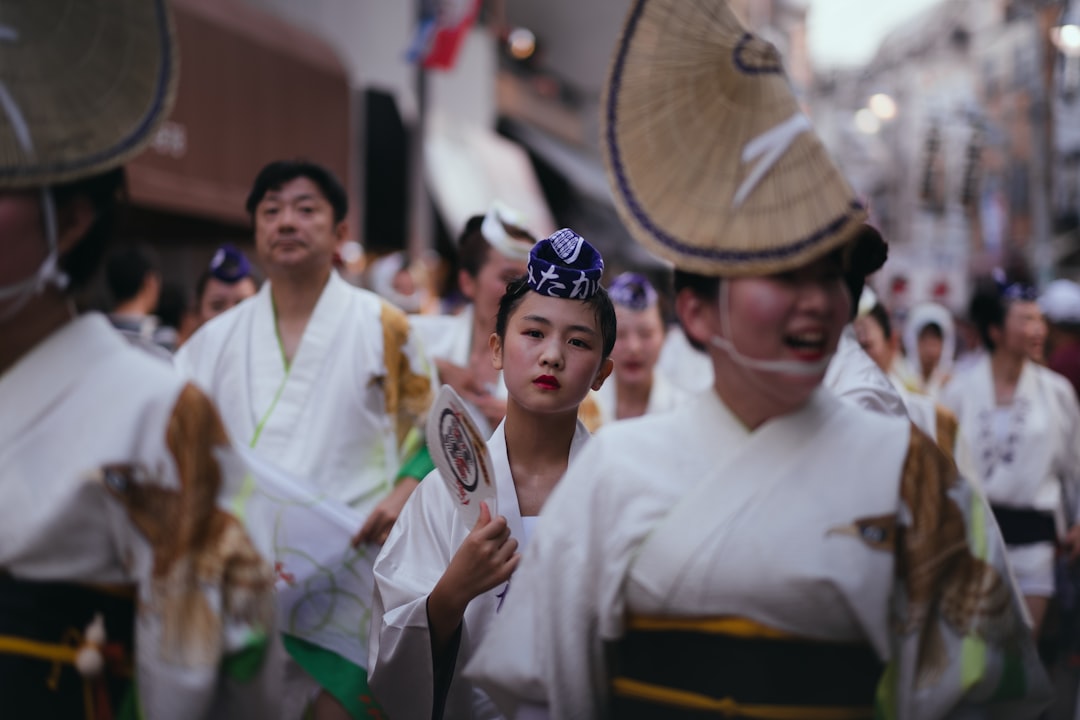
Komagome sits on the Yamanote Line between Sugamo and Tabata, and most tourists ride straight through it on their way to Ueno or Ikebukuro. That’s their loss and your gain. Unlike the curated vintage lanes of Shimokitazawa or the tourist-facing kimono rental shops of Asakusa, Komagome’s secondhand clothing culture exists almost entirely for local Japanese shoppers — which means prices are honest, selection is extraordinary, and the experience feels genuinely real.
For solo female travelers specifically, Komagome is a dream. The neighborhood is walkable, calm, and deeply safe. Shop owners tend to be older women — former seamstresses, antique dealers, women who grew up wearing the garments they now sell — and they have a particular warmth toward women who show up alone and curious. You’re not a tourist to be processed here. You’re a guest.
What to Know Before You Go: Kimono Basics for First-Time Buyers
🗾 Book on Viator: Explore Nippori Fabric Town’s Traditiona →
Understanding the Kimono Categories You’ll Encounter
Walking into a vintage kimono shop without any context is like walking into a wine cellar without knowing red from white — possible, but you’ll miss so much. Here’s the quick version you need:
Furisode are the formal, long-sleeved kimono traditionally worn by unmarried young women. They’re the most elaborately decorated — dramatic florals, sweeping embroidery — and tend to be the priciest even secondhand. If you want something showstopping to hang on a wall or wear to a very special event, this is your category.
Komon are casual, all-over patterned kimono that are genuinely wearable in daily life. These are the workhorses of the vintage kimono world, and they come in patterns ranging from subtle geometric repeats to wild abstract prints from the 1960s and 70s. For solo travelers who want something they’ll actually wear back home, komon are the sweet spot.
Haori are the short hip-length kimono jackets, and I cannot recommend them enough for Western travelers. They layer beautifully over jeans, they’re lightweight for packing, and they tend to run ¥1,000–¥5,000 in good vintage shops. Buy three. You won’t regret it.
Obi are the wide sashes worn around the waist, and even if you never wear a full kimono, a vintage obi makes a stunning wall hanging, table runner, or statement accessory. Some of the most intricate weaving in Japanese textile history lives in these pieces.
Sizing Reality Check
Vintage kimono were made for Japanese body proportions, which means the sleeves may be shorter than you expect and the overall length may fall differently than traditional styling requires. This is actually a non-issue for most Western purposes — for wearing as a robe, a jacket layer, or a display piece, fit is irrelevant. If you genuinely want to wear one traditionally tied, ask the shop owner; many can recommend a seamstress nearby who does alterations.
The Shops Worth Seeking Out
🗾 Book on Viator: Vintage Shopping Tour with Local Expert →
🎫 Book on Klook: Vintage Kimono Shopping Tours Tokyo →
🎫 Book on Klook: Tokyo Vintage Fashion Walking Tour →
The Hidden Gem Street Behind Rikugien Garden
Komagome’s crown jewel is Rikugien Garden, one of Tokyo’s most beautiful traditional Japanese landscape gardens. Most visitors do the garden and leave. Smart solo travelers do the garden and then spend equal time in the residential streets immediately behind and beside it, where a scattering of antique dealers and kimono specialists operate out of spaces that barely look like shops from the outside.
One afternoon I nearly walked past a shop — really just a converted home with bolts of fabric visible through a sliding glass door — when the owner, a woman in her seventies named Fujita-san, called out to me in gentle English: “You like old things?” I said yes. She poured me barley tea and spent forty-five minutes explaining the difference between Meiji-era dyeing techniques and Showa-era synthetic prints, holding swatches up to the window light to show me the color depth. I bought a 1950s komon in deep teal with white chrysanthemums for ¥2,800. It hangs in my bedroom in Seattle and I think about her every time I look at it.
Komagome’s Shotengai (Shopping Arcade) Side Streets
The covered shotengai running northwest from the station has a few permanent antique and used clothing dealers mixed in among the grocers and hardware stores. These spots don’t specialize exclusively in kimono, but they often have bins of haori and obi selling for ¥500–¥2,000 — genuinely excellent quality at prices that feel almost guilty. Go slowly. Dig through the bins. The best pieces are never on top.
Temporary Markets at Rikugien and Local Temples
Check the calendar before your visit. Komagome and the neighboring Sugamo area host rotating antique flea markets at temple and shrine grounds, and kimono dealers make up a significant portion of vendors. The Sugamo Togenuki Jizo Temple market (held on the 4th, 14th, and 24th of each month) is a twenty-minute walk and absolutely worth combining with your Komagome day.
Eating and Drinking Your Way Through a Komagome Kimono Day
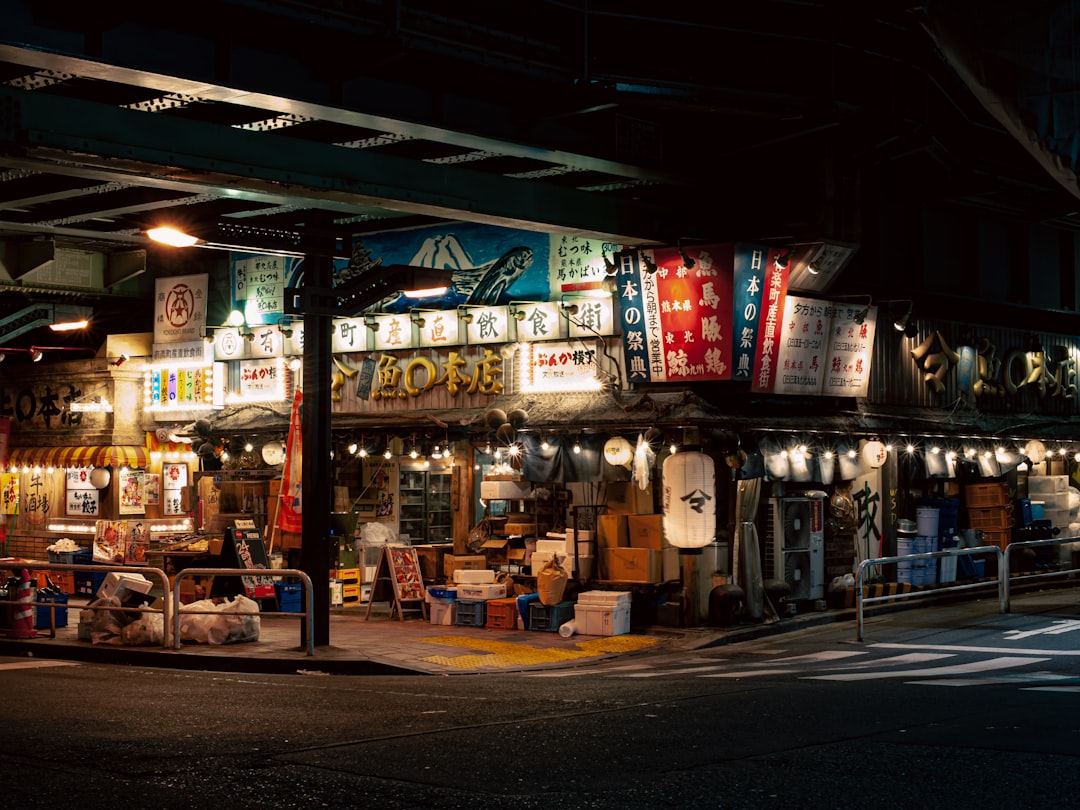
A proper kimono-hunting day in Komagome deserves proper food. This neighborhood eats well and quietly, away from tourist menus.
Start your morning with a stop at one of the small kissaten (old-school Japanese coffee shops) near the station. Order a morning set — thick toast, a soft-boiled egg, a small salad, and coffee — for around ¥600. The atmosphere inside these places, with their dark wood counters and jazz playing at a respectful volume, is the perfect psychological warm-up for a day of slow, appreciative looking.
For lunch, look for any handwritten sign reading teishoku (set meal). Komagome’s neighborhood restaurants serve honest, home-style Japanese cooking: grilled fish, miso soup, pickles, rice. A full teishoku lunch will run you ¥900–¥1,400. Eat at the counter if you’re solo — the owners are often willing to chat, and you’ll get better service.
Before heading home, stop at a wagashi (traditional Japanese sweets) shop near Rikugien for seasonal sweets. In autumn, look for momiji (maple leaf) shaped mochi or chestnut yokan. Eat it on a bench inside Rikugien as the light fades. That specific combination — handmade sweet, old garden, the rustle of silk still in your bag — is what travel is actually for.
Practical Tips for Solo Female Travelers Shopping Vintage Kimono in Komagome
🎫 Book on Klook: Traditional Japanese Dress Experience →
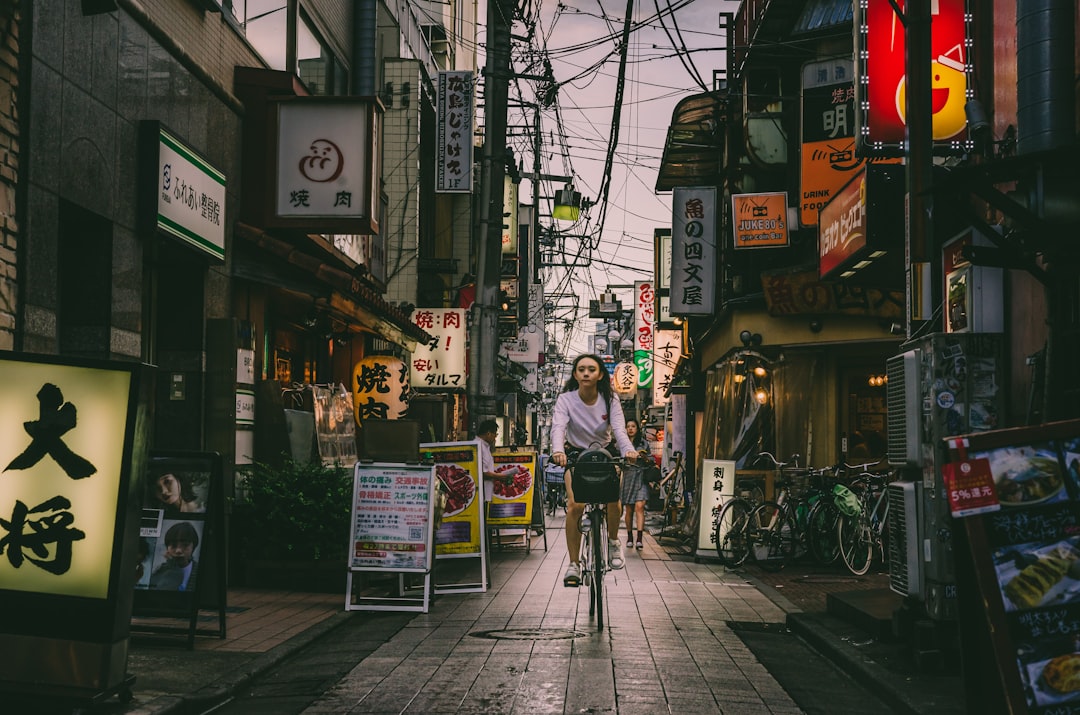
Budget: You can have a full, magnificent kimono-shopping day in Komagome for ¥10,000–¥15,000 total, including purchases, food, and garden entry (Rikugien costs ¥300). High-quality haori for ¥2,000–¥5,000, beautiful komon for ¥3,000–¥8,000, obi for ¥1,000–¥4,000.
What to bring: Cash. Most small kimono dealers in Komagome do not accept cards. ATMs are available at the 7-Eleven near the station. Bring a large tote bag or a foldable shopping bag — many shops wrap purchases in newspaper or tissue rather than bags.
Language: Basic Japanese phrases go a long way. “Kore wa nan en desu ka?” (How much is this?) and “Mite mo ii desu ka?” (May I look at this?) will endear you to every shop owner you meet. That said, many older dealers in this neighborhood have enough English for transactions and are patient, warm communicators.
Best time to visit: Late October through early December for autumn foliage in Rikugien, which is otherworldly. Early April for cherry blossom season. Avoid summer weekends when Rikugien gets crowded — the shops, thankfully, remain peaceful regardless.
Getting there: Komagome Station on the JR Yamanote Line and the Tokyo Metro Namboku Line. From Shinjuku, approximately 20 minutes. From Ueno, 10 minutes.
Before You Leave: One Last Moment
On my last visit, I sat inside Rikugien at dusk, the garden completely empty except for me and a groundskeeper raking leaves near the pond. I’d spent the day collecting: a 1960s haori in burnt orange with abstract black brushstroke patterns, a bolt of unused obi silk in gold and dark green that I bought on pure impulse, and a small fukusa (gift cloth) in embroidered silk that cost ¥400 and came wrapped in a piece of old newspaper dated 1987. I spread everything across the bench beside me and looked at it in the fading light. The groundskeeper walked past, glanced at my collection, and said in Japanese — which my friend later translated — “You have good eyes.” I didn’t need a translation in the moment. I understood.
Komagome won’t dazzle you the way Shinjuku does. It won’t hand you a perfect photo opportunity every three minutes. What it will do is slow you down, put something genuinely old and beautiful in your hands, and make you feel — as the best travel always does — like you found the real thing. For solo female travelers willing to wander a little off the Yamanote Line’s obvious stops, it’s one of Tokyo’s most quietly extraordinary afternoons.