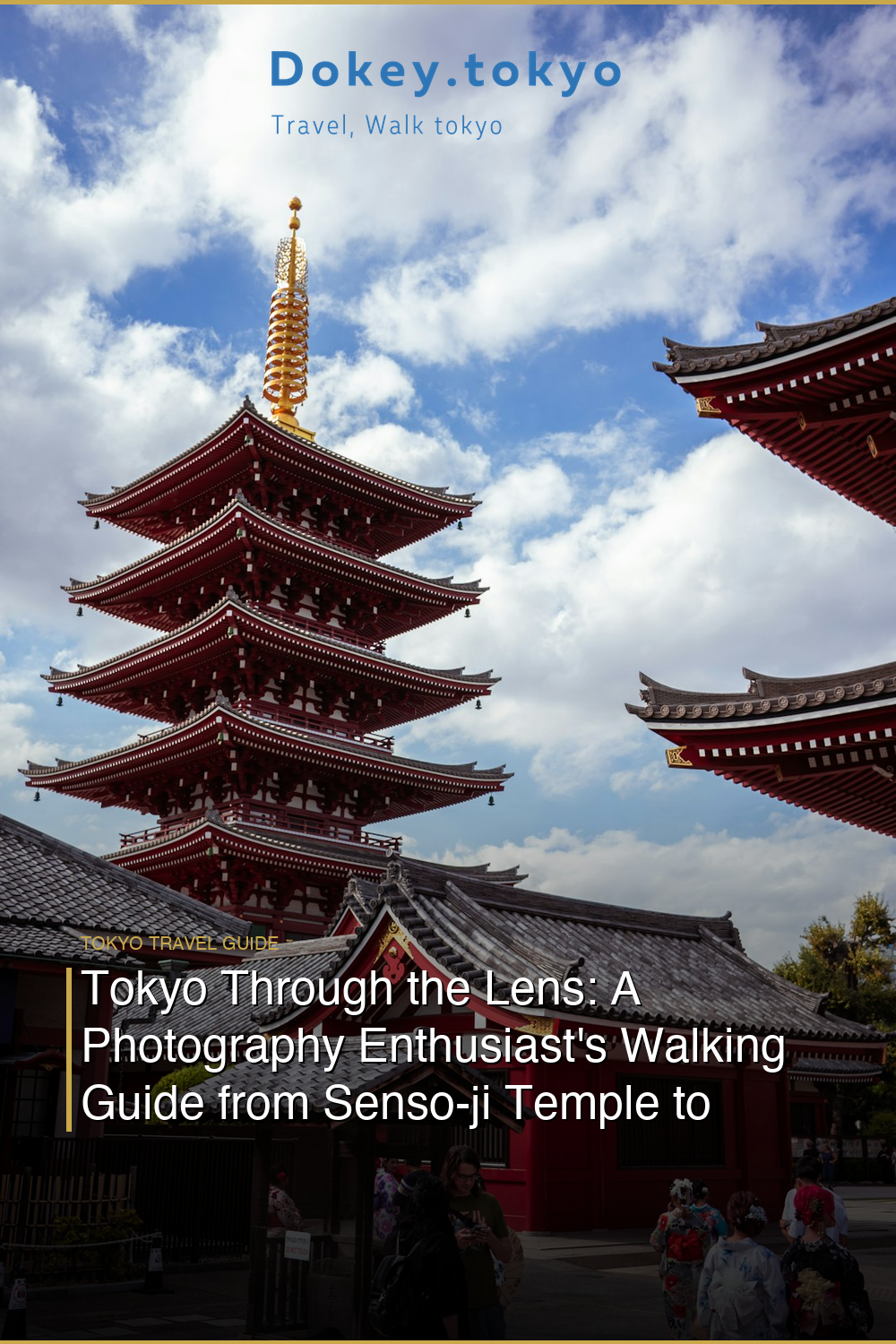
Few cities on earth reward the patient photographer the way Tokyo does, and nowhere in the capital is this truer than the stretch of old-town east Tokyo running from Asakusa’s Senso-ji Temple down through the waterfront canal districts to the retro island neighborhood of Tsukishima. This route is not a typical tourist circuit — it is a layered visual story, moving from centuries-old incense smoke and vermilion gates through quiet riverside lanes, industrial bridges, and finally into the narrow, neon-warmed alleys of a neighborhood that still smells like showa-era Japan. For photographers who want more than the postcard shot, this walk delivers texture, contrast, and quiet moments in equal measure across roughly six kilometers of some of the most characterful urban streetscape in Asia.
[ADD: Share your personal first impression or arrival story here — 2-3 sentences]
Planning Your Shoot: When to Walk This Route
🗾 See Tokyo’s must-see places in one day →
Timing is everything on a walk like this, and the good news is that the Senso-ji to Tsukishima route rewards photographers at almost any hour — though each time of day produces a radically different portfolio.
Golden Hour at Senso-ji
Arrive at Senso-ji before 7:00 AM and you will find something genuinely rare in central Tokyo: near-silence. The Kaminarimon Gate, with its enormous red paper lantern, is one of the most photographed subjects in Japan, but during daylight hours it is almost always surrounded by crowds that make considered composition nearly impossible. In the early morning, mist sometimes clings to the temple precincts, incense smoke drifts unpredictably through shafts of low amber light, and the occasional monk or early worshipper adds authentic human scale to your frame without overwhelming it. Shoot wide for the gate and the five-storied pagoda together, then move in close for the lantern’s weathered texture and the kanji characters carved into its base.
If golden hour is not possible, blue hour — roughly 30 minutes after sunset — turns the entire temple complex into something otherworldly. The lanterns glow warm against a deep indigo sky, and the contrast between the illuminated gate and the darkening pagoda behind it is the kind of shot that looks as though it required significant post-processing, even when it does not. For similar evening photography opportunities nearby, consider exploring the Sumida River area at night.
Mid-Morning: The Nakamise-Dori Details
Once the crowds begin arriving around 9:00 AM, shift your focus from grand architecture to granular detail. Nakamise-dori, the famous shopping street leading to the temple, becomes a photographer’s exercise in compression and color. Stalls selling ningyo-yaki (small cakes shaped like temple bells and pigeons), folded fans, and lacquered chopsticks create a dense palette of reds, golds, and greens. Work the edges of the street rather than the center: the shopkeepers arranging their displays, the elderly woman selecting a folded fan, the child reaching for a rice cracker. These are the shots that give a travel portfolio genuine human warmth.
Walking the Route: Key Stops and Compositions
🗾 Explore Tokyo’s iconic neighborhoods and waterfront →
🗾 Explore Tokyo’s iconic neighborhoods and waterfront →
🗾 Customized tour of Tokyo’s top attractions →
🎫 Tokyo waterfront guided photography walk →
Azuma Bridge to the Sumida River Promenade
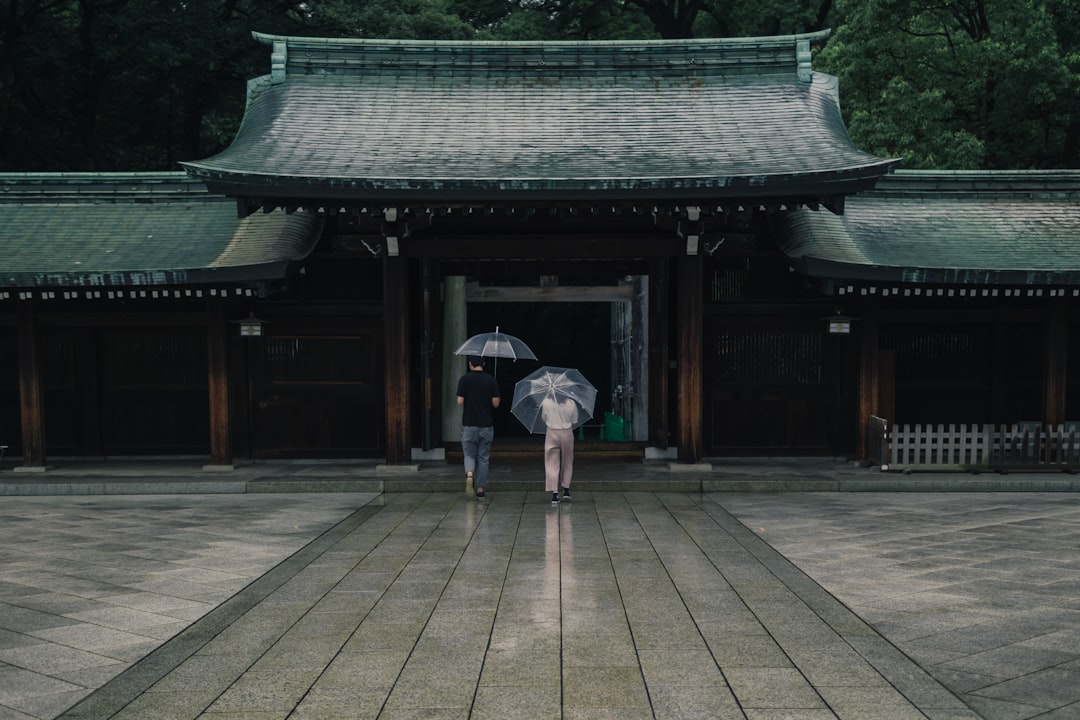
Leaving the temple precinct through the eastern exit, walk toward Azuma Bridge — Azumabashi — which spans the Sumida River just a short walk from Senso-ji. This bridge is one of the great underrated compositions in Tokyo photography. To the south, the Asahi Beer Hall (known locally as the “golden turd” for its distinctive golden flame sculpture) sits across the water, creating a surreal juxtaposition of ancient-feeling riverbanks and post-modern corporate architecture. Position yourself on the bridge’s pedestrian walkway in the early morning for reflections on the calm river surface, or catch the water buses — the Himiko and Hotaluna, designed by Leiji Matsumoto — pulling away from the pier for a shot that feels like science fiction against the traditional skyline.
From Azuma Bridge, join the Sumida River Terrace walkway heading south. This elevated promenade runs along the river’s east bank and provides continuous, unobstructed views across the water. The play of light changes constantly here — industrial cranes in the distance, houseboats moored at small docks, and the occasional rowing team moving silently upstream. This is a section for slower, more contemplative shooting: telephoto compression of the opposite bank, long exposures of the water if you carry a tripod, and quieter environmental portraits if you encounter the regulars — joggers, dog walkers, and elderly men fishing from the lower banks.
[ADD: Add one personal tip or hidden gem you discovered — 1-2 sentences]
Kiyosumi-Shirakawa: The Canal District Interlude
Approximately halfway through the walk, the route passes near the Kiyosumi-Shirakawa neighborhood, a former industrial canal district that has become one of Tokyo’s most interesting visual contrasts. Old stone storehouses — kura — stand next to boutique coffee roasters and design studios. The canals here are narrow and still, edged with stone walls that reflect the buildings above them perfectly on calm days. If you have a mirrorless camera with a tilting screen, shooting at water level produces almost painterly symmetry. The neighborhood’s coffee culture also means that warm, well-lit café interiors — many with beautiful vintage or Scandinavian-influenced aesthetics — are available for interior food and drink photography if the weather turns.
Tsukishima: The Island of Monja
The final destination, Tsukishima, is reached via a short bridge crossing that makes clear you are entering a different world. This man-made island was reclaimed from Tokyo Bay in the Meiji era and retains an almost startling amount of showa-period character despite being surrounded by modern high-rises. Monja Street — officially called Nishi-Nakadori — is the heart of the neighborhood: a narrow lane lined on both sides by decades-old monja restaurants whose signs, menus, and painted storefronts have barely changed since the 1970s.
For photographers, Tsukishima is a study in compression and atmosphere. The alley is narrow enough that a 35mm or 50mm prime lens will capture the full tunnel effect of receding signs and lanterns. Shoot during the day for the patina and character of the shopfronts, but return at dusk when the restaurants begin to heat their iron griddles and the alley fills with the thin, savory smoke of monja-yaki cooking. This smoke, backlit by the warm orange restaurant lighting, creates a naturally atmospheric haze that elevates almost any frame. Diners at the open-front counter seats become natural subjects — focused, communal, deeply local.
Eating Along the Route: Fuel for the Long Walk
🗾 See Tokyo’s must-see places in one day →
🎫 Tsukishima Monja food experience tour →
For photographers, meals are also content, and this route offers exceptional eating at every stage. Begin with a ningyo-yaki or melon bread from Nakamise-dori for an early snack. Mid-route, a pour-over coffee from one of the Kiyosumi-Shirakawa roasters (Icedrip Coffee or Blue Bottle’s original Tokyo location are popular options) gives you both a caffeine boost and a well-designed café interior to photograph. At Tsukishima, commit fully to a monja-yaki experience — sit at a counter seat and document the cooking process itself. The thin batter poured into a ring of ingredients on the iron griddle, the gradual crisping of the edges, the communal scraping with small metal spatulas: it is a documentary sequence that tells a complete story in ten to fifteen frames.
Practical Tips for Photographers on This Route
🎫 Photography tours Senso-ji Temple Tokyo →
Camera bag and gear: This is a full-day urban walk across approximately six kilometers of mixed terrain — riverside promenades, bridge crossings, and narrow alleyways. A comfortable shoulder bag or backpack is essential. Pack light: one body, a wide prime (24mm or 28mm) for temple and river architecture, and a short telephoto or 50mm for street and food work will cover almost every scenario.
Permissions and etiquette: Senso-ji is a functioning religious site. Photography of worshippers at the main hall is generally accepted but should be done with discretion — do not photograph people in prayer at close range. Along Monja Street, ask permission before photographing restaurant staff or diners at close range; a gesture toward your camera and a questioning expression is usually sufficient, and most locals are welcoming.
Weather considerations: Overcast days are underrated for this route. Flat, diffused light eliminates harsh shadows in the narrow alleyways of both Nakamise-dori and Tsukishima, and makes the colors of temple architecture and restaurant signage pop without blown highlights. Rain adds reflections to every surface and keeps crowds away from Senso-ji — a genuinely worthwhile trade.
Getting there and back: Senso-ji is served by the Ginza and Asakusa subway lines (Asakusa Station). Tsukishima has its own station on the Yurakucho and Oedo lines, making the return journey simple. The entire walking route takes three to four hours at a relaxed photographic pace, or a full day if you stop for coffee, lunch, and extended shooting sessions.
[ADD: Describe one specific moment or memory from this experience — 2-3 sentences]
Building Your Tsukishima Monja Walking Route Portfolio
🗾 Customized tour of Tokyo’s top attractions →
What makes the Senso-ji to Tsukishima walk exceptional for photography is not any single landmark but the remarkable variety of visual registers packed into a single manageable route. Within one walk, you move from ancient religious architecture to modernist riverfront design, through post-industrial canal reflections, into showa-era alley atmosphere — and end with documentary food photography in a neighborhood that feels genuinely preserved rather than staged for tourism. For photographers who want a Tokyo portfolio that demonstrates range and depth rather than just a checklist of famous locations, this is the route that delivers. Walk it slowly, return for the light you missed, and let the city reveal itself at the pace it prefers.