Disclosure: some links on this page are affiliate links. If you book a tour through them, dokey.tokyo may earn a small commission at no extra cost to you.
Quick answer
- Adult ticket: from ¥3,400 (ages 18+). The price changes by date and time; ages 13–17 ¥2,800, ages 4–12 ¥1,500, ages 3 and under free.
- Where to buy: the official ticket site. Tickets are for a date and time you choose, and buying at the door costs ¥200 more.
- Hours: generally 8:30 AM to 9:00 PM, but closing times change by date. Last entry is one hour before closing.
Source: Official teamLab Borderless page, checked 2026-11-08. Hours and policies can change, so check the official page before you go.
There are places in the world that make you forget you’re holding a camera — not because you stop shooting, but because the boundary between you and the image dissolves completely. TeamLab Borderless at Azabudai Hills in Tokyo is one of those places. It’s not a gallery. It’s not a theme park. It’s something entirely in between, a borderless ecosystem of light, sound, and motion where 60+ interconnected digital art installations bleed into one another like watercolors in the rain. For photographers, it is simultaneously the most rewarding and most humbling place you will ever point a lens.
What Is TeamLab Borderless and Why Photographers Need to Go
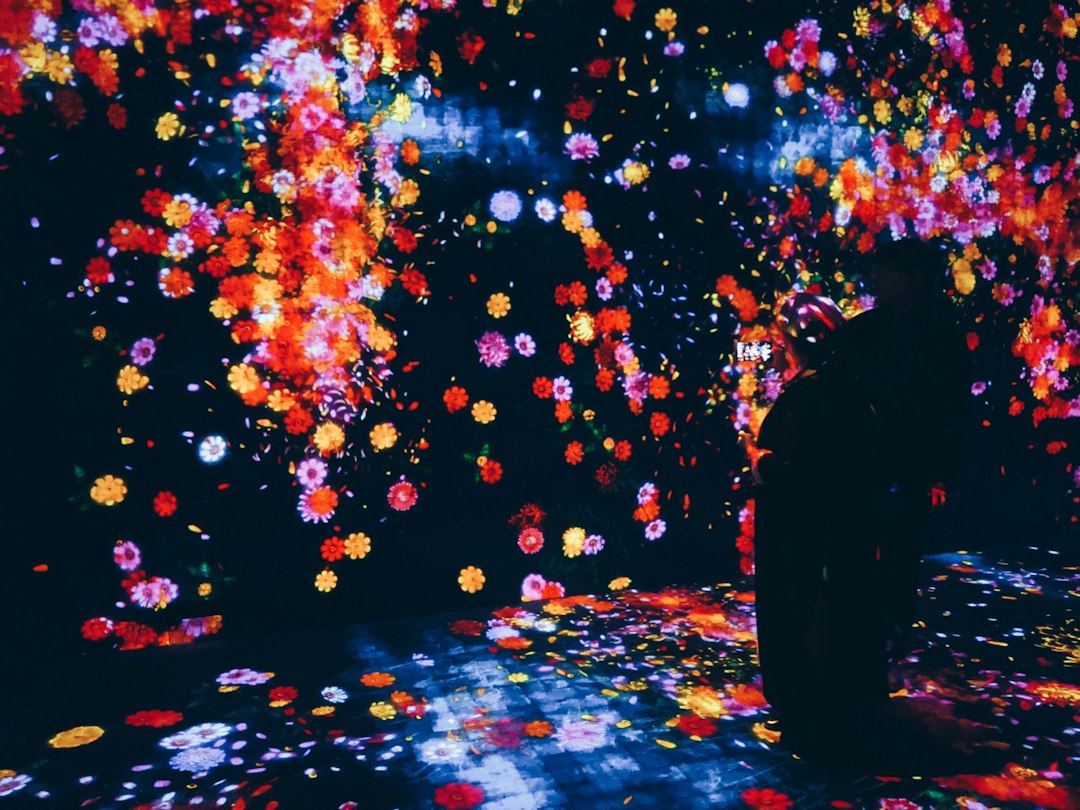
TeamLab Borderless reopened in early 2024 at its new home inside the gleaming Azabudai Hills complex in Minato, Tokyo — a significant upgrade from the beloved but aging Odaiba venue. The new space spans approximately 9,000 square meters across multiple floors, and the installations have been redesigned with more spatial breathing room between experiences. For photographers, this is critical: you actually have room to set up a shot without someone’s elbow appearing in your frame every three seconds.
The concept behind Borderless is deceptively simple. Unlike traditional museums where art hangs on walls in isolated rooms, here the digital works overflow from space to space. Walk too close to a waterfall of light and it wraps around you. Sit on the floor of the crystal world and the fractals recalibrate to include your silhouette. You are never just observing — you are part of the composition. For a photographer, this means every shot is unique to that exact second. You cannot recreate it. You cannot return tomorrow and find the same frame waiting. It’s pure, irrepeatable light.
Tickets: How to Book and What to Expect
This is where many photographers stumble — showing up without a reservation and being turned away. Do not do this. TeamLab Borderless Tokyo operates on a timed-entry reservation system, and popular weekend slots sell out weeks in advance.
Pricing and Booking
- Adults (18+): from ¥3,400; the price changes by date and time
- Ages 13–17: ¥2,800
- Ages 4–12: ¥1,500
- Ages 3 and under: Free
Book through the official ticket site (linked from teamlab.art), which the museum names as its main ticket sales channel. Avoid other resellers — prices can be inflated. You’ll select a specific entry window (usually 30–60 minute slots) and once inside, you can stay as long as you like. Most serious photographers budget 3 to 4 hours minimum.
Photographer’s Tip on Timing
Book the first entry slot of the day. Crowds are thinnest in the first 45 minutes after opening, which means cleaner compositions with fewer people drifting through long-exposure shots. Weekday mornings are the holy grail.
Opening Hours
According to the official site (checked 2026-11-08), teamLab Borderless is generally open from 8:30 AM to 9:00 PM, but the closing time changes by date (some days close earlier, some later), so check the calendar for your day. Last entry is one hour before closing. The museum has posted closed days, including Nov 24, Dec 8, Jan 13 and Jan 19.
The Must-Photograph Installations
With 60+ rooms, you need a strategy. These are the rooms every photography enthusiast must prioritize, ranked by the quality and uniqueness of shots achievable.
1. Forest of Resonating Lamps
This is the room. Hundreds of glass orbs suspended at varying heights, each glowing and shifting color in response to your presence and the presence of others. When someone touches a lamp, a pulse of color radiates outward through the entire forest in a wave. Shoot wide to capture the infinite mirror reflections, or go macro on a single orb to capture the universe inside. Camera settings to start with: ISO 400–800, f/2.8, shutter speed 1/15–1/30 depending on how much motion blur you want in the color pulses.
2. Athletic Forest
Don’t dismiss this as a kids’ area — the trampoline zones and climbing nets surrounded by projected nature create genuinely surreal images of people leaping through digital cherry blossoms and birds. Action photography meets fine art. Crank that shutter speed up and freeze a stranger mid-air against a waterfall of light.
3. Floating Flower Garden
Or its equivalent in the new space — a room where thousands of orchids and flowers are suspended at eye level, parting slightly as you move through them like a living curtain. Shoot at golden hour entry times when the color temperature of the projections shifts toward warm amber. The reflective floors turn every shot into a double exposure.
4. The Waterfall Room
A cascading vertical stream of light that flows floor to ceiling, reactive to touch. Stand still and the water flows around your shadow. Move fast and it shatters. For photographers: bring a compact tripod or gorilla pod if the rules allow, and experiment with shutter speeds between 1/4 second and 2 seconds to paint the light trails.
5. En Tea House
Yes, there is a café inside the museum and yes, it is worth a visit. The tea bowls are embedded with digital flowers that bloom as you drink — your tea becomes a garden.
Gear Advice for TeamLab Borderless
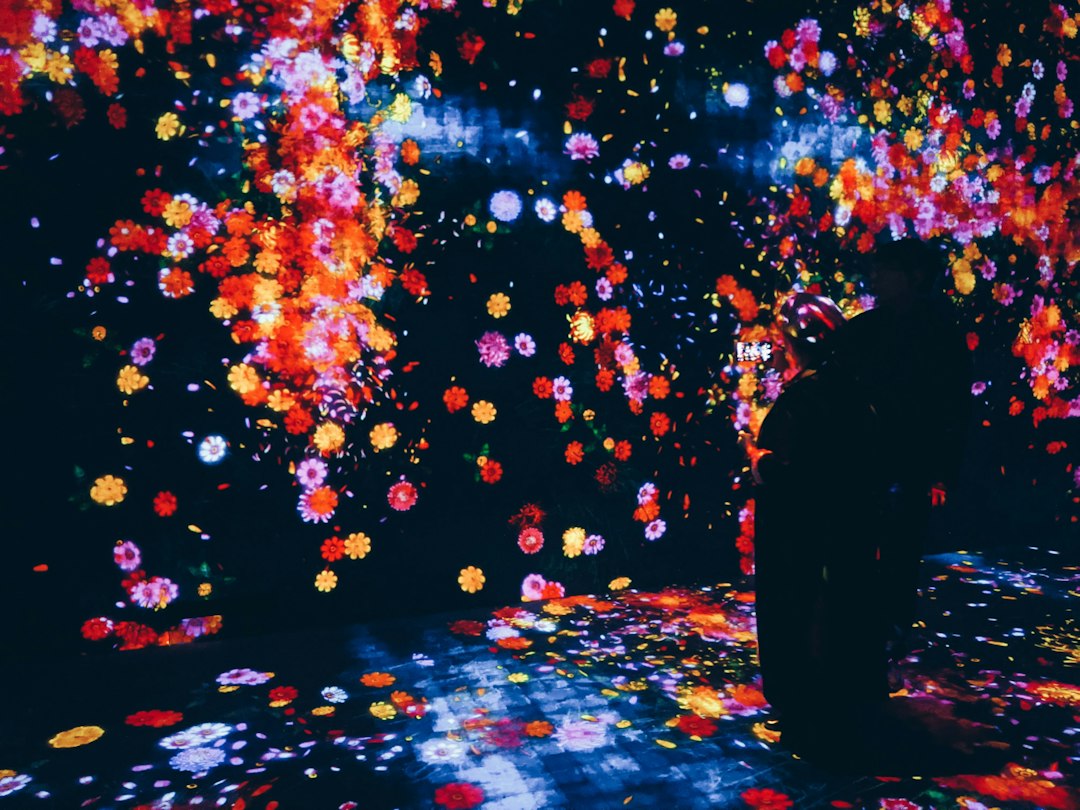
What to Bring
- Mirrorless or DSLR with a fast prime lens: A 24mm or 35mm f/1.8 is ideal. You need that aperture in the dark rooms.
- Compact gorilla pod or tabletop tripod: Full-size tripods are generally not permitted, but small stabilizers are usually fine. Confirm on arrival.
- Extra batteries and memory cards: You will shoot more here than anywhere else in Tokyo. Guaranteed.
- Wear dark, muted clothing: Not for stealth — for cleaner compositions. Bright clothing reflects light and becomes a distraction in reflective rooms.
- Comfortable socks with good grip: You will remove your shoes in several zones. Non-slip socks are sold at the entrance if you forget.
Phone Photographers
Don’t count yourself out. The iPhone 15 Pro and recent Android flagships produce genuinely stunning results here if you use Night Mode and keep your hands steady. Portrait Mode creates dreamy bokeh against the lamp forests. The museum is also aggressively Instagram-friendly — they want these images circulating.
Getting There: Azabudai Hills Access
The new TeamLab Borderless sits inside Azabudai Hills, one of Tokyo’s most ambitious recent developments in Minato Ward. The easiest access:
– Metro: Kamiyacho Station (Hibiya Line) — 5-minute walk
– Metro: Roppongi-Itchome Station (Namboku Line) — 8-minute walk
– From Shinjuku or Shibuya: Budget 25–35 minutes by metro
Azabudai Hills itself is worth arriving 30 minutes early to explore — the complex has excellent coffee shops and a Whole Foods-style market where you can grab food before your session.
Final Thoughts: Is It Worth It for Photographers?
Absolutely, unreservedly, yes. TeamLab Borderless is not a museum you visit once and check off a list. It is a place you return to across seasons, across moods, across different lenses and different light. The art changes continuously. You change continuously. Book your timed entry well in advance, arrive at opening, wear your dark layers, charge your batteries, and then — for at least a few minutes in every room — put the camera down and let the light find you.
Ready to experience it?
🗾 Book on Viator: Explore teamLab Borderless with Private →Plan your trip: Where to Stay in Tokyo · Tokyo Itinerary: 3, 5 and 7 Days · teamLab Planets tickets