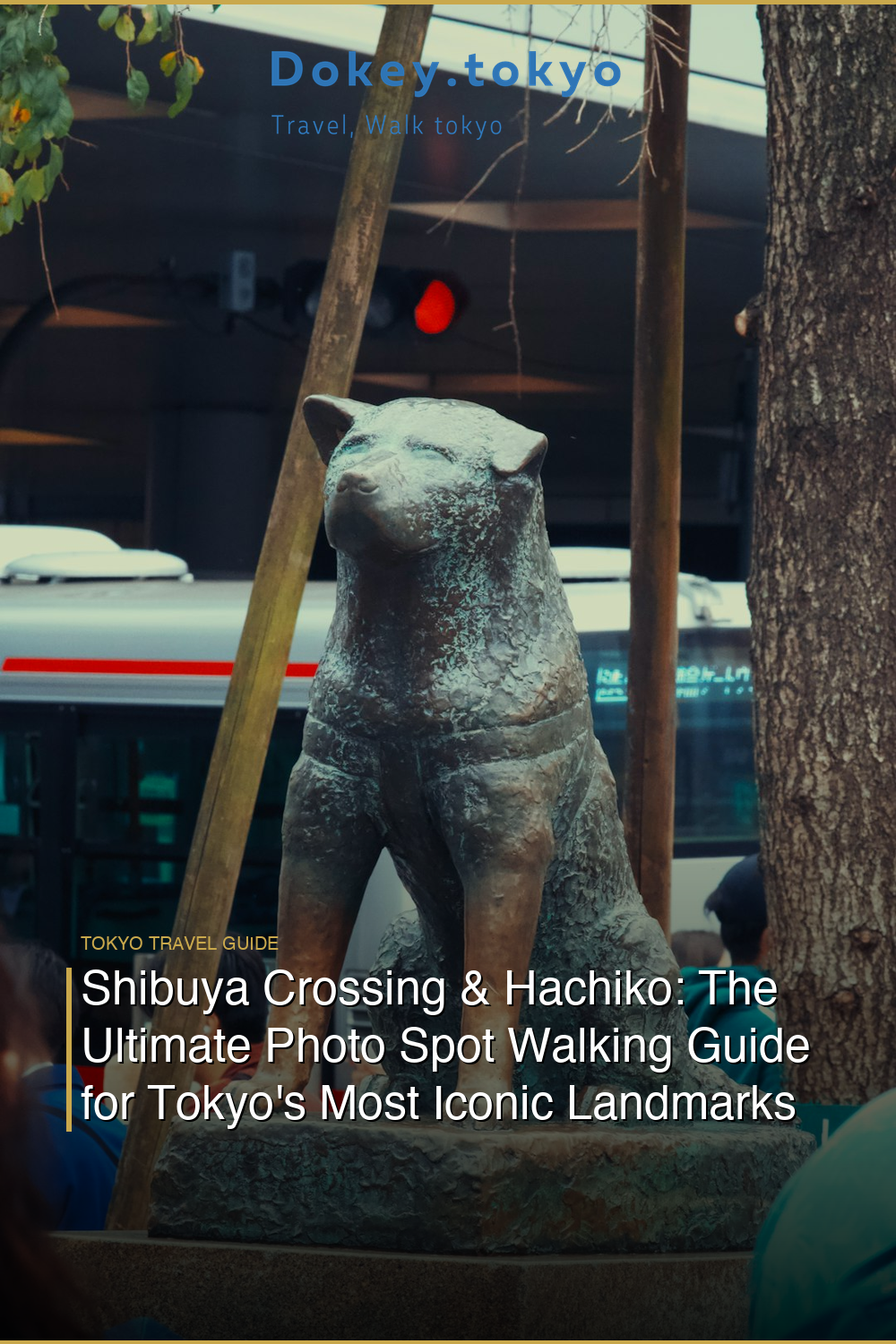
Shibuya Crossing & Hachiko: The Ultimate Photo Spot Walking Guide
Imagine standing at the center of the world’s most famous intersection as hundreds — sometimes thousands — of people surge past you from every direction, a choreographed urban ballet that somehow never results in collision. Then picture turning to meet the bronze gaze of the most loyal dog in history, his eyes forever fixed on the station exit where he waited for a master who never returned. Welcome to Shibuya, Tokyo’s beating heart, where modern Japan and timeless loyalty exist side by side on a single city block.
Whether you’re wielding a mirrorless camera, a vintage film SLR, or just your smartphone, Shibuya Crossing and the Hachiko statue offer some of the most compelling photo opportunities on the planet. This complete walking guide will take you to every essential shot, reveal hidden vantage points the crowds miss, and give you the cultural context to truly appreciate what you’re capturing.
Understanding Shibuya: More Than Just a Crosswalk
Shibuya is one of Tokyo’s most vibrant commercial and entertainment districts, drawing over 3.5 million visitors daily. But it’s the famous Shibuya Scramble Crossing — known in Japanese as Shibuya sukuranburu kōsaten — that has turned this neighborhood into a global icon. Positioned directly in front of Shibuya Station’s Hachiko Exit, the crossing operates on an all-way pedestrian phase, halting traffic in all directions and releasing a human flood that has appeared in countless films, music videos, and travel documentaries.
Understanding the crossing’s rhythm is your first step toward great photography. The pedestrian phase lasts roughly 70 seconds, after which vehicles reclaim the intersection for about 30 to 40 seconds. Study this cycle before you shoot, and you’ll know exactly when to press the shutter.
The Hachiko Statue: Where Every Tokyo Journey Begins
🎫 Hachiko statue walking tour experience →
The Story Behind the Bronze Dog
Before you reach for your camera, take a moment to understand why Hachiko matters. Akita dog Hachikō accompanied his owner, Professor Hidesaburō Ueno, to Shibuya Station every morning and waited faithfully for his return each evening. When the professor died suddenly of a stroke in 1925, Hachiko continued returning to the station every single day for nearly ten years until his own death in 1935. The story became a national symbol of loyalty, and the bronze statue erected in his honor has been a beloved meeting point ever since.
Best Photo Angles for the Hachiko Statue
The Hachiko statue sits in a small plaza just outside the Hachiko Exit of Shibuya Station, and photographing it well requires patience and positioning.
-
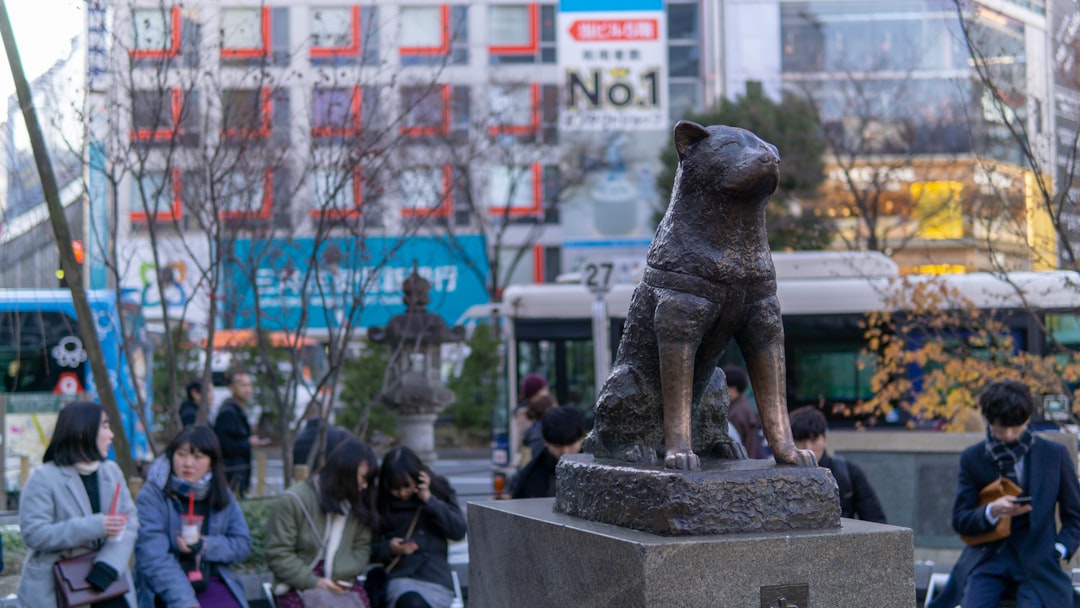
The Classic Portrait Shot: Stand directly in front of Hachiko at ground level, using a 50mm equivalent focal length to capture the statue against the colorful backdrop of Shibuya’s neon-lit buildings. Shoot during the blue hour (just after sunset) when the sky turns a deep indigo and the city lights warm the bronze.
-
The Low Angle Hero Shot: Crouch down to ground level and shoot upward, letting Hachiko loom large against the sky. This perspective gives the statue a dignified, monumental quality that does justice to his legendary status.
-
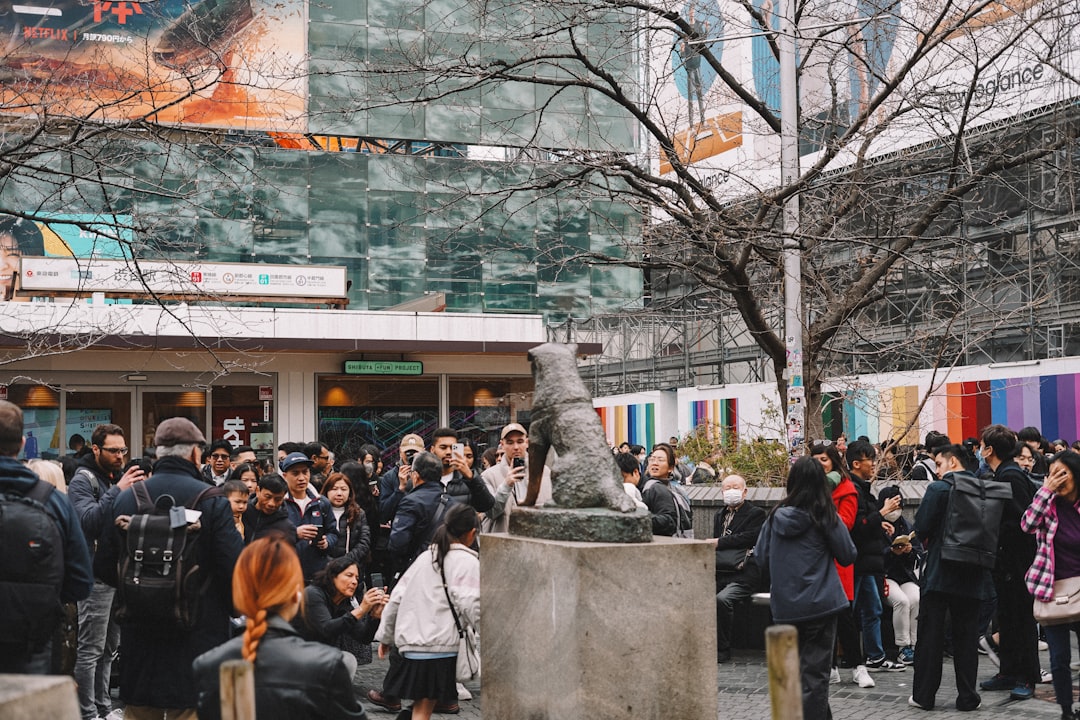
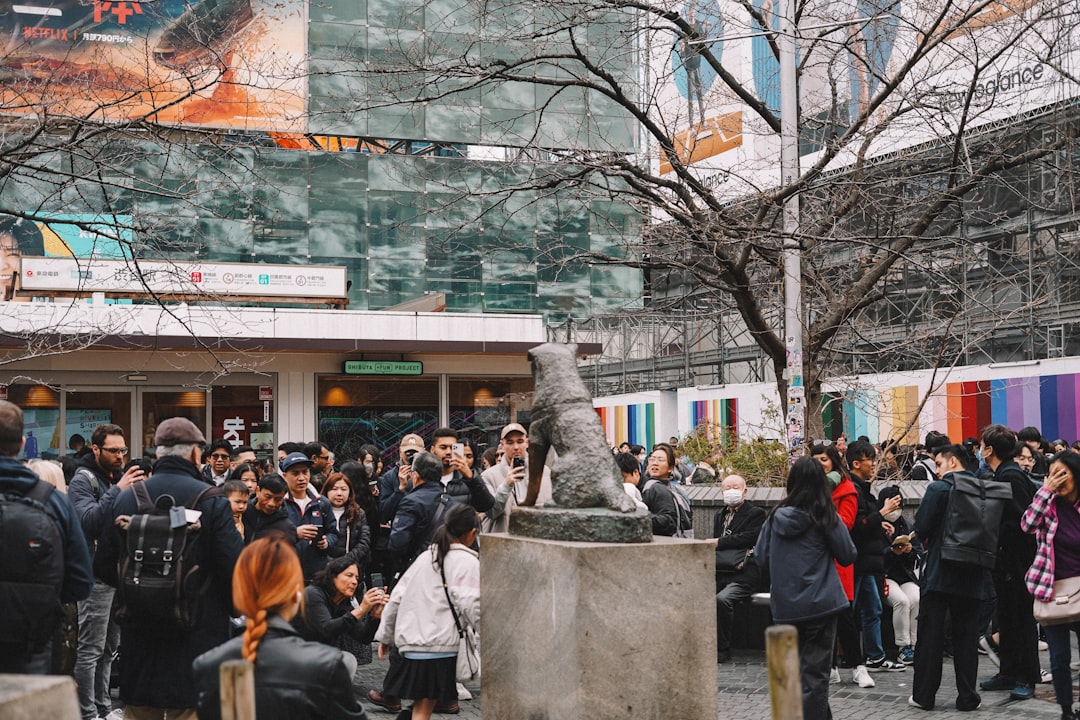
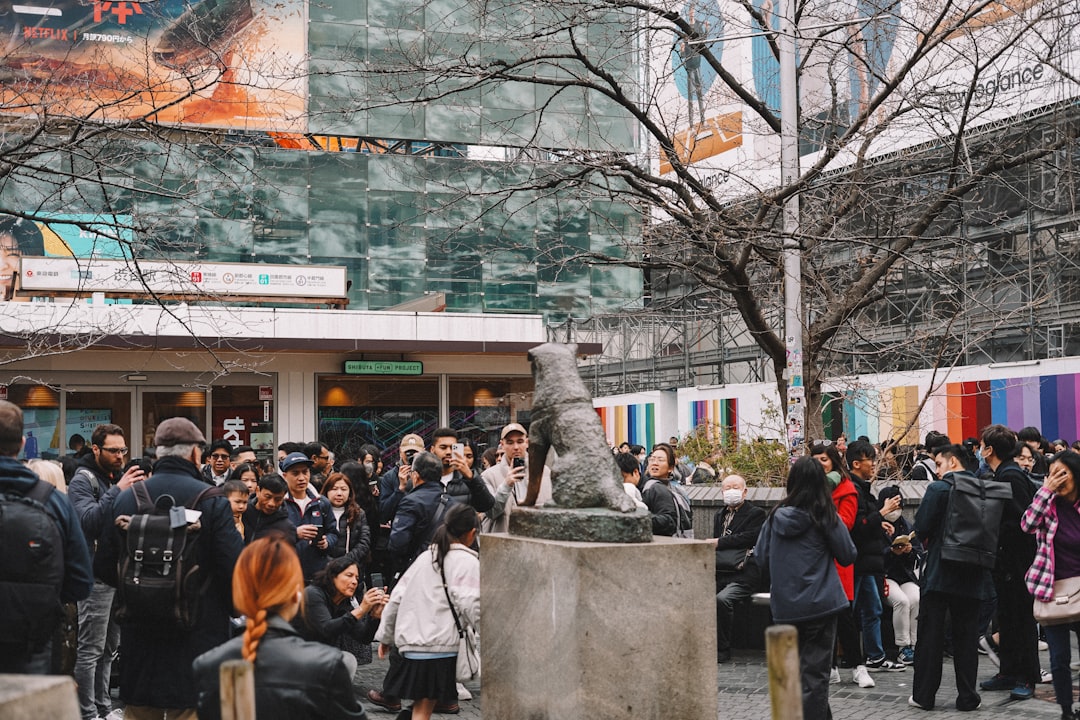
The Crowd Context Shot: Step back to the edge of the plaza and use a wide-angle lens to include both the statue and the swirling crowd around it. This contrast between the still, patient bronze dog and the rushing human world around him tells the complete emotional story of Hachiko’s vigil.
Pro Tip: Visit between 6:00–7:00 AM on weekday mornings to photograph Hachiko without the typical crowd of selfie-takers. The early light is beautiful, and you may have the statue almost entirely to yourself.
Shibuya Crossing Photo Spots: Every Angle Covered
🎫 Shibuya Crossing guided photo tour →
🎫 Tokyo iconic landmarks photography guide →
Ground Level: In the Eye of the Storm
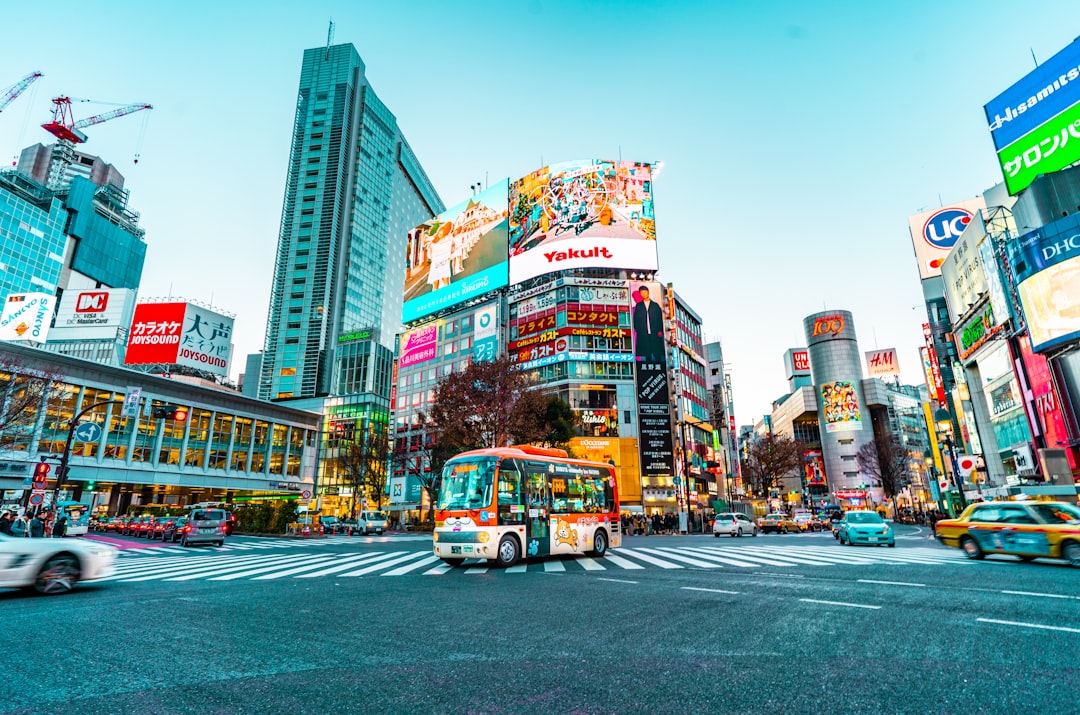
The most exhilarating way to experience and photograph Shibuya Crossing is from ground level — standing right in the middle of it as the pedestrian phase begins. Set your camera to burst mode, use a slightly slow shutter speed (around 1/60s) to capture motion blur in the moving crowd while keeping your foreground subjects sharp, and let the chaos unfold around you.
For street photography purists, position yourself toward the center of the crossing as pedestrians approach from multiple directions. A wide-angle lens (16–24mm) will capture the scale; a standard lens (35–50mm) will give you more intimate human moments.
Elevated Vantage Points: The Iconic Aerial Shot
The bird’s-eye view of Shibuya Crossing is the image that defined the intersection’s global reputation, and there are several ways to achieve it:
Mag’s Park / Shibuya Sky (Scramble Square)
The rooftop observation deck of Shibuya Scramble Square, known as Shibuya Sky, offers the most spectacular elevated perspective of the crossing. At 229 meters above ground, you can see the entire intersection, the surrounding cityscape, and on clear days, Mount Fuji. This is your absolute best bet for the classic drone-style crossing shot without actually needing a drone. Book tickets in advance — they sell out, especially on weekends. If you’re interested in exploring more of Tokyo’s panoramic views and night experiences, Tokyo Bay night cruises offer another perspective of the city’s glittering landscape.
Mag’s Park (SHIBUYA109 Rooftop Area)
The rooftop terrace of SHIBUYA109 offers a slightly lower but still excellent overhead angle of the crossing, often with less crowd than Shibuya Sky. It’s a fantastic option for golden hour shooting when the setting sun paints the streets in amber.
Starbucks Reserve Roastery / L’Occitane Café
The second-floor window seats at the Starbucks directly overlooking the crossing are legendary among travel photographers. Arrive 30 minutes before opening to queue for a window seat — they go fast. Order a coffee, settle in, and enjoy the world’s most cinematic view with a latte in hand.
Local Culture: Reading the Rhythms of Shibuya
🗾 Official Street Go-Kart in Shibuya →
🗾 Shibuya Annex Go-Kart Experience →
Shibuya is a district of constant evolution and fascinating subcultures. Beyond the crossing, the surrounding streets are worth exploring for cultural context that will enrich your photography.
Center-gai (Center Street): This pedestrian shopping street running perpendicular to the crossing is alive with Tokyo’s youth fashion, street food vendors, and the kind of spontaneous street life that makes urban photography endlessly rewarding. Look for fashion-forward locals, quirky storefronts, and the interplay of traditional and hyper-modern aesthetics.
Dōgenzaka and Nonbei Yokochō: Duck into the narrow alleyways of Nonbei Yokochō (“Drunkard’s Alley”) for an atmosphere completely at odds with the digital billboard world outside. This intimate lane of tiny bars and izakayas glowing with warm lantern light offers some of Shibuya’s most atmospheric after-dark photography. For similar explorations of Tokyo’s historic neighborhoods, consider visiting Asakusa or Yanaka Old Town, which offer their own unique cultural atmospheres and photographic opportunities.
Food & Drink: Fueling Your Photo Walk
No walking guide is complete without sustenance recommendations. Shibuya is a food lover’s paradise with options at every price point.
- Breakfast: Grab a freshly baked melon pan from a street bakery near the station and eat it while watching the morning crossing come alive.
- Lunch: The basement food halls (depachika) of Hikarie or Scramble Square offer beautifully presented bento boxes, fresh sushi, and Japanese sweets that are as photogenic as they are delicious. If you want to dive deeper into Tokyo’s food culture, Tsukiji Outer Market is a must-visit for food photography and authentic street food.
- Coffee: Beyond the famous Starbucks window seat, try About Life Coffee Brewers on Dōgenzaka for exceptional specialty coffee in a tiny, atmospheric space.
- Dinner: End your day at one of the izakayas along Nonbei Yokochō. Order yakitori skewers and Japanese whisky highballs, and let the neighborhood’s warm, convivial spirit wash over you.
Best Time to Visit Shibuya Crossing
For Photography:
– Golden Hour (just after sunrise or before sunset): The warm directional light enhances the crossing’s visual drama and gives your images a cinematic quality.
– Blue Hour (20–40 minutes after sunset): The deep blue sky balances perfectly with the neon and LED signage, creating the electric, dreamlike aesthetic Shibuya is famous for.
– Rainy Evenings: Rain transforms Shibuya into a mirror world of reflected neon on wet pavement — arguably the most beautiful condition of all.
For Experience:
– Peak Crowds: Friday and Saturday evenings (6–9 PM) offer the maximum crowd density and the full sensory impact of the crossing.
– Quiet Exploration: Early weekday mornings (before 8 AM) let you see Shibuya in a calmer, more contemplative state.
Seasonal Highlights:
– Spring (March–April): Cherry blossoms in nearby Yoyogi Park create beautiful contrasts with the urban landscape.
– Autumn (October–November): Crisp air, golden foliage, and comfortable temperatures make this arguably the finest season for a Shibuya photo walk.
– Christmas Season (December): The district transforms into a wonderland of illuminations and festive energy.
Practical Tips for Your Shibuya Photo Walk
🗾 Official Street Go-Kart in Shibuya →
🗾 Shibuya Annex Go-Kart Experience →
- Get There Early: Shibuya Crossing is busy 24/7, but pre-dawn hours offer magical emptiness that serious photographers treasure.
- Respect Local Etiquette: Don’t stop in the middle of the crossing to take photos during busy hours — keep moving with the crowd.
- Bring Extra Memory Cards and Batteries: You will shoot more frames here than almost anywhere else in Tokyo.
- Use a VPN and Pocket WiFi: Essential for navigating, uploading, and staying connected throughout the day.
- Plan Your Route: Combine your Shibuya visit with nearby Harajuku, Omotesandō, or Yoyogi Park for a full day of diverse Tokyo photography. If you’re extending your Tokyo trip, consider day trips to Kamakura or even Mount Fuji and Hakone for varied landscapes and cultural experiences.
Your Shibuya Story Awaits
Shibuya Crossing and the Hachiko statue are not merely tourist attractions — they are living symbols of everything that makes Tokyo extraordinary: the breathtaking scale of human activity, the quiet persistence of devotion, the marriage of tradition and relentless modernity. Every photograph you take here captures a moment in an ongoing story that has been unfolding for decades.
So charge your batteries, clear your memory cards, and set your alarm for sunrise. Shibuya is waiting — and whether you stand in the center of the crossing as a thousand strangers flow past you like a river, or you crouch down to meet Hachiko’s patient bronze eyes in the morning stillness, you will leave with images and memories that last a lifetime.
Tokyo doesn’t just invite you to visit — it dares you to return. And you will.
Book Tours & Activities
🗾 Official Street Go-Kart in Shibuya →