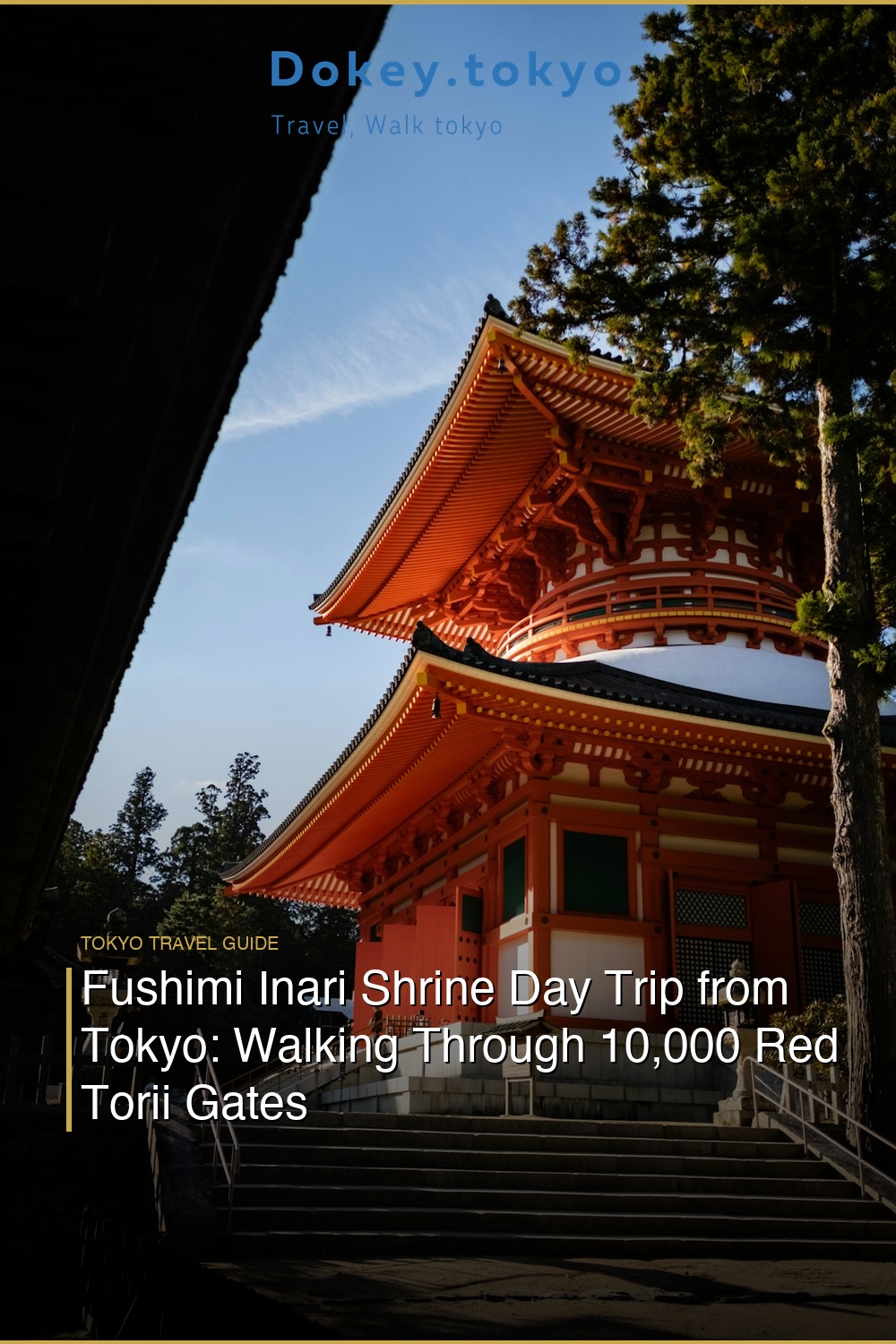
There are places in the world that look exactly like their photographs, and then there are places that make every photograph you’ve ever seen feel like a lie — because nothing prepares you for the real thing. Fushimi Inari Shrine is the second kind. The ten thousand vermillion torii gates spiraling up Mount Inari outside Kyoto are one of the most photographed subjects in all of Japan, which means every photographer who visits faces the same beautiful, maddening challenge: how do you make your shot feel like yours? I’ve been obsessed with answering that question across four separate visits, and I’m ready to hand you everything I’ve learned.
The first time I stepped through the senbon torii — the famous tunnel of closely packed gates near the shrine’s base — it was 6:15 in the morning in late October, and the air smelled like incense smoke and damp cedar. The light came through the gaps between the gates in thin amber blades, and the only sounds were my own footsteps and the distant clapping of a woman in a gray coat praying at a small stone fox altar. I stood there for a full three minutes without raising my camera, just breathing it in.
Why Fushimi Inari Is a Photographer’s Dream (and Nightmare)
Let’s be honest with each other: Fushimi Inari is relentlessly popular. By 9 a.m. on any weekend, the lower torii tunnels near the main gate are wall-to-wall tourists. Getting that clean, people-free shot of an infinite red corridor requires strategy, not luck. The good news? The mountain is open 24 hours, the full trail is about 4 kilometers to the summit and back, and most visitors never make it past the first 20 minutes of walking. That means the upper mountain is yours — quieter, wilder, and just as beautiful.
The Best Times to Shoot
Before 7 a.m. is the golden standard. Arrive at Fushimi Inari Station on the JR Nara Line before sunrise and you will find the lower gates nearly empty. The light quality in the first hour after dawn is extraordinary — soft, directional, painting the orange-red lacquer in shades that feel almost supernatural. Bring a tripod if you want long exposures of the gate tunnels fading into darkness. A 24-70mm lens covers most situations, but a 50mm prime gives you that compressed, gates-stretching-to-infinity compression that looks electric.
Blue hour (just before sunrise) is underrated for this location. At around 5:30 a.m. in summer or 6:00 a.m. in autumn, the sky behind the main shrine building turns a deep indigo while the lanterns glow warm amber. That color contrast is genuinely stunning and almost impossible to get mid-morning.
Weekday afternoons in light rain are a hidden gift. The vermillion gates deepen in color when wet, puddles create mirror reflections on the stone path, and most fair-weather tourists stay away. Pack your rain cover and go.
Getting There from Tokyo: The Shinkansen Play
For a day trip, the Tokaido Shinkansen from Tokyo Station to Kyoto Station is your weapon of choice. The Nozomi takes about 2 hours and 15 minutes; if you have a JR Pass you’ll need to take the Hikari (about 2 hours 40 minutes), which is still perfectly fine. I usually board the 6:00 a.m. or 6:30 a.m. Hikari from Tokyo, arriving in Kyoto just before 9:00 a.m. — but for a proper early-morning shoot, I actually recommend arriving the night before and staying in a budget guesthouse near Kyoto Station. That 5:45 a.m. start at the shrine is transformative.
From Kyoto Station, take the JR Nara Line (about 5 minutes, 150 yen) to Fushimi Inari Station. The shrine’s iconic main gate is literally a 2-minute walk from the station exit. Simple, fast, no stress.
IC Card vs. JR Pass: What Actually Makes Sense
If you’re doing this purely as a day trip from Tokyo, a round-trip Shinkansen ticket costs around ¥27,000–¥28,000. The JR Pass (7-day) costs around ¥50,000. Run the math based on your itinerary. For photographers who are making Kyoto a base and doing multiple day trips, the pass pays off. For a single day trip, the IC card or a direct ticket purchase is usually smarter.
The Trail for Photographers: Where to Stop and Why
Section 1: The Senbon Torii (Lower Gates)
This is the postcard shot — two parallel tunnels of densely packed gates running uphill from the main shrine plaza. Here’s the composition trick most people miss: crouch low and angle your camera slightly upward. The gates create a converging perspective that adds massive depth. Shoot in portrait orientation for dramatic verticals. Shoot in landscape for that tunnel-vision corridor feel. Both work. Do both.
Section 2: Yotsutsuji Intersection (About 30–40 Minutes Up)
This is where the trail splits and where you’ll find the first major viewpoint overlooking Kyoto city. At dawn or dusk, the city spread below you catches the light beautifully. This is also roughly where the tourist crowds thin out dramatically — most people turn back here. Don’t. Keep going.
On my third visit, I got chatting with an older man named Tanaka-san who’d been hiking the full mountain trail every single morning for eleven years. He pointed me toward a small sub-shrine about 10 minutes past Yotsutsuji that sits in a grove of moss-covered stone foxes (kitsune) — completely off the main path, virtually never photographed. The foxes were draped in tiny red bibs, some leaning at angles from decades of rain, and the light filtering through the cedar canopy made it feel like stumbling into another century.
Section 3: The Upper Mountain
The upper trail beyond Yotsutsuji winds through dense forest with older, more weathered gates — some faded to a pinkish-orange, some with kanji inscriptions worn almost smooth. These imperfect gates photograph beautifully against the green moss and grey stone. The summit offers limited views but intense atmosphere. Plan at least 1.5 hours for the full round trip from the base if you’re stopping to shoot.
Food for Photographers Who Don’t Want to Waste Golden Hour
The row of food stalls along the main approach (omotesando) opens around 8–9 a.m. and sells suzume (grilled sparrows on skewers) and inari-zushi (sweet tofu pockets filled with rice, named after the Inari deity). The inari-zushi from the stall closest to the JR station — run by a small woman who seems to have been there since the shrine was founded — is genuinely one of the best things I’ve eaten in Japan: chewy, slightly sweet, sesame-flecked, and eaten standing up at 7 a.m. while your hands are still cold. Don’t leave without eating at least two.
For lunch after your shoot, head back toward Kyoto Station and walk 10 minutes to Kyoto Ramen Koji on the 10th floor of the station building. It’s touristy, yes, but the Kyoto tori paitan ramen (rich white chicken broth) is warming, fast, and gives you fuel for the Shinkansen ride home.
Practical Photo Gear Tips for This Location
- Tripod: Bring a compact travel tripod for the early-morning tunnel shots. The light is low and you’ll want long exposures.
- Lens selection: 24mm–70mm covers everything. A 16mm or 14mm ultra-wide makes the gate corridors feel surreal.
- Extra batteries: Cold mornings drain batteries faster. Bring two.
- Bag: Keep your kit lightweight. You’re hiking a mountain.
- Neutral density filters: Optional but useful for silky long exposures on stone paths after rain.
The Moment I Keep Coming Back For
Just before I left on my last visit, I sat down on a stone step about halfway up the mountain, somewhere between the famous tunnels and the Yotsutsuji viewpoint, in a section of older gates where the morning light came through at a low angle and turned everything the color of honey and rust. A woman in a deep blue kimono walked slowly through the gates about thirty meters ahead of me, pausing at each one to read the inscriptions. I didn’t photograph her — it felt wrong to — but I watched her until she disappeared around a bend, and I thought: this is what all those photographs on Instagram can’t show you. The slowness of it. The way a sacred place makes you slow down too, whether you mean to or not.
One Last Piece of Advice Before You Book
Fushimi Inari as a day trip from Tokyo is absolutely doable and absolutely worth doing, but go early, go on a weekday if you can, and don’t rush back. The mountain rewards patience in a way that perfectly mirrors photography itself: slow down, pay attention, and the light will eventually do something that takes your breath away. Book that 6 a.m. Shinkansen, pack your tripod, and eat the inari-zushi while it’s still warm. You’ll thank me later.