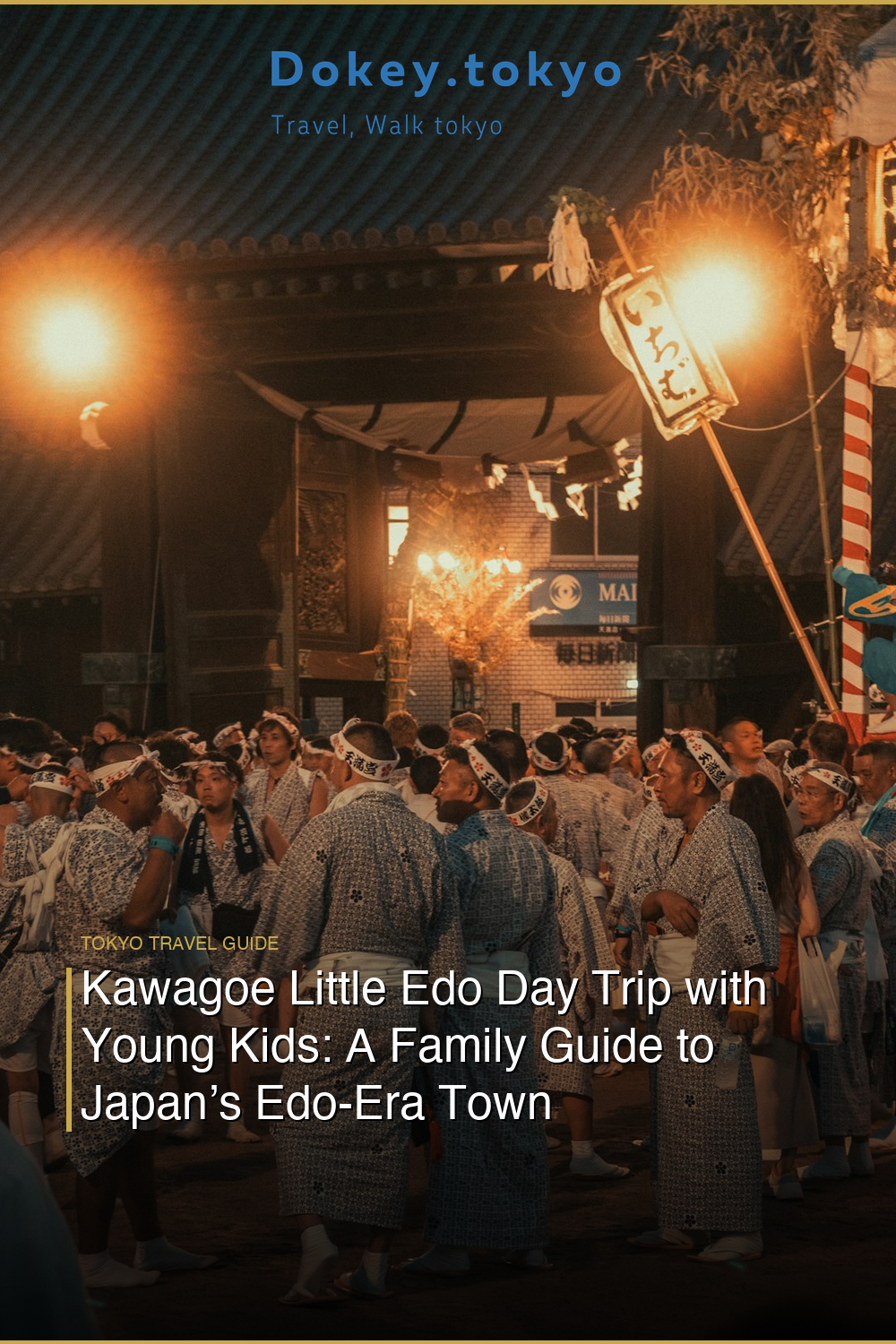
If you’ve ever tried to explain the Edo period to a four-year-old while simultaneously preventing them from licking a temple pillar, you already understand the particular chaos and magic of traveling Japan with small children. Kawagoe — nicknamed “Little Edo” for its beautifully preserved merchant townhouses — might not be the first place that pops into your head for a family day trip. But I’m here to tell you it absolutely should be. This compact, walkable historic town sits just 30–40 minutes from Ikebukuro by express train, it’s stuffed with interactive snacks, dramatic bell towers, and enough visual stimulation to keep even the wiggliest toddler wide-eyed for hours.
The first time I stepped off the Tobu Tojo Line at Kawagoe Station with my then-three-year-old niece on my hip, the smell hit me before anything else — sweet potato, caramel, and something faintly smoky from a nearby street grill. She immediately pointed and said “cookie?” in the most hopeful voice, and honestly, I had no argument. The morning light was soft and golden, falling across the clay-walled kura storehouses in that particular way that makes you reach for your camera before you’ve even oriented yourself on the map.
Getting There Without Losing Your Mind (or Your Kid)
The logistics of any day trip with young children are everything, so let’s start here. From Ikebukuro Station, the Tobu Tojo Line Express gets you to Kawagoe Station in about 30 minutes for roughly ¥480 per adult — kids under 12 ride at half price, and children under 6 are free. This is a huge win for family budgets.
Once you arrive, the main historic district (Hon-Machi) is about a 15-minute walk from Kawagoe Station, or a short bus ride if little legs are already protesting. I strongly recommend the Koedo Loop Bus (¥200 per adult, free for young kids with a paying adult on some routes — always confirm at the tourist info desk inside the station). It runs frequently and stops right at the major attractions, which means you have a built-in escape hatch if someone has a meltdown halfway through the day.
Stroller Realities
Kawagoe’s main Kurazukuri Street is flat and paved — excellent stroller territory. However, some of the smaller shrine paths and temple grounds have gravel or uneven stone steps, so a lightweight, foldable stroller is far preferable to a bulky travel system. Baby carriers are equally useful for the moments you want to duck into a narrow shop.
The Kurazukuri District: Where Kids Actually Pay Attention
The iconic kura (storehouse) buildings along Kurazukuri Street look like something out of a Studio Ghibli film — dark clay walls, swooping tiled roofs, wooden lattice windows. For adults, it’s architectural history. For kids, it’s a movie set, and that framing works beautifully.
Point out the thick earthen walls and tell your kids these buildings were built specifically so they wouldn’t catch fire (Kawagoe suffered a catastrophic fire in 1893 and rebuilt in fireproof style). My niece became obsessed with the idea of a “fire-proof house” and spent the rest of the day telling every building it was “not fireproof enough.” Small wins.
The Toki no Kane (Bell Tower) is a must-stop and genuinely thrilling for young children — it’s a tall, narrow wooden tower that rings four times a day (6am, noon, 3pm, and 6pm). If you time your visit so you’re standing beneath it at noon or 3pm, the deep, resonant gong reverberating through that narrow street is the kind of sensory memory that sticks with kids for years. Check the time before you leave home and plan around it.
菓子屋横丁 (Kashiya Yokocho): Candy Lane Is Exactly What It Sounds Like
If you do nothing else in Kawagoe with young kids, you must walk down Kashiya Yokocho — Candy Alley. This short, atmospheric lane has been selling traditional Japanese sweets and candies since the Meiji era, and it is absolute paradise for children aged 2 to 102.
The stalls overflow with colorful ramune candy, tiny senbei (rice crackers), chocolate-covered kinako treats, and the famous imo (sweet potato) snacks that Kawagoe is renowned for — sweet potato chips, sweet potato soft serve, sweet potato yokan, sweet potato caramel. It sounds excessive until you taste the soft serve, at which point you’ll understand why the entire town smells like a warm dessert.
Prices here are wonderfully affordable — most candies run between ¥50 and ¥200 — so you can let your kids pick a few things without any wallet trauma. I let my niece choose her own snacks completely independently the first time we visited, and watching her carefully deliberate over a row of tiny sugar-coated plums with the seriousness of a world leader negotiating a treaty remains one of my favorite travel memories.
One unexpected discovery I made on my second visit: the elderly woman running the tiny corner stall at the far end of the alley sells home-made imo-yokan (sweet potato jelly) that isn’t listed on any tourist map or food blog I’ve ever found. She pressed a small sample into my hand without a word, and it was silkier and less sweet than anything I’d bought on the main strip. If you see a small hand-lettered sign and a white-haired woman with a warm smile, stop there first.
Kitain Temple: Space to Run and Something Beautiful to See
Kitain Temple is about a 10-minute walk from the historic district and is one of my top recommendations specifically for families with young children, for one simple reason: space. After the narrow lanes of Kurazukuri Street, the temple grounds open up into wide graveled courtyards and soft grassy patches where kids can actually breathe, run, and decompress.
The temple itself dates to the 9th century and contains structures relocated directly from Edo Castle — the only remaining Edo Castle buildings in existence. The Gohyaku Rakan (500 Arhats) stone figures that line the grounds are endlessly fascinating for curious children. Each figure has a unique expression — laughing, stern, surprised, sleepy — and kids love running from statue to statue trying to find their favorites or match expressions.
Admission is ¥400 for adults; children under elementary school age are typically free. There are clean restrooms near the entrance, which after a morning of snacks and exploration is information worth its weight in gold.
Nap Strategy
If your toddler is still napping, the 20-minute Koedo Loop Bus ride between the temple and the historic district is a genuinely useful sleep window. The gentle rocking, the post-snack fullness, and the slight coolness of an air-conditioned bus conspire reliably in your favor.
Eating Lunch With Kids in Kawagoe
For a sit-down lunch, look for restaurants along the side streets off Kurazukuri Street rather than the main strip, where tourist prices creep up. Unaju (grilled eel over rice) is a Kawagoe specialty worth trying if your kids are adventurous eaters. For picky eaters, udon and soba shops are abundant, and most places have plastic food displays outside so kids can point at what they want even without shared language.
Many restaurants have low tables or floor seating that works naturally for small children. Don’t hesitate to ask for o-hashi-no-ko (children’s chopsticks) or a spoon — staff are unfailingly patient and kind toward families.
Best Time to Visit With Young Kids
Spring (late March to early May) and autumn (October to November) are the sweet spots — mild temperatures mean less risk of toddler overheating or meltdowns driven purely by summer humidity. Avoid Kawagoe during Golden Week (late April to early May) unless you enjoy crowds that would stress even the most zen parent. Weekday mornings are magically quiet; the tour groups tend to arrive after 10:30am.
As the afternoon stretched toward 4pm on my most recent visit, the light turned amber and low across the kura rooftops, and my niece — by then thoroughly sticky with sweet potato ice cream and clutching a paper bag of ramune candy — stopped in the middle of the street, looked up at the Toki no Kane, and whispered “it looks like it’s made of honey.” I didn’t have a better description of Kawagoe at golden hour if I tried for a week.
Final Tips Before You Pack the Diaper Bag
- Arrive early (aim for the district by 9:30am) before tour groups descend
- Bring a carrier for narrow shops and tired legs after lunch
- Download the Kawagoe tourist map PDF — the tourist info desk at the station also has excellent English maps with restroom locations marked
- Budget roughly ¥3,000–¥5,000 per adult for transport, entry fees, snacks, and lunch — kids cost very little
- The 7-Eleven near Kawagoe Station stocks formula, baby food pouches, and nappies if you run out
Kawagoe isn’t just manageable with young kids — it might honestly be one of the most joyful day trips you’ll take from Tokyo precisely because of them. Children don’t need to understand the Edo period to feel the magic of a street that looks like it swallowed time whole. They just need candy, space to run, and a bell that rings loud enough to feel in your chest. Kawagoe delivers all three.