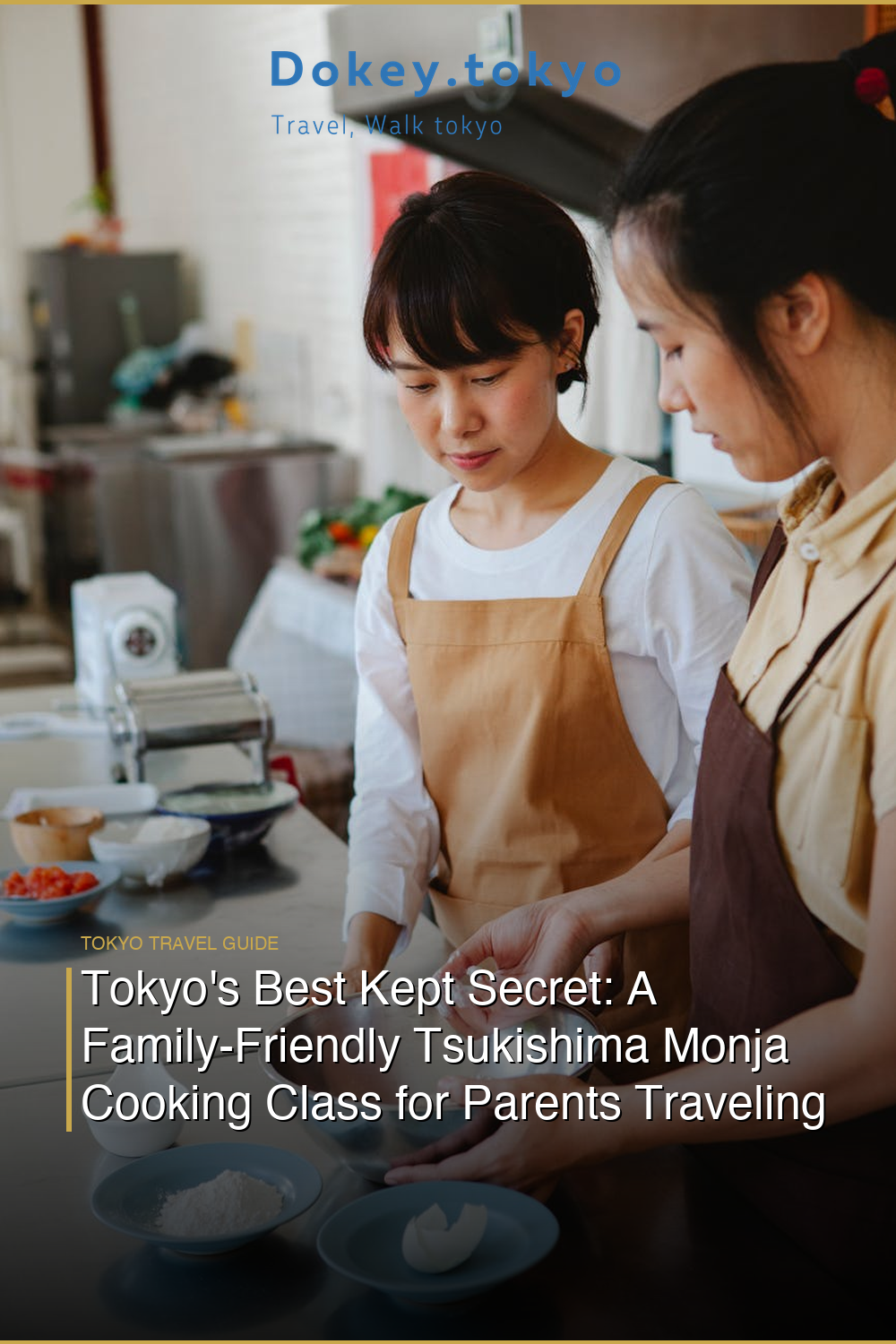
There’s a moment in every family trip when the sightseeing stops feeling magical and starts feeling like a forced march through someone else’s bucket list. The kids are tired, you’re sweaty, and nobody wants to queue for another temple. That moment never happened for us in Tsukishima — because we were too busy hunched over a smoking iron griddle, laughing at my seven-year-old’s first (very lopsided) monja pancake and arguing over who got to pour the dashi broth.
I still remember stepping out of Tsukishima Station on a warm Tuesday morning, the smell hitting us before we’d even reached street level — something rich and savory, like soy sauce and toasted flour and the faint ghost of the sea. My daughter grabbed my hand and said, ‘It smells like breakfast but fancier.’ She wasn’t wrong. The covered shopping street, Monja Street (西仲通り商店街), stretched out ahead of us, narrow and buzzing with the soft hiss of griddles warming up inside every restaurant, the kind of sound that tells your stomach it’s about to have a very good day.
Why Tsukishima Is the Perfect Family Food Destination in Tokyo
Tsukishima is a low-key neighborhood on a small island in the Sumida River, just a few stops from Ginza or Tsukiji on the Tokyo Metro Oedo Line. While tourists flood Shibuya and Asakusa, this place stays refreshingly local — older residents doing their morning shopping, kids on bicycles, restaurant owners hosing down the pavement outside their shops. For families, that calm energy is a gift. There’s no overwhelming crowd to lose a child in, no noise so loud you can’t hear yourself think.
Monjayaki (もんじゃ焼き) is Tokyo’s answer to Osaka’s okonomiyaki — but runnier, weirder-looking, and honestly more fun to cook. You mix flour, dashi broth, shredded cabbage, and various toppings, pour the whole liquidy mess onto a hot iron plate, and use tiny metal spatulas to scrape and shape it into a crispy, chewy, savory pancake. It looks like a disaster and tastes like comfort food. Kids absolutely love it, partly because making it correctly requires making a small, controlled mess — and children are genetically engineered to enjoy that.
What to Expect at a Monja Cooking Class in Tsukishima
The Class Format
Several restaurants on Monja Street offer structured cooking classes in English, typically running 60 to 90 minutes. The format is relaxed and interactive — nothing like a formal cooking school. Think of it as a guided lunch where a cheerful local instructor stands beside your table and walks your family through every step: mixing the batter, building the ‘dam’ of ingredients on the griddle, breaking it open to let the liquid flow in, and mastering the tiny spatula technique that transforms the gooey pool into something golden and crisp-edged.
Most classes accommodate children as young as five, though the instructor will handle anything involving direct flame setup. My kids — seven and ten at the time — were given their own spatulas immediately and treated like full participants, not just passengers along for the adult experience. That detail mattered more than I expected. My son stood up straighter the moment someone handed him a real kitchen tool and told him he was in charge of a section of the griddle.
What You’ll Cook
A typical family class covers two or three varieties of monjayaki. The classic Tokyo-style monja usually includes cabbage, dried shrimp (sakura ebi), and tenkasu (tempura flakes), with the option of adding mochi, cheese, or kimchi. Many classes also include a round of okonomiyaki so kids can compare the two styles — and let me tell you, the debate over which one tastes better will last the entire train ride home.
One instructor I met — a wonderfully patient woman named Keiko-san who’d been running classes for over a decade — told me the secret to getting the crust right: ‘Don’t push too hard. Let the griddle do the work. Children understand this better than adults.’ She was absolutely right. My impatient attempts to force the pancake into shape produced a crumbly mess, while my daughter’s gentle, instinctive scraping produced a perfect crispy edge that Keiko-san photographed for her restaurant’s Instagram.
Practical Tips for Families Booking a Monja Cooking Class
Booking and Logistics
Book at least three to five days in advance, especially during school holidays in Japan (late July–August, late December–early January, and Golden Week in late April–early May). English-language classes fill quickly. Several restaurants offer booking through platforms like Airbnb Experiences, Voyagin, or directly via their own websites — search specifically for ‘Tsukishima monja class English’ to filter options suited for families.
Class prices typically range from ¥3,000 to ¥5,000 per person, with discounts for young children at some venues. That price almost always includes ingredients, a drink, and use of the griddle — it’s genuinely one of the best-value experiences in Tokyo when you factor in that it’s both a meal and an activity.
Getting There With Kids
Tsukishima Station (月島駅) is served by both the Tokyo Metro Yurakucho Line and the Toei Oedo Line. The walk from the station to the main stretch of Monja Street takes about three minutes — completely flat, no stairs except the station exit itself (elevators available). For families with strollers, the Oedo Line exit at E8 has lift access.
Arrive 15 minutes before your class to let kids absorb the atmosphere of the street — the restaurant owners often have photos of monja at various stages displayed outside, which works perfectly to get children curious and hungry before you walk in.
What to Wear
This is a cooking class involving an open griddle and spattering batter. Skip the nice outfits. Light layers that can be wiped down are ideal. Some restaurants provide small aprons for children; confirm when booking.
Beyond the Cooking Class: Making a Half-Day of Tsukishima
The neighborhood rewards a slow wander before or after your class. The older residential streets just behind Monja Street feel genuinely unchanged from decades ago — traditional shotengai shop fronts, a tiny shrine tucked between apartment buildings, a tofu shop where a wooden board outside lists the day’s varieties in handwritten kanji. My kids found a vending machine selling hot corn soup next to a quiet canal and declared it the greatest invention in human history.
For families wanting a little context before diving into the cooking, a short walk across the Sumida River bridge gives you a sweeping view of the water with the Tokyo Skytree visible in the distance — a quick five-minute detour that makes for an easy photo stop. In spring, the river walk has cherry blossoms; in autumn, the light in the late afternoon turns the whole area a warm amber that makes even a canal look cinematic.
The Best Time to Visit Tsukishima With Kids
Weekday mornings between 10:30 a.m. and noon are the sweet spot — restaurants are quieter, instructors have more time for your family, and children’s attention spans are still intact before the afternoon energy crash. Avoid Sunday lunch hours, when Monja Street gets packed with Tokyo day-trippers and waiting times for walk-in seats can stretch to 45 minutes.
Spring (March–May) and autumn (September–November) offer the most comfortable temperatures for wandering the neighborhood before and after your class. Tokyo summers are punishingly humid, and standing over a hot griddle in August requires genuine commitment — though the air-conditioned dining room helps.
Near the end of our class, when the last monja had been scraped and eaten and the kids’ faces were flushed from the griddle heat and the joy of it, my son used the small metal spatula to write his name in the oil residue on the cooling plate — just because he could, just because it was his griddle now. Keiko-san laughed and told him in careful English that he had ‘the touch of a real Tsukishima cook.’ He folded that sentence up and carried it out of the restaurant like it was made of gold.
Why This Experience Stays With Kids Long After Tokyo
Here’s the thing about taking children to museums and temples and observation decks: they experience those places as spectators. A monja cooking class makes them participants. They touched the dashi, they smelled the cabbage hitting the hot iron, they ate something they made with their own hands in a city they’d never been to before. That sensory memory — the hiss of the batter, the scrape of the spatula, the salty-savory first bite — is the kind that actually sticks.
If you’re building a Tokyo itinerary for your family and you’re looking for one experience that checks every box — interactive, delicious, culturally authentic, kid-friendly, and genuinely off the tourist conveyor belt — put Tsukishima at the top of your list. Book the class before you book the flights, honestly. You can always see another temple. You can’t always find a Keiko-san who will hand your child a spatula and mean it.
Ready to experience it?