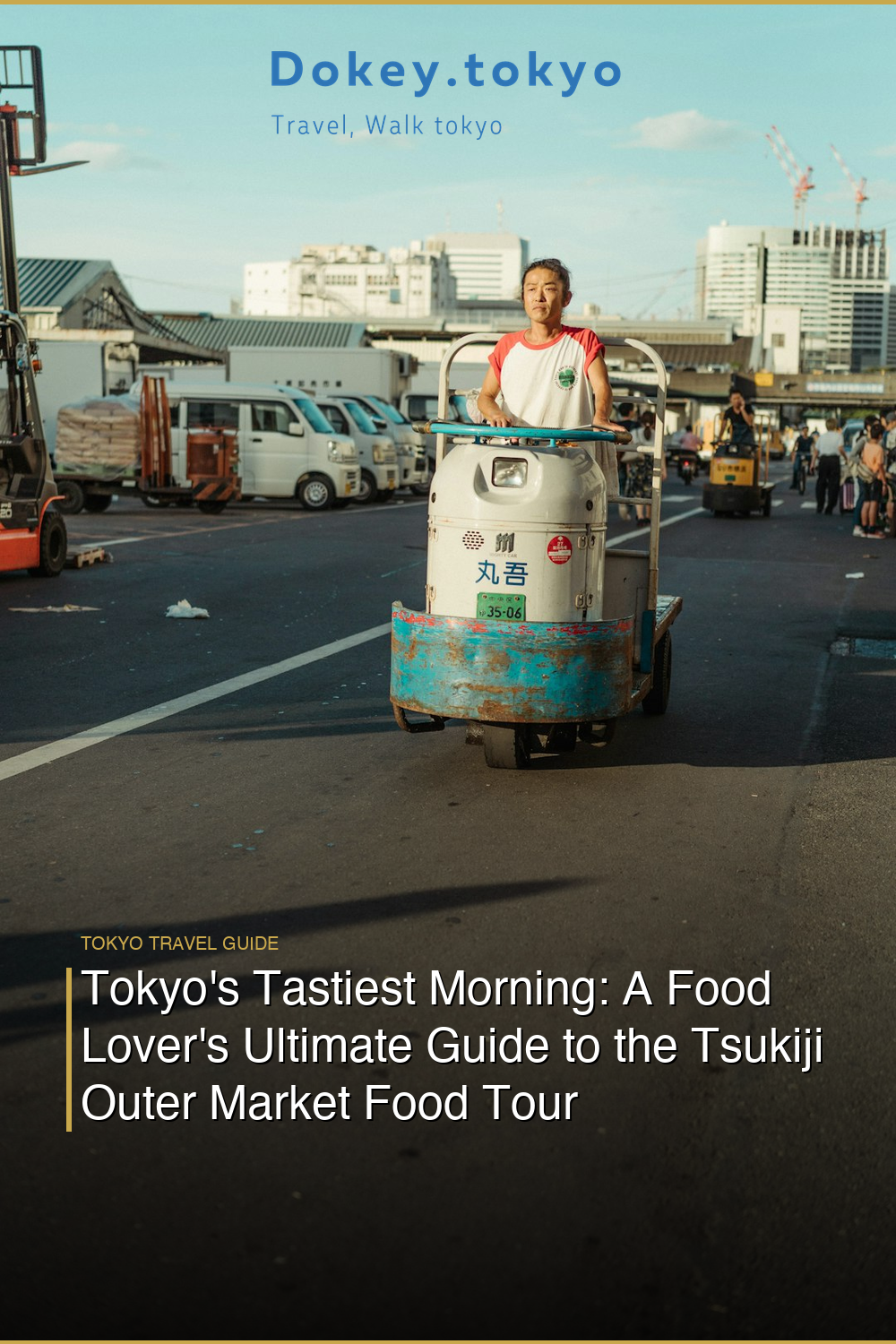
There are places in the world that don’t just feed you — they change how you think about food entirely. Tsukiji Outer Market is one of them. Tucked into the Chuo ward of Tokyo, this sprawling labyrinth of stalls, vendors, and smoke-filled alleyways has been the heartbeat of Tokyo’s culinary soul for generations. Even after the famous inner wholesale market relocated to Toyosu in 2018, the outer market stayed, stubbornly and gloriously, alive. It’s louder, messier, and more intoxicating than ever — and for anyone who considers eating a serious hobby, it is the single best morning you can spend in Tokyo.
I arrived just before 8 a.m. on a cool November Tuesday, when the low winter light was turning the narrow lanes amber and the charcoal smoke from a tamagoyaki grill drifted straight into my face before I’d even found my footing. The smell hit me first — briny ocean air layered over sweet egg and soy, with an undercurrent of fresh-cut tuna that made my stomach growl embarrassingly loudly. A vendor in a rubber apron caught my eye and gave me a nod that said, you’re in the right place.
Why Tsukiji Outer Market Is a Food Lover’s Paradise
🎫 Book on Klook: Tsukiji Outer Market Food Tour →
Let’s be honest: Tokyo has extraordinary food everywhere. You can eat brilliantly in a basement ramen shop in Shinjuku or a standing sushi bar in Shibuya. But Tsukiji is different. This is where the chefs shop. The produce here is so fresh it barely needs preparation, and the vendors who sell it have been perfecting their craft for decades — sometimes across multiple generations of the same family. For a culinary traveler, that provenance matters. You’re not just eating a scallop; you’re eating a scallop that a third-generation fishmonger selected personally that morning.
The outer market runs along a dense cluster of streets between Tsukiji Station and the waterfront, and it’s best navigated on foot, slowly, with no agenda other than hunger. There are over 400 shops and stalls, which sounds overwhelming until you realize that wandering aimlessly is actually the correct strategy.
What to Eat First: The Non-Negotiable Bites
Tamagoyaki (Japanese Rolled Omelette)
Start here. Always. Tsukiji is famous for its thick, custardy tamagoyaki, and the dueling stalls — particularly Marutake and Tsukiji Yamachō — have been cooking them fresh on rectangular iron pans for longer than most of us have been alive. The version at Tsukiji is dashi-rich and slightly sweet, nothing like the flat, rubbery versions you might have had elsewhere. Get it on a stick, still warm, and eat it while walking. It costs around ¥120-¥150 and it will reset your entire understanding of what an egg can be.
Fresh Sushi and Sashimi
Yes, you can eat sushi for breakfast at Tsukiji, and yes, you absolutely should. Several small sushi counters open by 7 or 8 a.m., serving omakase-style sets that are staggeringly fresh. Sushi Dai has famously long lines, but for a food lover, a 45-minute wait is simply part of the ritual. If you want something quicker, look for the standing sushi stalls where a single piece of otoro (fatty tuna) practically dissolves before you finish chewing.
On one visit, I struck up a conversation with the owner of a tiny sashimi stall near the Shin-Ohashi-dori entrance — a compact man in his sixties who told me, unprompted, that the secret to his uni (sea urchin) was buying only from a specific Hokkaido supplier. He handed me a small cup of it with a plastic spoon and watched my face carefully. It tasted like cold ocean and cream simultaneously, and I understood in that moment why people fly to Japan specifically for sea urchin.
Grilled Scallops and Seafood Skewers
Follow your nose to the smoke. Massive grilled scallops sizzling in their shells with a puddle of butter and soy are one of Tsukiji’s most iconic street foods, and for about ¥300-¥500 per shell, they are an obscene bargain for what you’re getting. Look also for grilled king crab legs, oysters on the half shell, and whole prawns skewered and charred over binchotan charcoal. Eat them standing at the counter. This is not a sit-down experience — it’s participatory theater.
Street Snacks You Can’t Skip
- Tuna gyoza from stalls along Kaikosha-dori — crispy-bottomed, juicy inside
- Dashi-maki tamago sandwiches from Tamago-ya-style shops
- Salmon roe (ikura) on rice — a tiny bowl that costs around ¥500 and tastes like the sea distilled
- Japanese strawberries from the produce vendors — in season (December–April), these are the sweetest fruit you will ever eat
- Fresh-cut fruit skewers with condensed milk for dipping
Practical Tips for Food Lovers Doing the Tsukiji Outer Market Food Tour
Arrive Early — But Not Insanely Early
The outer market hits its stride between 7 and 10 a.m. Arrive by 7:30 a.m. for the shortest lines at the most popular sushi counters and the freshest selections at the fish stalls. By 10 a.m., the crowds multiply and some of the best items sell out. Most stalls close by 1 or 2 p.m., so this is firmly a morning adventure.
Come Hungry — and Pace Yourself
This sounds obvious, but the cardinal sin at Tsukiji is filling up on tamagoyaki at stall number one and then suffering through the grilled scallops ten minutes later. Eat in small amounts. Share with a travel companion if you have one. The goal is to taste as many things as possible over two to three hours, not to gorge at the first stall you find.
Bring Cash
Most vendors are cash only. ¥5,000–¥8,000 (roughly $35–$55 USD) is a comfortable budget for a thorough food tour that leaves you very, very full. Some of the sit-down sushi counters accept cards, but don’t count on it.
Navigate with Your Nose, Not Google Maps
Seriously. The market’s best discoveries don’t have prominent signage or Instagram fame. If something smells incredible, follow it. I once found a vendor selling house-made soy sauce ice cream purely because I turned toward an interesting caramel-and-umami smell down an alley I hadn’t planned to enter. It was one of the best things I ate that entire trip.
Respect the Space
Tsukiji is a working market, not a theme park. Walk on the left, don’t block doorways, keep your camera out of vendors’ faces without asking, and dispose of your trash at the bins provided (don’t eat and walk if you can find a standing counter instead). These small gestures go a long way — and the vendors remember polite foreign visitors warmly.
Best Time of Year to Visit Tsukiji for Food Lovers
Tsukiji is open year-round, but the best seasons are autumn (October–November) and late winter (February–March). In autumn, the morning air is crisp and comfortable for extended outdoor eating, and seasonal seafood like Pacific saury (sanma) makes an appearance. Late winter brings peak strawberry season and some of the year’s best uni. Summer is perfectly fine but can be very hot and humid by 9 a.m., which makes standing over a charcoal grill slightly less romantic.
The market is closed on Sundays, some Wednesdays, and Japanese national holidays — always check the official Tsukiji market calendar before you plan your morning.
The Moment That Stayed With Me
It was just after 9 a.m. on that November morning, and I was sitting on a plastic crate outside a tiny sashimi stall, holding a small styrofoam tray of maguro (bluefin tuna) slices in three grades — akami, chutoro, and otoro — arranged side by side like a lesson in fat content and flavor. I ate them in order, from leanest to richest, and the progression was so deliberate and so delicious that I sat there for a full five minutes after finishing, just looking at the empty tray. The vendor came out, saw my expression, and laughed. “Good, right?” he said in English. I couldn’t argue with that.
How to Structure Your Tsukiji Outer Market Food Tour
A Simple Two-Hour Itinerary
- 7:30 a.m. — Arrive at Tsukiji Station (Hibiya Line), walk toward the market
- 7:40 a.m. — Tamagoyaki on a stick from Marutake, eaten while wandering
- 8:00 a.m. — Queue for or find a standing sushi counter; order otoro and uni
- 8:45 a.m. — Grilled scallops and prawn skewer from a charcoal stall
- 9:15 a.m. — Explore the produce and pantry shops; buy dashi packets, nori, or pickles to take home
- 9:30 a.m. — Tuna gyoza and a tamago sandwich for good measure
- 10:00 a.m. — Coffee from one of the small café counters, and a very contented sit-down
The Tsukiji Outer Market Food Tour Is Not Optional
If you are the kind of traveler who plans trips around restaurants, who photographs food before eating it, who researches fish markets the way other people research museums — Tsukiji Outer Market is not just a recommended stop. It is a mandatory pilgrimage. It will show you what food tastes like when it hasn’t traveled far, when it’s been handled by people who care, and when it lands on your tongue in a narrow smoky alleyway at 8 in the morning in one of the greatest cities on earth. Book the flight. Set the alarm. Come hungry.