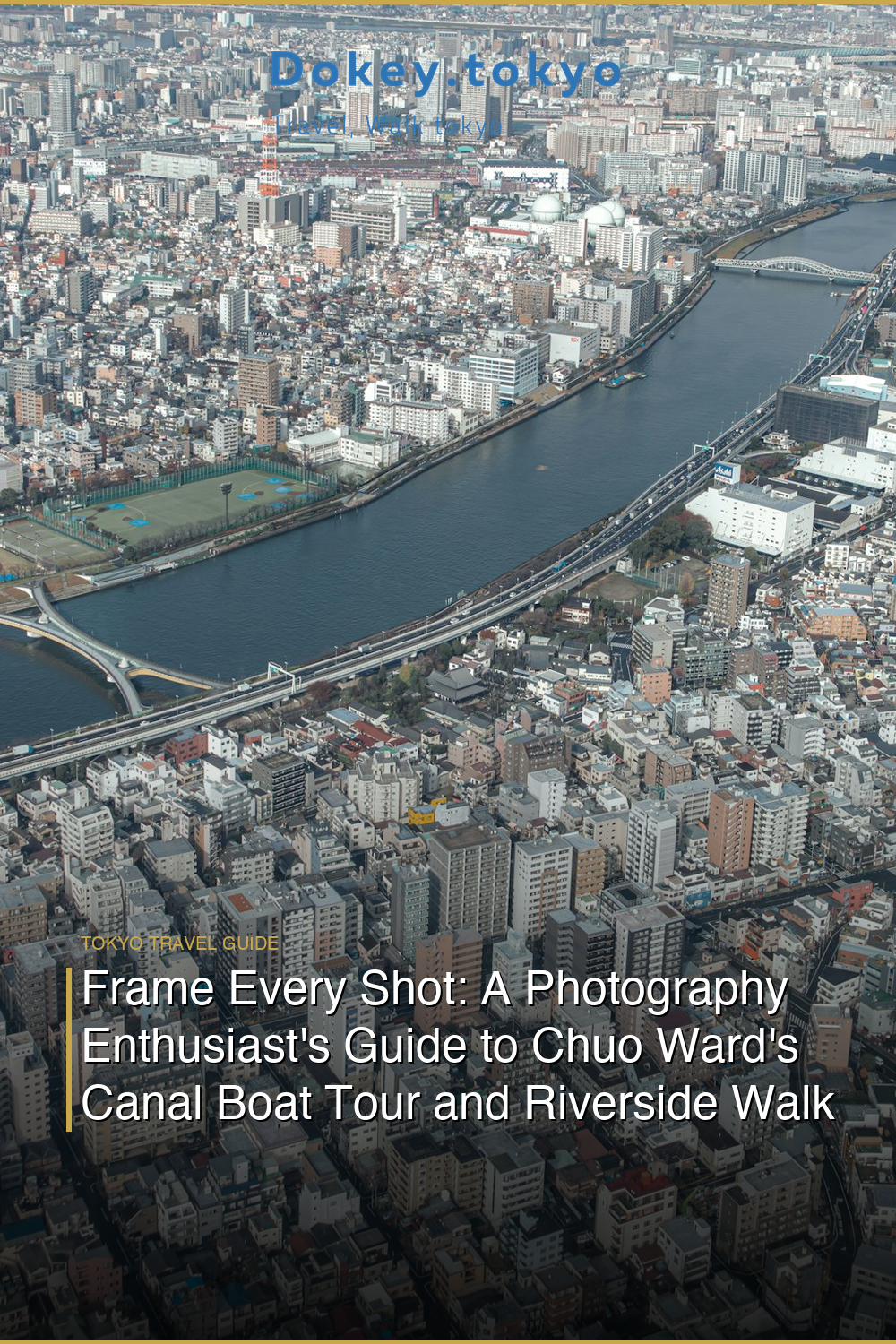
There’s a version of Tokyo that doesn’t appear on most camera rolls — no neon-drenched Shinjuku corners, no Shibuya crossing long exposures. This version moves slowly, smells of river mud and distant yakitori smoke, and reveals itself only when you’re sitting low in a flat-bottomed boat watching the city slide past at water level. Chuo Ward’s canal boat tours and the riverside walking paths that thread along the Nihonbashi and Kanda rivers are, without any exaggeration, among the most underrated photography locations in all of Japan. The geometry here — stone bridges arching over olive-green water, expressways suspended impossibly overhead, old warehouse walls kissed by morning light — is the kind of composition that makes you forget to check your histogram.
I still remember the first time I stepped onto the small wooden pier at Nihonbashi for a morning departure. It was just past 7 a.m., the air smelled like wet stone and exhaust from an early delivery truck, and a pale gold light was cutting horizontally across the canal surface, turning every ripple into a tiny prism. My hands were already shaking slightly — not from cold, but from the particular excitement I only feel when I know I’m about to shoot somewhere genuinely special.
Why Chuo Ward’s Waterways Are a Photographer’s Dream
🗾 Book on Viator: Tokyo Bay scenic boat cruise experience →
Unlike Tokyo’s famous rivers — the wide, tourist-heavy Sumida — the canals of Chuo Ward operate on an intimate scale. The Nihonbashi River, the Hamacho River, and their connecting tributaries are narrow enough that you can shoot both banks in a single frame without switching lenses. The architecture layering is extraordinary: Edo-period stone bridge foundations exist directly beneath elevated Metropolitan Expressway Route No. 1, creating a visual collision of centuries that is completely unique to this part of the world.
For photographers, this compression of history into a single frame is the core appeal. You’re not shooting a nostalgic old town or a gleaming modern skyline — you’re shooting both simultaneously, in genuine, unreconstructed form. This layered aesthetic shares a certain DNA with the Yanaka Cemetery Walking Tour, where old and new Tokyo exist in quiet conversation.
The Best Light Windows
Golden hour here behaves differently than in open urban areas. Because the canals run between buildings and under bridges, the light enters in shafts and slices rather than washes. This means:
- Early morning (6:30–8:00 a.m.): Soft directional light skims the water surface from the east. Almost no boat traffic. Reflections are glassy and undisturbed. This is when I always get my cleanest architectural mirror shots.
- Late afternoon (4:30–6:00 p.m.): Warmer, more dramatic. The expressway overhead catches orange light and throws it down onto the canal in broken geometric patterns. Foot traffic on the riverside walk increases, adding human interest.
- Blue hour (just after sunset): The canal lights flicker on, the sky holds a deep cobalt, and the old stone bridges glow amber. This is arguably the most dramatic window for long-exposure work.
The Canal Boat Tour: What to Expect Through a Lens
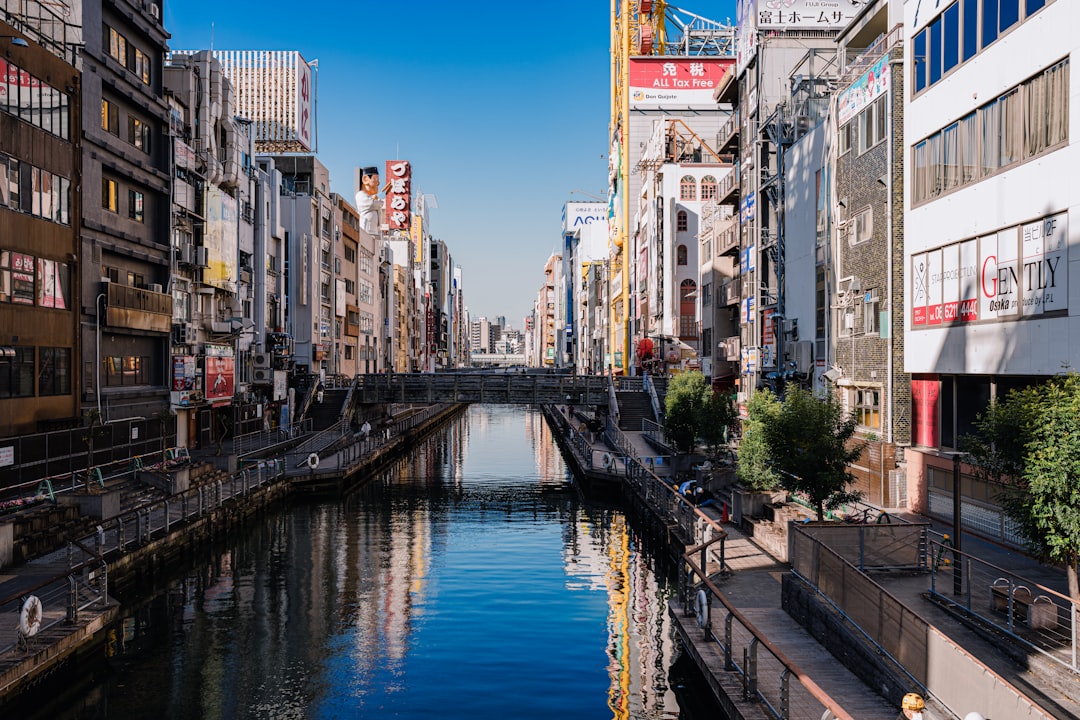
The Nihonbashi Cruise operated by Tokyo Mizube Cruising Line is the standard entry point, and it’s perfectly suited for photographers. Boats are small — typically holding 20–40 passengers — which means you’re never fighting through crowds to reach the railing. The open-deck option is essential; book specifically for a vessel with an unobstructed upper or open-air area, as shooting through glass produces exactly the kind of soft reflections that ruin a sharp composition.
Bring a wide-angle lens as your primary tool. The 16–35mm range captures the dramatic overhead expressway spans without requiring you to physically back up (you’re on water — you cannot back up). A 50mm prime is excellent for isolating bridge details and catching the faces of local workers on the riverbanks. I personally leave my telephoto at the hotel — it’s unnecessary here and adds weight during the riverside walk that follows.
Key Compositions to Hunt On the Water
The Expressway Tunnel Effect: As you pass directly beneath the elevated highway at Nihonbashi, look straight up and shoot with a wide-angle. The concrete columns create a repeating pattern that frames the sliver of sky above — one of the most architecturally striking frames in Tokyo.
Bridge Reflection Triptychs: The Edo-era stone bridges are low and rounded, and on still mornings their arches create perfect circles with their own reflections. Try shooting in portrait orientation to capture both arch and its water double in full.
Waterside Workers and Fishermen: Locals do fish along these canals — quietly, patiently, almost invisibly. These human-scale moments anchor the industrial scenery in warmth. Ask permission with a simple gesture and a smile; in my experience, people here almost always nod graciously.
On one particular afternoon cruise, I noticed a small covered boat moored near Kayabacho that wasn’t on any map I’d seen — it turned out to be a private floating garden tended by a retired gardener named Tanaka-san, who waved us over and, through a fellow passenger translating, explained he’d been growing chrysanthemums on the water for over twenty years. I got a frame of his weathered hands against purple blossoms with the city rising behind him that remains one of my favorite photographs from Japan.
The Riverside Walk: Your Post-Cruise Shooting Gallery
🗾 Book on Viator: Bike and water bus riverside exploration →
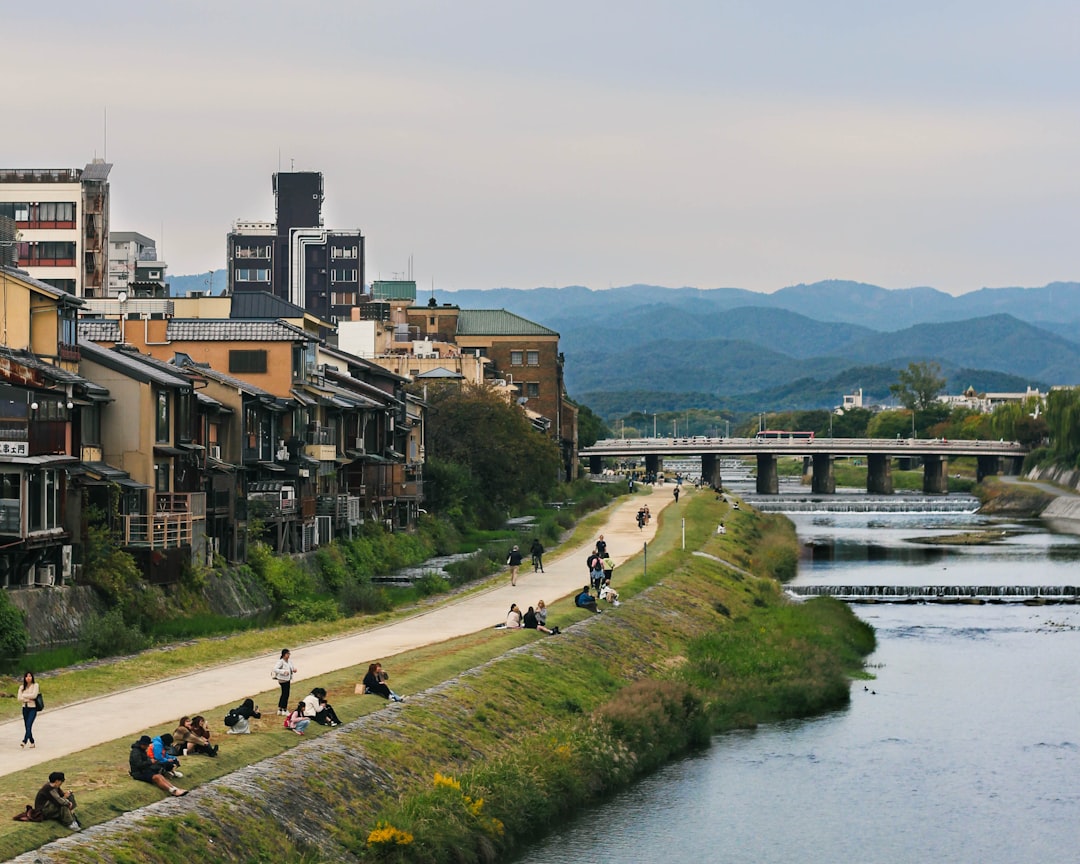
After the boat returns to Nihonbashi, do not go straight to the subway. The walking paths along the canal embankment — particularly the stretch from Nihonbashi down toward Hamacho and Shin-Ohashi Bridge — deliver a second, completely different photographic experience.
The path itself is narrow, often just a meter wide between the water’s edge and a low railing. Cherry trees line sections of the route, making spring visits particularly dramatic, but honestly the winter version — bare branches lacing against gray sky, the canal flat and silver — has a stark, melancholic beauty that I find even more compelling for black-and-white work. If you’re drawn to riverside walks in Tokyo, the Inokashira Park Boat Rental experience offers a similar sense of escape from urban bustle.
Food and Drink Stops That Are Worth the Detour
Photography burns calories and the riverside walk conveniently passes within a few minutes of some excellent refueling options. Near Ningyocho — a neighborhood just a short detour inland — you’ll find Tamahide, a restaurant that has been serving oyakodon (chicken and egg rice bowl) since the Edo period. The light inside is warm and slightly dim, and if you arrive between lunch service rushes, the wooden interior with steam rising from lacquer bowls makes for compelling interior food photography. Ask to sit near the front window. For those interested in culinary exploration elsewhere in Tokyo, Tsukishima Monja Street offers similarly photogenic food experiences with a neighborhood charm.
For coffee with a canal-adjacent view, look for the small independent cafes tucked along Amazake Yokocho lane. These spots open early enough to serve as warm-up stations before your morning shoot, and the ceramic cups against aged wooden tables photograph beautifully in available light.
Practical Photography Kit and Logistics
Getting there: Take the Tokyo Metro Ginza Line or Tozai Line to Nihonbashi Station. Exit B6 deposits you almost directly onto the cruise boarding point.
Booking the boat tour: Tickets can be purchased at the pier or through the Tokyo Mizube Cruising Line website. Prices typically range from ¥1,500–¥2,500 depending on route and season. Spring cherry blossom cruises sell out weeks in advance — book online early and arrive 20 minutes before departure to secure a railing spot.
What to carry: A lightweight tripod or gorilla pod is genuinely useful on the riverside walk for blue-hour long exposures. The paths are stable and tripods are not obtrusive here at off-peak hours. A circular polarizing filter cuts surface glare beautifully during midday, revealing the canal’s surprising green depth.
Weather: Overcast days are underrated for canal photography — the diffused light eliminates harsh shadow contrast under the bridges and makes color grading easier in post. Don’t cancel your plans for cloud cover.
Best Season to Visit
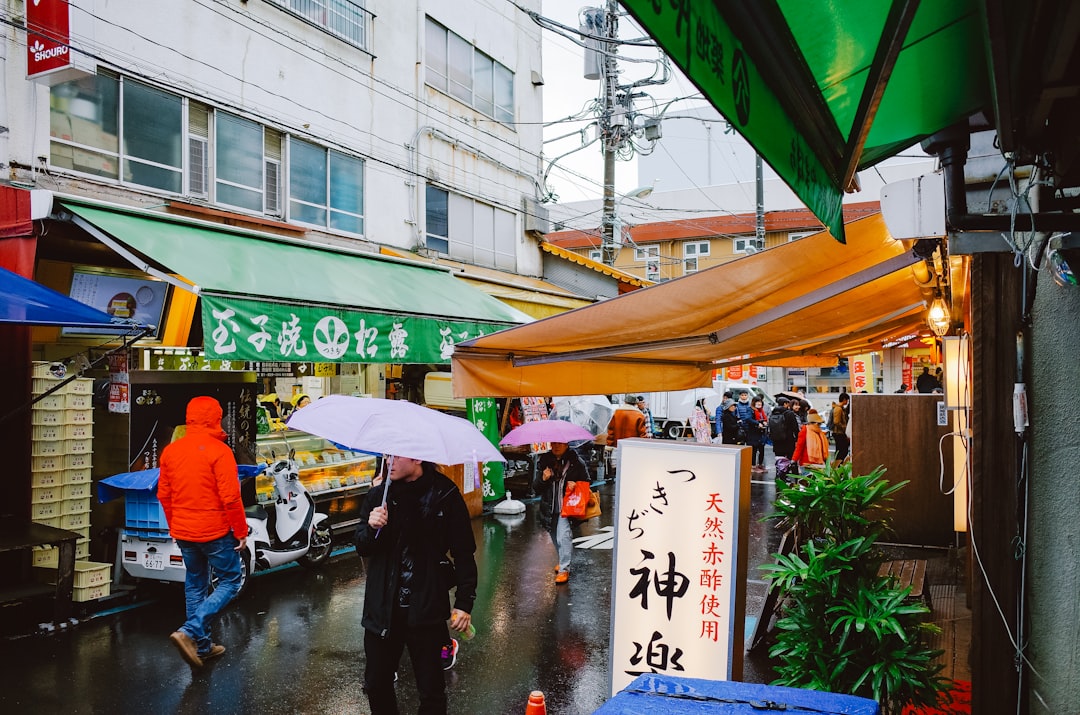
Spring (late March to early April) is the obvious peak — the sakura trees along the embankment create pink canopies reflected in the water, and the soft morning light at this time of year is genuinely extraordinary. Autumn (November) brings copper foliage and crisp air that sharpens every reflection. For cherry blossom season, the Yoyogi Park Cherry Blossom experience offers another scenic springtime destination. Summer mornings are humid but the mist that sometimes sits on the water at dawn creates an ethereal, almost painterly effect. Winter is quiet and cold and utterly photogenic in its austerity.
I was here one late November afternoon, sitting on a low stone step just past Shin-Ohashi Bridge, eating a warm ningyo-yaki (small fish-shaped cake filled with red bean paste) I’d bought from a cart near Ningyocho. The cake was hot enough to sting my fingers and tasted of roasted sugar, and as I looked up, a single ginkgo leaf — luminous, electric yellow — spiraled down from an overhanging branch and landed silently on the black water surface, floating there for a moment before the current took it. My camera was around my neck. I didn’t lift it. Some frames you keep only in your eyes.
Final Tips Before You Head Out
🗾 Book on Viator: Mt. Fuji day trip from Tokyo →
Chuo Ward’s canals reward patience and revisitation. A single boat tour gives you the overview and the key compositions, but the riverside walk — especially walked slowly, in different light, more than once — is where your best images will come from. Talk to the people you meet on the path. Sit with the fishermen. Order the oyakodon at Tamahide and notice the steam. Tokyo at water level is a quieter, older, more honest city than the one most visitors see — and for photographers willing to slow down and look carefully, it is endlessly, generously rich.