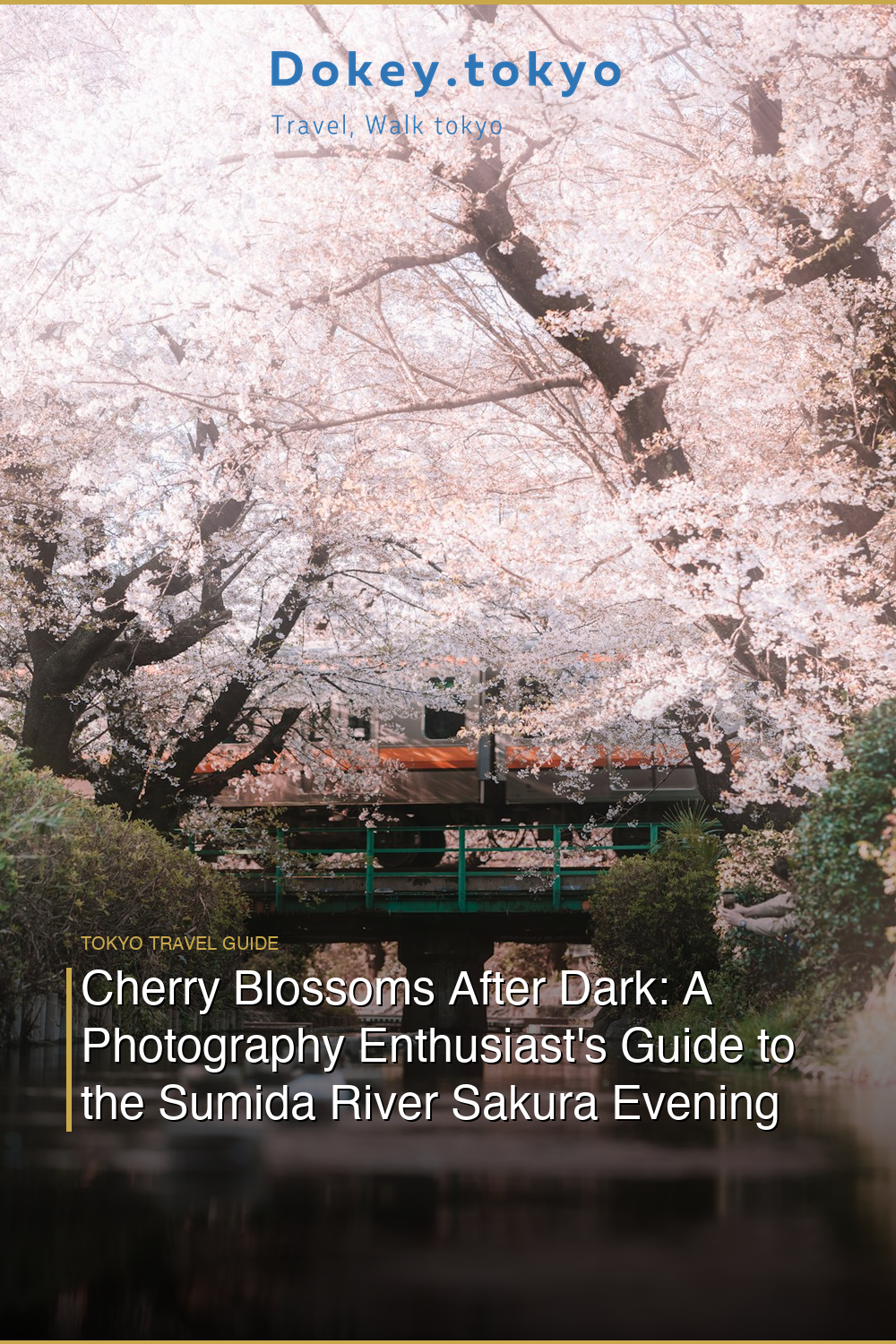
There’s a moment — and if you’ve ever chased cherry blossoms in Tokyo, you know exactly the one I mean — when the light turns that impossible shade of amber-rose just before dusk, the petals start to let go, and everything smells faintly of something you can’t quite name. Sweet, green, a little like rain that hasn’t fallen yet. That moment, for most visitors, happens on land, crushed between a thousand other people all pointing their cameras in the same direction. But if you board an evening sakura cruise on the Sumida River, that moment becomes entirely, breathtakingly yours.
I remember stepping onto the low wooden deck of a yakatabune — a traditional Tokyo river boat — on my fourth visit to Japan, camera bag banging against my hip, heart already hammering. The engine vibrated softly beneath my feet, and the smell hit me first: river water, cedar wood, a faint drift of grilled fish from somewhere on the boat’s small kitchen. The sky was still pale blue overhead but deepening into violet near the horizon, and the first of the illuminated sakura trees along the Sumida riverbank flickered to life like a string of pink lanterns. I actually laughed out loud. Nobody heard me over the water.
Why the Sumida River Sakura Cruise Is a Photographer’s Holy Grail
Let me be honest with you the way a good friend would be: Tokyo during cherry blossom season is overwhelming for photographers. Ueno Park is stunning but chaotic. Shinjuku Gyoen is controlled but crowded by 9 a.m. Chidorigafuchi is gorgeous but everyone else already knows that. The Sumida River cruise solves the problem you didn’t know you had: it gives you a moving, elevated, ever-changing platform from which to shoot the sakura in a way that 99% of visitors never experience.
The trees lining both banks of the Sumida — over 600 of them, a mix of Somei Yoshino and Yaezakura varieties — are flood-lit after sunset as part of Tokyo’s official sakura illumination program. From the water, you’re shooting across a reflective surface that doubles every glowing tree, every lit bridge arch, every passing neon sign into a second, shimmering image below the first. It’s compositional gold.
What the Light Actually Does at Different Times of the Cruise
Most evening cruises depart between 6:00 p.m. and 7:30 p.m. during sakura season (typically late March to early April), and the light transformation over a 90-minute cruise is dramatic. The first 20 minutes are your golden hour window — soft directional light still coming from the west, warm on the petals, long shadows on the water. This is your time for wide shots and botanical close-ups if the boat drifts near the banks.
Around the 30-minute mark, as you pass under Komagata Bridge and approach Azumabashi, the city lights come fully alive. Now you’re shooting a completely different scene: deep blue sky, electric-pink sakura clouds, the red-orange glow of the iconic Asahi Beer Hall “golden flame” sculpture catching the last of the day. Shoot in RAW, keep your ISO between 800 and 1600, and use a fast prime lens (I shoot the f/1.8 50mm almost exclusively during this window).
By the final third of the cruise, you’re in full night mode — long exposure territory, streaking bridge lights, the Tokyo Skytree reflected in fragments on the choppy water. Bring a small gorilla-pod or lean your elbows on the boat railing for stability. The crew won’t mind.
Choosing the Right Cruise for Serious Shooters
Not all Sumida River sakura cruises are created equal, and this matters enormously if you’re there primarily to photograph.
Tokyo Mizube Cruising Line operates the most accessible option, running from Asakusa Pier to Hamarikyu Gardens. It’s affordable (around ¥1,200–¥1,500), open-deck sections are available, and it passes the densest concentration of illuminated sakura. The open deck is non-negotiable for photographers — do not book a fully enclosed boat if shooting is your priority.
Private yakatabune charters are the luxury option, running ¥8,000–¥15,000 per person with a set menu dinner. The slower pace and lower passenger count mean you can claim a corner of the deck, set up properly, and stay there. On one cruise, the boat captain actually slowed the engine to near-idle when we passed the famous double row of sakura near Kototoi Bridge because a few of us were clearly mid-shot. I could have kissed him.
The Gear Setup I Actually Use on the Water
- Camera body: Mirrorless is better than DSLR here — quieter, lighter, faster autofocus in low light
- Lenses: 35mm f/1.8 for atmospheric wide shots, 85mm f/1.8 for isolating blossom clusters against illuminated bridges
- Filters: Skip the ND filters for evening; a circular polarizer can help manage reflections during golden hour
- Extras: Lens cloth (river spray is real), extra batteries (cold air drains them fast), and a small flashlight for changing settings without blinding fellow passengers
Food, Drink, and the Social Ritual of Hanami on Water
Here’s something photographers sometimes forget in the pursuit of the perfect shot: the food on a yakatabune dinner cruise is genuinely part of the experience, and it will improve your photos. Seriously.
Traditional yakatabune menus lean heavily into seasonal Japanese cuisine — tempura, sashimi, pickled vegetables, grilled river fish, and a warming bowl of miso with tofu. The visual presentation of the food, lit by the soft interior lanterns of the boat against the blurred pink bokeh of passing sakura outside the window, is a photograph in itself. Shoot it. I once spent a happy ten minutes photographing a single ceramic cup of warm sake — pale gold liquid, steam rising, a fallen petal that had somehow floated in from the open deck — before I remembered to drink it.
Drink something warm. The Sumida River at night in late March is cold. A flask of sake or Japanese whisky highball will keep you shooting long past the point where your fingers would otherwise give up.
Practical Tips for Photography Enthusiasts
Booking and Timing
- Reserve your cruise at least 2–3 weeks in advance during sakura season — these sell out, particularly on weekends
- Target cruises departing around 6:30 p.m. to capture both golden hour and the full illumination window
- Follow the Japan Meteorological Corporation’s sakura forecast (updated daily) and Tokyo Sakura Map to time your visit within the peak bloom window; even 3–4 days off peak can significantly reduce the flower density
- Weeknights are less crowded on public cruises; more deck space = better shooting angles
Getting to the Pier
- Asakusa Pier (Azumabashi) is the main departure point — 2 minutes on foot from Asakusa Station (Tokyo Metro Ginza Line or Tobu Skytree Line)
- Arrive 20 minutes early to claim your position on the open deck before other passengers settle in
Shooting Etiquette on the Boat
- Ask before using a flash near other passengers or crew (honestly, don’t use a flash — it kills the atmosphere and your photos)
- If you’re on a private charter with fellow photography enthusiasts, coordinate shooting positions early; the bow and stern offer the cleanest foreground-free shots
The Shot That Will Change How You See Tokyo
About an hour into my most recent evening cruise, we slid under Shirahige Bridge, and for exactly thirty seconds the timing aligned in a way that felt almost engineered: the Skytree was lit in its soft cherry blossom pink seasonal color scheme, a rogue shower of petals caught the wind and spiraled down across the beam of a spotlight on the riverbank, and a lone elderly man standing at the railing of the bridge above us lifted his hand in a slow wave as we passed beneath him. I got the shot — petals in motion blur, Skytree in background focus, the bridge railing framing the top third of the frame — but what I actually remember is the feeling: that specific Tokyo feeling of being impossibly small and impossibly lucky at the exact same time.
Final Thoughts Before You Book
The Sumida River sakura evening cruise isn’t just a boat ride with nice scenery. For a photographer, it’s a controlled, repeatable, compositionally rich environment where the city does the work of lighting itself for you — and then gives you the water to reflect it all back twice. You will shoot more usable frames in 90 minutes on this cruise than in a full day at Ueno. You will also eat well, stay warm enough, and feel the specific quiet thrill of watching Tokyo drift past at river pace while everyone else is fighting for a spot on a park bench.
Book early. Bring your fastest lens. And when the petals start to fall on the water around the bow of the boat, put the camera down for just a moment. Some things deserve to be remembered in the body, not just the memory card.