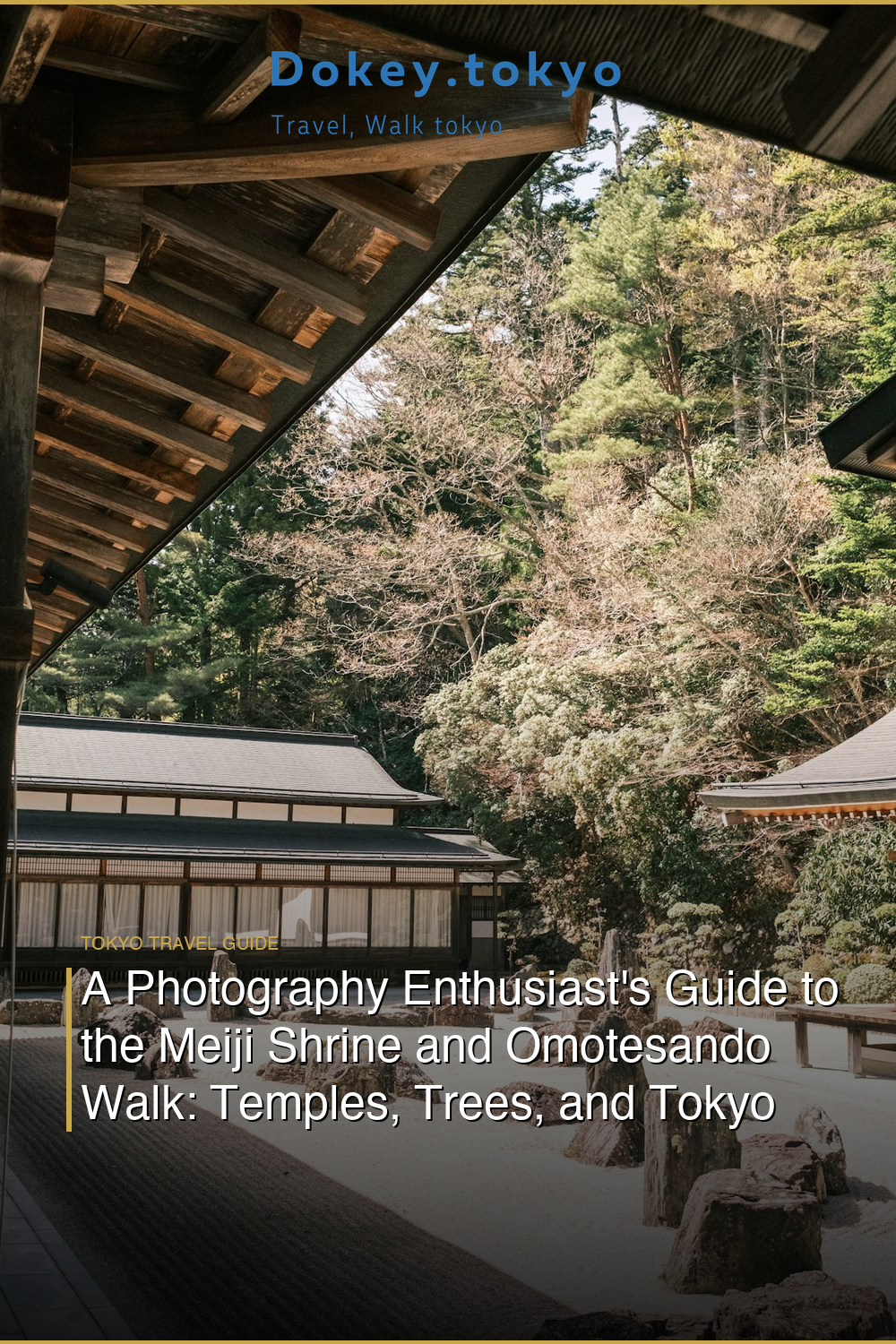
Imagine starting your morning standing beneath a towering cedar torii gate, dappled light filtering through 70,000 trees surrounding you in near silence — and then, just two kilometers later, framing a shot of impossibly stylish Tokyoites striding past Tadao Ando’s brutalist concrete masterpiece. That contrast is exactly what makes the Meiji Shrine to Omotesando walk one of the most photographically rewarding routes in all of Japan. For photographers — whether you’re shooting on a mirrorless system, a film camera, or even a high-end smartphone — this walk offers an extraordinary range of subjects, light conditions, and emotional registers all within a leisurely two-to-three-hour stroll. No other route in Tokyo transitions so gracefully from ancient forest to high fashion, from hushed reverence to buzzing street energy.
I still remember visiting Meiji Shrine for hatsumode at the start of the year — even surrounded by the energy of central Tokyo, the moment I stepped through the torii, the air turned solemn and still, as if the city itself had paused. That quiet gravity, hidden right in the middle of the metropolis, is what keeps drawing me back to this walk with a camera in hand.
Why This Walk Was Made for Your Camera
🗾 Customize Your Tokyo Sightseeing Day →
🗾 Customize Your Tokyo Sightseeing Day →
🗾 Private Car Tour with English Driver →
The Meiji Shrine to Omotesando corridor is essentially a living photography workshop. In the span of a single morning, you’ll encounter soft, diffused forest light ideal for portrait and nature work, dramatic architectural lines perfect for geometric compositions, candid street photography opportunities, and the kind of quiet human moments that define documentary travel photography. The key is understanding how the light and crowd levels shift throughout the day — and structuring your visit accordingly.
The Golden Hour Advantage at Meiji Shrine
Arrive at Meiji Shrine as close to opening time as possible, ideally just after sunrise. The shrine opens at dawn (times vary seasonally, so check the official site before you go), and the first 60 to 90 minutes offer something genuinely magical for photographers: raking golden light that cuts through the ancient cedar forest, long shadows across the gravel pathways, and almost zero crowds. The famous approach — a long, wide gravel lane flanked by massive Japanese cedar trees — is your first major composition opportunity.
Shoot from low angles to exaggerate the towering height of the trees. Use a wide aperture (f/1.8 to f/2.8) to isolate individual moss-covered trunks against soft bokeh. If you shoot film, a roll of Kodak Portra 400 or Fujifilm Provia will render the forest greens with extraordinary fidelity. For mirrorless and DSLR shooters, set your white balance manually — the forest light tends to run cool and green, and auto white balance sometimes strips the warmth you want to preserve.
The giant wooden torii gate at the entrance is your hero shot. For the cleanest composition, stand centered and low, shooting upward to include the canopy framing the gate. Early morning means you can take your time without feeling rushed by crowds behind you.
Inside the Shrine Grounds: Finding the Quiet Frames
🗾 Private Guided Tour of Tokyo →
🎫 Meiji Shrine guided tour Tokyo →
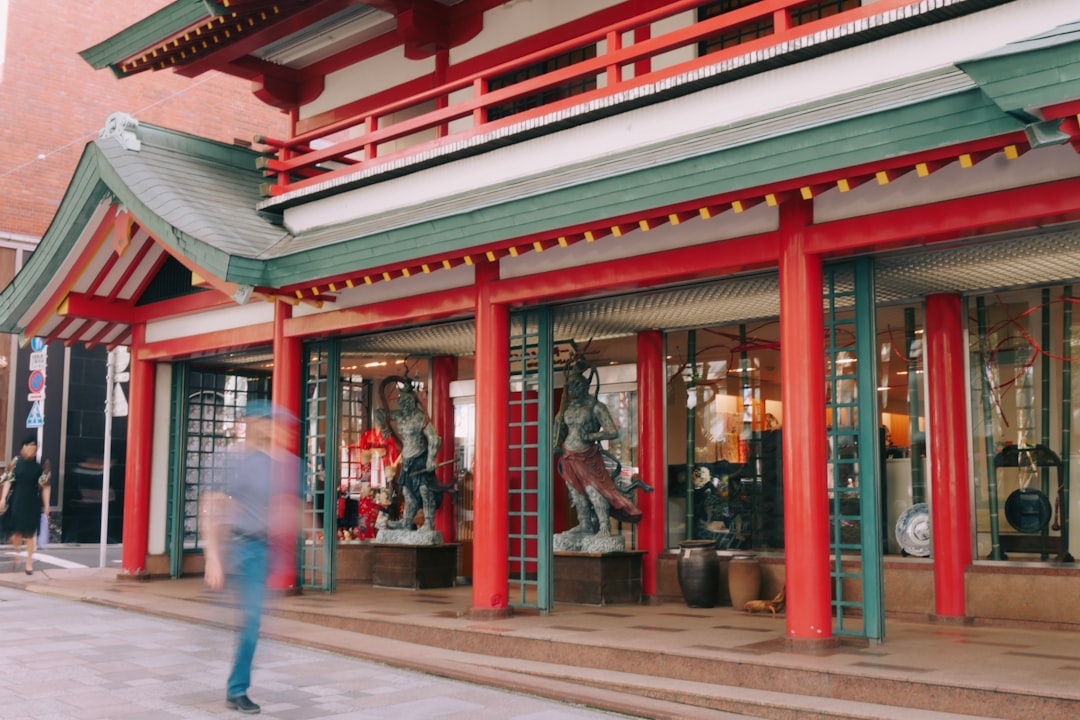
Once past the torii, the main shrine complex opens up into a series of elegant wooden structures, stone lanterns, and raked gravel courtyards. Photography of the main hall itself is restricted at certain points (always observe posted signs), but the surrounding areas offer beautiful compositions: the sake barrel display (kazaridaru) featuring hundreds of colorful wooden barrels stacked in rows is a perennial favorite. Early light turns those barrels into a rich tapestry of burgundy, gold, and dark wood tones — pure color photography bliss.
The Inner Garden — An Underrated Gem
Many photographers walk straight through to the main hall and miss the Meiji Jingu Inner Garden (Gyoen), which requires a small admission fee (500 yen). This is a serious mistake. The garden contains a stunning iris pond, traditional Japanese landscaping, and a small well that was reportedly used by Empress Shoken herself. In late spring, the irises bloom in violent purple and white against still water — a macro and landscape shooter’s dream. Even outside bloom season, the garden offers moss-covered stone paths, reflecting pools, and the kind of peaceful compositional space that the main shrine grounds don’t always provide.
One practical tip: the garden gets noticeably crowded during New Year holidays and special events. If you want to soak in the meditative calm that makes this place so special — and capture those glassy reflections without a crowd in frame — prioritize visiting on a quiet weekday morning instead.
Transitioning Through Harajuku: Where Subculture Meets Your Lens
🎫 Meiji Shrine forest photography experience →
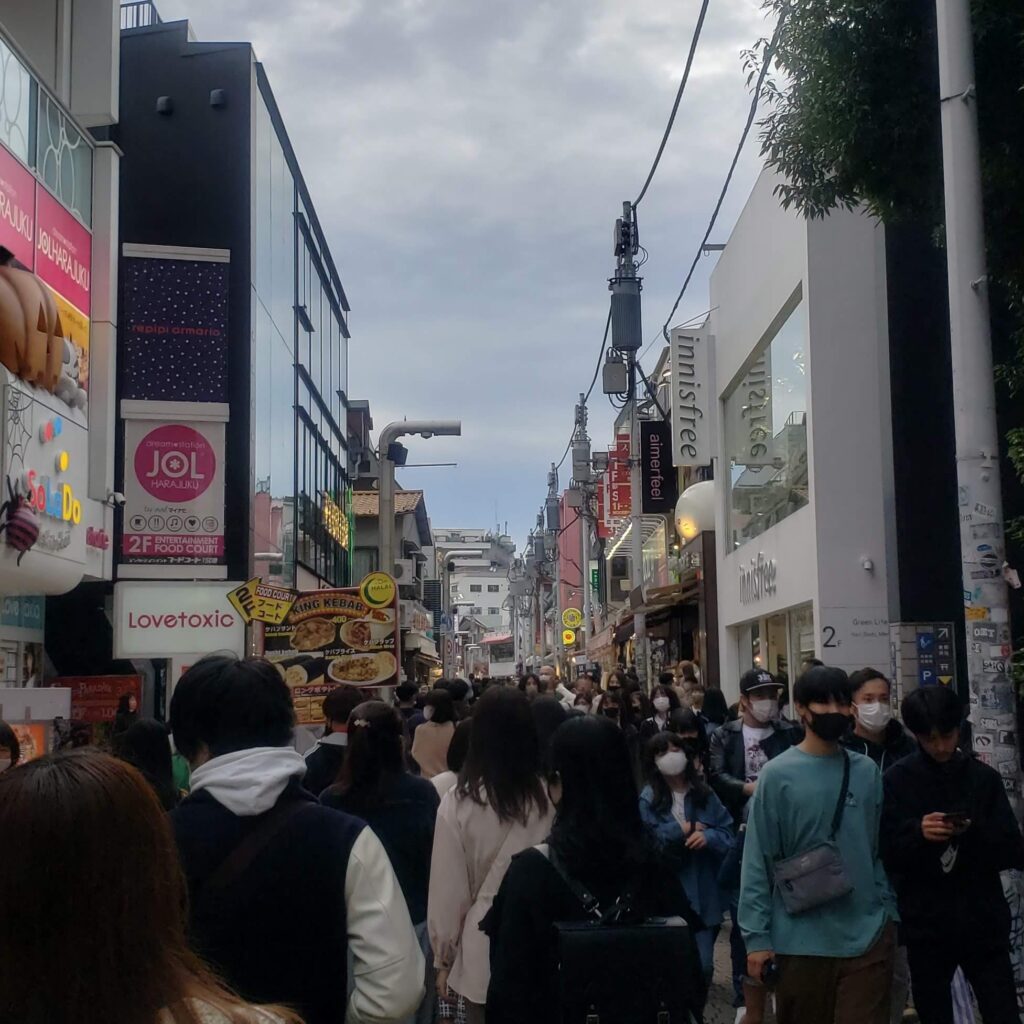
Exiting Meiji Shrine through the southern Harajuku gate deposits you directly into the Harajuku neighborhood, and the photographic mood shift is immediate. Takeshita Street, the narrow pedestrian lane famous for its Decora fashion, crepe shops, and teenage subculture, runs perpendicular to your route. If street photography and vibrant color are your passion, spend 20 to 30 minutes here. Shoot from the hip or ask permission — most of the young people who dress expressively in Harajuku are delighted to be photographed. A 35mm or 50mm prime lens is ideal for this tight, energetic environment.
For those who prefer a quieter detour, the backstreets of Ura-Harajuku (sometimes called the Harajuku Cat Street area) offer independent boutiques, beautifully maintained vintage clothing stores, and walls covered in layered street art. The textures here — peeling paint, handwritten signage, fabric spilling out of open shopfronts — make for compelling detail shots.
Omotesando Avenue: Architecture as Your Subject
🗾 Private Car Tour with English Driver →
🎫 Omotesando fashion district walking tour →
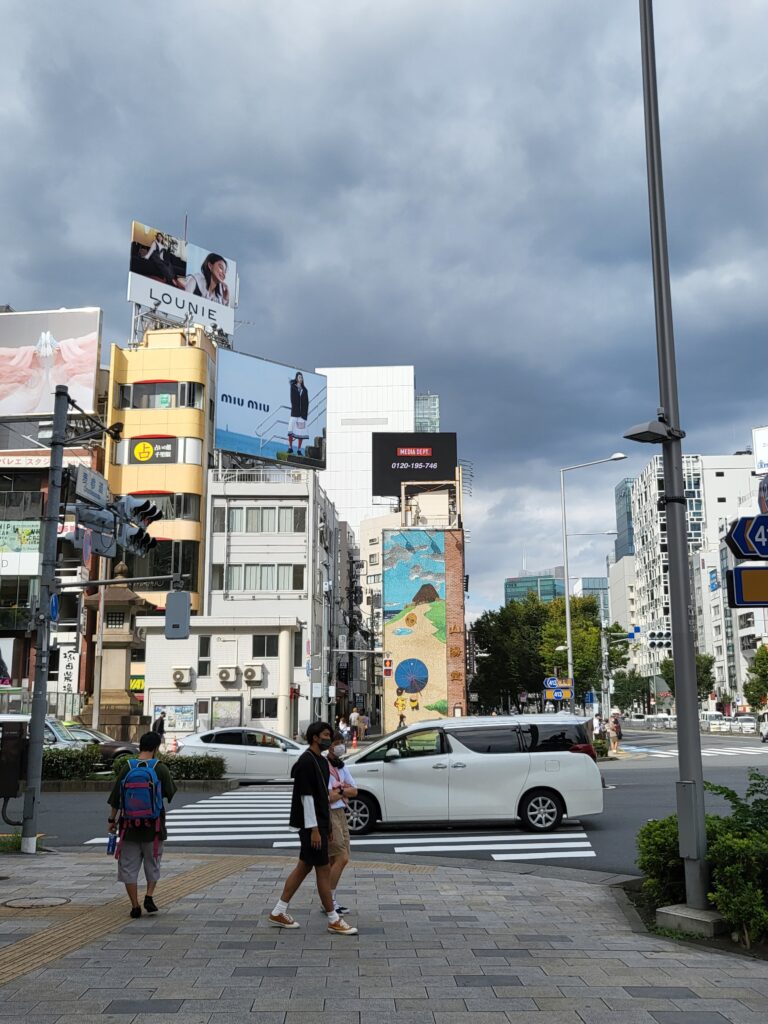
Where Takeshita Street is chaotic and colorful, Omotesando Avenue is composed and cinematic. Often called the Champs-Élysées of Tokyo, this broad, tree-lined boulevard is home to flagship stores designed by some of the world’s greatest architects. For photographers, this is an outdoor architecture museum.
Must-Photograph Buildings Along the Avenue
Prada Aoyama (Herzog & de Meuron): The faceted glass facade creates extraordinary reflections and refractions, especially in mid-morning light. Shoot from across the street with a telephoto (85mm to 135mm) to compress the geometry.
Omotesando Hills (Tadao Ando): The spiraling interior ramp and the deliberately restrained concrete exterior are exercises in minimalist composition. Shoot the exterior at street level in the late morning when light rakes across the concrete surface revealing its texture.
Tod’s Omotesando (Toyo Ito): The interlocking tree-shaped concrete structure on the facade is a favorite for architectural photographers. Try shooting at the intersection where the building meets the zelkova tree canopy — the echoing organic shapes make for an almost surreal image.
Street Style Photography on Omotesando
By mid-morning, Omotesando fills with some of Tokyo’s most aesthetically considered pedestrians. This is not Shibuya’s chaotic energy — the people here tend to move more deliberately, which gives you time to frame a shot properly. Position yourself near a café terrace or at a pedestrian crossing and work with a 50mm or 85mm lens. The zelkova tree canopy above the avenue creates beautiful dappled light patterns on the pavement that add visual interest to candid street frames.
Food and Café Stops That Deserve a Photo Too
A walk like this demands at least one coffee stop, and Omotesando delivers photographically here as well. Omotesando Koffee (a small, beautifully minimal cube of a café hidden in a traditional wooden building courtyard) is almost as famous for its aesthetic as its espresso. The contrast between the dark interior wood and the carefully poured cortado in a ceramic cup is a still-life photographer’s delight.
For food, Maisen on a nearby side street serves the definitive Tokyo tonkatsu (breaded pork cutlet) in an old public bathhouse building. The architecture alone — tiled walls, wooden changing room shelves repurposed as seating — makes it worth photographing before you eat. Those interested in exploring more culinary experiences in Tokyo might also enjoy a Tokyo food tour that ranges from Michelin-starred ramen to izakaya nights.
If you want a high vantage point over the zelkova canopy, the rooftop terrace at Tokyu Plaza Omotesando Harajuku (nicknamed Omohara) offers a striking view down the avenue through a kaleidoscopic mirror-tiled entrance that has become one of the most photographed retail spaces in Tokyo.
Practical Photography Tips for This Walk
🗾 Private Guided Tour of Tokyo →
- Best time to visit: Tuesday through Friday, arriving at Meiji Shrine at opening time. Weekends bring wedding processions to the shrine (genuinely beautiful to photograph, but crowds are significant) and much busier street scenes on Omotesando.
- Gear recommendation: A single versatile zoom (24-70mm equivalent) handles the full range of this walk. A 35mm prime is the one-lens solution if you prefer to travel light.
- Light windows: Forest shooting peaks from opening until about 9 AM. Architectural shooting on Omotesando is best from 10 AM to noon when the sun is high enough to catch building facades without harsh shadows.
- Tripods: Permitted in the Meiji Shrine garden and forest paths during quiet hours, but check current guidelines. Not practical on Omotesando.
- Weather: An overcast day is actually excellent for forest photography (even, diffused light) and decent for street shooting. Avoid heavy rain unless you’re specifically shooting rainy-day reflections on the avenue — which, honestly, look incredible.
What stays with me most is how seamlessly this walk merges two seemingly opposite worlds. In the morning you’re composing shots beneath a canopy of ancient trees in near-total silence, and by lunchtime you’re framing sleek glass facades and stylish passersby — all without ever feeling rushed. Few walks anywhere offer that kind of range in a single day.
The Walk That Keeps Giving Back
What makes the Meiji Shrine to Omotesando walk so enduringly rewarding for photographers is precisely that it refuses to be just one thing. You cannot reduce it to a single mood, a single palette, or a single genre. It demands that you move fluidly between meditative slowness in the forest and alert, quick-reflexed responsiveness on the avenue. It asks you to honor silence and then celebrate spectacle. Every visit — different season, different light, different lens on your camera — reveals a new photograph waiting to be taken. If Tokyo is, as many photographers believe, one of the greatest cities on earth to shoot, then this walk might just be its finest single chapter.
Book Tours & Activities
🗾 Customize Your Tokyo Sightseeing Day →