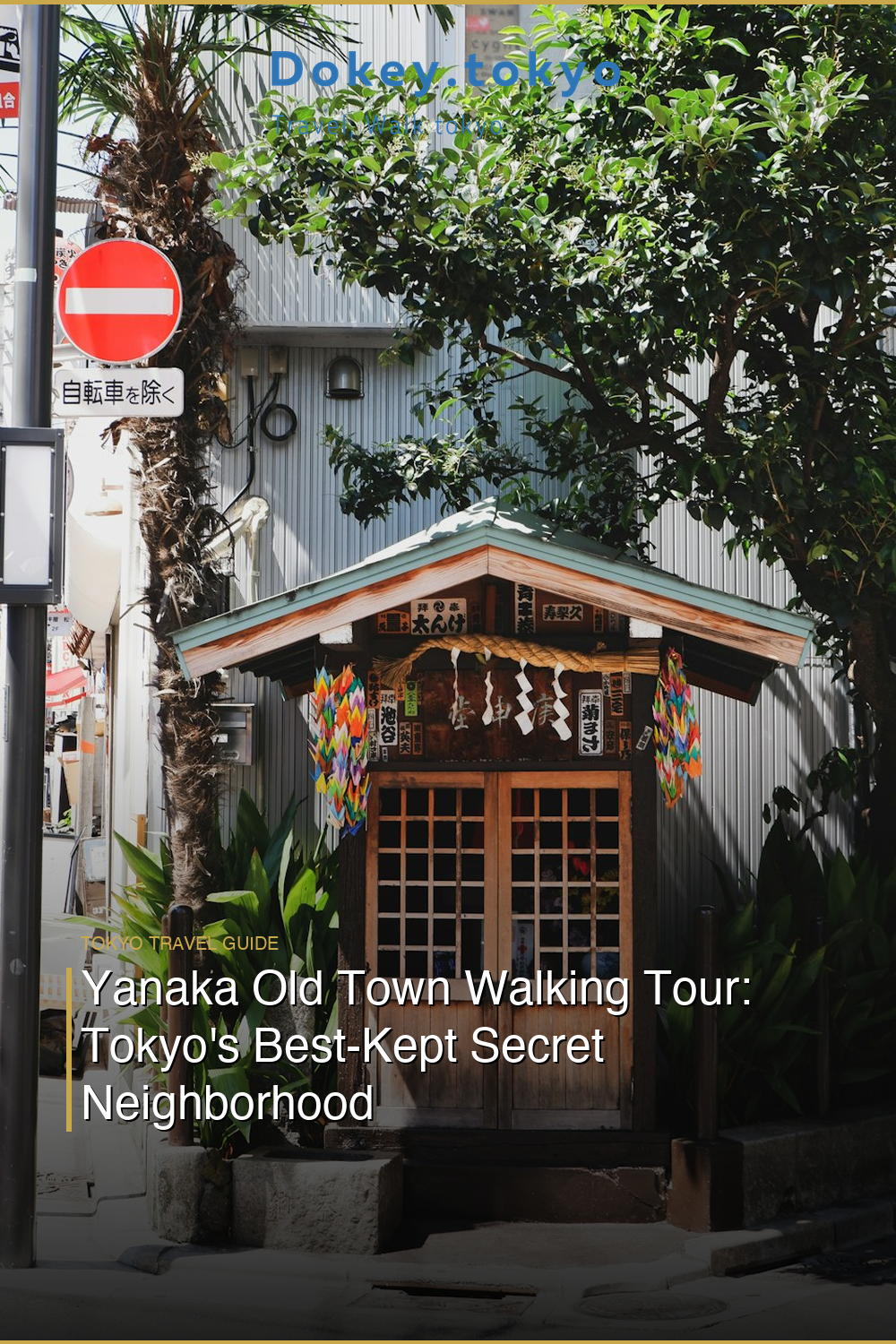
Somewhere between the chaos of Shibuya and the neon overload of Akihabara, there exists a Tokyo that most tourists never find — a neighborhood where wooden shopfronts lean gently with age, where Buddhist incense drifts through narrow lanes, and where a tabby cat naps on a sun-warmed stone wall as if posing just for you. Yanaka is that place. It’s a photographer’s dream dressed up as an ordinary afternoon, and if you point your lens in almost any direction, you’ll find a frame worth keeping.
I still remember stepping off the Nippori Station exit onto Yanaka Ginza for the first time, mid-October, about 4 in the afternoon. The low autumn sun cut sideways through the covered shopping street, turning every dust mote and drifting smoke wisp from a grilling skewer stall into something luminous and golden. I stood there with my camera half-raised, genuinely unsure where to point it first — the stacked ceramic cats in the shop window to my left, or the elderly woman in a lavender apron sweeping her doorstep to my right.
Why Yanaka Is a Photographer’s Paradise
Yanaka survived the 1923 Great Kanto Earthquake and the World War II firebombings that leveled much of Tokyo — a fact that makes walking its streets feel almost miraculous. While the rest of the city rebuilt itself in concrete and glass, Yanaka kept its prewar bones: machiya townhouses with latticed wooden facades, hand-painted shop signs, moss-furred stone lanterns, and temple gates draped in cedar shadows.
For photographers, this translates into textures and layers that modern Tokyo simply cannot offer. You’re not shooting a reconstruction or a theme park version of old Japan — this is the genuine article, still lived in, still breathing.
The Light You’ll Find Here
The neighborhood runs roughly northwest to southeast, which means the main shopping street, Yanaka Ginza, catches dramatic side-lighting in the late afternoon. If you’re shooting golden hour (roughly 4:30–5:30 PM in autumn, 5:30–6:30 PM in summer), position yourself at the top of the famous Yuyake Dandan staircase — the so-called “Sunset Steps” — looking down into the shopping street. The warm light spills down the steps in a way that makes every subject, from cyclists to street food vendors, look like a film still.
For softer, more diffused light that’s ideal for architectural details and close-up textures, come early morning. By 8 AM, the streets are nearly empty, the shopkeepers are just beginning to roll up their shutters, and the overnight dew still clings to the old wooden planks.
The Yanaka Walking Tour: Shot by Shot
Start at Nippori Station (North Exit)
Your walk begins at Nippori Station, which is one stop from Ueno on the JR Yamanote Line — a ¥140 ride from most central Tokyo hubs. Exit through the North Exit and you’ll find yourself at the top of Yanaka Ginza within a five-minute walk.
Before you descend into the shopping street, pause at the Yuyake Dandan steps. This is one of the most photographed spots in the neighborhood, but don’t let that put you off. Arrive early enough and you’ll have it entirely to yourself. Shoot downward with a wide lens to capture the staircase geometry, or wait for a local to walk through your frame — the candid shot of a shopping-bag-laden grandmother navigating the steps is worth every minute of patience.
Yanaka Ginza: The Living Street
Yanaka Ginza is a 170-meter covered shopping street packed with about 70 small independent shops — fishmongers, tofu sellers, craft stores, and snack vendors. For photographers, it’s a masterclass in everyday Japan.
Shoot the repetition of hanging lanterns overhead for graphic, geometric compositions. Get in close on the handmade signage — the brushstroke calligraphy on a fishmonger’s board or the hand-cut price tags on a sweet shop window are details that tell the neighborhood’s story better than any wide shot.
The cats are, of course, legendary. Yanaka has historically been home to dozens of free-roaming cats, and while their numbers have dropped in recent years, you’ll still find ceramic cats in every shop window and the occasional real one lounging on a low rooftop. I once spent twenty minutes crouched in the alley behind Yanaka Ginza waiting for a one-eyed gray tom named “Kuro” (according to the handwritten sign the local shopkeeper had taped to her drainpipe) to turn and face the light. When he finally did, whiskers backlit and eyes half-closed in the sun, I got the shot that has since become the most-liked image I’ve ever posted.
Yanaka Cemetery: Hauntingly Beautiful
Yanaka Cemetery sounds like an odd recommendation, but it is genuinely one of the most atmospheric and visually stunning places in all of Tokyo. Over 7,000 graves, many of them Edo-period, sit beneath a canopy of cherry trees. In spring, the fallen petals drift between the headstones in a way that stops you in your tracks.
But cherry blossom season aside, the cemetery rewards photographers in every season. In autumn, the ginkgo trees turn a deep, saturated yellow. In winter, the bare branches create skeletal frames against pale sky. Morning mist — common here from October through February — collects between the stone monuments and gives the entire space an otherworldly depth.
Shoot from low angles to emphasize the height of the grave markers against the trees, and look for the compositional contrast between the weathered kanji inscriptions and the soft organic shapes of moss and fallen leaves.
Tenno-ji Temple and the Surrounding Lanes
At the cemetery’s heart sits Tenno-ji Temple, a Buddhist temple dating to 1274. The temple’s main courtyard has a large bronze Buddha that catches beautiful light in the morning — position yourself so the Buddha’s face is lit from the side while the temple gate frames the background.
From Tenno-ji, wander into the side streets to the east and south. These are the streets that most tourists skip entirely, and they are where Yanaka reveals its most intimate self: low wooden houses with sliding paper screens, potted plants crowding every doorstep, hand-drawn neighborhood notices pinned to telephone poles. Bring a 35mm or 50mm prime lens and shoot at eye level — this is street photography at its most rewarding.
Scamper Lane and the Cat Alley
Locally nicknamed “Neko no Michi” (Cat Alley) by regulars, the narrow lane running parallel to the train tracks near Nippori is worth a slow, deliberate exploration. The walls here are layered with decades of faded posters, paint over paint, moss between brickwork — textures that make macro photographers genuinely weak at the knees.
Eating and Refueling: Where to Pause Between Shots
Yanaka Ginza’s Street Food
The menya (noodle stalls) and menchi-katsu (deep-fried minced meat cutlet) vendors along Yanaka Ginza are your best mid-walk fuel stops. The menchi-katsu here, freshly fried and handed to you in a small paper sleeve, costs around ¥200 and is one of those bites you’ll think about for years. Eat it standing at the counter while the vendor chats with the next customer — that is the shot and the experience simultaneously.
Kayaba Coffee
For a sit-down break, Kayaba Coffee is a retro kissaten (old-school coffee shop) that has been operating since 1938. The interior — dark wood, yellowing menus, lace curtain windows — is a photographer’s interior dream. Order the tamago sando (egg salad sandwich) and a hot coffee, find a window seat in the morning light, and don’t feel guilty about the twenty minutes you spend shooting the sugar bowl.
Practical Tips for Photography Enthusiasts
Best time to visit: Late October through mid-November for autumn foliage colors, or late March for cherry blossoms at the cemetery. Golden hour in any season is unmissable.
What to bring: A mirrorless or DSLR with a 24–70mm zoom covers the architecture and street scenes. A 50mm prime is ideal for the intimate alley shots. A small tripod or gorillapod is useful for the cemetery in low morning light.
Be respectful: Many of the wooden houses along the walking route are private residences. Don’t photograph through windows or into courtyards without permission. Smile, make eye contact, and ask — more often than not, a resident will wave you in.
Getting there: Nippori Station on the JR Yamanote Line. The full walking loop takes approximately 2.5 to 3 hours if you’re shooting seriously.
Entry costs: Almost entirely free. Yanaka Cemetery and temple grounds are open to the public at no charge.
On my last afternoon in Yanaka, just before dusk, I found myself sitting on the stone step of a shuttered incense shop on a side lane I’d never been down before. A wind moved through the camphor tree overhead and scattered dry leaves across the cobblestones in a single, perfect diagonal line. I raised my camera instinctively — the light was nearly gone, the lane was completely silent, and somewhere nearby a temple bell rang once, low and long, the sound rolling through the narrow street like something you feel more than hear. That single frame, blurred slightly at the edges, orange and gray and utterly still, is the one I keep coming back to when people ask me why I return to Tokyo every single year.
Before You Go: A Final Note
Yanaka will not dazzle you the way Tokyo’s skyline does. It won’t overwhelm you with spectacle or speed. What it will do — if you come slowly, with a camera and no particular schedule — is hand you a version of Japan that the rest of the city has almost entirely lost. For photographers who believe that the best images live in the quiet, ordinary, unrepeatable moments of daily life, Yanaka is not just a hidden gem. It is the whole point of the trip.